An « area of city control » (school canteen, public procurement, public events and festivals, social access to food, etc.) on which the city partner has complete decision power or that the city partner create (MEAD Sustainable Food Education Centre or municipal farm) to include it (food education or agricultural production) into its area of control.
An « area of influence » (retail, restaurants, companies, agriculture, canteens depending on different levels of governance, etc.) among which the city partner targets the most accessible, interested actors (responsible retail, fare-trade shops, vegetarian restaurants, local organic producers, etc.) it is likely to influence with subsidies, regulation, campaign, etc. (carrots, sticks, or sermons).
An « area of collaboration » (NGOs raising food quality, environmental activists, health observatory, national food transition policies, research labs & universities, international networks, etc.) focusing on the same values and goals with which the city partner is joining forces, building synergies, sharing efforts, etc.
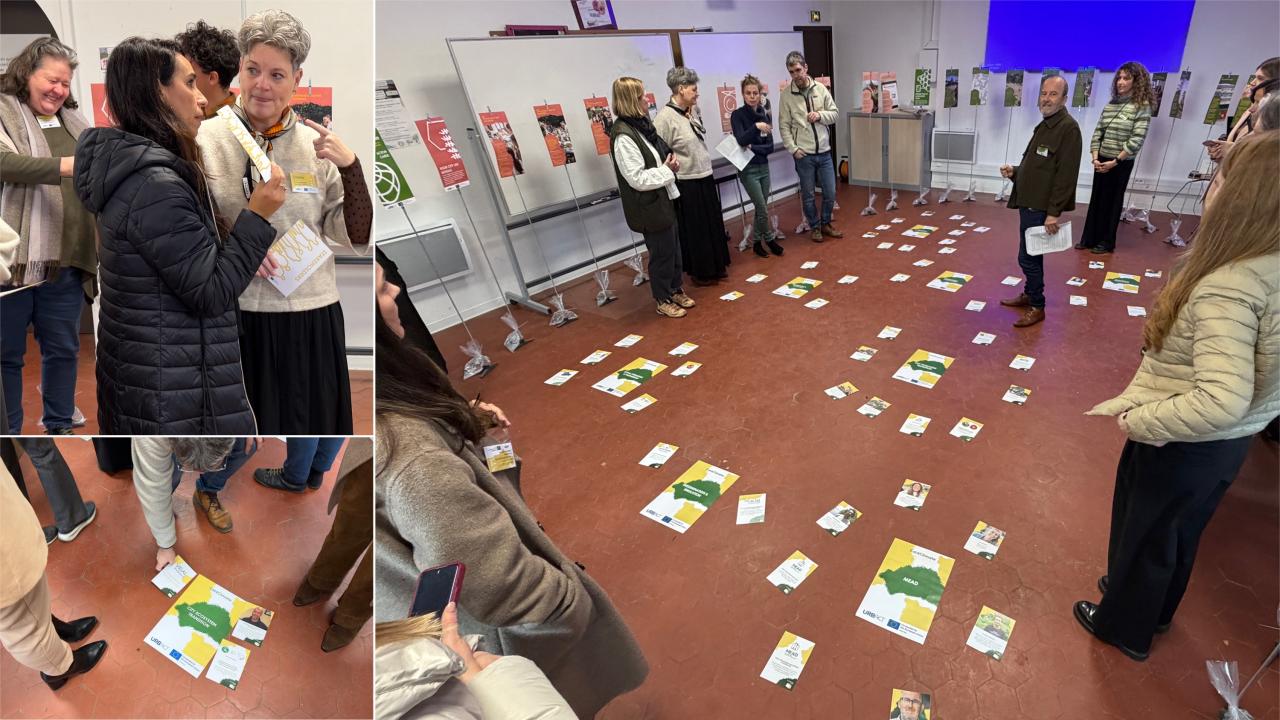
The collective analysis of the Good Practice - investigating Mouans-Sartoux’s approach and during Kick-off meeting - allows to come-up with a structured vision of the GP in 5 modules and a detailed presentation of it in the form of 30 characteristic actions.
This modular and tangible methodology(see box: Eat4Climate Sustainable Food Policy Cards to draft the transfer…) ensures to both inspire partner cities and enable them to design a refined adaptation to their context.