The intention
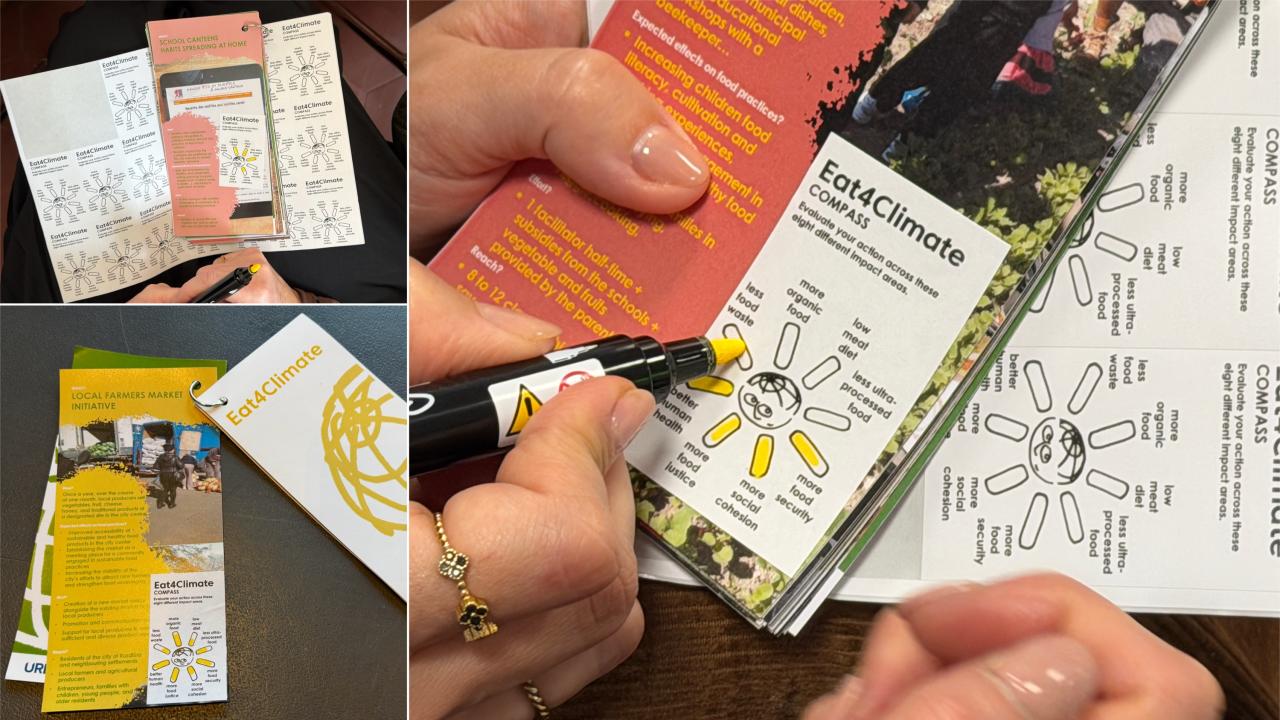
The Eat4Climate Compass is conceived as a simple orientation tool - a compass rather than a map - to support good intuitions at the moment when actions are imagined, discussed or improved. It brings together, in one readable framework, the most critical levers for reducing the climate impact of food (less animal protein, less ultra-processed food, more organic, less food waste…) and key social points of attention (health, food security, food justice, social cohesion).
Usage
The Compass assumes a deliberately simplifying, but operational posture. It helps cities deconstruct preconceived ideas, develop shared reflexes, and discuss actions between partners. Using a yellow marker, participants qualitatively assess perceived impacts before and after an action (“a lot”, “medium”, “rather low”, “zero / not relevant”), producing a rapid visual comparison. There is no right or wrong answer: the Compass is a self-assessment tool to support reflection, not to rank or certify.
From actions to systems
By comparing actions, the Compass helps move from isolated initiatives to a systemic perspective. Actions interact and rarely operate alone. The Compass starts at the action level, but aims to progressively move toward a more systemic evaluation.
Limits and follow-up
The Eat4Climate Compass is an early-stage orientation tool: useful for draft assessments, quick comparisons, exploring improvements, and building common understanding among heterogeneous stakeholders. Going further requires mobilising additional data: descriptive indicators, simple feedback from target groups, more detailed surveys, and broader population-level assessments.