Across Europe, cities are being asked to do more than recover. They are being asked to reinvent themselves: to attract talent, support local businesses, create jobs, protect heritage, welcome visitors and improve quality of life.
The seven URBACT Good Practices featured in this article were selected among the 116 URBACT Good Practices awarded in 2024. These practical, tested and transferable solutions show that local economic development is not only about attracting investment. It is also about building skills, trust, identity, partnerships and shared purpose.
A new generation of local economy solutions
For many years, local economic development followed a familiar checklist: bring in investors, build infrastructure, promote the city and create jobs. These priorities still matter. But they are no longer enough.
While every city has its own context and solution, the following URBACT Good Practices reveal seven complementary ways of strengthening local economies. Some focus on creating the conditions for talent, businesses and employment to flourish. Others show how attractive, liveable places can become a driver of growth. A third demonstrates how culture, heritage and local identity can generate new economic opportunities. Together, they illustrate that successful local development is built through multiple, interconnected pathways.
Growing talent and future businesses
1. Fundão (PT)
A rural city that decided talent was not only for big cities
Fundão faced a challenge many low-density European territories know well: population loss, economic decline and the idea that skilled jobs belong somewhere else. Instead of accepting this path, the municipality built a long-term innovation strategy rooted in the local territory.
Since 2012, the Fundão Innovation Plan has combined business incubation, digital skills, professional retraining, research and development, investment support and community engagement. The Cova da Beira Living Lab has been central to connecting public institutions, companies, schools, universities and civic organisations.
The results are impressive: 16 IT companies attracted, 1,000 skilled jobs created, more than 250 private investment projects supported and a positive migration balance for the first time in decades. Fundão is now home to people from more than 70 nationalities.
2. Lyon (FR)
When economic development starts measuring what really matters
Many cities say they want greener, fairer and more resilient economies, but if they measure success only through jobs, investment and business creation, they may miss the bigger picture. With Tools for sustainable business transformation, Lyon Metropole has chosen a different path: making the local impact of companies visible and useful for decision-making.
The Metropolis created two complementary tools. The Observatory of Positive Impact Economy measures how companies contribute to public sustainability goals. The KELIMPACT platform helps companies assess and improve their economic, social and environmental impact.
With more than 1,000 users, KELIMPACT has already helped Lyon Metropole adapt its public services. For example, when the tool showed that small companies were not completing carbon footprint assessments, Lyon developed targeted support to help them take action.
Labour market problems need more than isolated projects
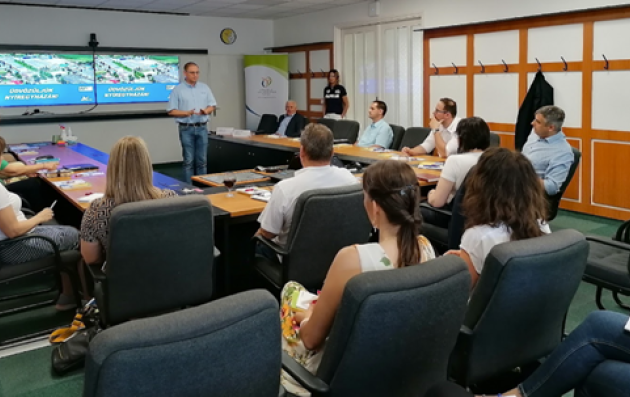
Skill shortages, youth outmigration, barriers to women’s employment, vulnerable groups and business needs rarely fit within one institution’s responsibility. In Nyíregyháza, the answer has been to create a shared governance structure where labour market actors can understand problems together and act collectively.
Employment Forum brings together 38 public and private stakeholders, including local and regional authorities, educational institutions, companies, NGOs and labour market organisations. It meets regularly to discuss talent retention, vulnerable groups, digitalisation and the future of work.
Over time, the Forum has evolved from a top-down network into a more collaborative body. Four working groups now focus on labour market dynamics, career orientation, modern training structures and workforce mobility. Between 2017 and 2023, the partnership organised more than 120 events.
What’s the takeaway for your city?
Taken together, these practices show that cities can grow talent and future businesses when strategy, partnerships, skills and quality of life are aligned. Small and rural cities can build serious innovation ecosystems, while metropolitan authorities can move from business support to business transformation by connecting competitiveness with social and environmental responsibility. Where labour market challenges cut across institutions, shared structures can help align skills, jobs and inclusion, offering cities the coordination they need more than another isolated employment project.
Making places people choose to live and visit
4. Baião (PT)
Tourism that protects the place it depends on
Tourism can bring jobs, visibility and income. It can also put pressure on landscapes, communities and local identity. Baião’s Sustainable tourism destination initiative asks a key question: how can tourism support local development without damaging the place people come to experience?
Baião placed sustainable tourism at the centre of its local strategy, becoming the first Portuguese municipality to achieve EarthCheck certification. This was not a branding exercise, but a structured governance process supported by a Destination Sustainability Policy and an Action Plan.
A multidisciplinary Green Team coordinates the work, monitors progress and involves local, inter-municipal and private actors. The strategy covers energy and water efficiency, renewable energy, biodiversity protection, cultural programming, local products and community engagement.
The rural town that turned attraction into a whole-city strategy
Idanha-a-Nova faced one of Europe’s hardest territorial challenges: long-term demographic decline. Over five decades, the municipality lost around 70% of its population.
The Restart in Idanha strategy was created to challenge that trajectory. Launched through a participatory planning process in 2015, the strategy is built around four programmes with 26 projects. Idanha Green Valley links knowledge and innovation in rural areas. Idanha Live improves conditions for current and future residents. Idanha Experimenta allows potential newcomers to experience the territory. Idanha Made In supports local products, especially organic food.
The strategy focuses on what makes a place liveable: education, health, safety, incubation spaces, research, services, wellbeing and quality of life. It is not simply a campaign to attract residents. It is an attempt to make rural life desirable, viable and future-facing.
What’s the takeaway for your city?
Together, Baião and Idanha-a-Nova show that making a place attractive starts with how it is managed and lived, not simply how it is promoted. Sustainable tourism is not a slogan but a management system that can align tourism, climate action, local business and community wellbeing. Attracting residents begins with liveability, not publicity, making these approaches especially relevant for rural destinations, border towns and depopulating regions seeking to become more desirable and viable for residents, entrepreneurs, families and visitors.
Turning heritage into a productive asset
6. Onda (ES)
An old ceramics factory becomes a new civic heart
Onda’s ceramic tradition is part of the city’s identity. But heritage only becomes a resource for the future when it is actively used, shared and reimagined. That was the challenge behind the transformation of La Campaneta through the Repurposing heritage for citizens project.
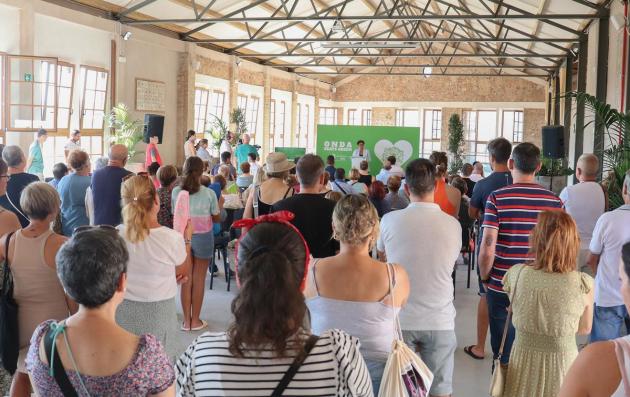
La Campaneta is one of Onda’s oldest preserved ceramic factory complexes. Located between the districts of Tossalet, Monteblanco and Rajolar, the building had fallen into disrepair. The municipality restored it and transformed it into a cultural and leisure centre for the community.
The project preserved three Moorish kilns and other elements of traditional ceramic production, while giving the building new life. Since reopening, La Campaneta has hosted exhibitions, concerts, workshops, community events and also local URBACT meetings.
7. Fundão (PT)
Where tradition meets digital fabrication
Already mentioned in this list for another practice, Fundão has also sought to solve another urban challenge. Traditional knowledge is often treated as fragile, decorative or destined to disappear.
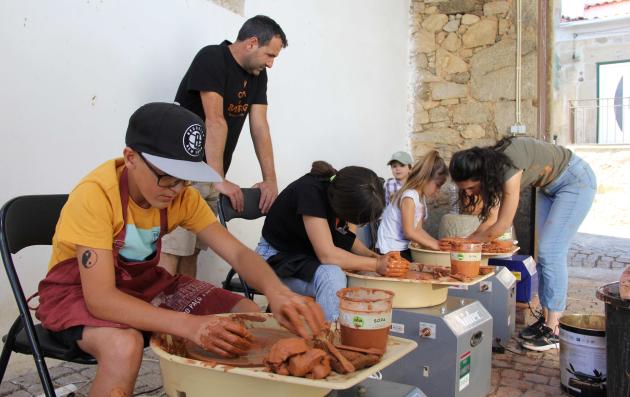
Craft Lab tells a stronger story: craft can be a platform for innovation, education, tourism, identity and economic renewal. Casas e Lugares do Sentir was launched in 2017 to preserve and celebrate the region’s tangible and intangible heritage. The network brings together 14 thematic houses across the city’s parishes, forming a cultural, touristic, social and educational itinerary.
In 2019, the Craft Lab was launched within this network, in partnership with FabLab Aldeias do Xisto and CEARTE. The project connects traditional craftsmanship with design, digital manufacturing and sustainable materials. It also supports intergenerational learning through the Escola-Aldeia project.
What’s the takeaway for your city?
Onda and Fundão show that heritage can be more than memory; it can become infrastructure for community life and local development. Vacant public buildings, industrial heritage and underused cultural assets can be given new uses, while living traditions can connect identity, skills, education, digital fabrication and local economic diversification. The common lesson is that heritage becomes a productive asset when it is actively used, shared and reimagined.
What could your city do next?
These seven URBACT Good Practices do not offer a universal formula for local development. That is exactly why they matter. They show that future-ready cities are not the ones with the most fashionable strategy, but the ones capable of seeing their own strengths differently.
Get inspired by the full cadre of URBACT Good Practices awarded in 2024, plus many more in the database. Then ask the question that matters most: what could your city become if it took its own strengths seriously?