Public procurement and municipal budgeting rarely attract public attention. It is a part of the city administration that is hidden behind closed doors or complex decision-making processes, long before residents see the result. Yet across Europe, cities are proving that these tools could fulfil their purpose better when a select group of people is intentionally invited into the process.
All six practices featured in this article were selected among 116 URBACT Good Practices awarded in 2024. Together, these cities show that participatory administration can be rigorous and efficient.
Who gets a seat at the table when it comes to decisions about public spending? Read on for highlights – and answers to this question – from each practice, along with some takeaways for your city.
Smarter procurement that starts with people
Every procurement process starts with a set of decisions: what to buy, how to buy it, and who gets a say. The following three URBACT Good Practices are using that starting point differently, opening it up to residents, suppliers and civil society long before a contract is even signed. This results in procurement that better reflects what communities actually need, without adding red tape.
#1 – Tartu Vald (EE)
Community-inclusive public procurement involved residents from the very start of the process, with the municipality incorporating their preferences when drafting the technical brief for a new playground or public facility. Once bids come in, the city informs providers of the set budget, and the residents themselves vote to select the winning proposal.
So far, nine facilities have been built this way across Tartu, with each tender drawing between three and eight bidders. Compared with the traditional process, which often produced facilities that didn't match what residents needed or fell through when costs ran too high, the practice has strengthened both the fit of what gets built and the social cohesion around it.
#2 – Kavala (EL)
Centralised procurement embeds environmental and social criteria into every stage of the tender process, from early consultations with local SMEs to final contract evaluation. On a 2020 tender for cleaning products alone, the approach awarded over €465 000 to four local businesses, all meeting strict recyclability and biodegradability standards.
The practice has become a national benchmark in Greece, showing that procurement can double as a lever for local economic resilience and sustainability, not just a purchasing formality.
#3 – Oulu (FI)
The Open and shared city initiative turns open governance from a stated value into a standing structure. Its Regional Civic Organisation Academy is jointly delivered through associations, youth councils and the regional wellbeing services county, giving public bodies and civil society a recurring space to build governance together.
The result is an approach that treats openness as an ongoing practice rather than a one-off consultation, with civic organisations returning to the same table year after year to help shape decisions that affect them.
What's the takeaway for your city?
What these examples share is the timing of public participation: residents, suppliers and civil society are brought in long before decisions are finalised.
Whether it's a technical brief, a set of procurement criteria, or a governance structure; letting people shape decisions from the outset is what makes these practices transferable to cities of any size.
Participatory budgets that put young people in charge
If procurement decides how a city spends, participatory budgeting decides what it spends on. Young people have traditionally had few opportunities to take part in local decision-making, including decisions about how public money is spent. The following three URBACT Good Practices are handing that decision to young people directly, treating their proposals and votes as binding rather than advisory. Consequently, these residents gain a real sense of ownership – and city budgets reflect their priorities more closely.
#4 – Cascais (PT)
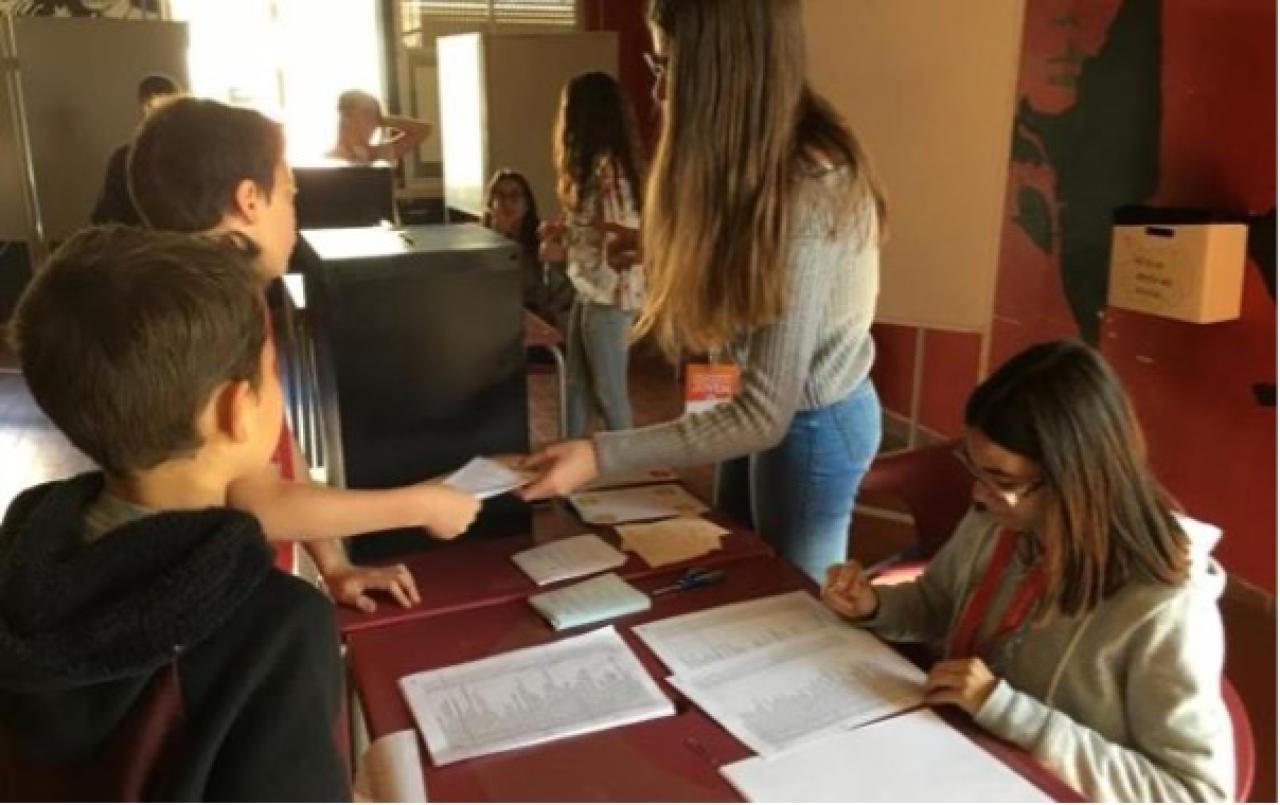
Building on its own long-running participatory budget for adults, Cascais launched a Youth Participatory Budget for residents aged 10 to 17. Students proposed and voted on projects for their schools and communities, and, uniquely, helped design the rules of the process itself. Winning school projects have received €10 000, while larger community projects could receive up to €350 000 after technical review.
Across seven editions, more than 13 500 students have taken part in public sessions, making Cascais one of the most established models of youth budgeting in Europe.
#5 – Valongo (PT)
Participatory youth budget is open to everyone aged 6–35 living or studying in the city, with €250 000 distributed across four categories: school, generations, community and green. The innovative approach especially surfaces in the fact that every proposal is to be made by young people themselves.
Schools have incorporated the process into their curriculum, which helps keep the process genuinely youth-led (since the ideas themselves come from young people).
#6 – Cluj-Napoca (RO)
Com'ON extends participatory budgeting to informal youth groups, without requiring them to register as a formal association, by funding them directly to design and run their own community projects, spanning culture, education and social inclusion.
The programme has backed over 1 000 small-scale initiatives, with more than 50 000 community members involved in choosing which ideas get funded: proof that meaningful participation doesn't require a large budget, just low barriers to entry.
What's the takeaway for your city?
By handing young people real budgetary authority, Cascais, Valongo and Cluj-Napoca are simultaneously building trust, civic confidence and practical decision-making skills among younger populations.
Any city can adapt the model by starting small, keeping the rules simple, and letting proposals come from young people themselves.
Better administration, bringing more voices to the table
Taken together, these six examples show practical ways cities can make procurement and budgeting more participatory. Procurement and participatory budgeting are just two of the levers cities are using to rethink who gets a say in public administration. None of them required a bigger budget or a new department. What they required was a willingness to let go of part of the decision, and share it with the people it affects.
As more cities look to make procurement and budgeting more transparent and participatory, Tartu Vald, Kavala, Oulu, Cascais, Valongo and Cluj-Napoca have enough seats at the table to make effective public-spending decisions. Other cities can take note of their experiences and methods, which offer a ready-made starting point.
Explore all 116 URBACT Good Practices awarded in 2024 for more transferable urban solutions. The same principle of inviting residents, suppliers and young people into decisions traditionally made without them, runs through many of the other URBACT Good Practices, from housing to mobility to local economy and greening urban economies.