Networks and cities' news

Catch up on the latest updates from cities working together in URBACT Networks. The articles and news that are showcased below are published directly by URBACT’s beneficiaries and do not necessarily reflect the programme’s position.

Want to learn more about the projects that are featured here? Discover the URBACT Networks.


  • URBACT – Landesgartenschau Löbau 2012

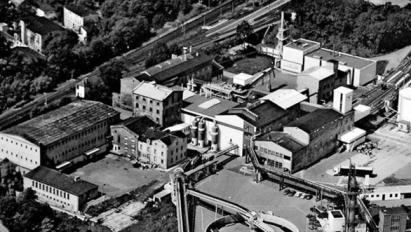
    When we decided to apply for the Greenplace project, we already knew what we wanted to share with the other project participants – our experience from the 2012 Saxon State Horticultural Exhibition (6. Sächsische Landesgartenschau Löbau 2012). For this exhibition, a 20-hectare industrial wasteland in Löbau was completely transformed. The site had previously housed several textile factories and various buildings of the Löbau sugar factory. Following the decline of these industries, the sugar factory—the last operating facility in this area near the city center—closed in 2002.

    Joanna Gańcza-Pawełczyk

    See more
  • A goup of people walking around the old depot area

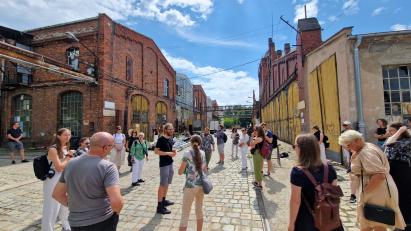
    Planning for Green: The Future of Wrocław’s Popowice Depot

    The old Sachsenhausen and Bornheimer depots in Frankfurt am Main and  Czasoprzestrzeń at Biskupin in Wrocław are just a few of the places that gained a second life after the line buses and trams "moved out". Now, another depot in Wrocław has a chance to join them in a green ecological style - Popowice at 65 Legnicka Street, being a case study in the "GreenPlace, Let's do it together!" project.  This is all due to the "testing actions" taking into account the pro-ecological projects planned to be implemented within the complex.

    Joanna Gańcza-Pawełczyk

    See more
  • a group of people posing for a picture in from of an old building

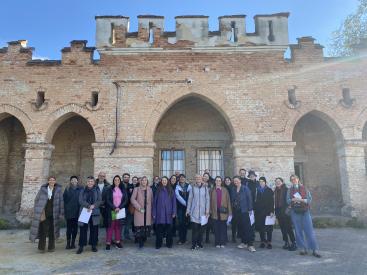
    Nature-Based Solutions, Equal Cities & Inclusive Design

    The 5th Core Network Meeting of partners within the Green Place network took place in Nitra on October 15-16, 2024. The meeting focused on the topics of Nature-Based Solutions, Equal Cities & Inclusive Design. It was also aimed at feedback on the addressed area of ​​abandoned brownfield of former military barracks and drawing on relevant experiences with partners on this topic. The meeting continued with some partners on October 17 as  a site visit, showcasing successful examples of good practices in green infrastructure, work with minority groups, improving the health of residents, and the reconstruction of historic buildings.

    Joanna Gańcza-Pawełczyk

    See more
  • Quarto d'Altino: A Sustainable Future through Culture and Cohesion

    In recent years, the Municipality of Quarto d'Altino, through the actions of its local government, has embarked on an ambitious path to address the environmental and social challenges of its territory. A key part of this effort is the URBACT GreenPlace initiative, a European program promoting sustainable urban development through collaboration and the exchange of best practices among cities.

    Joanna Gańcza-Pawełczyk

    See more
  • Vila Nova de Poiares: Small City, Big Environmental Ambitions

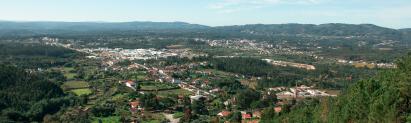
    Vila Nova de Poiares, the smallest city in the GreenPlace URBACT network, with a population of around 7.000, is taking ambitious steps to address significant environmental challenges. Despite its size, this municipality in the Coimbra Intermunicipal region of Portugal has become a model for sustainable practices and community engagement, especially through its collaboration with the local URBACT Group (ULG) and its active role in the GreenPlace network.

    Joanna Gańcza-Pawełczyk

    See more
  • How to involve your ULG members using a card game?

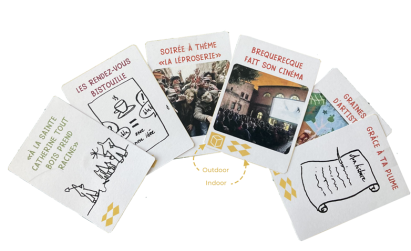
    Boulogne-sur-Mer, a historic coastal city in northern France, is blending community engagement with urban revitalization through a unique card game designed for collaborative planning. Facing challenges like economic shifts, population decline, and coastal erosion, the city is rallying local stakeholders to reimagine and activate underutilized spaces. This approach has inspired new ideas for future projects, fostering deeper community involvement and turning citizen input into actionable plans for a thriving local future.

    Joanna Gańcza-Pawełczyk

    See more