Six cities, six contexts, and one shared ambition
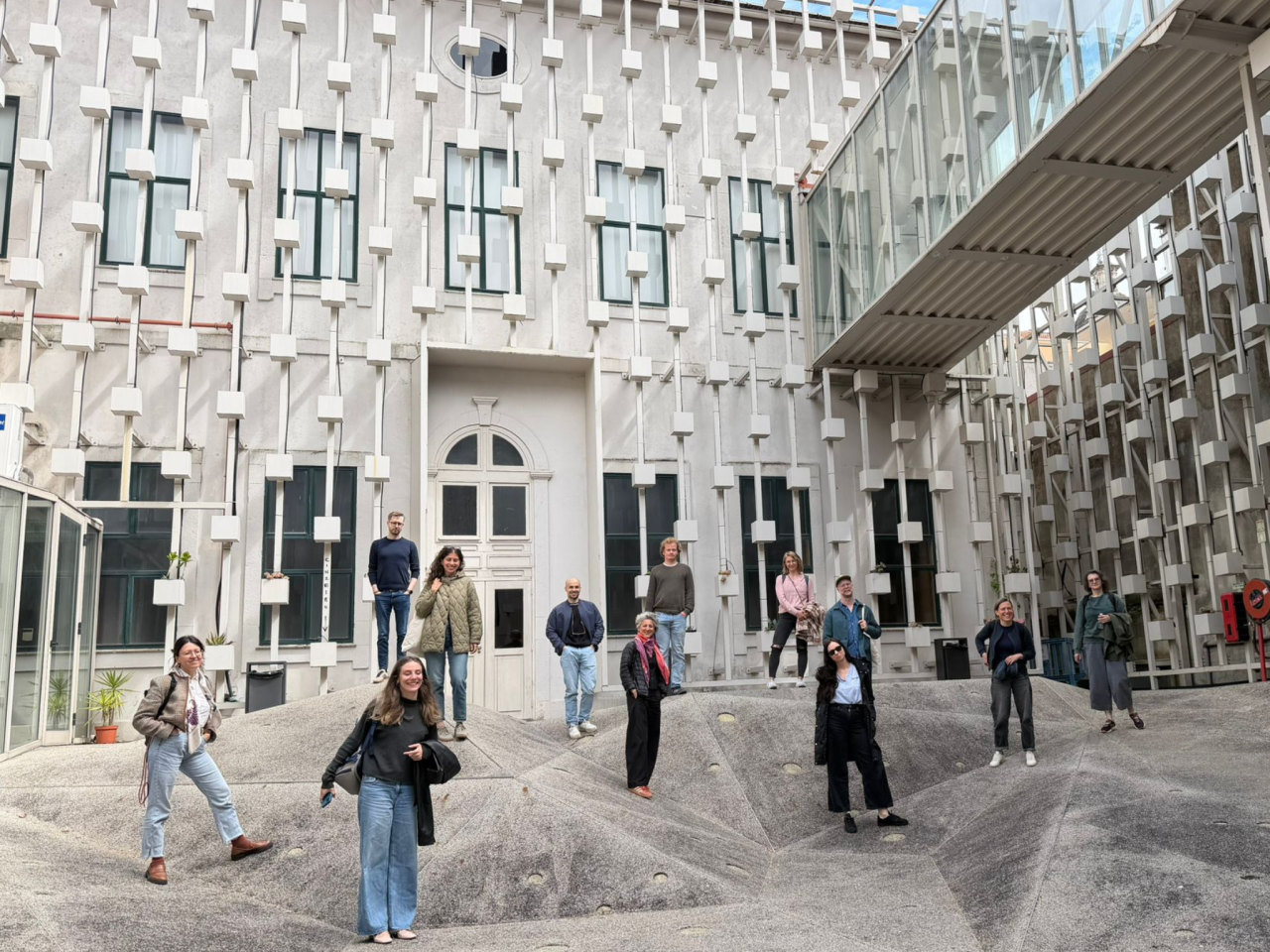
Over the first months of the project that started in November 2025, Braga’s HPH team and the HPH
Europe Lead Expert visited the partner cities, meeting city officials, local stakeholders, and the
emerging members of each city's URBACT Local Group, to understand the context of each local
ecosystem: its political momentum, its existing assets, its gaps, and its appetite and potential for
change.
What those visits revealed was a partnership of great diversity. The six transfer cities span a wide
spectrum of contexts: Bologna, with close to a million inhabitants in its metropolitan area, brings a
dense cooperative economy and a sophisticated network of foundations committed to social
innovation; Gdańsk, a city where social innovation has deep roots - it was the lead partner of the
original BoostINNO network, where the HPH story began - is now developing a dedicated hub for
youth, co-designed from the outset with young people themselves; Leipzig brings a tradition of
bottom-up civic mobilisation and an innovative trialogue governance model; Málaga has already built
an operational social innovation centre, Innosocial, and a well-established public-private partnership
with La Noria, giving it a strong launchpad for transfer; Espoo, a city recognised for its innovation
ecosystem and world-class universities, brings the research infrastructure and digital expertise thatthe broader network will learn from; and Kyiv despite their dire current war conditions, will seek to
adapt the HPH model in the context of wartime, building on its existing Vcentri community hubs and
a civil society very much mobilised.
Three shared foundations unite these six cities and Braga: strong political will at the highest levels of
local government, strategic alignment and a base of existing social innovation assets to build from.
None of the partners is starting from scratch. All of them are ready to build.
What the Transferability Study found
The Transferability Study, the network's first output, published in May 2026, confirmed a high overall
transfer potential across the partnership and established the methodological framework for the
journey ahead.
Its central finding is that the HPH model is genuinely transferable, not as a rigid blueprint but as a
modular, adaptable model. The study identifies five core modules - quadruple helix governance;
incubation and acceleration programmes; impact measurement and sustainability; civic engagement
and co-creation; and physical or virtual hub infrastructure - that can be deployed in different
combinations depending on each city's context, capacity, and priorities. Every city's adaptation will
begin with the same foundation: Module 1, the governance architecture that activates and
coordinates public, private, academic and civil society actors. Without it, no other module can
function sustainably. From there, each city will build its own configuration.
The cornerstone concept the study introduces is the Minimum Impact Human Power Hub - the
MiHPH: the smallest, leanest version of the HPH that can still generate measurable social impact
within the project timeframe. Drawn from product development logic, it encourages each city not to
wait for ideal conditions but to launch at the right scale, learn fast, and iterate toward fuller
implementation.
"Launch small, learn fast, scale what works" is the network's guiding principle.
The Study's partner assessments produce a rich picture of where each city stands and what it will
build while Braga itself will be learning from the network to develop its HPH version 2.0, with
improved impact measurement, enhanced digital co-creation tools, and a stronger quadruple helix
approach.
How the network will work
The transfer methodology at the heart of the study borrows deliberately from product development.
The three URBACT phases - Understand, Adapt, Reuse - are reframed as three sprints: Discovery,
Build, and Scale. The network approaches the transfer of the Good Practice as iterative, user-centred
co-development, with each partner city acting simultaneously as tester, co-developer, and future
operator of their local hub.
The backbone of the network's collective learning is a sequence of six Transnational Network
Meetings, each hosted by a different partner city and designed around a specific thematic focus
drawn from the quadruple helix. Between those meetings, the work continues locally. Each city's
URBACT Local Group - the quadruple helix coalition of stakeholders convened to co-develop the
transfer plan for the local hub - is the real build environment where transfer happens.
What’s next
The network is currently entering its Adaptation/Build phase, during which partner cities will develop
local transfer plans, engage stakeholders, and identify the elements of the Human Power Hub most
relevant to their contexts.
The coming months will focus on testing ideas, sharing experiences, and refining approaches through
peer learning and transnational exchange. Questions around governance, sustainability, citizen
participation, impact measurement, and institutional integration will be central to this work.
For the Human Power Hub Europe Transfer Network, the objective is not to create seven identical
hubs but to build a community of cities that are collectively exploring how social innovation can
become a more permanent and effective part of local governance.
As European cities continue to face complex social challenges, this shared learning process is likely to
prove just as valuable as the model itself.
Follow the network's journey through the project webpage and across social media channels
https://www.linkedin.com/in/human-power-hub-europe/
https://www.instagram.com/urbact.humanpowerhub/
HPH Europe is an URBACT IV Transfer Network co-funded by the European Union through the Interreg
programme. Lead Partner: BragaHabit E.M., City of Braga (PT). Transfer Partners: Bologna (IT), Espoo
(FI), Gdańsk (PL), Kyiv (UA), Leipzig (DE), Málaga (ES).