When the music stops
In theory, ITNs are focused on transferring an innovative solution (originally funded through EUI) to a network of transfer partners. However in WISH-CITIES - and indeed most networks - the learning was very much a two-way process. The Lead Partner, Milan, had much to share from its pioneering work promoting youth wellbeing. But they brought an honest, open attitude to their role, characterised by humility and active listening. This was incredibly helpful, especially as we had transfer partners which are amongst Europe’s pioneers, when it comes to promoting youth wellbeing and empowerment.
So, when the music stopped, where had the WISH-CITIES partners got to? An examination of their final outputs (Investment Plans) provides an insight into their progress and, more importantly, their future intentions. These documents have some common themes, but each has its own distinctive approach.
Governance
Exploring the common denominators, we can see that governance is a recurring commitment from most partners. For example, Dublin (IR) will pilot a youth council model which will - for the first time - bring young people into the municipal decision-making process. At the other end of Europe, Valmiera (LV) will also break new ground by establishing a platform to enable youth voices to contribute to the city’s governance model. Cartagena, a city with an established framework for youth empowerment, will extend its impressive youth assembly to facilitate the contribution of older youth - aged 18+.
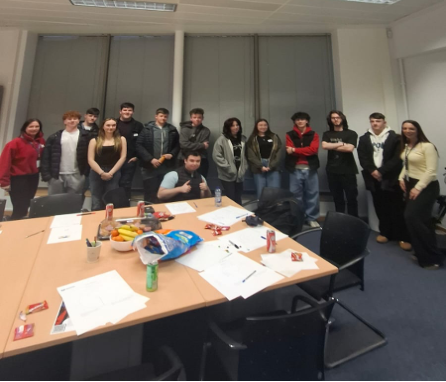
Image: Dublin Youth Advisory Panel first meeting
Finance
Empowering youth voices will have limited impact unless it relates to finance. In time, Dublin, and Korydallos (GR) plan to introduce a youth participation budget. Other cities in the network - including Cartagena and Vila Nova de Gaia already operate these mechanisms which have encouraged other WISH-CITIES partners.The city of Vienna also showcased their highly successful children and youth participation as part of our webinar series. These cases showed that ring-fencing public funds and trusting young people to decide how to use them is a strong municipal validation, as well as a reflection of youth as a policy priority.
Spaces and Places
Spaces and places also feature strongly in the Investment Plans. Korydallos, Vila Nova de Gaia and Pori, will all explore ways to improve youth access to city spaces. Pori will pilot an innovative model to promote open-access to public buildings, as part of a commitment to improve utilisation rates, whilst supporting youth organisations. Vila Nova de Gaia will build on its testing action by giving more freedom to young people over the function of some public spaces. Korydallos will create a new hub for young people - a first for the city - focused on improving employability and entrepreneurship. Milan, an established champion of youth hubs, continues to develop the concept with two new youth spaces added to their city network.
Milan’s hubs operate across the entire city, located in a mix of neighbourhoods. The notion of place - an influencing factor in the original WISH-MI project - continues to be closely monitored, supported by the city’s excellent data on wealth disparities at the neighbourhood level. Place is also a vital factor in the Dublin story, as the city will focus its innovative efforts on two of the city’s most deprived areas; Ballyfermot and Cherry Orchard. Starting small, the city hopes to scale its new approach across the entire municipal area, if successful.

Image: Korydallos youth carnival event
Ambassadors
A final component, which we see in various forms across the network, is the use of ambassadors. This has been a key part of the initial Milan model that transfer partners have embraced and interpreted in their own ways. For example, both Pori and Dublin will launch a version of the Milan concept, appointing municipal colleagues across the departmental spectrum, to champion the needs of children and young people.
Getting beyond projects - once the circus has moved on
Within these shared initiatives is a desire to achieve systemic impact for young people. This means going beyond a short-term project approach to one which can trigger lasting change, creating a legacy which should remain long after the URBACT funding has finished. At its heart is a desire for municipalities to work differently with children and young people, bearing in mind that they are our citizens of the future. Co-design must be at the heart of this, using the kind of tools developed by the WISH-CITIES partners.
It’s exciting when the circus comes to town, but we’ve got to make sure the buzz remains once the big tent comes down.