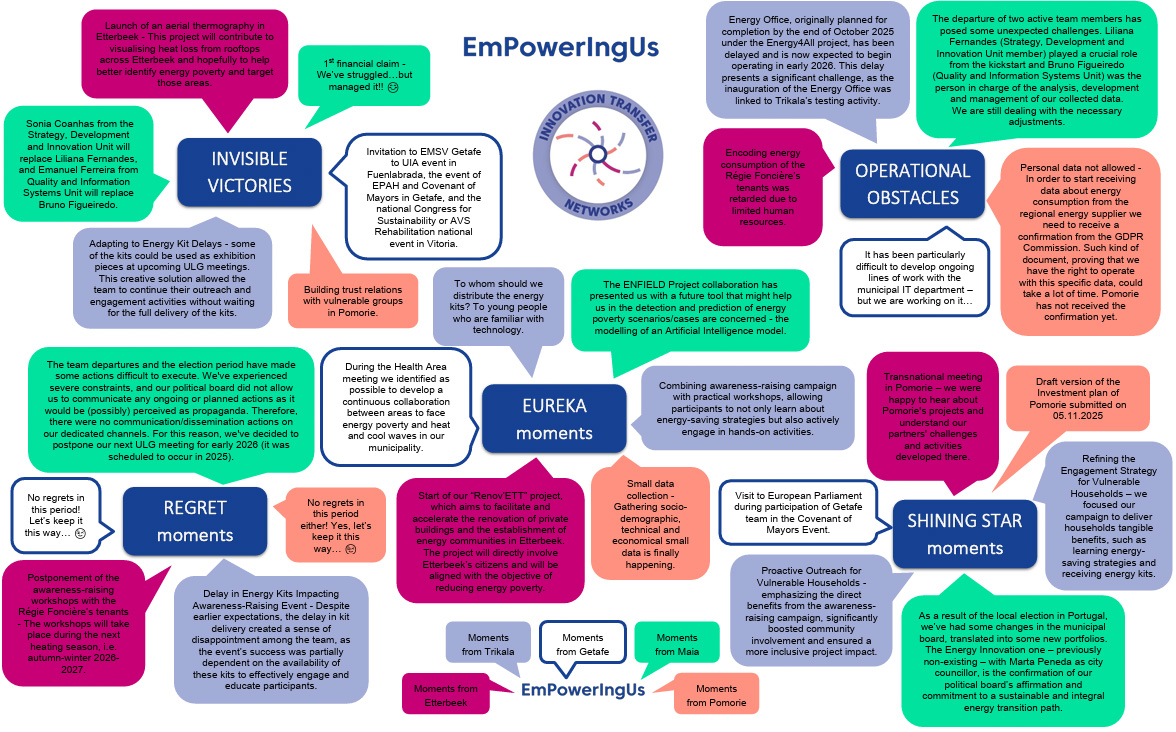
- Getafe further strengthened its pioneering approach through enhanced cooperation with social organisations, public authorities, universities, and energy communities. New partnerships with the Municipal Health Department and Fundación Naturgy have expanded the project’s social and environmental impact, while ongoing work on housing sensorisation and the development of the “Healthy Homes” data platform are reinforcing the evidence-based foundations of local policies. Getafe has also increased its visibility at European level through participation in major events organised by the European Parliament, EPAH, and the Covenant of Mayors.
- In Etterbeek, Belgium, the transfer process has advanced through the implementation of an innovative “energy cadastre” for municipal housing, awareness-raising workshops targeting vulnerable groups, and the preparation of a comprehensive investment plan. The municipality is also developing monitoring tools and planning an aerial thermography campaign to improve understanding of building energy performance and support future renovation strategies.
- Maia, Portugal, has continued to strengthen its local governance model through an extensive stakeholder ecosystem involving municipal departments, social housing actors, energy agencies, and local communities. The city has launched discussions on two highly innovative initiatives, including the ENFIELD project, which explores the use of artificial intelligence to identify early signs of energy poverty.
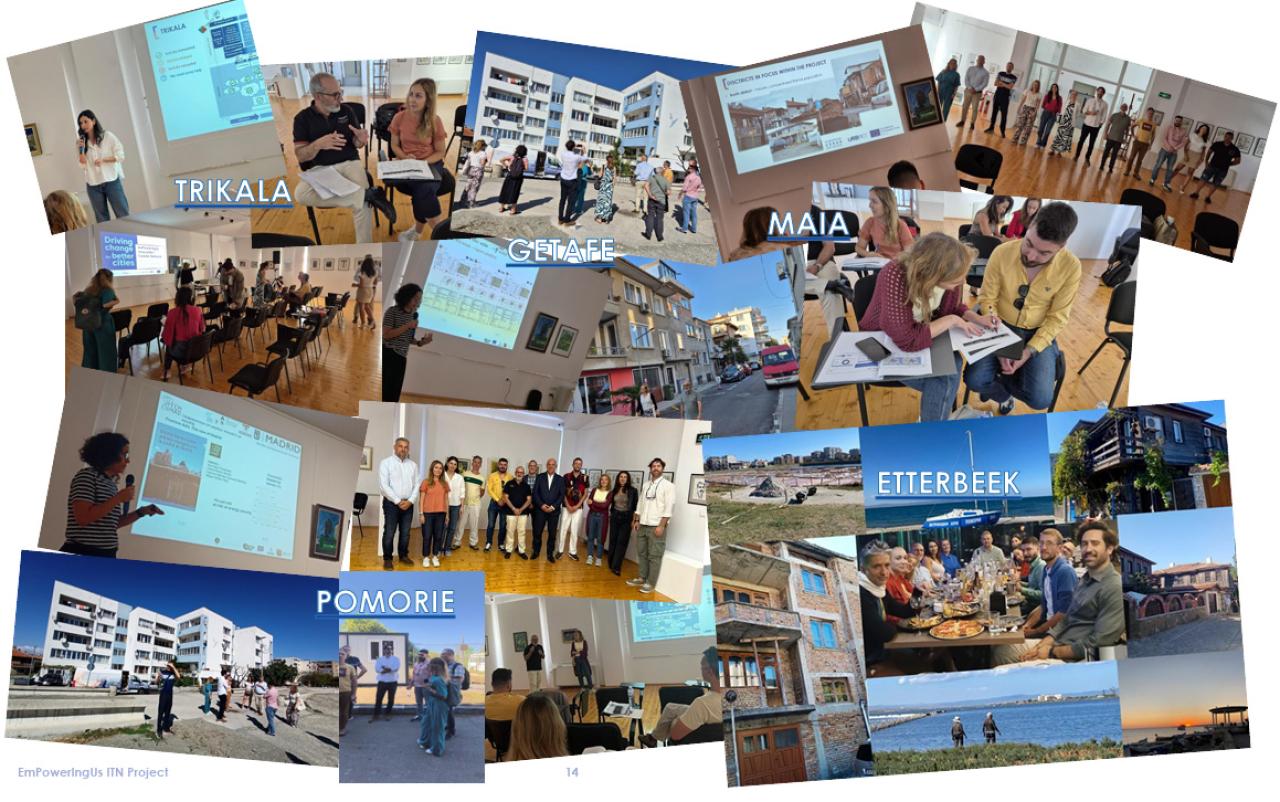
- Pomorie, Bulgaria, has successfully mobilised a broad network of stakeholders through its Local Action Groups. The city hosted the third transnational network meeting, showcasing local achievements in building renovation, public infrastructure upgrades, and energy-efficient street lighting. These activities have strengthened local awareness and enhanced the exchange of practical solutions among partners.
- In Trikala, Greece, efforts have focused on identifying vulnerable households, aligning data sources, and preparing testing activities and awareness campaigns. Despite delays related to the establishment of the local Energy Office, strong stakeholder engagement and cooperation with social services are creating solid conditions for the next implementation phase.
EmPowerIngUs is proving that the transfer of good practices goes beyond replication. By adapting the EPIU methodology to diverse local contexts, partner cities are building stronger institutional cooperation, improving data-driven decision-making, and developing innovative tools to reduce energy poverty while supporting a fair and inclusive energy transition.
Interested to learn more? Have a look at EmpowerIngUs 3rd Quarterly Network journal by Klemen Strmšnik