Designed around capacity building among cities of the Western Balkans, a key component of URBACT’s Pioneer’s Accelerator is study visits to introduce participants to best practice in developing EU cities. I lead the Sustainable Tourism cluster, helping these emergent destinations to prioritise local quality of life and place in their development. This cluster sees tourism as a lens for achieving urban equity and sustainable transitions, especially in diverse or vulnerable urban contexts. Part of my role is to share participatory design methods for engaging citizens in destination development, stress collaboration with local communities and municipalities to shape sustainable tourism strategies. This positions co‑creation and stakeholder engagement as core methods towards resilient, people‑centred urban development.
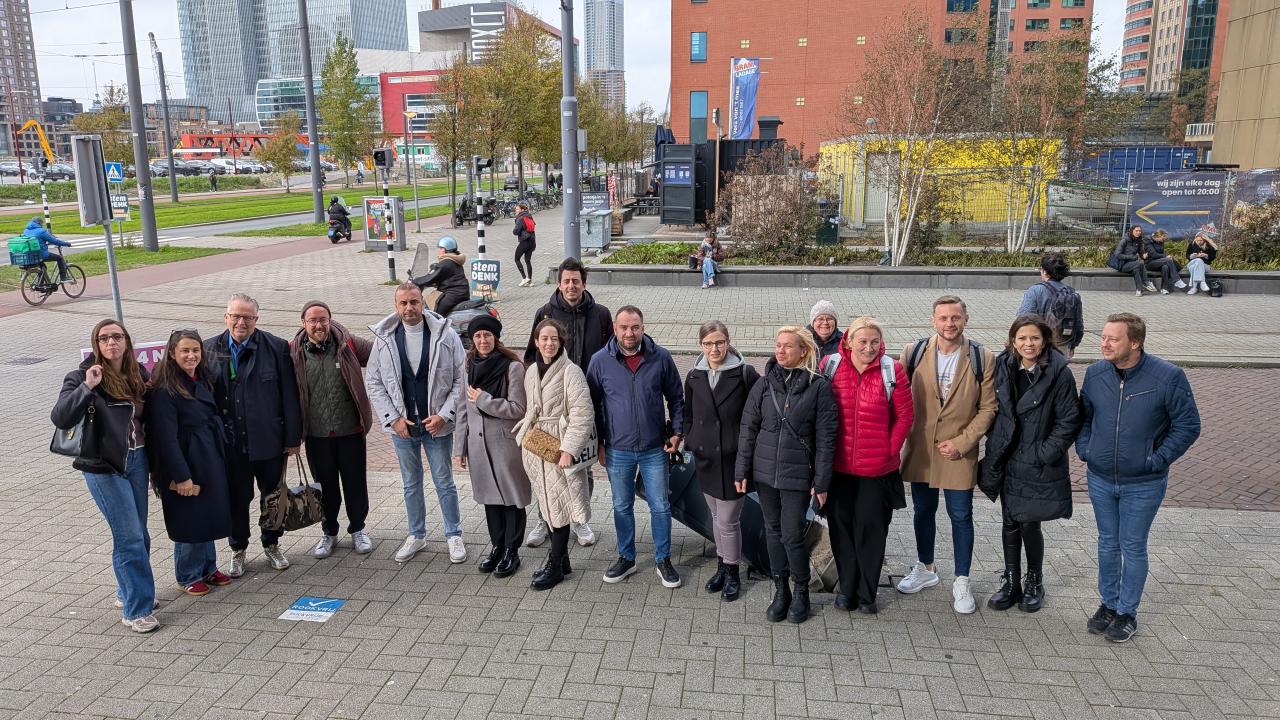
The end of October 2025 saw the arrival of representatives from five cities of Albania, Bosnia and Herzegovina and Serbia to Rotterdam. Civil servants from the cities of Kakanj, Lezhë, Senta, Široki Brijeg and Smederevo explored a curated set of local initiatives, examples of sustainable urban tourism and regenerative placemaking. This journey began in earnest last July, when I began to work with my cities to identify their opportunities and challenges in joint-mapping exercises – which allowed us to jointly agree core themes and topics to be explored – including visibility and awareness raising, activating vacant and underused heritage assets and changing local perceptions.
From a sustainable tourism perspective, the city of Rotterdam has leveraged its post-industrial heritage to become one of Europe’s fastest growing tourism destinations, recording 20% year on year growth. While the city lacks the chocolate box, tulip-tasting and packaged porcelain offer of many Dutch destinations, its policy prides itself on centring local quality of life within strategic tourism initiatives at a neighbourhood level. As a city reinventing itself through the visitor economy, Rotterdam was chosen as its strategies connect improved quality of life for locals with interventions that use tourism to rebalance settlements, tackle inequality, and support discoverability.
Like the legend of the Fenix – tourism can be a gift that keeps giving.
Almost entirely annihilated by occupying German forces during World War II, Rotterdam in the twentieth century became a laboratory for modern architecture and an incubator for international style, culminating in the later relocation of its port areas and the redevelopment of its harbours. Over the past decades, the city has sought to leverage the diversity and uniqueness of what was once the largest port in the world reorienting towards sustainable tourism and the service economy. Rotterdam has transformed from a city defined almost entirely by its port logistics into one of Europe’s leading hubs for sustainable innovation and urban optimism. Its postwar reconstruction fostered a culture of experimentation, which today translates into cutting‑edge circular‑economy districts, world‑class architecture, and climate‑adaptive design projects like floating farms and flood‑resilient waterfronts. The city’s commitment to green mobility, renewable‑energy pilots, and inclusive urban spaces makes it a model for how former industrial centres can reinvent themselves as forward‑looking, sustainable destinations with support from European programmes.
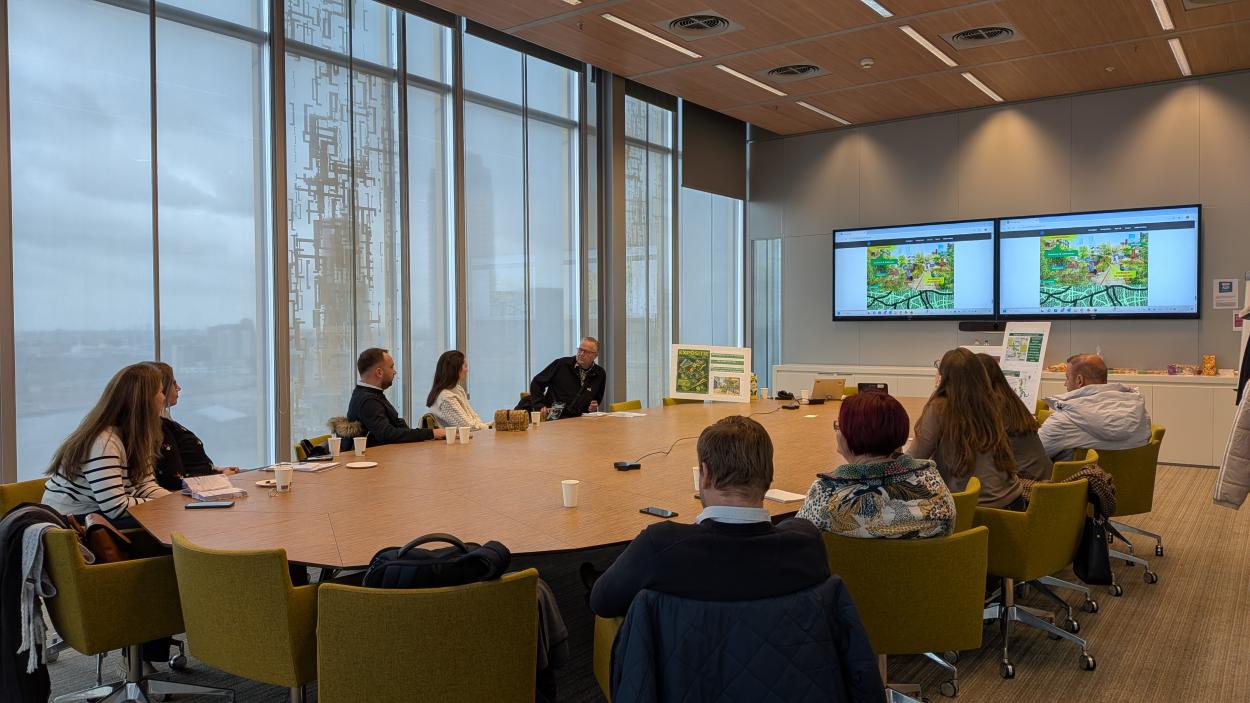
From the vantage point of the top floor Inholland University of Applied Sciences, the visit opened overlooking the emerging city beach at Rijnhaven. The first day commenced with presentations from the local municipality, Gemeente Rotterdam, outlining the city’s freshly minted tourism strategy. Te gast in Rotterdam (To host in Rotterdam) positions visitors as a means to cultivate a vibrant, locally rooted city—prioritizing quality, authenticity, and equitable distribution of tourism benefits across neighbourhoods, bolstering local businesses and community pride while safeguarding liveability. In elaborating, Michiel Visser, project manager for tourism and the visitor economy framed tourism not merely as economic growth but as a tool to enhance identity, sustainability, and collaborative hospitality long before visitors arrive - and well after they leave. Among the four main pillars of this strategy is a focus on quality over quantity, on attracting visitors who contribute positively to the city’s character and economy, rather than maximizing tourist numbers and spread and balance - distributing tourism benefits across urban neighbourhoods. In order to ensure liveability for residents, the strategy empowers local identity and authenticity - strengthening Rotterdam’s unique cultural and social fabric through sustainability and collaboration.
With a background in urban development, Jan Van der Wolde shared his community development practice with the visitors, illuminating how through civic engagement the council can embed environmental responsibility and co-create tourism strategies with residents, businesses, and stakeholders for long-term resilience. Having experience with collaborating with other functions of the local authority, Jan is well placed to share how competency-building and transnational learning are core components in cultivating urban vitality.
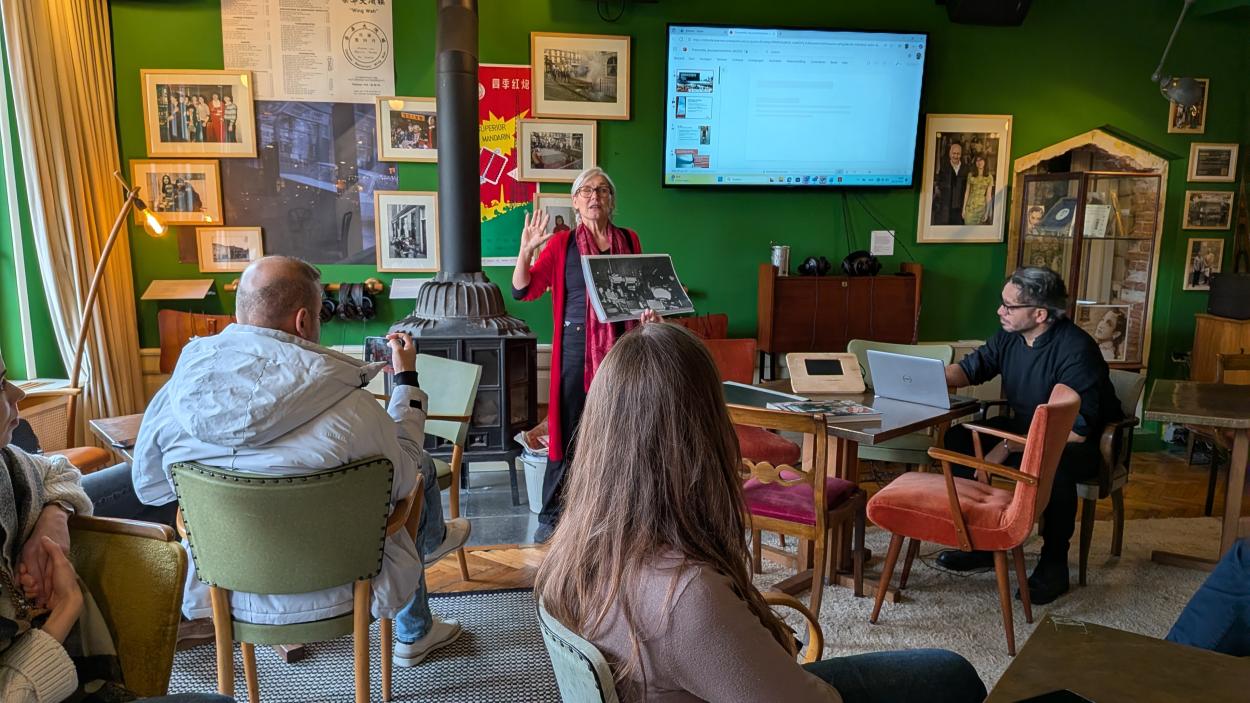
After an engaging dialogue amongst cities and presenters, the visit continued towards the development of Rijhaven, Katendrecht and the home of the world's first museum dedicated to migration (The FENIX) where warehouses and imperial port buildings now house venues and cultural institutions. At Verhalenhuis Belvédère, local guide Anja Brand welcomed us to the city’s storytelling centre that connects people, communities, and the city through art, culture, and personal stories. Its role is to make the changing city visible to a broad audience, fostering social cohesion and cultural identity. The centre promotes authentic local experiences rooted in community narratives, and strengthens cultural heritage and inclusivity, which are key to sustainable tourism. Storytelling is an important level for tourism development that encourages visitor engagement beyond consumption, creating meaningful connections and supporting local development. Echoing this view, there we met with Joël Ferdinandus from Rotterdam’s Destination Management organisation (DMO) who discussed the importance of local ownership over tourism experience. His presentation shared how in Rotterdam Partners’ vision, tourism is seen not as an end in itself but as a tool to create a liveable, inclusive city. Growth is only valuable when it benefits residents, businesses, and visitors. The strategy focuses on balance over volume, aiming to make Rotterdam better and more attractive primarily for its own people - this itself a route to attractiveness for other segments. In pursuing this goal, the DMO seeks out visitors who share Rotterdam’s mindset - curious, open, and forward-thinking. The Rotterdam City Card offers transport and discounts while giving back to local families through a social impact model. After a tasty vegan lunch - and lively discussion - the group was corralled in quickstep towards the Erasmusbrug, where we met the departing waterbus with only minutes to spare.
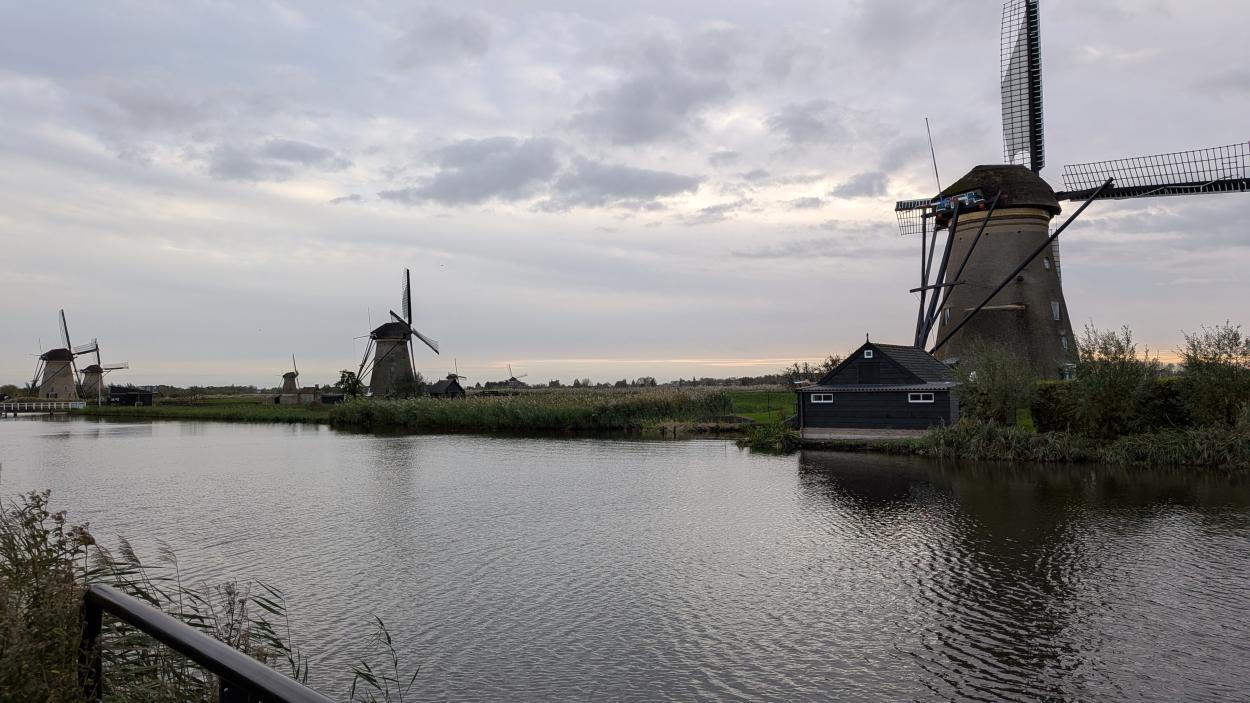
In the windmills of our mind - a tale of two rivers comes to life.
Both practitioners and scholars note that authentic storytelling has become a powerful tool for sustainable tourism development, strengthening destination appeal while supporting balanced growth and community benefit. Research in cultural‑heritage tourism shows that when storytelling is platformed in co‑creation between residents and visitors, it can enhance perceptions of local authenticity and deepen community engagement, which in turn supports stronger local ownership of tourism initiatives and policies. Kinderdijk, a UNESCO World Heritage Site that showcases the Netherlands’ historic water management system, is also a place where community power, and external messaging insect – being as it is a lviign community of millers who curate this landscape. Co‑creating storytelling, branding, and awareness with the local community at Kinderdijk is essential because residents’ participation and shared narratives strengthen authenticity and sense of belonging, which enhances engagement and the overall visitor experience.
Accompanied by Ginger Weerheim of BLOC, strategic-advisory firm specialising in sustainable urban strategies the group set sail for Kinderdijk. This is an iconic network of 19 windmills built in the 18th century to prevent flooding, it represents a globally significant example of human ingenuity in living with water, now an important post-industrial, peri-urban destination. Illustrating how Dutch engineering shaped sustainable landscapes, the site plays a key role beyond heritage, attracting visitors who learn about climate adaptation and historical resilience. Ginger has been working in collaboration on Kinderdijk's digital visitor management and urban strategy planning across stakeholder networks to implement tourism. For our Western Balkan visitors, Kinderdijk’s approach to tourism emphasises a balance between preservation, community well-being, and visitor experience, making it a model for sustainable destination management. Jeanet de Jong, who manages public relations and sustainable tourism at the UNESCO site leads this effort by forging cross-sectoral partnerships and developing visitor offerings that integrate water-based transport and group experiences - elevating the visitor journey while ensuring that tourism revenue supports conservation and local inclusion. In order to balance environmental, social, and infrastructural goals, Kinderdijk has adopted an integrated destination management approach focused on safeguarding unique heritage while promoting sustainable tourism, implementing a visitor management strategy collaboratively developed with municipalities, water boards, the province, and heritage agencies.
This is particularly important as this is a living community, with 14 out of the 19 windmills at Kinderdijk are still inhabited, maintaining the living, working traditions of the miller families. The first day concluded with a hearty meal overlooking the Erasmusbrug, were the visitors contemplated ways to activate their own city embankments through placemaking initiatives.
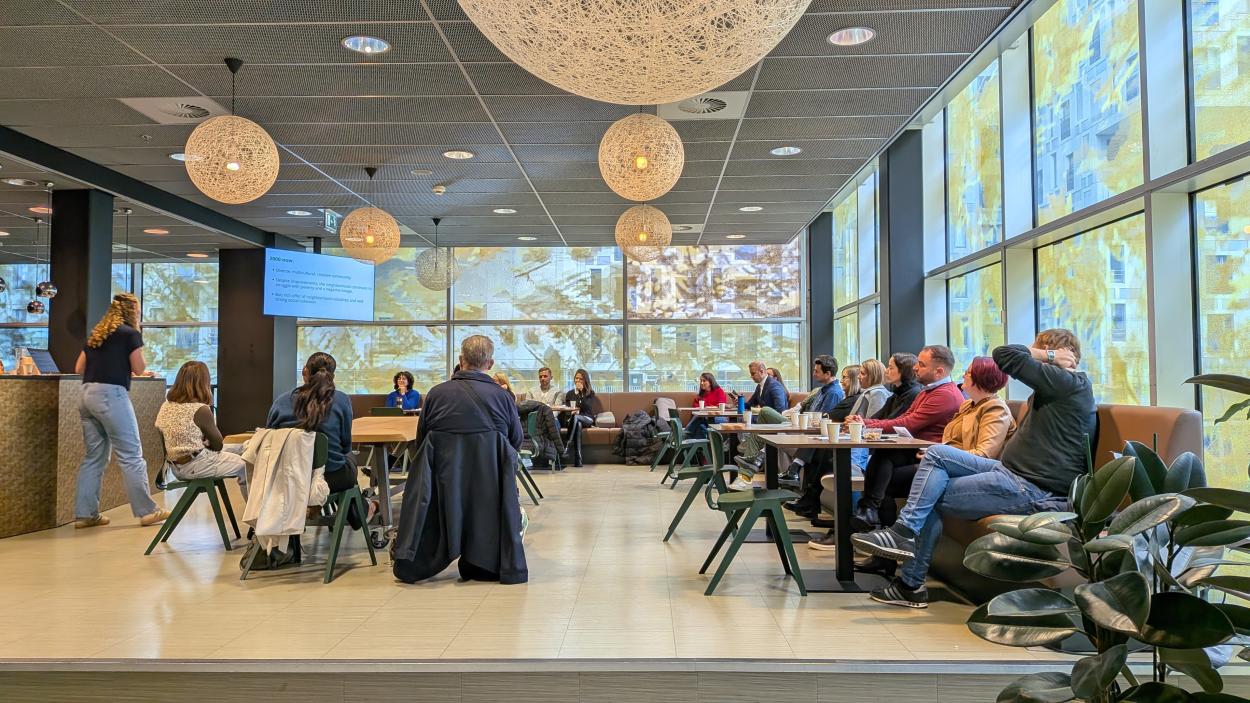
The second day saw the visitors convene back at Inholland University Applied Sciences, and hosted by members of the Urban Leisure and Tourism (ULT) Lab. Part of the university's New Urban Tourism Research group, the ULT lab introduced a novel living-lab approach that reimagines tourism as a vector for regenerative placemaking, and a force for good in society. Integrating applied education with a quintuple-helix model, the lab anchors research and innovation on-site in underrepresented areas (like Rotterdam South), generating place-based solutions that balance tourism, community well-being, and inclusive growth. For visiting cities, this approach stimulates collaboration between students, residents, businesses, and local government co-design and prototype interventions in real neighbourhood contexts, fostering social cohesion and sustainable urban development.
The importance of quality of life, and empowering local initiatives was the topic of a well-received presentation from practitioner Lotte Verheggen, who shared her experience from research in the north of the city. Verheggen’s research explores how Rotterdam’s local hood tourism strategy unfolds in the Oude Noorden neighborhood, revealing tensions between inclusive rhetoric and neoliberal urban development. Through interviews with stakeholders, the study finds fragmented governance, identity dislocation, and risks of gentrification, while highlighting grassroots resilience and proposing recommendations for community-driven, place-based tourism that genuinely benefits local residents. Her recommendations included the establishment of a neighbourhood visitor economy panel to ensure continuous, inclusive input from residents, entrepreneurs, and cultural actors in tourism planning; and the need to protect and activate affordable spaces for local businesses and cultural initiatives through partnerships with housing associations and municipal programs, safeguarding diversity and neighborhood identity.
Joined by Kristijan Radojčić, Strategic Programme Development Lead for URBACT, the case of Oude Noorden initiated a lively discussion amongst participants on adaptive reuse, gentrification and quality of life and place. The morning session concluded with co-creation and reflection, where cities shared their vision for pilot activities in their locations, with invited students and academics.
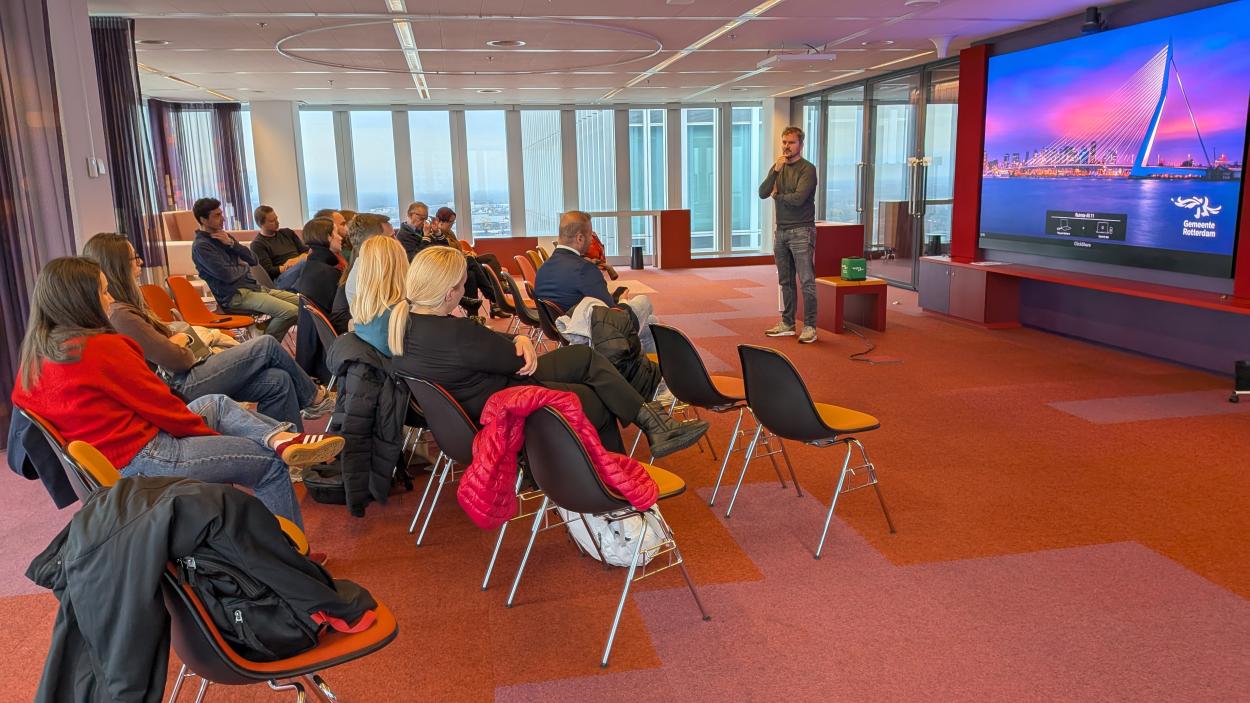
Citizens as tourism ambassadors - a birds eye view on socio-spatial transformation.
Facilitated by Jan van der Wolde, and welcomed at the top of De Rotterdam by the city’s Digital Innovation Officer Jochem Cooiman, visitors visited the local authority's iconic tower to discuss European project funding mechanisms. Here cities learned about how Rotterdam has over recent decades leveraged its participation in European projects to power social and digital innovation on programmes such as URBACT, EUI and Horizon Europe. Working at the intersection of European project research and local policy innovation, Cooiman described how Rotterdam has used EU-funded programs to pilot smart city solutions, data-driven governance, and digital tools that enhance urban sustainability and livability - all contributing to a coherent sustainable tourism offer.
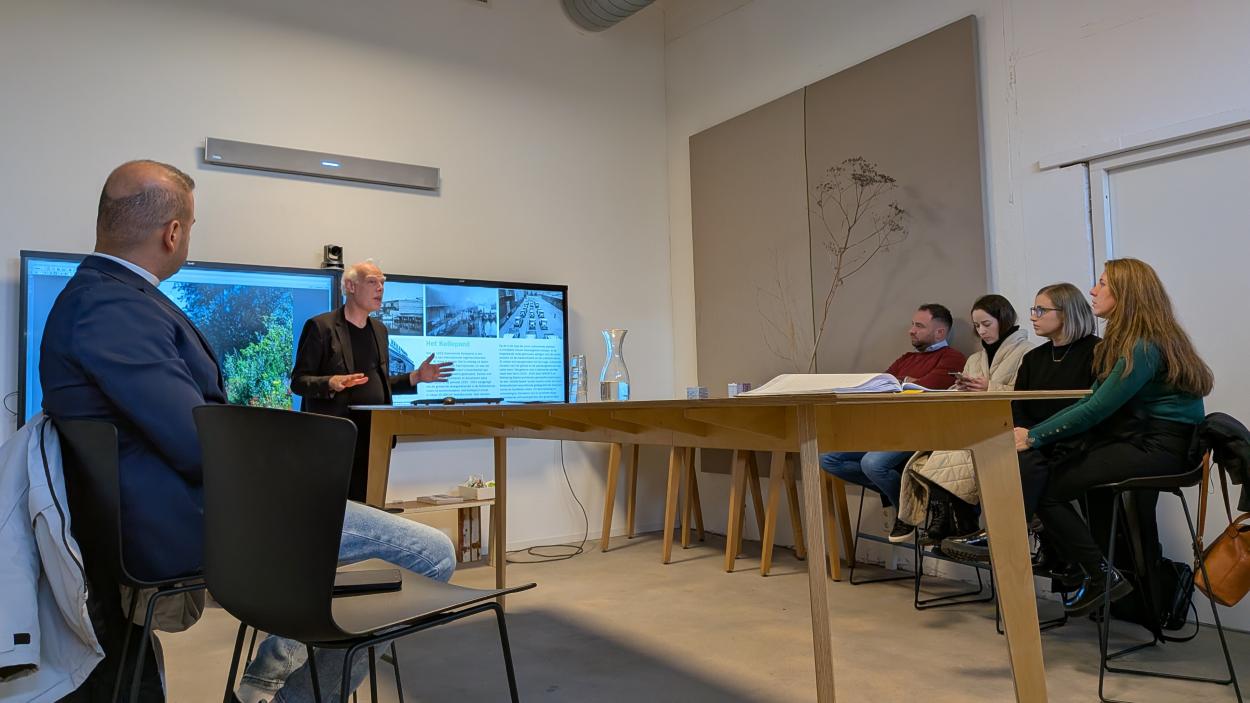
Back on ground level, the group descended to the Metro and made their way west, to the developing centre of Rotterdam's developing tourism offer. Bospolder-tussendijken and the areas around Merwe-Vierhavens (M4H) illustrate the incremental nature of tourism and spatial development, where regeneration unfolds through small-scale, adaptive reuse rather than large, top-down projects. The visit to Keilepand, hosted by Folkert van Hagen, architect and partner at GROUP A architects and KeileCollectief, showcased how low-resource strategies and creative partnerships can transform former industrial spaces into vibrant hubs of activity. By combining new functions - such as coworking spaces, community kitchens, art museums, and even nightclubs - these actors demonstrated how cultural programming and shared-use models can reinvigorate industrial infrastructure for social and economic good, aligning with principles of circularity and inclusive placemaking (Horgan and Koens, 2026; Horgan, 2019).
This engaging session included a visit to some on-site community gardens - linking to the Urban Nature theme - and discussion around the funding mechanism to support collective realisation of a cultural-heritage led renewal programme for this neighbourhood. Adjacent to Rotterdam's iconic Delftshaven, this area shines as an example of how creative industries and diverse actors can unite around sustainable tourism, cultural programming and urban development. After an activity filled two days, participants were guided through local tourism hotspots - Depot Boijmans van Beuningen, Markthal and the Cube Houses (Kubuswoningen) - before settling into a coffee-infused reflection moment in Rotterdam Blaak.
Key takeaways for the group included the role of cultural storytelling, heritage-led tourism and cooperative redevelopment, encouraging reflection on Rotterdam as a model for sustainable urban tourism - given its recent growth and post-industrial uniqueness. For Western Balkan cities, the city offers a good case with which to unpack urban tourism at a host of scales and settings. Participants valued the interactive exchange of ideas, the safe space for honest discussion that contributors created, and exposure to real-life examples, such as the lean DMO model, Rotterdam City Card, and industrial heritage reuse. The visit sparked cross-city inspiration, with participants linking Rotterdam’s lessons to their own contexts and identifying practical ideas for storytelling and youth engagement. At a European policy level, culture and cultural heritage are seen as key enablers to achieve inclusive and sustainable development. The Framework for Action on Cultural Heritage, includes three linking actions: regenerate cities and regions through cultural heritage; promote adaptive reuse of heritage buildings; and balance access to cultural heritage with sustainable cultural tourism and natural heritage.
Reflections on Rotterdam - readying the ground for pilot actions.
For the Sustainable Tourism Cluster, themes of adaptive reuse of industrial buildings, and how to cultivate new narratives around cultural heritage will be important. For some, messaging and communications might be part of their pilot actions, engaging stakeholders in storytelling and co-creation. Lilla, from Senta, Serbia was particularly inspired by the use of storytelling, and how city stakeholders work with local organisations on narrative building. “We are now going by storytelling… we had some kind of application… (we want to) upgrade this application to be more interest for young people”
Cross-city inspiration and practical ideas were considered to be the most useful, including exposure to lean DMO model we saw in Rotterdam, where strategic projects are led by a core team of two.“For me the most important information was about this DMO… developing this kind of organisation will help Lezhë to create a brand”, reflected academic-practitioner Arlinda, who is working with the city of Lezhë, Albania.
While Rotterdam is known for its modern architecture, little is know about its attempts to bring urban porosity through green initiatives that link tourism and quality of place, through micro interventions in the public realm. Similarly the tradition of reusing vacant buildings and giving them new cultural functions was well-received. “What was quite interesting for me was the urban greening… lack of it and plans for restoring it. Especially for the usage of prior industrial heritage to use it today as kind of a hub for various things”, commented Anamarija, who leads strategic development projects in Široki Brijeg, Bosnia and Herzegovina.
In conversations post-mobility, Milena Ivkovic - URBACT Pioneers Accelerator Local mentor reflected on the power of networking beyond city borders and regions, and look into the possibilities of being part of international tourism networks, and knowledge sharing ecosystems such as the living labs – recognising the need for networking and regional integration more broadly. “(Realising) the actual labs… it’s again a kind of step-by-step process…” Furthermore, “Be part of the wider tourist supply… not just you, it’s you and the next village”.
This relates to how local ownership for process is encouraged at the grass roots level, through co-creation with local stakeholders. In Senta, “We are very curious because the first city safari (URBACT Action lab output) is going with more than 20 young people… we prepared a little presentation (on Rotterdam)” , further commented Lilla.
Looking forward to next the thematic learning expedition
The next study visit will continue to stimulate creative thinking of participants, and focus on best practice in the form of deeper case studies. For cities of the scale of those in the Sustainable Tourism cluster, questions of access, attractiveness and shared mobility will be considerations in choosing an appropriate destination. Braga in northern Portugal is top of the list, shortlisted for the European Green Capital title for 2026, and awarded the Global Green City Award by the UN at COP28. The city has reforested over 1,200 hectares since 2017 and is developing major new green spaces - like the Eco Monumental Park of Sete Fontes - and holds a Platinum Sustainable Destination certification. Braga won the 2022 European Mobility Week Award after replacing 60% of its public transport fleet with electric and natural gas vehicles and expanding its pedestrian and cycling networks.
Braga serves as a lighthouse for mid-sized cities by demonstrating that high-impact sustainability does not require a megacity's resources. Initiatives like its Urban Garden Network (10 community gardens) and the School Bus project are designed for easy replication in other smaller municipalities. Important for the sustainable tourism cluster,
the city uses a bottom-up approach, involving residents and local businesses in its Local Green Deal to ensure long-term community buy-in, and leveraging EU resources to bridge the gap between ambitious planning and physical infrastructure. Through programs like NetZeroCities, Braga accesses EU expertise and funding to trial large-scale decarbonization projects, such as the electrification of its bus fleet and the development of Bus Rapid Transit (BRT) lanes. While our first study visit focused on emerging sub-topics and interests, the second is envisaged as a deep dive into developing actionable solutions. Based on the previous exploration, this visit will be focusing on small cases and the synergetic relationship between policy and action in sustainable tourism. We invite you to accompany us on this pioneering journey, exposing our small group of cities to exciting developments elsewhere in Europe.