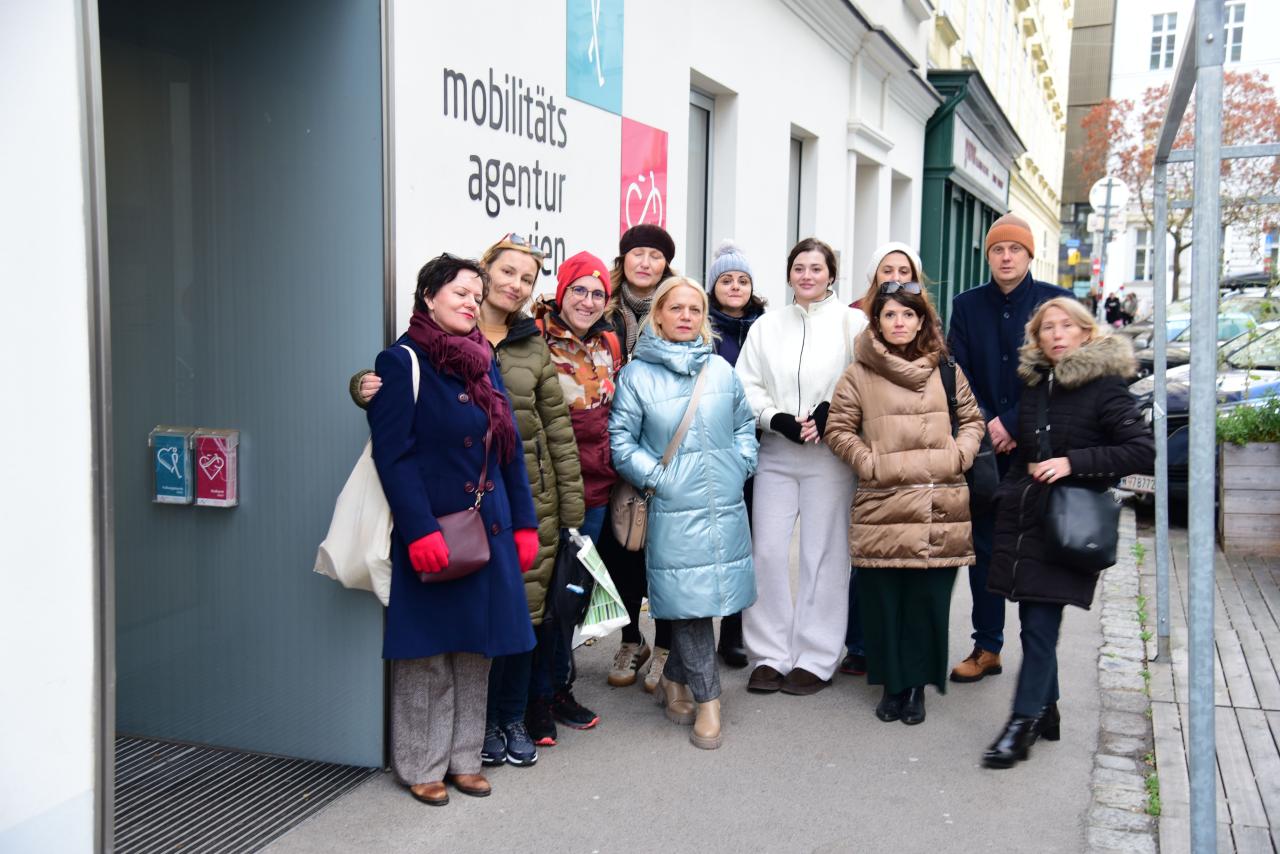
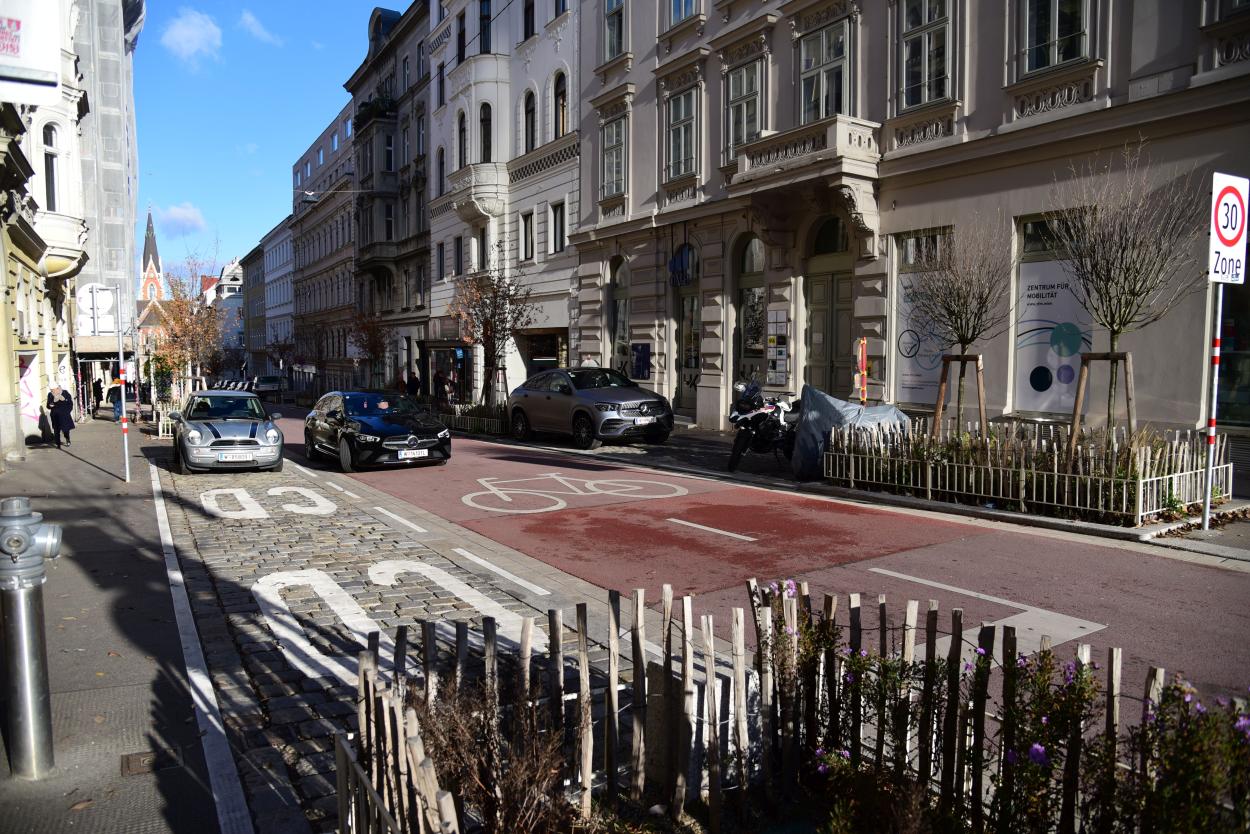
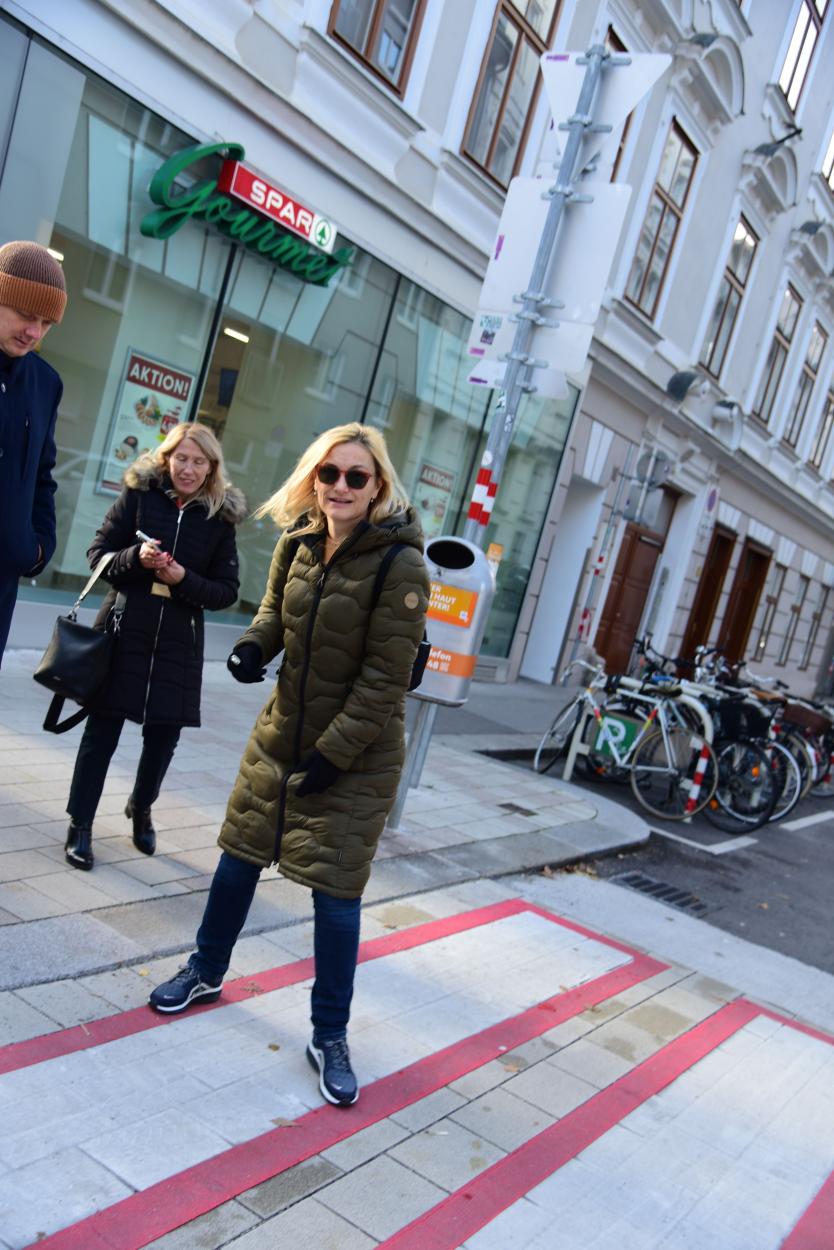
On a sunny November morning in Vienna (AT), a group of urban mobility practitioners from the Western Balkans stood with open eyes at a pedestrian crossing: innovative traffic signs, brand new cyclist highway, efficient traffic calming and school street, also a city-wide parking policy and 30 km/h-s zone among many other mobility innovations for the first look. For the cities taking part in the Urban Mobility Cluster of the URBACT Pioneers Accelerator, this moment captured the essence of their thematic dimension of the learning journey: understanding mobility not through theory alone, but through streets, movement, and lived experience.
The Mobility Cluster brings together six small and medium-sized Western Balkan cities: Tivat (ME), Himara (AL), Aranđelovac (RS), Sremska Mitrovica (RS), Subotica (RS), and Tuzla (BA). All face similar structural legacy stories and active challenges: growing car ownership and dependence, under-performing public transport (if any), often perceived as a basic social service, acute parking pressure, and fragmented walking and cycling networks. The first study visit of the Cluster, hosted in Vienna (AT) and the Zlín region (CZ) in November 2025, was deliberately designed as a focused mobility field exercise. It explored processes, trade-offs, and everyday practices, making abstract concepts into tangible reference points, helped by the Thematic Expert András Ekés, The core ambition shared by the participating cities is to leverage peer learning to move from a “car-first” paradigm to one where sustainable mobility is both visible and trusted.
The Thematic Scope of the Cluster
The thematic scope of the Urban Mobility Cluster was defined through a preliminary State-of-the-Art and SWOT analysis of the participating cities. This analysis revealed remarkably similar mobility patterns dominated by "car-first" travel habits, often reinforced by the limited reliability of public transport and missing multimodal systems.
The key cross-cutting challenges identified by the Cluster include:
- Car-first travel patterns and limited service level and reliability of public transport
- Seasonal/Peak Overloads: Seasonal demand severely overloads coastal cities like Tivat and Himara, while inland cities such as Sremska Mitrovica, Subotica, and Tuzla suffer from acute peak-hour bottlenecks. Aranđelovac faces unique topography constraints.
- Gaps in active mobility networks: There are fragmentation issues in continuous, protected cycling and walking networks, alongside accessibility shortfalls for people with disabilities.
- Parking chaos: Illegal parking and poor enforcement, under-regulated city logistics undermine mobility conditions and reliability.
- Fragmented governance: Multi-level road ownership and operation frequently cause internal conflicts in the system.
From these challenges, the Cluster defined common thematic needs that guide their learning journey:
- Make public transport usable and visible: This involves clarifying services and networks based on strong and committed KPIs (Key Performance Indicators) under performance-based public service contracts.
- Reclaim space and manage demand: Key tools include zonal parking (adjusting pricing by zone/time; introducing resident permits), developing P+R (Park-and-Ride) facilities at gateways, and implementing targeted pedestrianisation or one-way traffic schemes in city cores.
- Build a safe active-mobility system: This focuses on delivering quick-win protected bike-related solutions (lines, paths, curbs, crossings, bike racks) and traffic calming, alongside accessible sidewalks and crossings that connect crucial nodes (schools, stations, centres, and waterfronts where relevant).
- Governance & Data: Public and private mobility stakeholders must cooperate and share data to implement SUMP (Sustainable Urban Mobility Plan)-compatible solutions and align with EU frameworks/funding.
- Seasonal operational solutions: Specifically, cooperation between the tourism and mobility sectors in cities is needed to make car-free solutions attractive by offering real alternatives.
The First Study Visit in Vienna (AT) and Zlín (CZ): Learning by experiencing
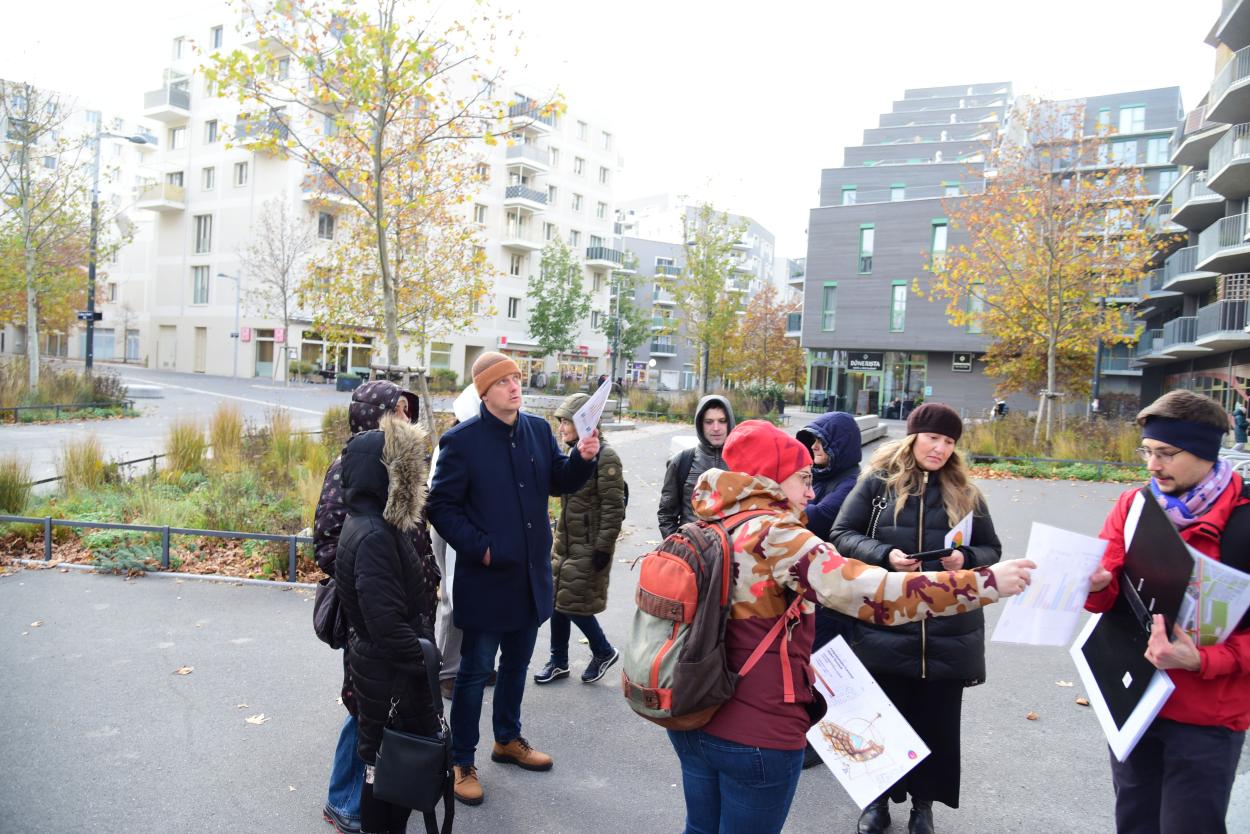
The study visit taking place 18–20 November 2025 was designed for visual and experiential learning, inside and outside, ensuring that participants used public transport and observed real-world outcomes. This approach transformed abstract concepts into tangible reference points from Austria and Czech Republic.
Key locations, institutions and companies explored:
- Argentinierstraße, the cycling highway (Vienna): This site demonstrated Vienna’s first bicycle highway, implemented using Dutch and Danish design approaches, where public space and road layouts were redesigned to give absolute priority to cyclists. The focus was on how safety and priority can be conveyed through visual solutions and space reallocation, using awareness raising and involvement of many mobility user groups.
- Mobilitätsagentur Wien (Vienna Mobility Agency): The Agency revealed the governance structures beyond the street-level outcomes, showcasing methods for participatory planning, consulting with the public, and involving stakeholder groups (like NGOs) to create successful and widely supported projects. The Western Balkan cities found this process knowledge particularly useful, as practical engagement is less common in their regions, and a step-by-step approach is the main outcome.
- Wiener Linien: Vienna’s main public transport operator shared insights on service modernisation, including live experiments like the local DRT project, Hüpfer and demonstrated how they use data analysis and automated counting to conduct service and usage analysis. The professional level of public transport operation convinced the participants despite the gaps between Vienna and the participant cities.
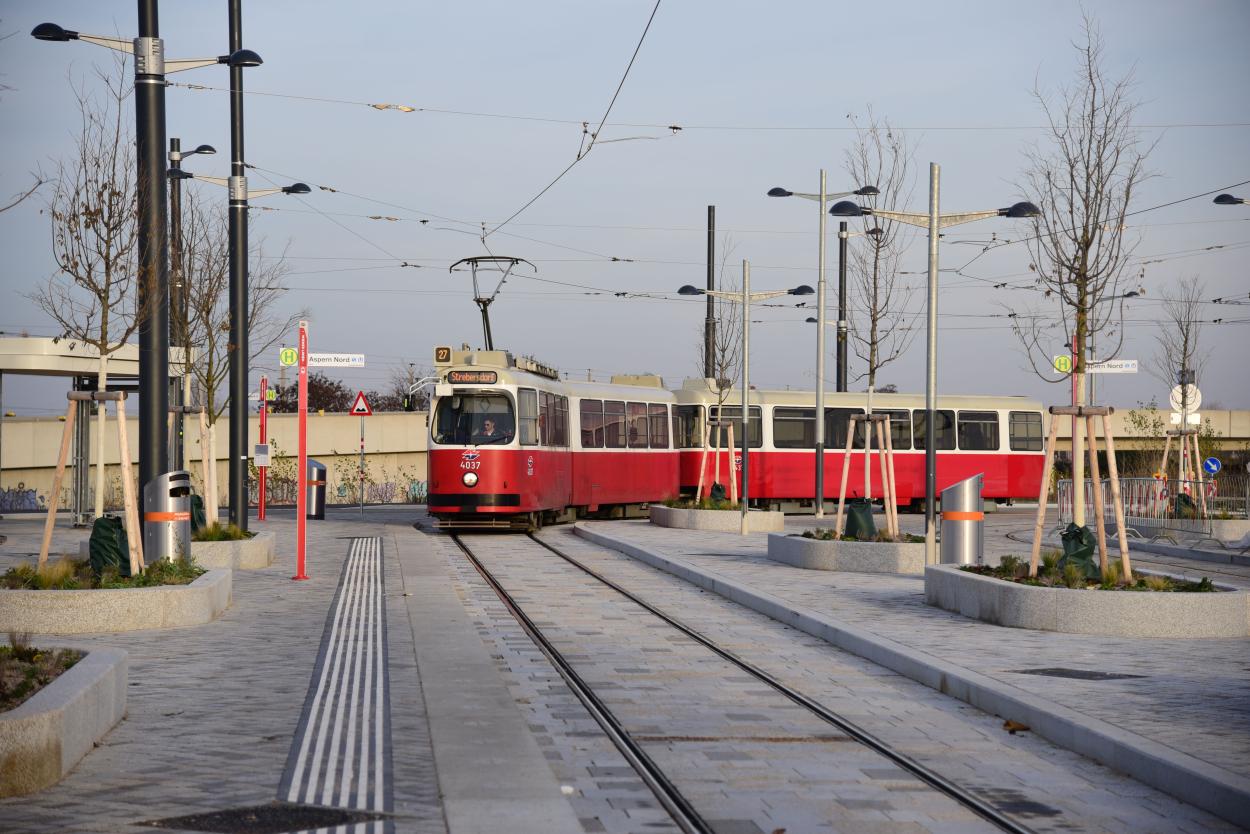
- NÖVOG – St. Pölten: This visit highlighted intermodality and integration at a key regional railway hub. The group examined how local and regional bus services connect seamlessly to rail, how P+R facilities and bicycle storage are integrated, and the use of flat-rate ticketing solutions like the Klimaticket and cheap student passes.
- Aspern Mobilab: Great practical opportunity to understand how do urban and mobility planning meet at every layer of a big-city development in Seestadt (Vienna). Awareness raising, participatory planning with the urban and mobility stakeholder groups showed a systematic cooperation with impressive results.
- NextBike provided the on-site experience: different implementation and business models with different mobility and social aspects, getting closer this sharing opportunity to the Western Balkan cities.
- Zlín Region (KOVED and Uherské Hradiště): The Zlín region was valuable because its transport organization and small-town context are "much closer" to that of the Western Balkan cities than Vienna’s. The regional transport organization, KOVED, explained its model of integrated mobility planning, showcased new IT solutions such as t mobile ticketing app, and demonstrated how political commitment led to attractive public transport renewal and new branding (Poulička) in Uherské Hradiště.
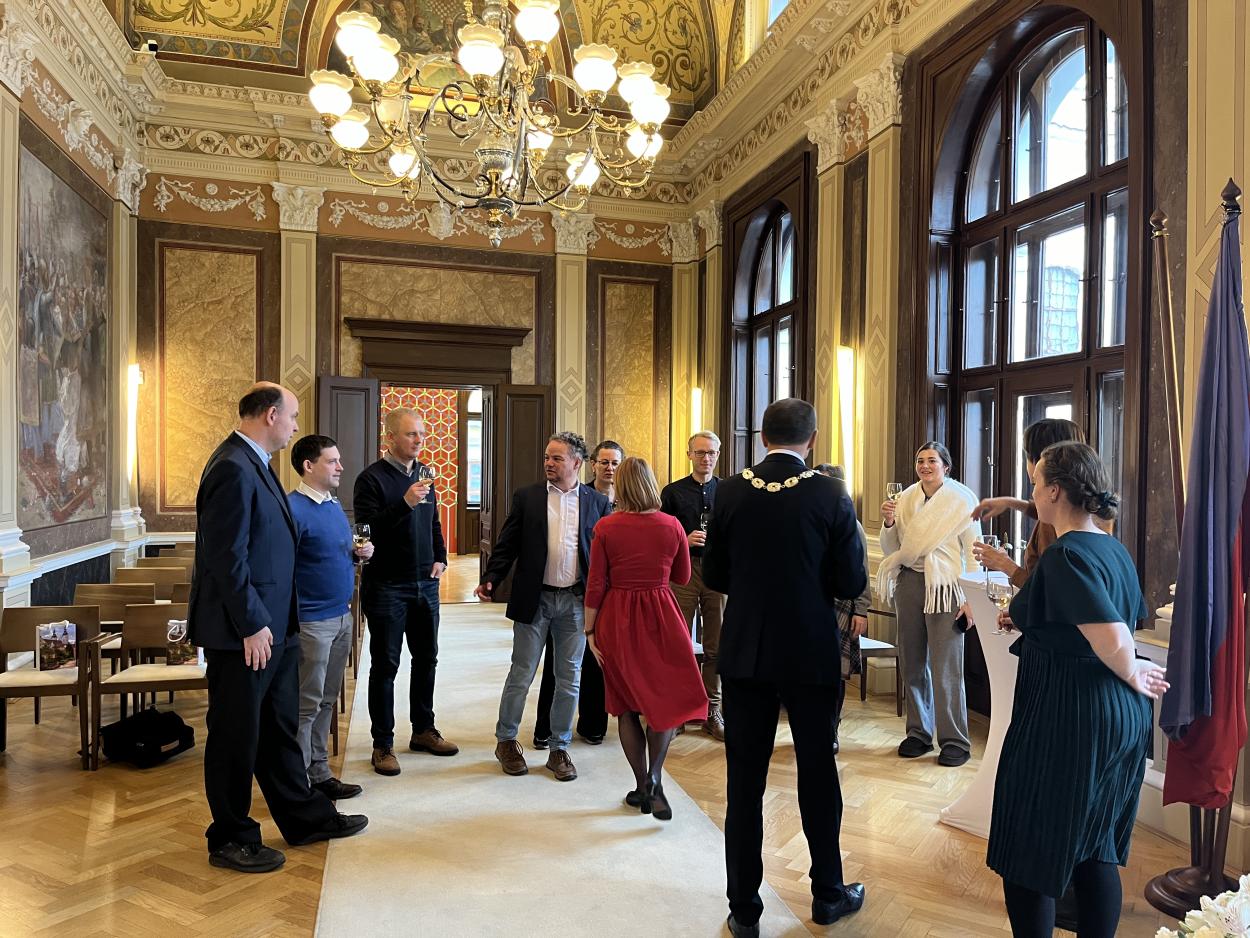
The core lessons reinforced across the entire Cluster were that visibility matters—people use what they can see, understand, and trust—and that public spaces, streets and mobility related actions are the most powerful communication tool for mobility and transport policy. Furthermore, the study reinforced that even simple data gathering builds credibility and supports difficult political decisions – in case of openness.
What is Coming Next: The Journey Towards Tailor-Made Solutions
The Vienna–Zlín study visit provided a foundational step, shifting the Cluster's knowledge from general awareness to practical and common inspiration and shared experiences. The synthesis of the lessons learned emphasizes that integrated urban and mobility development requires continuity and alignment from professional, administrative and political points-of-views.
The next strategic direction for the Cluster is to move from peer learning abroad to tailor-made local implementation.
Success in delivering visible pilot projects will enable the cities to achieve meaningful modal shifts and position them as key reference points for sustainable urban mobility in the Western Balkans. The journey towards better solutions will continue in March 2026, by visiting Szeged and Budapest (in Hungary). A customised programme will help common and personal experiences, in between the findings in Vienna and the local circumstances in Wester Balkans.