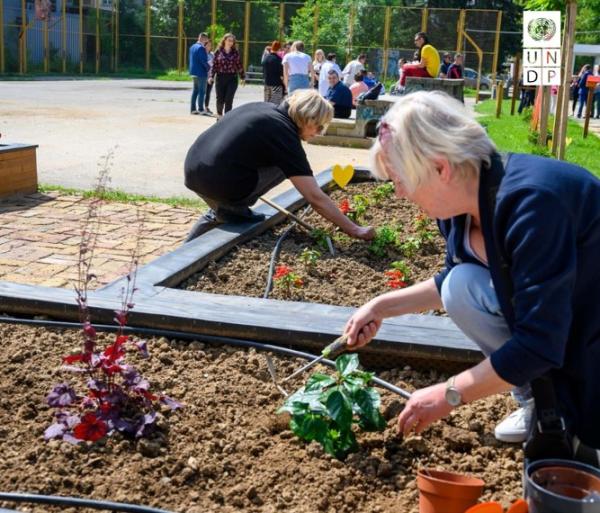
Imagine a city space where you can take a break from the busy urban life among the blossoming meadows and bees. What if you could share the shade from trees with bird nests and other local species?
This might seem idyllic, given that cities today deal with growing sprawl, the heat island effect, flooding, and other climate extremes. Reconnecting with nature is not an option anymore; it is necessary to improve the situation and benefit us all. This is what Nature-based Solutions are all about.
This article showcases the URBACT Action Planning Networks BiodiverCity, GreenPlace, Re-Gen. Between 2023 and 2025, city partners in each network developed Integrated Action Plans that put Nature-based Solutions front and centre. Learn more from their journey, with inspiring case studies and practical resources for protecting and enhancing biodiversity, regenerating urban places and implementing new leisure and recreation areas.
What are Nature-based Solutions, exactly?
You might have a sense of what Nature-based Solutions are; ‘nature’ and ‘solutions’ are in the name itself. According to the International Union for Conservation of Nature, Nature-based Solutions are “actions to protect, sustainably manage, and restore natural and modified ecosystems that address societal challenges effectively and adaptively, simultaneously benefiting people and nature.”
We know that because of rising temperatures and climate change cities experience more flooding, heatwaves, air and soil pollution and more health-related issues. Nature-based Solutions can help cities mitigate different climate risks. Take floods for example, cities could de-seal their streets, dig wadis (constructed dry riverbeds), or increase greenery, transitioning towards a sponge city. By planting more trees, they could increase available shadows and natural misting while cooling concrete-based urban spaces: and we could all enjoy some freshness. By giving new purposes to old infrastructure, they could limit their expansion and mineralisation while at the same time providing space for arts and culture, entrepreneurship or accommodation. The best part of it all is that, not only would we benefit from the solution itself, but jobs would be created, as we would need renewed skills and competences embedded in new ways of thinking, of making the city.
Let’s see what three URBACT network cities can share with us about their experiences…
Protecting biodiversity in an urban-agricultural context
The rapid urbanisation in Guimarães (PT) drove a striking loss of urban biodiversity. The knock-on effects on key ecosystem services such as pollination and the lack of small wet habitats are local examples that 81% of EU protected habitats and 63% of EU protected species are in ‘poor’ or ‘bad’ conservation status. And the prospects for improvement are alarming.
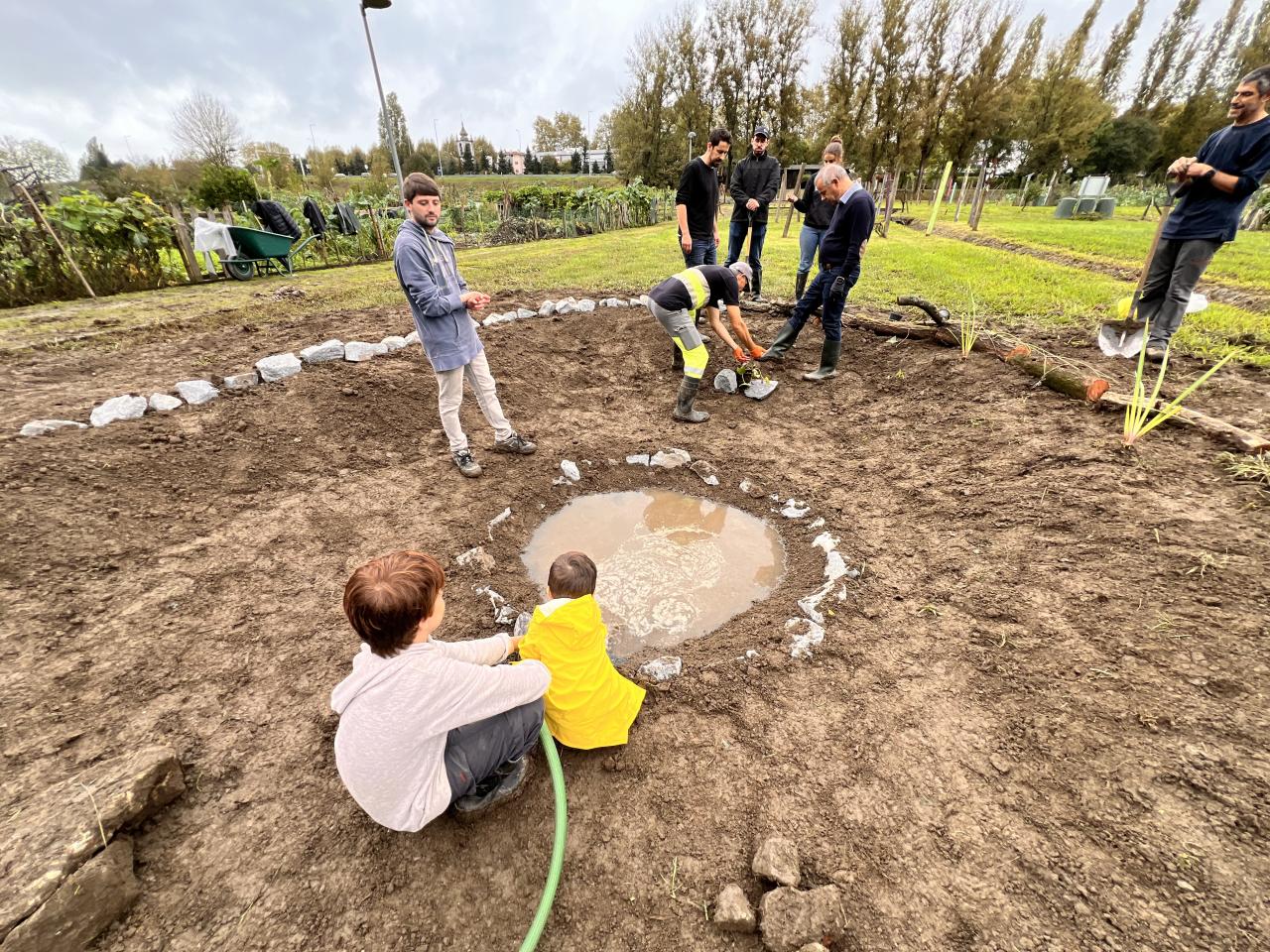
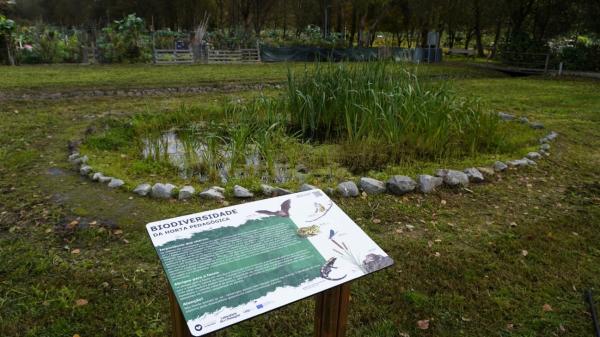
As part of BiodiverCity, Guimarães was one of 10 partner cities exploring community-based approaches. The Portuguese city tested a Nature-based Solution to strengthen ecological connectivity as part of its Blue infrastructure approach: it experimented a wildlife pond.
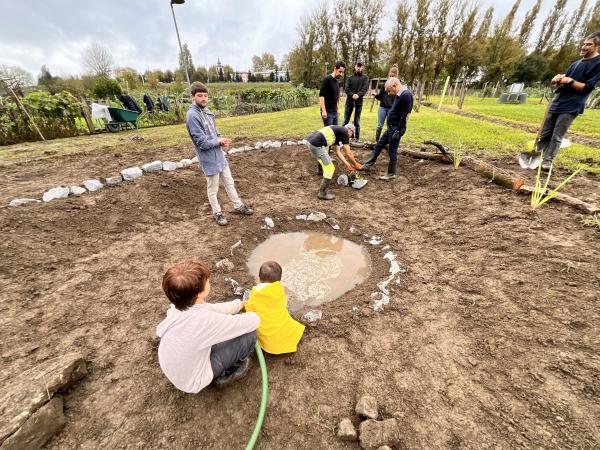
After completing a baseline ecological survey, together with the community, the city installed nest boxes for birds and bats and created micro-habitats. As a result, the pond acted as a living demonstrator, showing the way targeted micro-interventions can support broader ecological restoration and connectivity goals. As a plus, having been involved since the beginning, the community felt they owned it and became dedicated to taking care of it.
For cities ready to transform their relationship with nature, BiodiverCity has produced an Urban Biodiversity Guidebook.
BiodiverCity included the cities of Dunaújváros (HU) (lead partner), Vratsa (BG), Veszprém (HU), Laboratório da Paisagem (PT), Cieza (ES), Siena (IT), Limerick (IE), Den Bosch (NL), Sarajevo (BiH).
Designing urban regeneration with citizens
Nature-based Solutions do more than increase biodiversity: they can also transform neglected spaces into places people actively use, as experienced in Limerick (IE), one of 10 partner cities involved in GreenPlace.
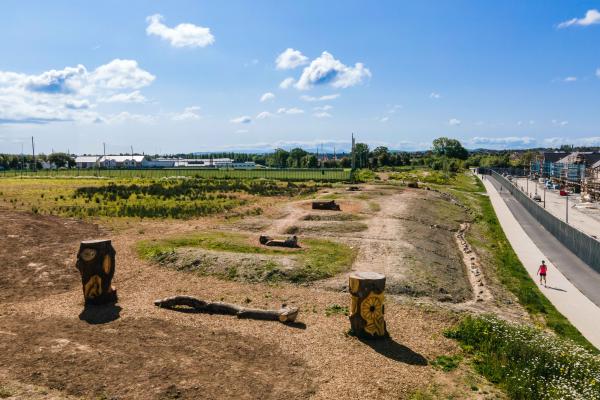
A new residential area was about to be built on the outskirt of the city on a wet land, with difficult drainage. The area was also lacking recreational facilities. At the same time, the site was adjacent to an abandoned brownfield: it seemed the perfect place to test new solutions to improve the quality of life of residents by providing adequate infrastructure.
From the outset, the community was involved together with specialists. Through various activities such as nature workshops, tree planting, or bioblitz, they co-created the design and solutions for the site, including Sustainable Drainage Systems features such as rain gardens and swales, seating, sculptures, play elements made from fallen trees, planting of native woodland and hedges. By modelling the existing ground, new play opportunities also arose.
Through this experience, residents realised that playgrounds could be altogether a safe space, low on carbon, reconnect them to nature, and create social interaction. The techniques and materials used also became a blueprint for the development of open spaces at little cost, linking them to climate actions and biodiversity. That also informed the city’s play policy. To follow up on such activities, for the first-time, the Central Government allocated €100 000 fund for natural play projects in 2026 for both Limerick City & County Council, as well as Clare County Council.
The GreenPlace network has compiled an overview of inspiring practices for other cities that want to restore ‘forgotten’ urban areas and green degraded urban spaces. A series of Testing Action Learning Cards are also available, providing insights and lessons learnt from the partner cities carrying out such activities.
GreenPlace included the cities of Wrocław (PL) (lead partner), Nitra (SL), Vila Nova de Poiares (PT), Boulogne sur mer Développment Côte d’Opale (FR), Löbau (DE), Bucharest (RO), Onda (ES), Qarto d’Altino (IT), Limerick (IE).
With the Re-Gen network, nine partner cities could experiment with new forms of public services which can benefit all ages: they could be the core of the design of leisure and recreation areas.
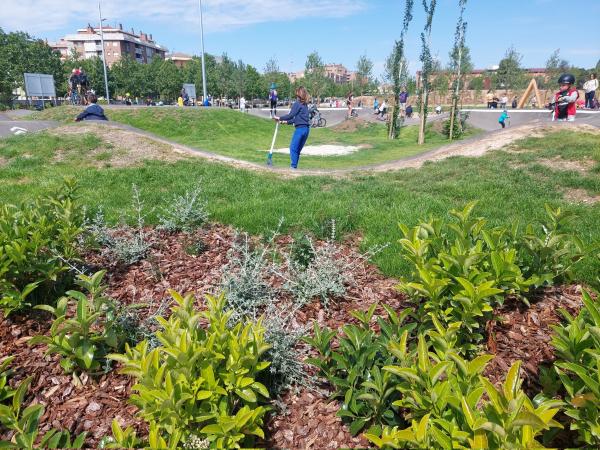
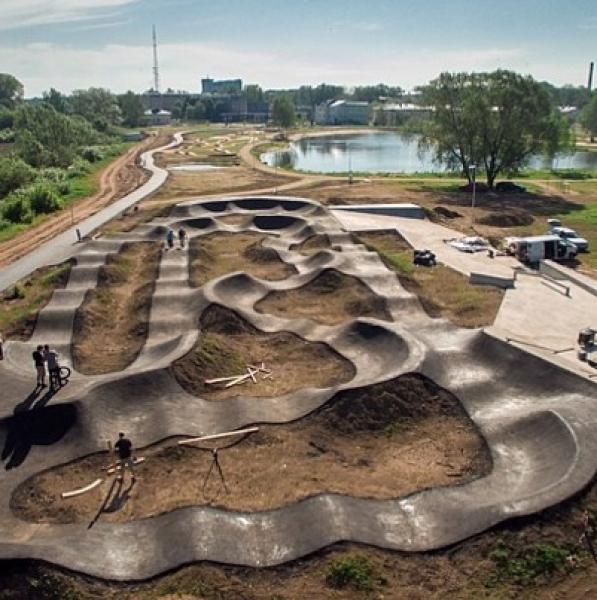
As part of Re-Gen, Daugavpils (LV) embarked on the journey of using sports as a driver for sustainable, inclusive, green cities. The Esplanade park was a natural, chaotic wetland area, without clear structure or purpose. The city decided to make the park a multi-functional sports space integrating green infrastructure and Nature-based Solutions.
On the one hand, the city launched a programme of nature restoration including the removal of invading shoots of trees and shrubs, thinning shrub vegetation, creating a system of open water areas and ponds. On the other, it developed recreational activities over four hectares with a bathing lake, wooden bike park, skatepark, outdoor gym, running and walking trails, cycling track, skatepark, skills parks and children’s areas.
The park became a vibrant, safe and inclusive destination for all ages, while improving the quality of the habitats of the local protected species: the open water areas and the coastline became quickly inhabited by plant and animal species that were previously absent from the area. Human disturbance was limited by the mosaic location of maintained trees and shrubs along the edge of the site.
Watch the Re-Gen final video and get inspired to take back public spaces.
Re-Gen included the cities of Verona (IT) (lead partner), Business Innovation Centre Albacete (ES), Daugavpils (LV), Dobrich (BG), Kapodistriaki Development S.A. (GR), Lezha (AL), Milan (IT), Pula (HR), Vila Do Conde (PT).
Letting nature in cities
Based on the cities involved in these three networks, here are some key takeaways:
• Nature-based Solutions can be and should be integrated in all urban solutions, be they urban planning, renewal, design of new (recreation) areas. They should be part of the methodology. This requires a change in the municipality mindset: not easy, but necessary.
• Working together yields the best results: Cities have much to learn from each other. Previous experiences will explain what has worked well or not so well, both on the technical, environmental and social part. Leanings and exchanges captured in the networks’ deliverables are the best demonstrator of this.
• Adapting to local realities requires strong local involvement. Cites need to work with local communities to find locally adapted solutions: they will know what works best for themselves – humans, as well as for nature – non-humans.
Where nature lovers can go to learn more
What happens when nature is integrated into city development, spaces and community activities? We get better cities – cities that are more liveable, more prepared for the ongoing climate change, with more opportunities to work, travel or rest.
What can other cities do already to jump on the Nature-based Solutions bandwagon? Visit the BiodiverCity, GreenPlace, and Re-Gen Network pages for practical guidance, tools and inspiration for cities looking to embed Nature-based Solutions into their own policies and practices. In particular, make use of the Urban Biodiversity Guidebook for cities to transform their relationship with nature and GreenPlace’s Inspiring practices on Nature-based Solutions and Green Infrastructure.
The above-mentioned examples can also be found on the newly created URBACT Knowledge Hub on Nature-based Solutions, a platform that brings together case studies from the URBACT networks and from URBACT Good Practices. You will find practical examples on how cities planed and integrated green spaces. Anything that you ask yourself, chances are you will find it there!
More resources are also currently being developed by the Urban Agenda Partnership on Greening cities. Check out in particular the Methodology for quantifying the demand for green infrastructure at local level, the Indicator system for Urban Nature Plans and the resources on innovative funding by urban authorities to green cities.
Get inspired by more local actions from URBACT cities! Stay tuned for more thematic articles from the 30 URBACT Action Planning Networks (2023-2025) for climate action, youth, health and well-being, and much more.