Networks and cities' news

Catch up on the latest updates from cities working together in URBACT Networks. The articles and news that are showcased below are published directly by URBACT’s beneficiaries and do not necessarily reflect the programme’s position.

Want to learn more about the projects that are featured here? Discover the URBACT Networks.


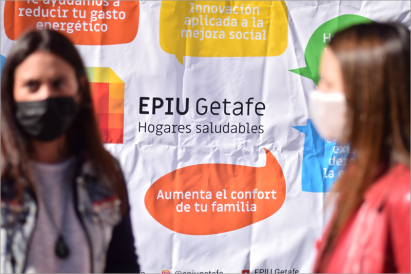
  • EPIU GETAFE Hogares saludables

    From Getafe to Europe: a roadmap for tackling hidden energy poverty

    What can other European cities learn from Getafe’s award-winning fight against energy poverty? According to the EmPowerIngUs Transferability Study, the Spanish city’s Energy Poverty Intelligence Unit (EPIU) offers far more than a local success story. It provides a practical and adaptable framework that can help municipalities identify vulnerable households, improve living conditions and modernise public services.

    One of the most transferable elements is the shift from a reactive to a preventive approach. Instead of waiting for citizens to request assistance, Getafe developed mechanisms to identify “hidden energy poverty” – households struggling to maintain adequate comfort at home but often absent from official statistics. This proactive model allows cities to intervene earlier and more effectively.

    Another key lesson is the creation of a dedicated one-stop-shop service, the Healthy Homes Office. Acting as a trusted interface between citizens and local authorities, the office combines technical advice, social support and personalised guidance. The study highlights that this human-centred service became the cornerstone of the entire system, helping to build trust and reach vulnerable groups that traditional public services often fail to engage.

    The Getafe experience also demonstrates the value of cross-departmental collaboration. Housing, social services, energy experts, universities and community organisations worked together to address a complex challenge that no single department could solve alone. This integrated governance model is considered highly replicable across different administrative contexts.

    Equally important is the use of data-driven decision-making. Although the project learned that artificial intelligence alone is not a “magic solution”, it successfully combined data analysis with direct community engagement, creating practical citizen profiles and tailored interventions.

    Finally, the study stresses that transferability does not depend on copying every action. Cities can adopt individual modules—from awareness campaigns and data collection systems to renovation support schemes and neighbourhood interventions—while adapting them to local realities.

    For cities seeking inclusive climate action, Getafe’s message is clear: tackling energy poverty requires data, cooperation and technology, but above all, trusted relationships with people.
     

    Chiara.Lucchini

    See more
  • From etterbeek to getafe and back

    The EmPowerIngUs deep dive meeting in Getafe: certainties fade away and innovative ideas flourish

    Written by Benjamin Sornin de Leysat


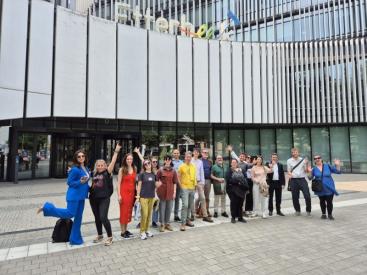
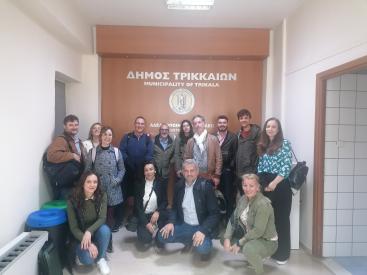
    On November 5, 2024, we set off for Getafe (Spain), the pilot city for the European URBACT EmPoweringUs Transfer Network project. Our delegation consists of the head of the Etterbeek social housing agency, an architect from ‘la régie foncière’ and the energy advisor from the Public Social Welfare Center. We don't yet know what adventure we are embarking on, but we are delighted to meet representatives from the other delegations from the participating cities of Trikala (Greece), Pomorie (Bulgaria), and Maia (Portugal). 


    Chiara.Lucchini

    See more
  • getafe deep dive cover

    Harnessing Innovation in Getafe: A Strategic Deep Dive into the Future of Urban Energy

    Written by Vanya Vandova


    As the Leading Partner of the EmPowerIngUs network under the URBACT IV Programme, the Municipality of Getafe (EMSV) has established itself as a pioneer in tackling modern urban challenges. By spearheading this international collaboration, Getafe provides the strategic framework and proven expertise necessary to guide partner cities toward sustainable energy solutions. A primary objective of the network is to identify "hidden" energy poverty that standard statistics might miss, allowing for more targeted local administration measures. The city’s proactive leadership was recently on full display during a high-intensity "Deep Dive" into urban resilience held from November 5th to 8th, 2024. During this Transnational meeting, a delegation from Pomorie Municipality, led by the Mayor Ivan Aleksiev, joined partners from Portugal, Belgium, and Greece to transition from theoretical discussions to concrete, data-driven social planning.


    Chiara.Lucchini

    See more
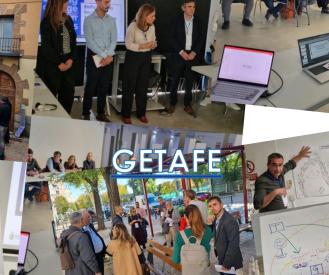
  • Composition image: bird´s view of Getafe´s urban centre and the Healthy Homes Office

    Energy Poverty Intelligence Unit: an innovative energy poverty reduction solution designed and implemented in the city of Getafe

    In 2018, it was estimated that around 15% of Getafe’s households – approximately 30,000 residents – could not keep their homes warm in winter. Additionally, rising climate change impacts and increasingly frequent heatwaves made summer conditions more extreme. Yet, fewer than 1,000 residents (234 households) in Getafe sought assistance – revealing a significant gap between those in need and those receiving help.


    “This was a clear sign we have to act,” says Fernando González Ferreira, one of the key developers of the Energy Poverty Intelligence Unit. “But the more we searched for the solution, the more we realized that there was none suitable for our situation. So, we knew we had to get innovative and do it ourselves in close collaboration with our community.”


    And they did it! Since 2022, when it became operational, the Energy Poverty Intelligence Unit assisted over 2,750 households (more than 6,850 citizens) and, on average, reduced their energy bills by 20%, improved the internal coordination between municipal services, and established fruitful cooperation with a diverse array of external partners like universities, NGO’s, consultancies, etc.

    Klemen Strmsnik

    See more