What's new

Check URBACT's latest stories, updates and events!


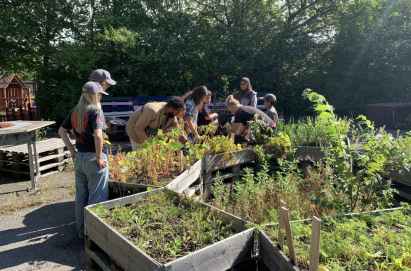
  • ReDAN Network in Ormož Basins Nature Reserve

    ReDAN partners meet in Ormož to explore how degraded areas can become places for nature and people

    What can happen when a degraded industrial area is no longer seen only as a problem, but as an opportunity? This question guided the kick-off meeting of the URBACT IV Transfer Network ReDAN – Reviving Degraded Areas for Nature and People, held in Ormož, Slovenia, from 4 to 7 May 2026.

    The meeting was hosted by the Research and Development Centre RRC Ormož (Slovenia), Lead Partner of the network, and brought together partners from the Municipality of Alcanena (Portugal), Limerick City and County Council (Ireland), the Municipality of Srebrenica (Bosnia and Herzegovina), the Municipality of Bogovinje (North Macedonia), the Municipality of Priboj (Serbia), and the Municipality of Yaremche (Ukraine).

    Although the partners come from very different local contexts, they all share a similar challenge: how to give new life to degraded, abandoned or underused areas in a way that benefits both nature and local communities.

    Nina Prelog

    See more
  • YOUth SPACE LINK across Europe

    At the beginning of March, project coordinators from the Social Participation Office of the City of Lublin carried out visits to three partner cities of the URBACT Transfer Network YOUth SPACE LINK: Plasencia (Spain), Torres Vedras (Portugal) and Sofia (Bulgaria). The visits provided an opportunity to explore local youth-focused initiatives and exchange experiences on the development and management of youth spaces. The network’s Lead Expert also took part in the visits.

    Volodymyr Vityk

    See more
  • YOUth SPACE LINK in Alba Iulia!

    On 17–18 February, representatives of the URBACT Transfer Network YOUth SPACE LINK, including coordinators from Lublin and the network expert, visited Alba Iulia, one of the network partner cities.

    Volodymyr Vityk

    See more
  • Event

    Online info session: Call for URBACT Accelerator for Ukraine and Moldova

    From November 2026 to May 2028, this new bespoke learning programme for Ukrainian and Moldovan cities aims to strengthen their capacities on urban reconstruction, revitalisation, resilience and crisis management. Activities include knowledge-sharing events, design and funding of small-scale urban actions in Ukraine and Moldova.


    This call is looking for:

    URBACT
    Online
  • The future-of-work transition starts locally

    Network article by Petra Grgasović, Lead Expert of Network4Work.


    Zoltán Szenes

    See more
  • EPIU GETAFE Hogares saludables

    From Getafe to Europe: a roadmap for tackling hidden energy poverty

    What can other European cities learn from Getafe’s award-winning fight against energy poverty? According to the EmPowerIngUs Transferability Study, the Spanish city’s Energy Poverty Intelligence Unit (EPIU) offers far more than a local success story. It provides a practical and adaptable framework that can help municipalities identify vulnerable households, improve living conditions and modernise public services.

    One of the most transferable elements is the shift from a reactive to a preventive approach. Instead of waiting for citizens to request assistance, Getafe developed mechanisms to identify “hidden energy poverty” – households struggling to maintain adequate comfort at home but often absent from official statistics. This proactive model allows cities to intervene earlier and more effectively.

    Another key lesson is the creation of a dedicated one-stop-shop service, the Healthy Homes Office. Acting as a trusted interface between citizens and local authorities, the office combines technical advice, social support and personalised guidance. The study highlights that this human-centred service became the cornerstone of the entire system, helping to build trust and reach vulnerable groups that traditional public services often fail to engage.

    The Getafe experience also demonstrates the value of cross-departmental collaboration. Housing, social services, energy experts, universities and community organisations worked together to address a complex challenge that no single department could solve alone. This integrated governance model is considered highly replicable across different administrative contexts.

    Equally important is the use of data-driven decision-making. Although the project learned that artificial intelligence alone is not a “magic solution”, it successfully combined data analysis with direct community engagement, creating practical citizen profiles and tailored interventions.

    Finally, the study stresses that transferability does not depend on copying every action. Cities can adopt individual modules—from awareness campaigns and data collection systems to renovation support schemes and neighbourhood interventions—while adapting them to local realities.

    For cities seeking inclusive climate action, Getafe’s message is clear: tackling energy poverty requires data, cooperation and technology, but above all, trusted relationships with people.
     

    Chiara.Lucchini

    See more