15/09/2015 03/05/2018
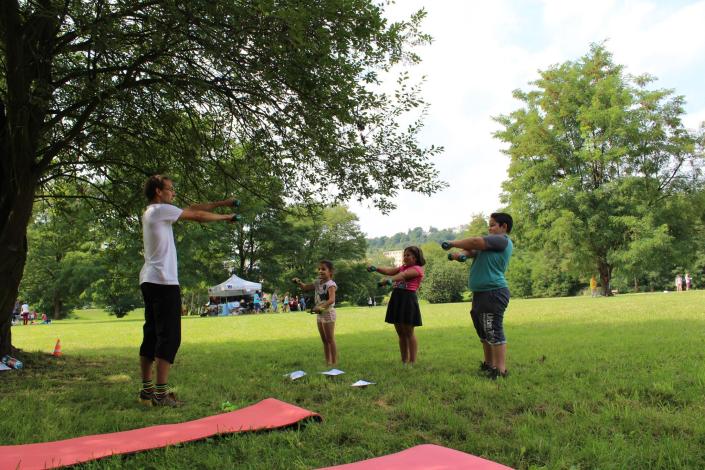
Seeking answers on how to combat social exclusion through the redesign of public spaces in deprived residential areas by using the power and common language of sport, this Action Planning network found solutions through innovative urban sport actions, physical equipment and better orchestrated service delivery. Active living positively contributes to social cohesion, wellbeing and economic prosperity in cities. However, currently cities are challenged by the opposite: dramatic increase in the frequency of diseases as a result of sedentary life style and social exclusion. To tackle these challenges, European cities have invested in large scale sports facilities over the past decades. These strategies have a limited success, hence a new approach is needed: instead of ‘bringing’ the inactive citizens to the sports facilities, public space itself should be turned into a low threshold facility inviting all citizens to physical activity.
Summary
Partners
Lead Partner : Loulé - Portugal- Birmingham
- Budapest - Hungary
- Burgas - Bulgaria
- Krakow - Poland
- Liepaja - Latvia
- Rieti - Italy
- Sibenik - Croatia
- Usti Nad Labem - Czech Republic
- Vestfold County - Norway
Timeline
Kick-off meeting in July (Birmingham). Transnational meeting in November (Liepaja).
Transnational meeting in March (Rieti).
Final event in April (Loule).
Network Outputs
-
vital_cities_final_synthesis_report.pdf(PDF, 1Mo)
Integrated Action Plans
-
Birmingham Integrated Action Plan(PDF, 2Mo)
-
Liepaja Integrated Action Plan(PDF, 709Ko)
-
Usti Nad Labem Active People - Active City(PDF, 3Mo)
-
Krakow Integrated Action Plan(PDF, 2Mo)
-
Burgas Local Sport Development Plan(PDF, 394Ko)
-
Rieti Enhancing the Urban Quality of Life(PDF, 2Mo)
-
Loulé Integrated Action Plan(PDF, 2Mo)