KarolinaOrcholska
-
Poland - Gdańsk
- Polish, English

Karolina Orcholska is a senior urban mobility expert with over 15 years of experience working with cities, metropolitan authorities and European urban networks. She helps cities develop ambitious mobility strategies and translate them into practical actions and lasting results.
Her professional path has given her several complementary perspectives on urban mobility. She began her career in local government, working for more than a decade as a planning specialist, traffic engineer and project coordinator in Gdańsk. This experience gave her a practical understanding of how cities function from the inside: how decisions are made, how infrastructure and traffic management affect everyday life, and why even well-designed policies must respond to institutional capacity, political realities and the needs of different users.
She later worked at the metropolitan level, coordinating sustainable mobility activities and the RiConnect project for the Gdańsk-Gdynia-Sopot Metropolitan Area. Working across municipal boundaries fundamentally broadened her perspective. It demonstrated that mobility challenges rarely stop at administrative borders and that effective solutions depend on cooperation between municipalities, transport authorities, operators and other institutions.
As a project manager and urban development consultant at Wolański, Karolina added the perspective of a researcher and external adviser. She managed mobility and transport assignments for local and regional authorities, conducted and coordinated research, reviewed Sustainable Urban Mobility Plans and translated evidence into strategic recommendations. Today, as an independent consultant, she combines these different perspectives – local government practitioner, traffic and transport specialist, metropolitan coordinator, researcher, adviser, project manager and facilitator.
Karolina served as Lead Expert of the URBACT PUMA Action Planning Network, supporting nine European cities throughout the complete Integrated Action Planning process. She guided partners from understanding their local challenges and building URBACT Local Groups to defining objectives, developing actions, testing ideas and preparing implementation and monitoring frameworks. She designed and facilitated transnational meetings, peer-learning activities, thematic workshops and capacity-building processes. She has also supported the SchoolHoods, Cities After Dark and S.M.ALL networks as an URBACT Ad Hoc Expert.
Her expertise covers Sustainable Urban Mobility Plans, public transport, walking and cycling, accessibility, road safety, integrated urban planning, participatory processes, stakeholder and community engagement, monitoring and evaluation. She led the comprehensive update of the Gdańsk Sustainable Urban Mobility Plan 2035 and previously contributed to the city’s first SUMP, which gives her a particularly strong understanding of both strategy development and the difficult transition from planning to implementation.
Karolina also works as an External Assessor for European Urban Initiative – Innovative Actions and has been selected for the EIT Community New European Bauhaus Mentors Pool 2026–2028. Alongside her practical work with cities, she teaches, develops mobility education and capacity-building programmes, and writes professional articles on mobility, participation and contemporary urban challenges.
What matters most to her is combining professional rigour and extensive experience with genuine attention to people. She believes that mobility is never only about transport: it shapes access to education, employment, services, relationships and participation in urban life. Cities are not experienced in the same way by everyone, and good planning must recognise whose needs are visible, whose voices are heard and who may still be left outside the process.
Karolina brings structure, energy and clarity to complex projects, but she also asks difficult questions. Is the strategy implementable? Does participation genuinely influence decisions? Who will take responsibility after the project ends? Will the proposed change improve people’s everyday experience of the city? Her work is grounded in the belief that integrated planning, meaningful collaboration and careful implementation can turn ambitious urban ideas into real change.
For those interested in how she looks at cities, mobility and the people who experience them, her regular Monday Reflections on LinkedIn offer a more personal perspective on the questions that also shape her professional work.
Articles
-
Article
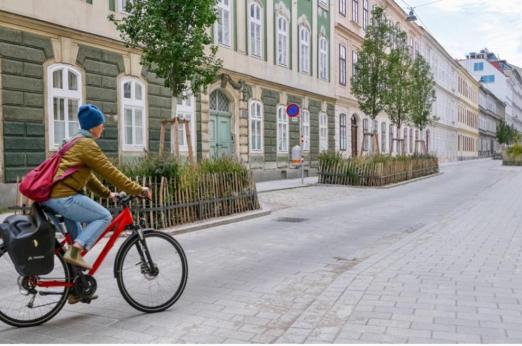
Mobility for everyone: what five URBACT Action Planning Networks learned about turning plans into practice
From safer school journeys to rural transport connections and accessible streets, five URBACT Action Planning Networks are turning mobility for
-
Article
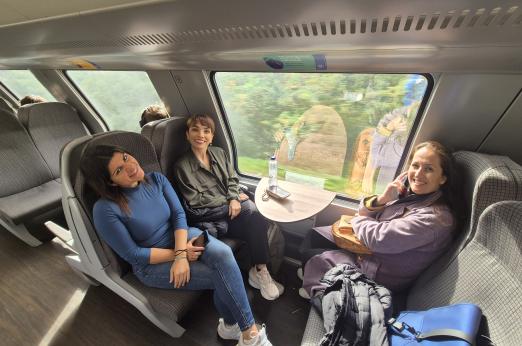
The People’s mobility: Lessons from three Belgian cities on data, dialogue and persistence
Change is never easy, but with vision, persistence and empathy, cities of any size can redesign life on their streets.
-
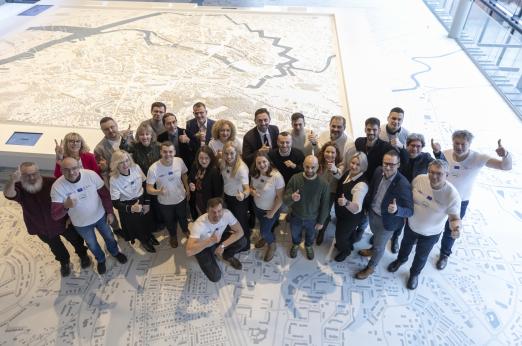
How the PUMA Network changed the way cities plan mobility
Cities, cooperation and the URBACT experience
The Plans for Urban Mobility Actions (PUMA) network brought together nine partners from eight European
