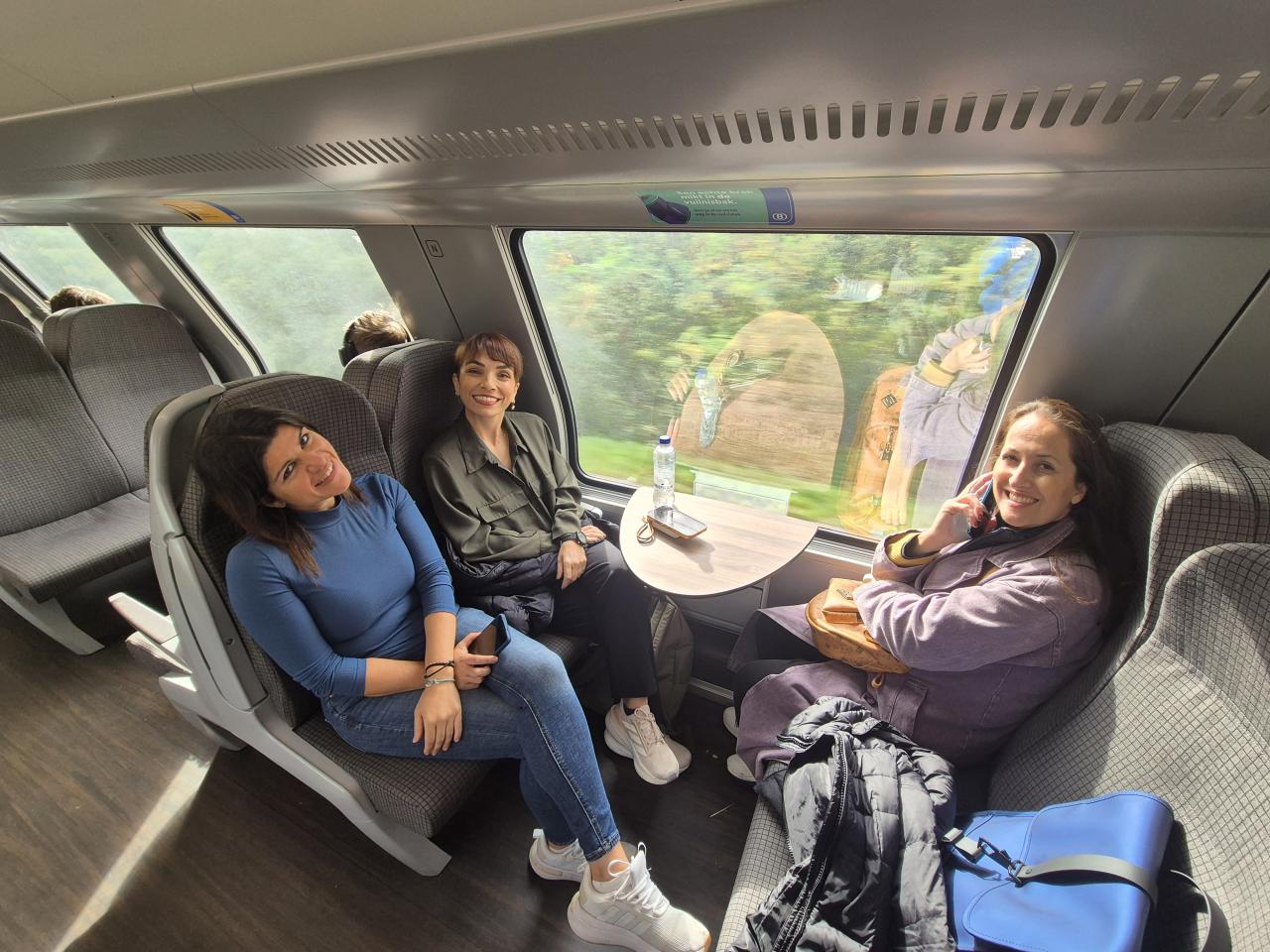
Two days in Belgium did something quiet but powerful: partners from six URBACT Action Planning Networks (PUMA, Schoolhoods, S.M.ALL, FEMACT-Cities, ECONNECTING and Beyond the Urban) were inspired by the courage, mistakes and participatory approach to sustainable urban mobility in three Belgian cities.
Get the short story from the latest URBACT study visit to Ghent, Brussels and Sint-Niklaas, where sustainable mobility is more than a technical challenge, it’s a social contract.
Ghent: courage, continuity and everyday change
From the legendary circulation plan to a culture where walking and cycling are simply normal, Ghent is a lesson in political courage and consistency. Dries Meers, Traffic Management officer, Ghent Circulation Department, guided us through the city’s journey, from pilot projects and heated debates to the full implementation of the 2017 circulation plan that divided the city centre into sectors and limited through-traffic. Since then, car traffic has dropped by more than 50%, and cycling has become the default mode of everyday life.
“It’s not about avoiding conflict, it’s about managing it with empathy,” says Dries. “You can’t convince everyone, but you can keep them informed, involved and heard.”
The walk through the city centre showed how deeply this approach has reshaped daily life. Cafés and local businesses now thrive where cars once dominated. Cargo bikes replace delivery vans, and children cycle freely on streets that used to be filled with noise and fumes. Ghent tracks progress through air quality, business vitality and citizen satisfaction – but the calm rhythm of its streets tells the story best. Ghent’s success comes from repeating small, credible steps until they add up to transformation.
Still, participation is never easy. Every plan brings disagreement, and the real work lies in how the city responds – with information, education and empathy. It’s hard to make everyone happy, but you can keep them informed, involved and heard.
If Ghent showed how local courage reshapes everyday life, Brussels reminded us that policy and governance set the framework for that change.
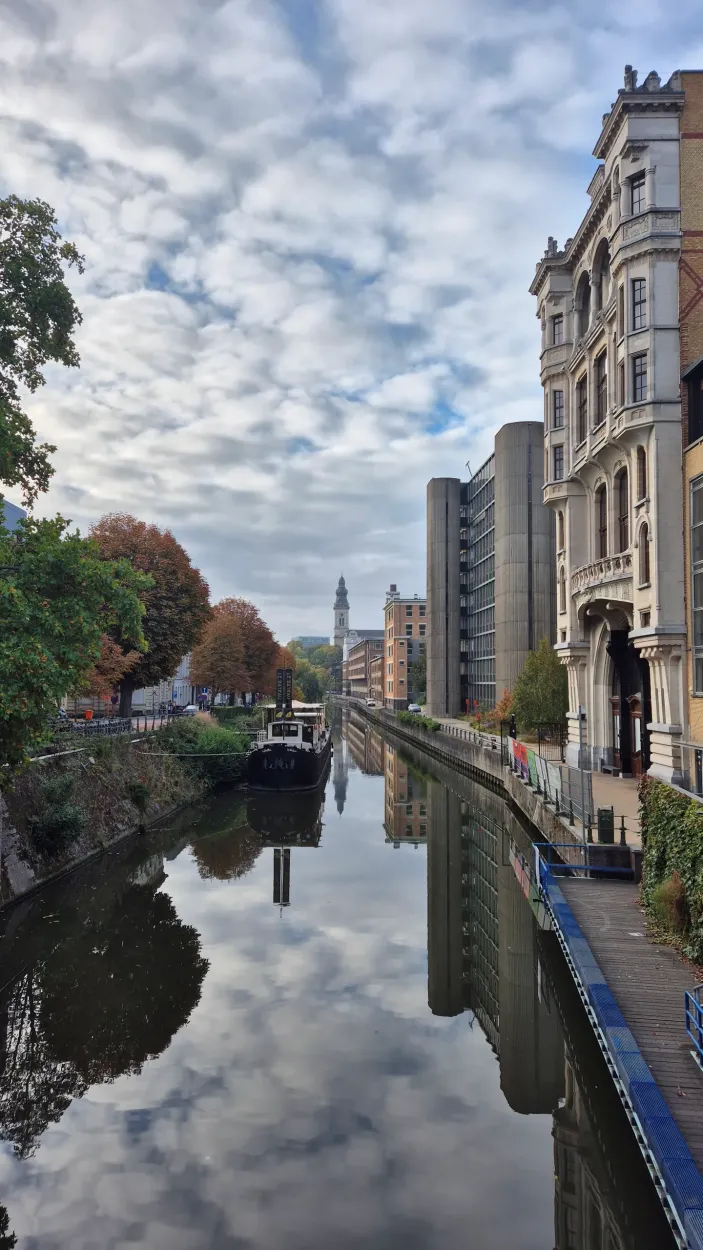 | 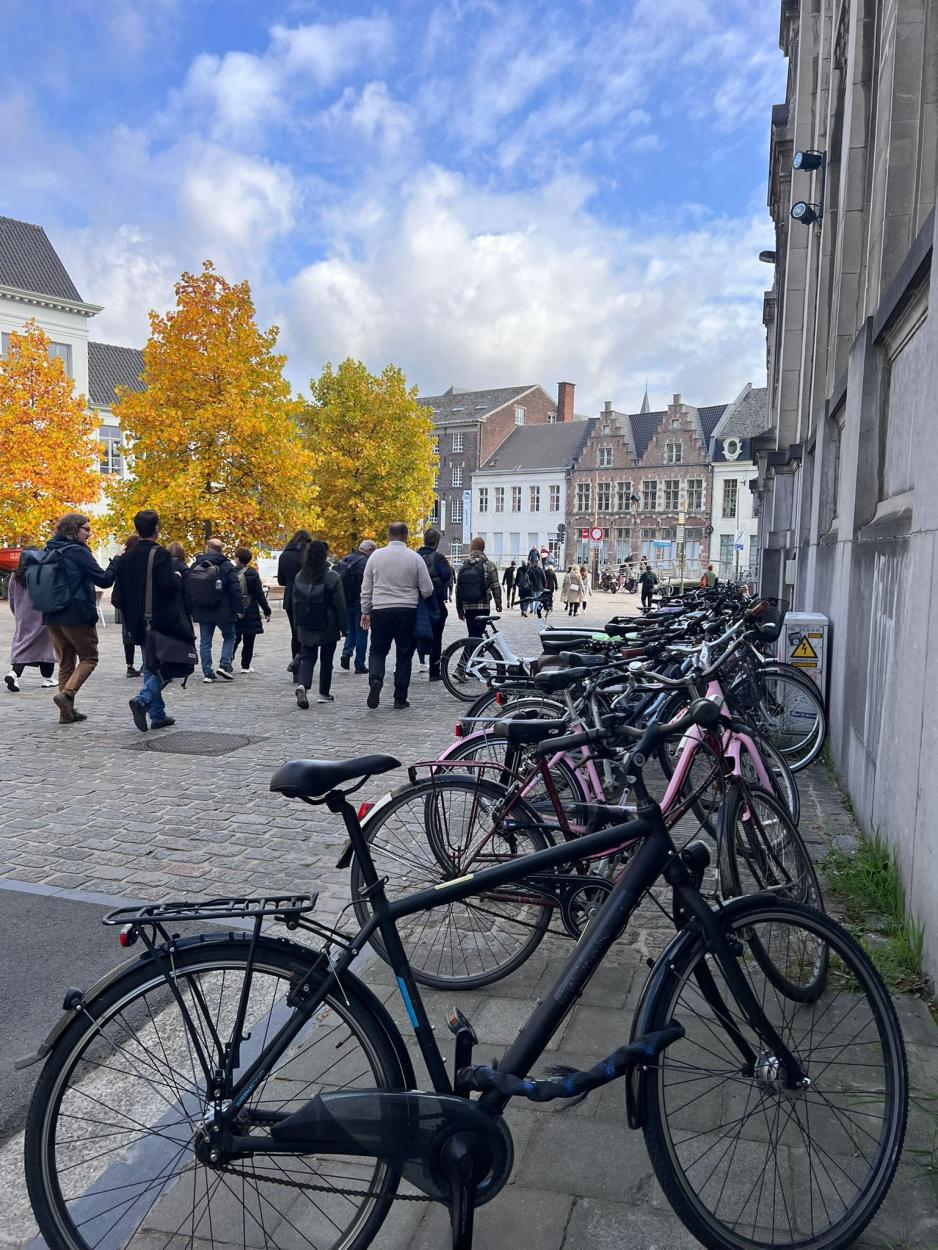 | 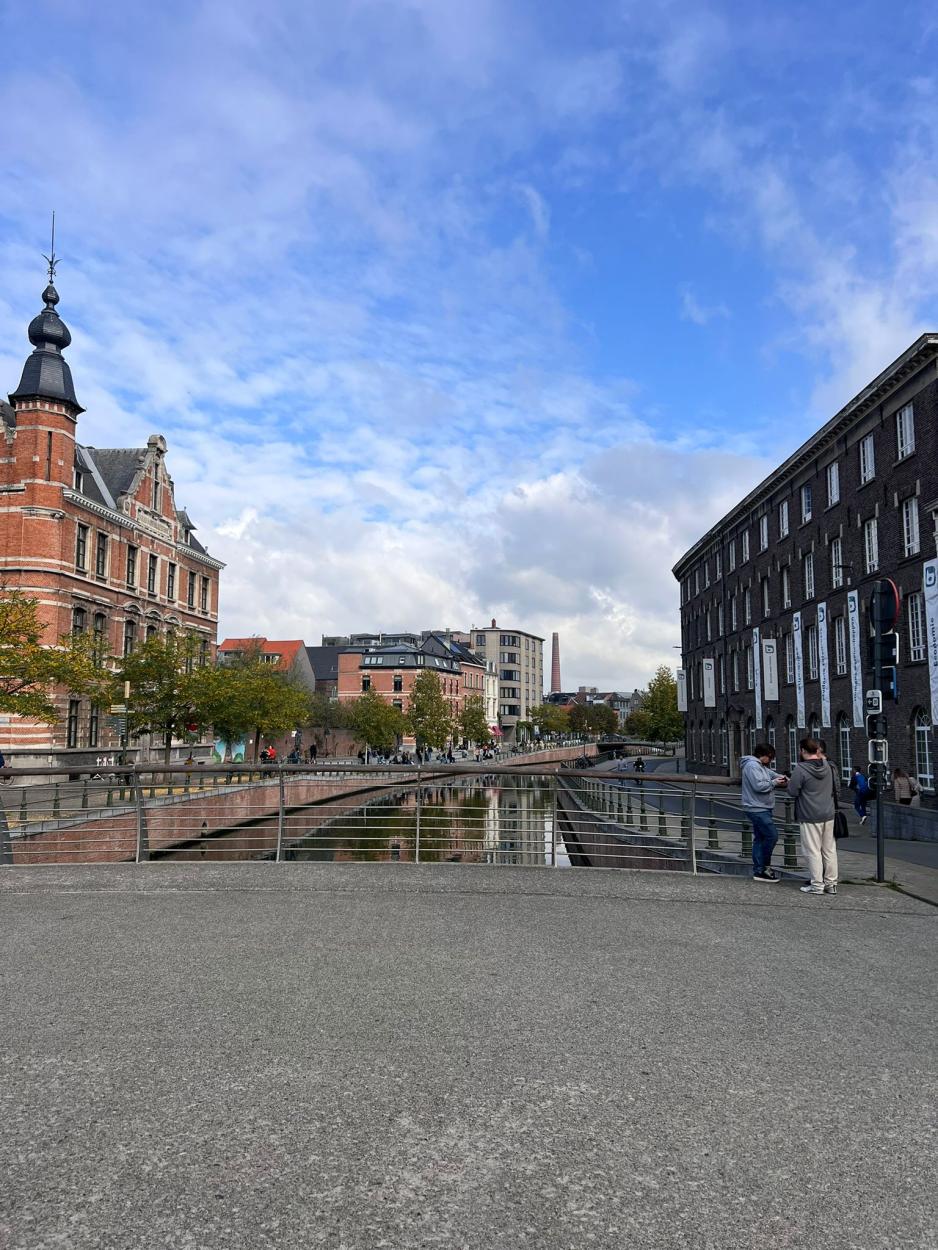 |
URBACT Action Planning Network partners visiting Ghent, Belgium. Source: Karolina Orcholska.
Brussels: linking policy, governance and the bigger picture
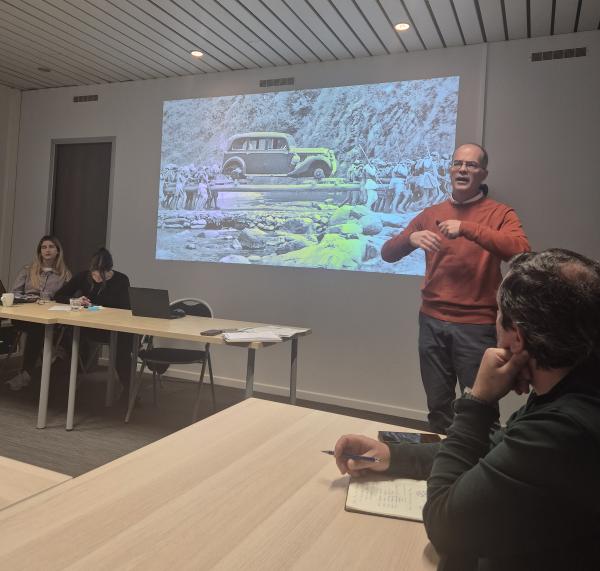
Between Ghent and Sint-Niklaas, the URBACT study visit stopped in Brussels to visit the POLIS Network and discuss the European dimension of urban mobility. This exchange added a valuable layer to the trip – connecting what was seen in Ghent with broader policy frameworks on road safety, governance and just transition.
“Cities are the laboratories of change. But they need structures that let them fail safely and share what they learn,” says Marco Stančec, Project and Climate-Neutral Cities Mission Taskforce coordinator - Urban Nodes Taskforce co-coordinator.
Among the speakers, Pedro Homem de Gouveia, senior policy advisor and cluster lead for Safety & Security and Governance & Integration, made a particularly strong impression. His presentation, ‘Framing & Steering the Future of Urban Mobility’, challenged participants to think beyond infrastructure and innovation - reminding that progress requires a paradigm shift. “We already have the knowledge and the means to eliminate traffic deaths and serious injuries in our streets”, he says. “The question is how we use them - and how fast we learn.”
The discussion was both technical and emotional: a reminder that urban mobility is as much about political will as it is about design or infrastructure. Local courage thrives when supported by European structures, funding mechanisms and peer networks that share solutions and failures openly.
Key takeaways included the need to address transport poverty, road safety and gender equality more directly within sustainable urban mobility planning, ensuring that future systems meet the needs of everyone.
Sint-Niklaas: greening the city, one street at a time
The next stop, Sint-Niklaas, a medium-sized city in East Flanders, proves that transformation is not reserved for big capitals. Wim Nicque, mobility advisor at the City of Sint-Niklaas, opened the visit by tracing the evolution of the city’s mobility strategy. Each iteration – from SUMP 1 (2003–2015) and SUMP 2 (2015–2025) to the upcoming SUMP 3.0 (2026–2035) – has become more data-driven, more integrated and more human-centred, combining sustainability and safety with well-being and climate resilience.
The city has introduced a zone 30 across its entire inner ring, putting safety and accessibility above speed. It has also redesigned its transport network so that “the right traffic is on the right road,” as Jurgen Goeminne, Planning and Development Department, explains. Public transport is prioritised along key corridors connecting the station, market and shopping mall, with dedicated lanes, modern bus stops and conflict-free crossings for pedestrians and cyclists.
“We design for people first, then for vehicles”, says Jurgen. “And that changes everything – from noise to neighbourhood life.”
Ellen Piessens, mobility specialist at the Fire Service Zone Centrum, shared the story of school streets and shared spaces (there are now 17 in total). Each one changes not only how children travel, but how communities feel. A new tree, a calmer street, a safer crossing - all fit into one clear, long-term vision.
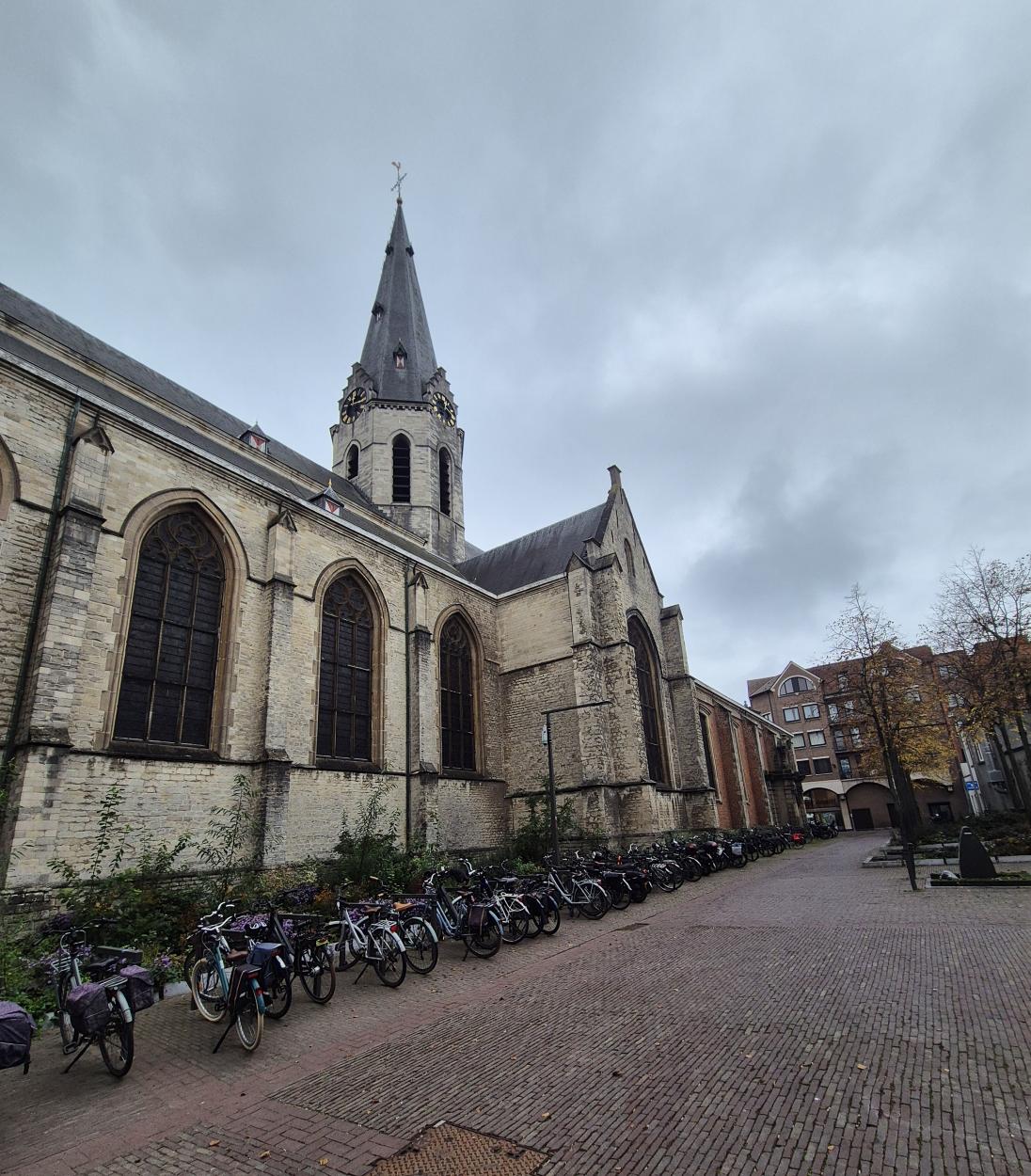
Sint-Niklaas’s strength lies not only in movement, but in place. The city has been steadily greening its main public spaces, including the Grote Markt, Belgium’s largest market square, and the Houtbriel area. Once dominated by asphalt, these spaces are now transforming into green, shaded and sociable meeting points.
“Greening is not decoration”, according to one of the experts. “It’s infrastructure for health, comfort and climate adaptation.”
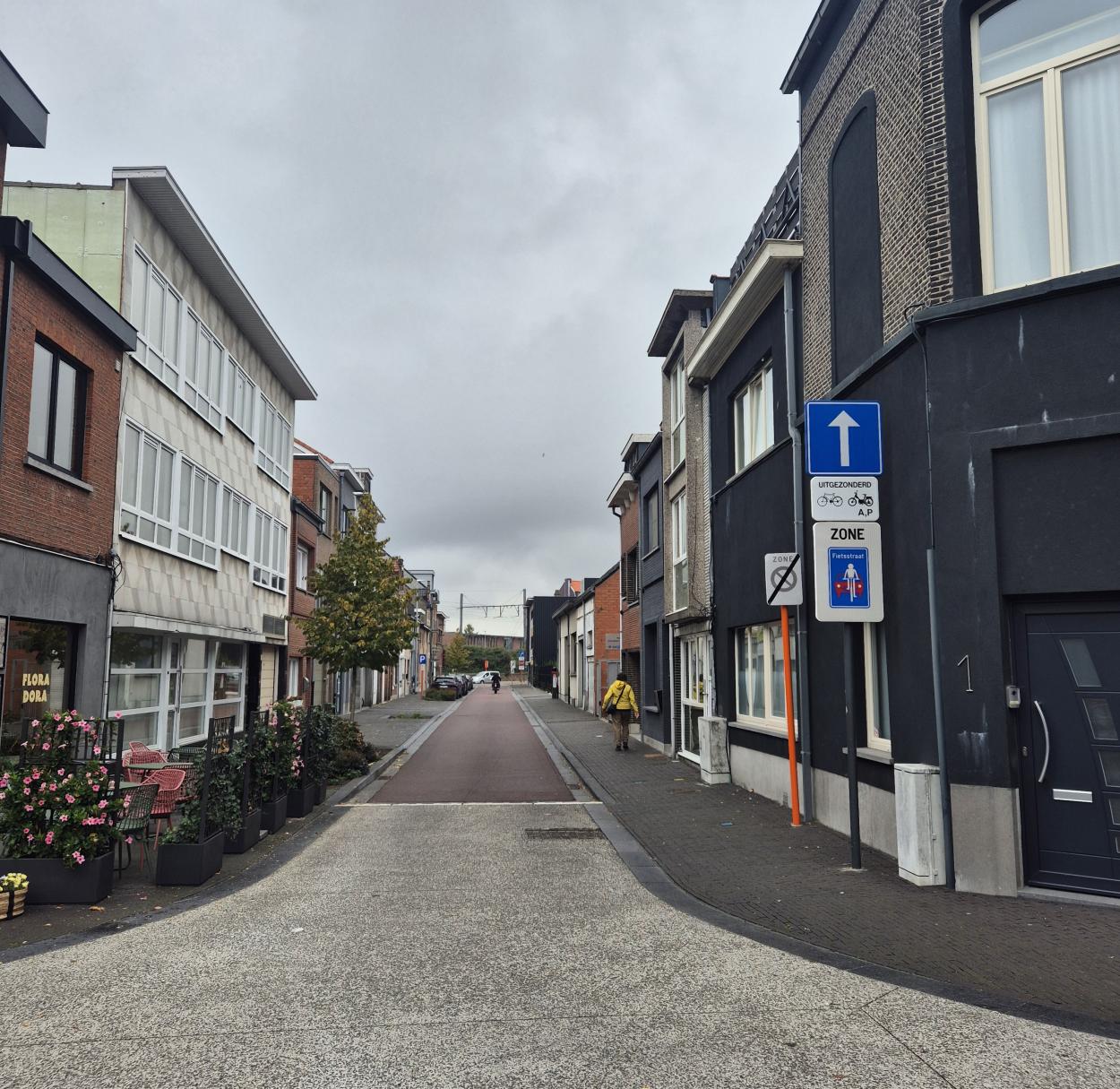 | 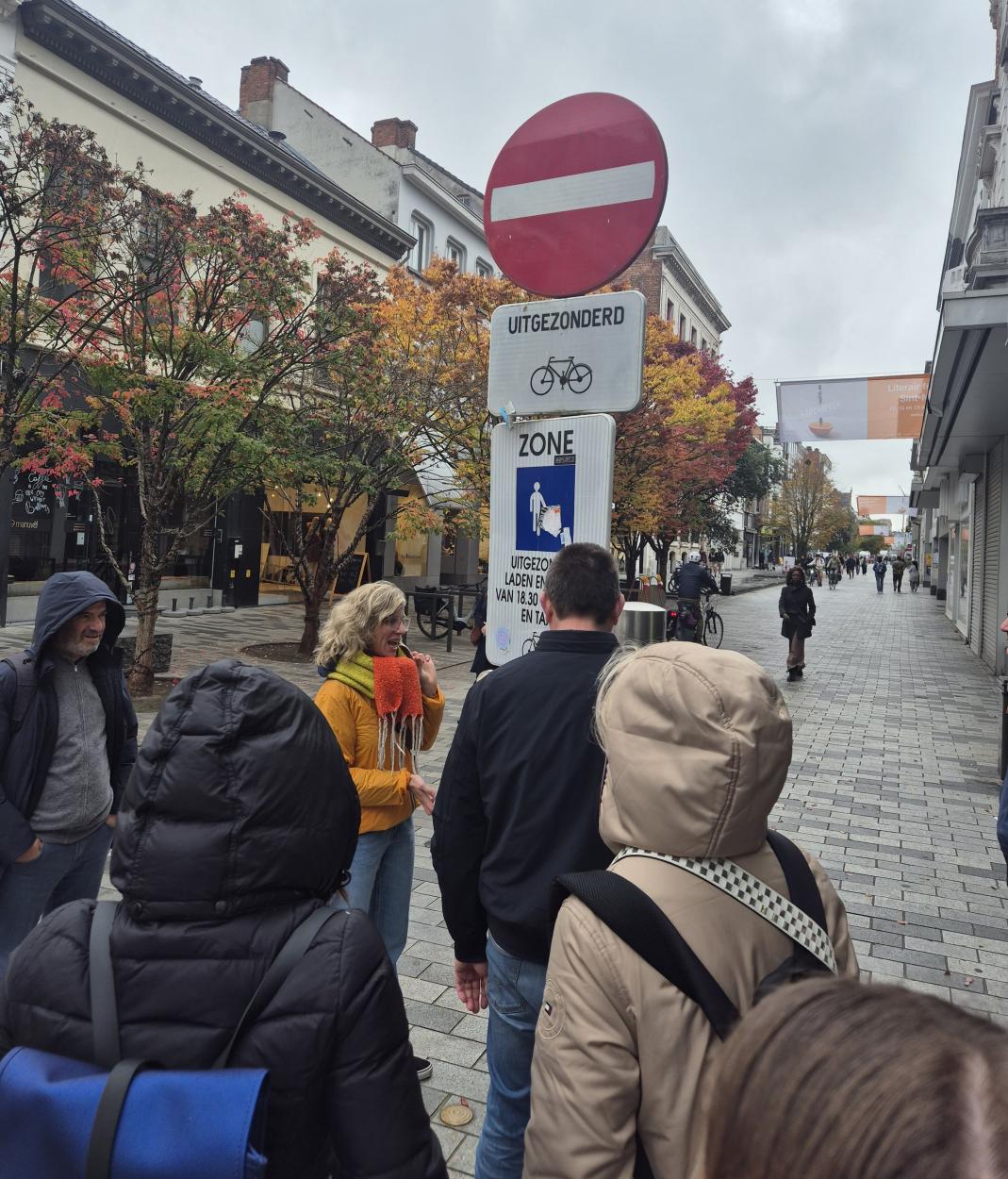 |  |
URBACT Action Planning Network partners visiting Sint-Niklaas, Belgium. Source: Karolina Orcholska.
Participation is hard, but essential
These visits reminded us that sustainable mobility is not just a technical challenge, but a social contract. It’s about how we share space, handle disagreement and care for our cities. Ghent, Sint-Niklass and Brussels remind us that participation is not a box-ticking exercise. It is hard, emotional and continuous work – explaining decisions, listening to disagreement and showing empathy even when frustration grows.
“People can live with discomfort if they understand why. But they won’t accept being left out”, says one of the participants.
Participation is about honesty. People can accept discomfort when they understand the reason behind it. It is about education – helping residents see new routines as opportunities, not threats. And above all, it is about empathy – recognising fear and fatigue, and responding with dialogue, not defensiveness.
Change will never make everyone happy. But that’s not failure. It’s democracy in motion.
If there was one common thread between Ghent, Brussels and Sint-Niklaas, it was clarity of purpose. None of these places claim to have all the answers. They test, measure and learn. They build trust between departments and with residents. They treat communication not as a side task, but as a core part of mobility planning.
Test, measure, learn -> Communicate constantly -> Build trust and empathy -> Keep going, even when it’s hard.
The URBACT spirit - learning together, acting locally
The true power of these site visits came from the mix of participants from six different URBACT Action Planning Networks, each bringing unique perspectives yet facing the same fundamental question: how can we make change happen?
Find more inspiration on the URBACT Knowledge Hub on Mobility.
More from the EU City Lab on Active Mobility.
