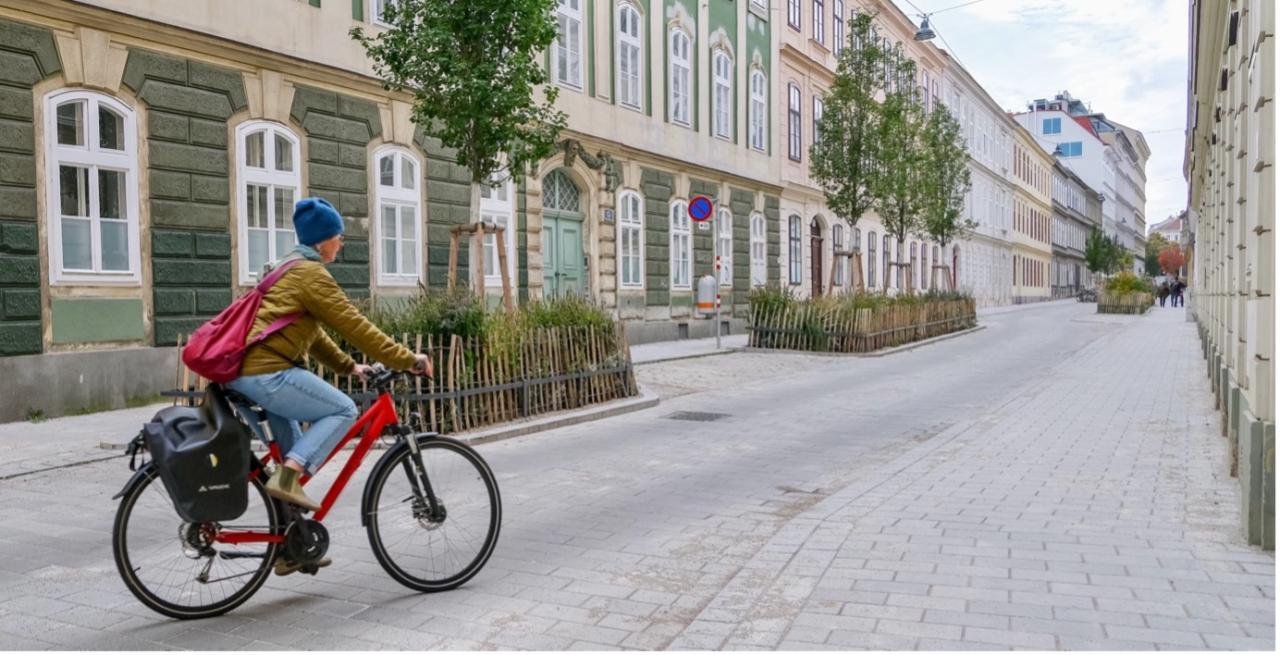
Children should be able to travel safely, older people should remain independent, and access to education, work, healthcare and everyday services should not be linked to someone's income, gender, abilities or place of residence.
Making mobility accessible to everyone is the theme of EUROPEAN MOBILITY WEEK 2026, with a particular focus on intergenerational fairness. Few leaders would openly question the principle behind it; and still, agreeing with this is considerably easier than turning it into everyday practice.
Between 2023 and 2025, 44 partners in five URBACT Action Planning Networks developed mobility action plans for more open and accessible cities. What challenges did they face and how did they overcome them? Get inspired by some of the local actions, lessons learnt and new resources that you can apply in your city.
Delays expected: mobility challenges in the city
Many mobility problems begin with a mismatch between the way people travel and the way institutions are organised. A person may live in a village, work in a nearby town, take a child to school in another municipality and travel to a regional centre for healthcare. From their perspective, these are connected parts of everyday life. Institutionally, the same journeys may pass through several territories, transport systems, budgets and political responsibilities.
The same street, bus service or crossing can also work very differently depending on who uses it. A pavement walkway may exist, but be too narrow, uneven or obstructed for a person using a wheelchair or pushing a pram. A journey that appears short and simple to one person may still be unsafe for a child or exhausting for an older person. Mobility for everyone therefore requires cities to understand both territorial connections and xthe different ways in which people experience them.
The URBACT Action Planning Networks PUMA, Beyond the Urban, ECONNECTING, S.M.ALL and SCHOOLHOODS came up with unique responses to this challenge. PUMA supported small and medium-sized cities in preparing integrated mobility action plans. Beyond the Urban and ECONNECTING examined connections between urban, peri-urban and rural territories. S.M.ALL approached mobility through accessibility, inclusion and everyday experience, while SCHOOLHOODS focused on children's journeys to school and their ability to move independently.
The URBACT journey in action: making change visible and testable
The networks did not search for one intervention that could be reproduced everywhere. Instead, partners used URBACT Local Groups, co-creation and small-scale testing to understand what change required in their own contexts. These are some of the core tools of the URBACT Method, and their apparent simplicity should not obscure how effective they can be in bringing different perspectives together, testing assumptions and turning broad ambitions into locally grounded action.
Reimagining mobility through Beyond the Urban and ECONNECTING
Among the 10 partners in Beyond the Urban, Treviso (IT) offers a particularly tangible example. The city tested the one-day pedestrianisation of Piazza Duomo, allowing residents, businesses and decision-makers to experience a different use of the square, on-site surveys and observations assessed footfall, dwell time, safety, comfort and public acceptance. In Bram (FR), a community-led Vélobus showed how volunteers and schools could make cycling part of ordinary school travel without waiting for major infrastructure investment.
Beyond the Urban included the cities of Creacció Agència d’Emprenedoria (ES) (lead partner), Santa Maria da Feira (PT), Hradec Kralove (CZ), Machico (PT), Szabolcs 05 Regional Development Association of Municipalities (HU), Tartu (EE), Bram (FR), Bucharest-Ilfov (RO), Treviso (IT), Kočani (MK).
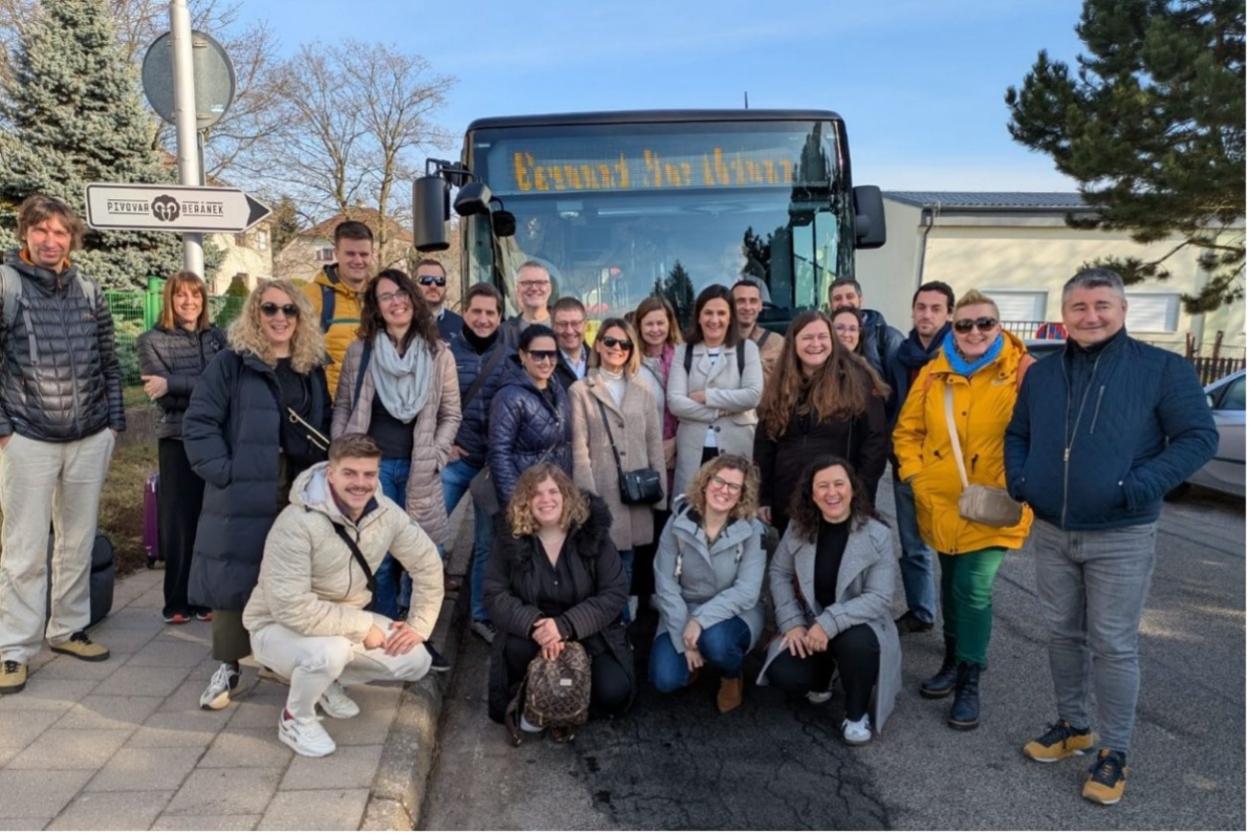
ECONNECTING explored a different scale through the idea of the 30-minute territory. Its 8 partners examined demand-responsive transport, community taxis, shared mobility, mobility hubs, cycling connections and integrated information. The resulting approach does not attempt to reproduce the famous 15-minute city concept across a rural region; it combines accessible local services with reliable connections between settlements, digital access and cooperation across levels of government. In Ormož (SI); for example, the local partner tested a free, flexible transport service on two routes, connecting people from rural areas with events in the town centre. This provided a practical way to examine how demand-responsive transport could complement limited public transport and improve access across a dispersed territory.
ECONNECTING included the cities of Romagna Faentina (IT) (lead partner), Razvojno raziskovalni in Ormož (SI), Nagykálló (HU), West Mani (EL), Viseu Dão Lafões (PT), Berane (ME), Ennis Municipal District (IE), Tori Vallavalitsus (EE).
Moving through cities safely with S.M.ALL & SCHOOLHOODS
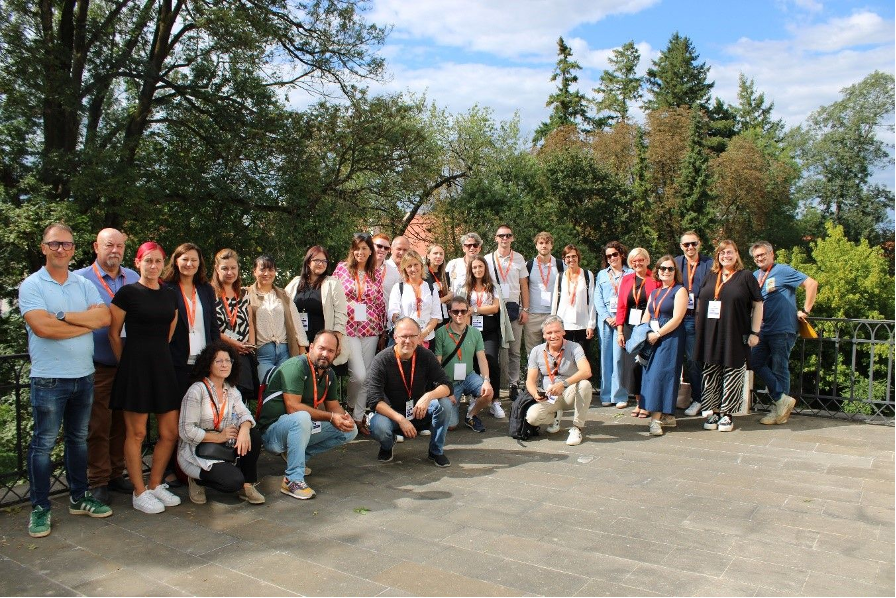
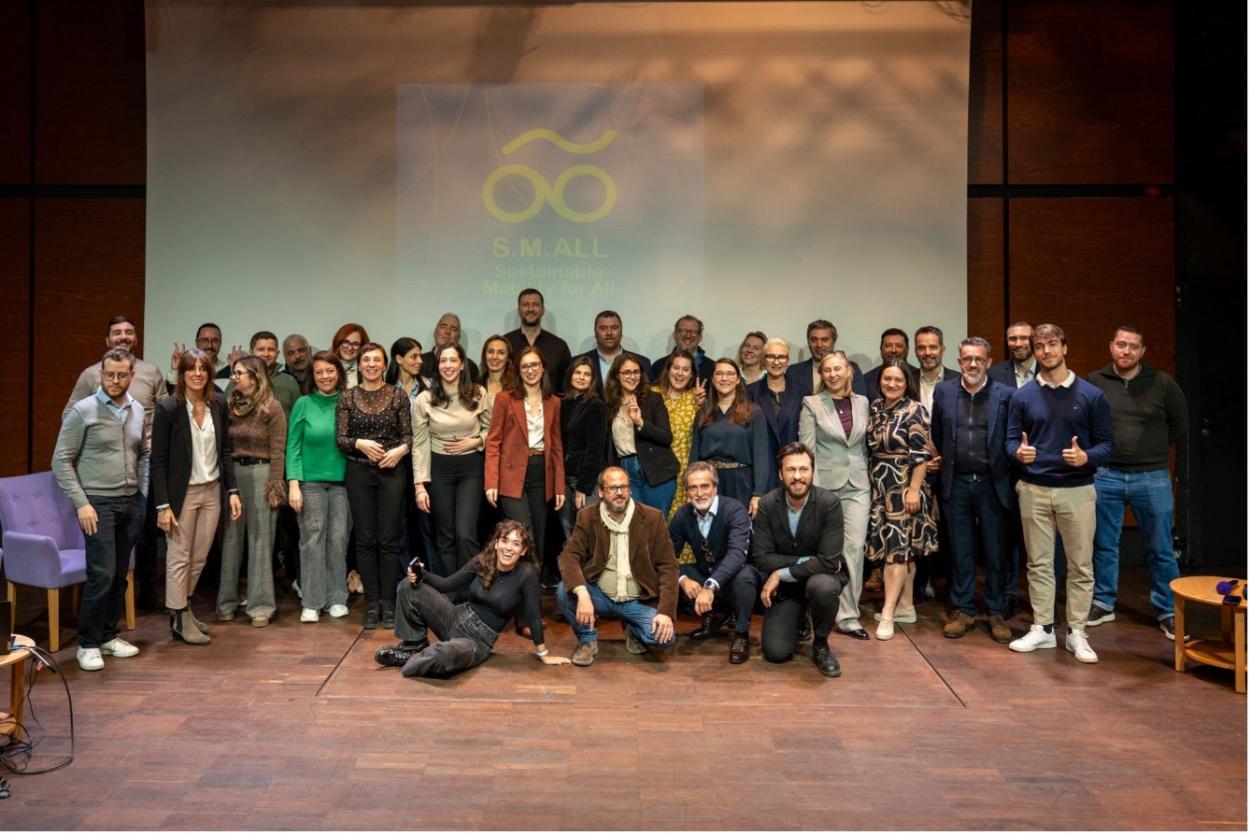
The 9 partners in the S.M.ALL network placed people who often experience the greatest barriers at the centre of planning. Across the network, cities combined physical changes with education, communication and service redesign, following a simple principle: if it works for the most vulnerable, it will work for all.
Larissa (EL) and Škofja Loka (SI) used walk-along assessments and accessibility audits involving people with disabilities, older residents and parents with pushchairs. Sofia (BG) concentrated on specialised and on-demand transport for people with disabilities, where the challenge was not simply to provide a vehicle but to coordinate routing, eligibility, data and social services.
S.M.ALL included the cities of Ferrara (IT), Associação de Municípios de Fins Específicos Quadrilátero Urbano (PT), Bucharest (RO), Druskininkai (LT), Strasbourg (FR), Larissa (EL), Komotini (EL), Sofia (BG), Škofja Loka (SI).
SCHOOLHOODS set out to improve school mobility through both practical changes to streets and a serious effort to understand how children experience them. The eight partner cities began their journey with an everyday occurrence of urban families. Parents may choose to drive because they consider walking or cycling to school unsafe. However, when many families make the same choice, the additional traffic, congestion and vehicle movements around the school make the area more difficult and potentially more dangerous for children travelling on foot or by bicycle. This, in turn, strengthens other parents’ belief that driving is the safest and most responsible option.
In Brno (CZ), the work focused on two elementary schools, ZŠ Tuháčkova and ZŠ Krásného, where separate URBACT Local Groups developed and tested measures including a pedestrian corridor, scooter parking, school streets and local board game called Brno Dragon Game, which encouraged sustainable travel to school. In Skawina (PL), the ‘City of Girls’ workshops invited girls aged 13–18 to use The Sims 4 as a participatory tool, allowing them to design school surroundings that responded to their own needs and perceptions of safety.
SCHOOLHOODS included the cities of Rethymno (EL) (lead partner), Brasov (RO), Brno (CZ), Guía de Isora (ES), Parma (IT), Skawina (PL), Turku (FI), Zadar (HR).
Outrunning the limits of spatial planning with PUMA
PUMA's nine partners faced another recurring problem: how to move from a desirable list of improvements to an actual implementable programme. Some partner cities did not have integrated mobility plans in place prior to joining the network. For instance, Liepāja and Dienvidkurzeme (LV) needed to coordinate transport, spatial development and climate objectives across municipal departments, and the largely rural Dienvidkurzeme had to address mobility across dispersed settlements and coordinate its plan with neighbouring Liepāja, the functional centre for many everyday journeys. In both cases, the process required cooperation between spatial planning, road management, public transport, education, climate policy and participation, despite limited specialist capacity.
Every partner was expected to develop an Integrated Mobility Action Plan, but the network also produced results that were less easily captured in a final document, including new relationships between municipalities and residents, stronger cooperation across departments and greater awareness of experiences previously absent from mobility planning. As Umberto Amoroso from Cento (IT) recalled after the city’s first URBACT Local Group meeting with migrant women: “It was the first time that a public authority had shown interest in their opinions about the accessibility of the urban mobility system.” Such an encounter does more than provide information for a plan. It can change how public authorities understand participation, whose knowledge they value and how they approach future decisions.
PUMA included the cities of Liepaja (LV) (lead partner), Dienvidkurzeme (LV), Taurage (LT), Larissa (EL), Zagreb (HR), Gdańsk (PL), Cento (IT), Viladecans (ES), Nova Gorica (SI).
What the networks produced together
The local actions were supported by products intended to travel beyond the original partnerships. Beyond the Urban's Rural Urban Connections Toolkit turns the idea of ‘rurbanism’ into practical guidance on understanding daily movement, working with communities, testing interventions and integrating successful pilots into policy. The ECONNECTING Manifesto sets out six principles for sustainable urban-rural linkages and presents modern, inclusive mobility as a backbone of territorial cohesion.
S.M.ALL's Integrated Action Planning Report compares how a shared methodology was adapted across different territorial scales and governance settings. This video contains more useful information:
SCHOOLHOODS produced targeted messages for local authorities, politicians, teachers and parents, alongside city case studies and recommendations on safe, green and happy ways to school. PUMA Times brings together the nine mobility plans, partner reflections and practical lessons about governance, funding and communication.
These outputs matter because they foster interregional cooperation, helping cities examine their assumptions, see how a method behaves in different conditions and adapt what they learn rather than copy a finished solution.
In PUMA, Edvinas Benetis from Lithuania's Green Region captured this well: "True mobility solutions are not only technical – they're social and built through collaboration across borders."
Four lessons for implementation
1. Mobility must be planned at the scale at which it actually happens. Some actions should remain close to local communities, while public transport, regional cycling connections or access to services may require cooperation across municipal boundaries.
2. Co-design with residents and local stakeholders can reveal needs that technical analysis alone may overlook and help shape actions around people’s everyday experiences. All five networks worked through URBACT local contacts, but they also showed why cities need to go beyond the people who normally attend formal meetings. Children, older residents, people with disabilities and inhabitants of small settlements may have essential knowledge about mobility barriers while having the least opportunity to participate in conventional consultations.
3. Pilots should be treated as learning tools, not as comfortable substitutes for decisions. Temporary interventions can reveal how people respond and make an abstract proposal tangible. Their real value, however, depends on whether results are assessed, responsibilities agreed on, and successful ideas connected to budgets, standards and permanent projects.
4. Implementation is a governance challenge. A safer journey to school, urban-rural mobility, whatever the goal, a city plan must have political support, institutional capacity and people who remain responsible after the project meetings have ended.
From plans to lasting change: what happens after the networks?
‘Mobility for Everyone’ will not be achieved through one universal model, because people, places and institutional capacities differ too much. The work of these five URBACT networks offers processes that help cities recognise who is excluded, test what might work and carry successful ideas from temporary action into lasting practice.
Two-and-a-half years of joint work produced plans, tested actions, new partnerships and practical knowledge. The formal work may have ended on 31 December 2025, but the value of this work depends on whether cities carry them into everyday decisions, budgets and institutional routines.
Explore the five URBACT Action Planning Networks and their final outputs:
PUMA | S.M.ALL | ECONNECTING | Beyond the Urban | SCHOOLHOODS | and all the 30 URBACT Action Planning Networks (2023-2025).
Get inspired by more local actions from URBACT cities, by following their participation at the URBACT City Festival 2026.
