Reimagining spaces: placemaking lessons from URBACT cities

Edited on 18/06/2026

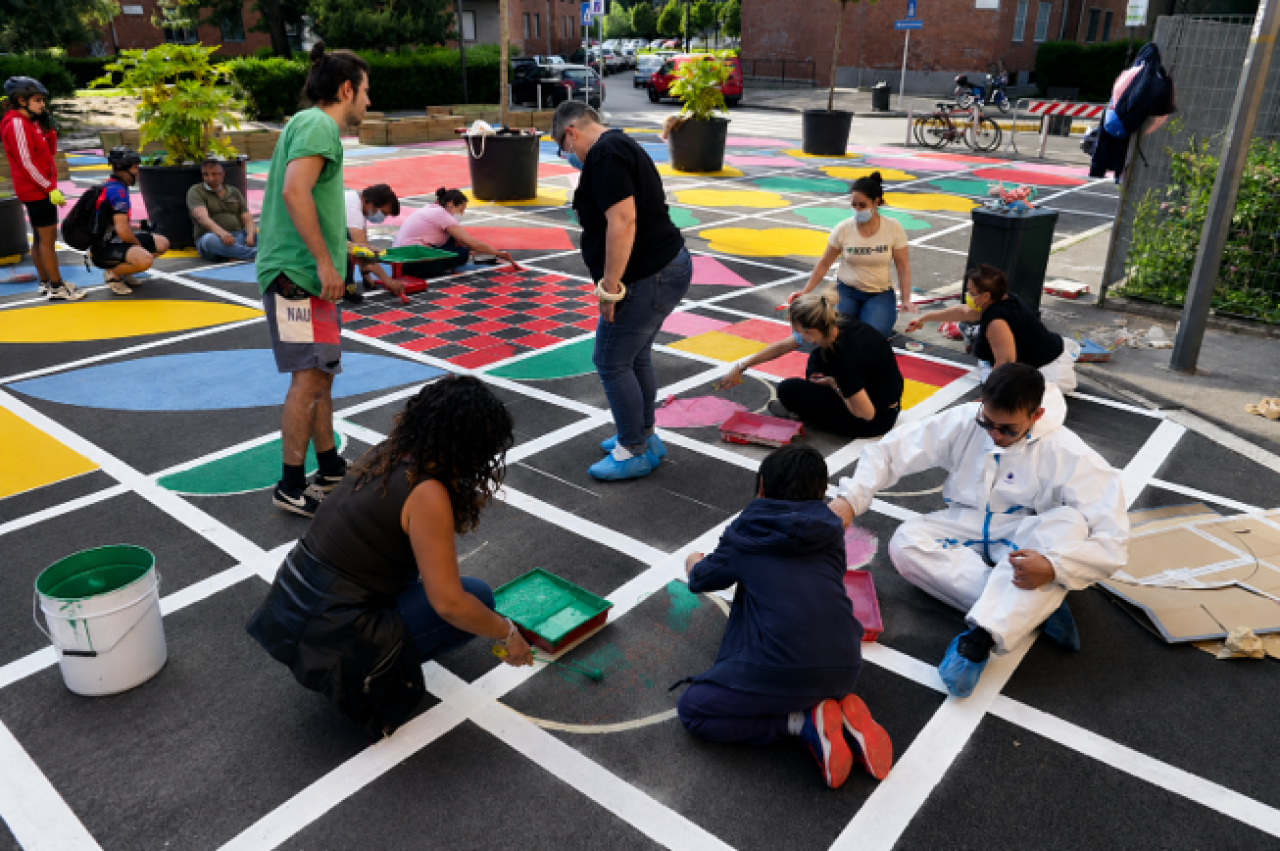
People painting a city square in Milan, Italy

Piazze Aperte – Milano – Copyright (Demetrio Scopelliti, Director for Urban Planning and Public Space at AMAT, City of Milan)

From playful streets in Cork (IE) to sensory trails in Tavernes de la Valldigna (ES), five URBACT Good Practices show how cities can turn ordinary spaces into places people recognise, use and care for.

Why do some cities succeed in making people want to stay? It is not always because they are beautiful in an obvious way. Sometimes it is the shade at the right time of day, the sound of people nearby, the possibility of sitting down without having to buy anything, a terrace that gently spills into the street, a safe corner where children can play, or simply the feeling that the place has a life of its own. These things are easy to notice when they are there, and even easier to miss when a space has been planned as something else.


Placemaking is the approach that focuses on the people who use a space, rather than just the physical structures. It looks at streets, squares, buildings, routes and landscapes as more than functional points on a map, and asks how they can become recognisable, meaningful and useful to the people who live, work and play there. 


In this article, we look at five URBACT Good Practices that show how that idea can take different forms across Europe. Each starts from a different kind of space, from streets and squares to vacant buildings, village assets and protected landscapes, but they all ask a similar question. How can an ordinary space become a place people want to use, remember and care for? The five examples below were selected from the 116 URBACT Good Practices awarded in 2024


Activating the spaces cities already have

1. Milan (IT): Citywide tactical urbanism programme

The city’s Piazze Aperte programme changed the order in which urban planning usually happens. Instead of waiting years for fully rebuilt squares, Milan tested the idea first. Paint, planters, benches and simple street furniture were used to create new pedestrian spaces quickly. Residents could see the change, use it and react to it before anything became permanent. 


That matters because a plan can only tell you so much. On paper, a new square might look perfect. In real life, people reveal what the plan missed. They sit where there is shade. Children gather where they feel safe. A bench may be in the wrong place. A crossing may still feel uncomfortable. A space may work during school pick-up but feel empty in the evening.


Milan turned those everyday observations into part of the planning process. More than 40 Piazze Aperte (open squares) have been created, and the programme has brought new public space within a 15-minute walk for one in two residents. Schools also became a major focus, with proposals for safer and more welcoming spaces around educational buildings.


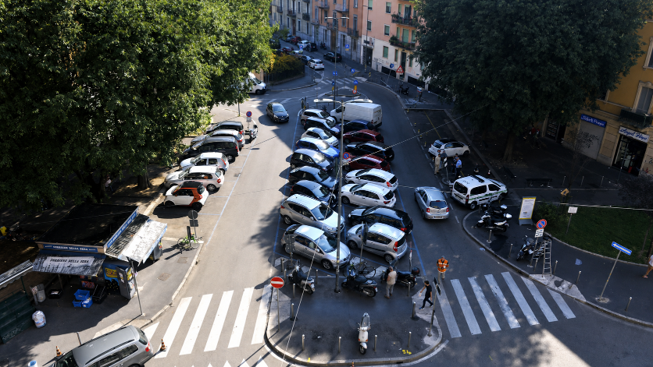
Milan streetscape filled with car parking
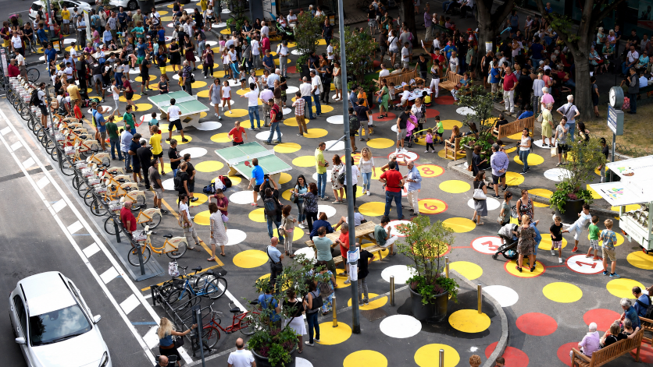
Milan streetscape filled with people with markings painted on the ground

Piazze Aperte – Milano – Copyright (Demetrio Scopelliti, Director for Urban Planning and Public Space at AMAT, City of Milan)

In the image on top, you see one of the spaces before the transformation; the space is doing a familiar urban job. It moves traffic, stores cars and leaves the rest of public life around the edges.


The second image below it shows the same place after it has been opened up for people to gather, play, sit, paint, talk and spend time. Not much has changed, a few benches and plants have been added, circles have been drawn and a few bicycle racks have been installed. Yet, the change is dramatic and easy to understand. A space that once mainly organised movement and parking has been given a social role, and with that role comes a different feeling of place.


2. Cork City (IE): PlaysMaking

Cork started from an idea that sounds almost too simple: let people play in the city.


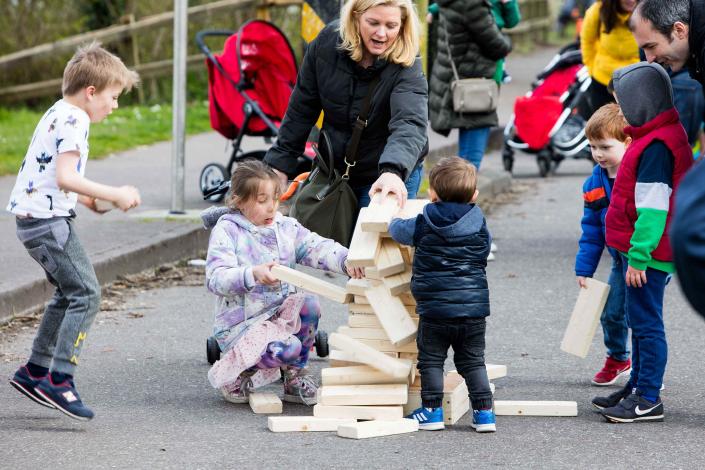
That does not mean adding one playground and calling the job done. PlaysMaking treats play as a way of changing how people enter public space and how they take part in conversations about it. A street can host a giant game, a playful workshop, a temporary event or a community activity that lets children, families and local groups use the city differently for a few hours. Instead of inviting people into the conversation through planning language, the city gives them something they can join, notice and respond to.


That matters because play changes who feels invited into the process. Children notice possibilities adults often miss, parents see where they feel comfortable or unsafe, and community groups can test how a street or square works when it is no longer treated only as a route from A to B. Cork has supported this through Play Streets, pop-up events, trained Community Play Leaders and a system that allows play equipment to be accessed through public libraries, making it easier for local groups to bring play into their own neighbourhoods.


The results have gone beyond individual events. In Cork, the approach has helped support the permanent pedestrianisation of more than 3 km of public roads, created 15 public spaces where pop-up events can happen more quickly, and secured multi-annual funding for a Play Development Officer. Play has also entered local planning priorities through the City Development Plan 2022–2028 and the Local Economic and Community Plan, while the approach has travelled beyond Cork, inspiring other towns across Ireland and cities across Europe to adapt play to their own streets, squares and public spaces.


Kids in Cork

Playsmaking Cork (IE)

3. Celje (SI): Temporary use of spaces

Every city has them. Empty ground-floor units. Closed doors. Dark windows. Spaces in good locations that somehow make the street feel less alive.


In Celje, the starting point was a municipally owned office space in the old town centre that had stood empty for years. The city could have waited for the perfect long-term use. Instead, it opened the doors.

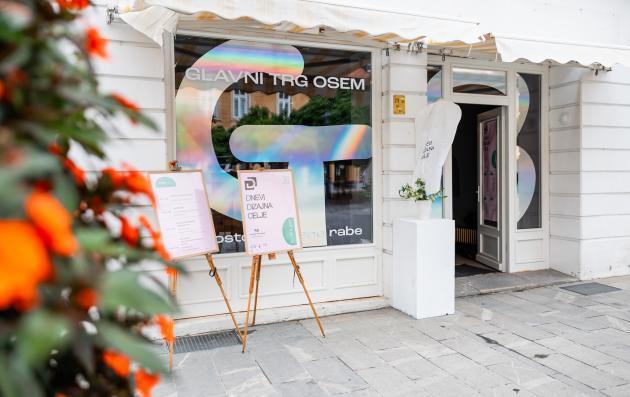
The space, known as GT8, became a place for culture, creativity and encounter rather than another closed frontage in the old town. Local artists, NGOs, schools, designers, associations, entrepreneurs, sports clubs and public institutions could use it at minimum cost for performances, workshops, debates, pop-up events and creative projects. 


After an initial test period in late 2023, when six week-long events brought around 1 000 visitors into the venue, the city continued the approach through a public call in 2024. In the first six months, GT8 hosted 20 projects, including theatre performances, workshops, debates, pop-up events and activities linked to Design Days Celje.


The point is not that one empty room solves the future of a city centre but that vacancy was treated as a resource rather than a dead end. When a ground-floor space becomes active, the street changes. There is a reason to pass by, to enter, to meet someone, to try something, to imagine another use for nearby spaces.


Celje also shows why temporary use works best when it is light but organised. The city did not simply hand over the keys and hope for the best, instead the arrangement gave local actors access, while the municipality and cultural institutions helped coordinate use, visibility and continuity.

Celje (SI) – GT8 event space

Placemaking beyond the urban square

4. Tavernes de la Valldigna (ES): The Path of the Senses

Some places do not need to be made distinctive. They already are. Tavernes de la Valldigna, a Spanish town of around 17 000 inhabitants, sits between the coast, and unique landscapes that quickly change, moving from natural springs and forest paths to agricultural land, marshes and dunes. Here, the challenge is not to invent a sense of place from scratch, but to help more people experience what is already there without losing the qualities that make it special.


The Path of the Senses was created as a response to that challenge. Since 2015, the project has adapted trails and access routes, added relief panels showing local landscapes, introduced braille signage and linked QR codes to audio guides in Valencian, Spanish and English. It has also been accredited as a Blue Trail and accessible route. These details matter because they change who can use the landscape and how. Families, older residents, people with disabilities, schools, visitors and local associations can all experience the landscape in ways that suit them, turning the route into a shared space for recreation, learning and connection.


The project also makes care part of the route itself. Residents were involved through surveys, needs analysis, volunteering and improvement activities, while schools, accessibility organisations, environmental partners and local associations helped shape its educational and community role. Employment workshops supported by the European Social Fund have contributed to cleaning and restoration activities, linking the trail to local skills and job opportunities as well as environmental stewardship.


What makes the Path of the Senses a placemaking practice is that it turns a memorable landscape into a shared civic experience. The trail is not only a way to move from one point to another. It helps people understand what surrounds the town, why those ecosystems matter and how access can be widened without turning the place into a simple attraction, showing that, when nature already gives a place its character, placemaking can mean helping more people experience it and take part in protecting it.


Tavernes de la Valldigna (ES) – The Path of Senses

5. Vila Boa do Bispo (PT): Smart Village Strategy

Vila Boa do Bispo, a Portuguese parish of just over 3 000 inhabitants is not working with one square, one street or one building, but with the everyday resources that shape local life. Its Smart Village Strategy brings together local initiatives around sustainability, digital tools, youth engagement and environmental care. While that may sound abstract, in practice, the strategy becomes visible through very concrete things such as river preservation, forest trails, recycling schemes, school activities, energy cooperation and youth projects linked to green and circular economy skills.


This is what makes the case interesting. Vila Boa do Bispo does not treat climate action as something separate from local identity, or as a strategy that sits above everyday village life. The river becomes a starting point for environmental awareness, the forest becomes a place to walk, learn and care for, schools help carry the work into the next generation, and young people are brought in through volunteering, sustainability education and green skills projects. 


Since 2020, this has moved from intention into action, starting with a #VBB_ZERO youth volunteering project involving more than 60 young people and growing into a wider set of partnerships, including the QUORUM cooperative for local renewable energy. For smaller towns and rural communities, the lesson is that placemaking can also mean making local resources more visible, more shared and more connected to the future people want to build together.


Vila Boa do Bispo (PT) - Smart Village logo

Key takeaways for your city

Across the five examples, one idea comes through clearly. Placemaking does not have to wait for a major redevelopment project to begin. Small, practical changes can have an outsized impact when they help people see a familiar place differently, whether that means opening a street for play, testing a new public square, bringing life back to an empty room, or making local landscapes easier to experience.


What makes these practices work is not only the intervention itself, but the way people are brought into it. Residents, schools, local organisations, volunteers and public administrations all play a role, turning placemaking into a form of everyday participation rather than a decision made elsewhere and delivered from above. When people can help shape a place, even in small ways, they are more likely to recognise it as shared and to care about what happens there, and that is ultimately what placemaking is about: making people care about the place they call home.


You did not think these were the only Good Practices URBACT had to offer, did you? Get inspired by the 116 URBACT Good Practices awarded in 2024! Explore the full database to discover more tested ideas from cities across Europe and find inspiration for your city’s next move.

Submitted by on 18/06/2026