15/09/2015 03/05/2018
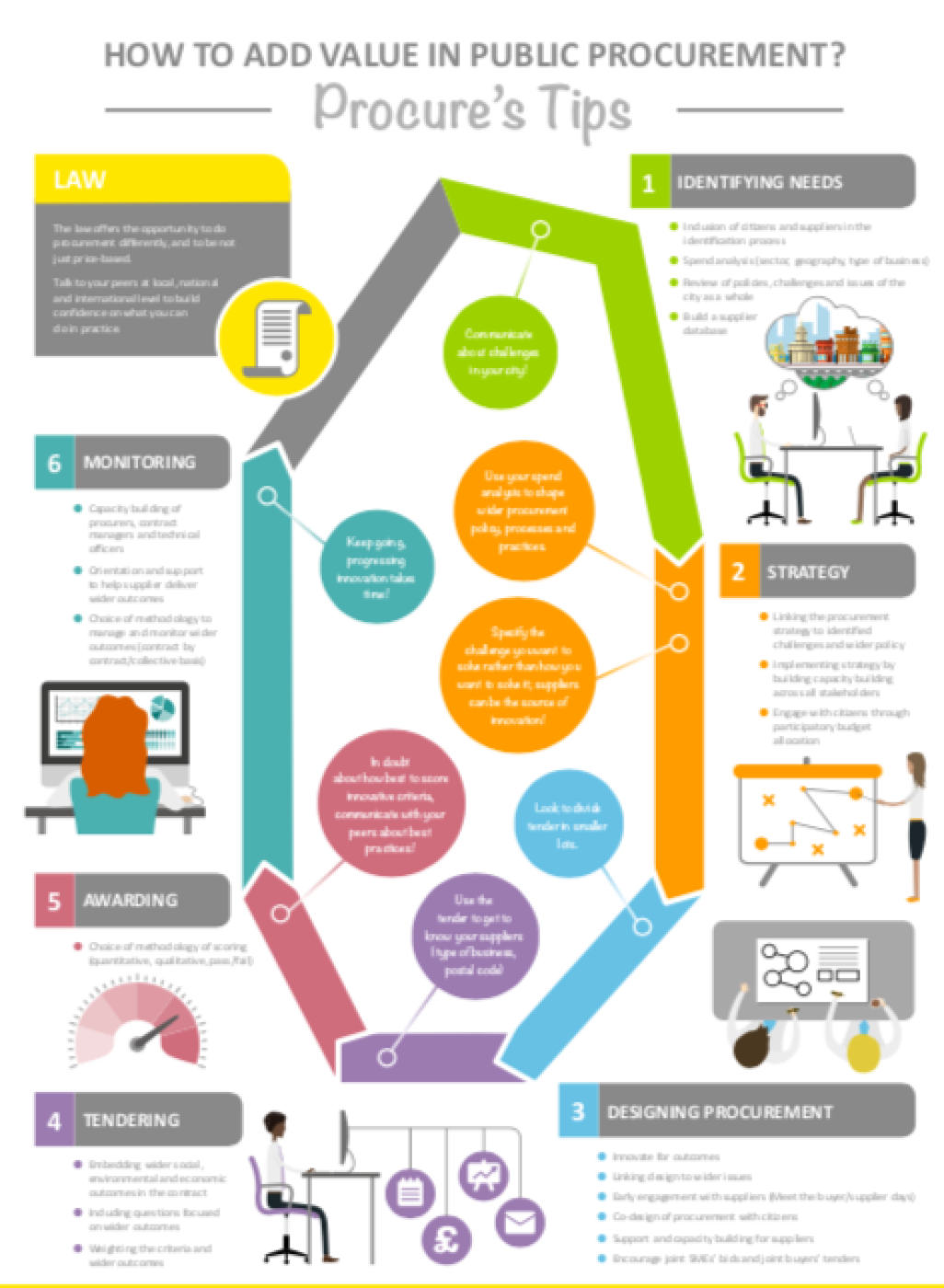
The goal of this Action Planning network was to explore how to harness the spending power through procurement of public and anchor institutions in the partner cities to bring about economic, social and environmental benefits for businesses and people which in turn will have a positive impact on the city and its local economy. The topics to be explored include: the regulations and law at both European and national level, and what cities are able to do around innovative procurement; how to analyse procurement spend and develop a procurement strategy; the use of social criteria and environmental criteria in procurement; and how to raise awareness of procurement amongst local businesses and SMEs.

Summary
Partners
Lead Partner Preston- Albacete - Spain
- Almelo - Netherlands
- Bologna - Italy
- Candelaria - Spain
- District 9 Prague - Czech Republic
- Koprivnica - Croatia
- Koszalin - Poland
- Lublin - Poland
- Nagykálló - Hungary
- Satu Mare - Romania
Timeline
Kick-off meeting in June (Lublin). Transnational meetings in September (Satu Mare and Nagykallo) and December (Albacete).
Transnational meetings in March (Koprivnica), June (Candelaria), September (Koszalin), November (Prague).
Final event in March (Bologna).
Network Outputs
Preston City Council
Town Hall, Preston, PR1 2RL
-
procure_final_report.pdf(PDF, 10Mo)
-
procure_partners_iap_summary.pdf(PDF, 845Ko)
Integrated Action Plans
-
albacete_procure_action_plan_final_en.pdf(PDF, 775Ko)
-
procure_preston_-_iap_final_en.pdf(PDF, 1Mo)
-
procure_-_prague_9_integrated_action_plan_en.pdf(PDF, 621Ko)