The idea of welcoming cities has probably never been more politicised than today. Across Europe, cities are coming under pressure, as institutions and governments shift their attention to curbing migration and parties with anti-migrant agendas make strides in the polls.
In the last round of URBACT Action Planning Networks (2023-2025), three networks explored different approaches to building more welcoming cities. Agents of Co-Existence aimed to reinvigorate democracy through civic participation with all residents, including newcomers, while WELDI drew on human rights as the glue to better incorporate newcomers into the city fabric. Residents of the Future looked at how smaller cities can create the conditions to become more welcoming to newcomers, attracting investments and creating opportunities for people to settle, connect and participate in local life.
Read more about the networks’ local actions and tangible outputs from across their 27 partner cities.
WELDI – building social cohesion
The network started from the responsibility of cities to safeguard the human rights of their residents, whatever their origins and status. The project of localising human rights is challenged by a reality where ‘new guestworkers’ arrive through recruitment companies under the city’s radar, shanty towns mushroom, asylum seekers have to sleep in the streets and refugees are being denied access to health care by red tape. The nine partner cities used a human rights approach to look at the rights of all city residents together, creating win-win-situations for everyone.
This approach manifested in different ways, including Utrecht (NL)’s famous Plan Einstein refugee reception model, Lampedusa (IT)’s plan to improve maternal health infrastructure benefiting both landing migrant women and residents and Timișoara (RO)’s House of Youth programme that offers cultural activities for young Ukrainian refugees together with local youth.
Over the course of their network journey, WELDI partners realised that they could only reach their goal of rights-based reception policies by speaking directly to newcomers themselves. WELDI’s migrant recommendation videos identify priorities and talk about needs from their perspective. This video series has been curated around language learning, orientation, recognition and public perceptions of migrants.
With many new arrivals from Ukraine, South America and Asia, Sosnowiec (PL) conducted a migrant survey together with a university to take the pulse of this population, and found that many were lacking guidance, but also language learning opportunities and social contacts in their new home. According to the local WELDI coordinator, Edyta Wykurz, “This survey was a ‘game changer’ for the city council”. It led the city not only to design multi-lingual information material but also new language courses and opportunities for interaction.
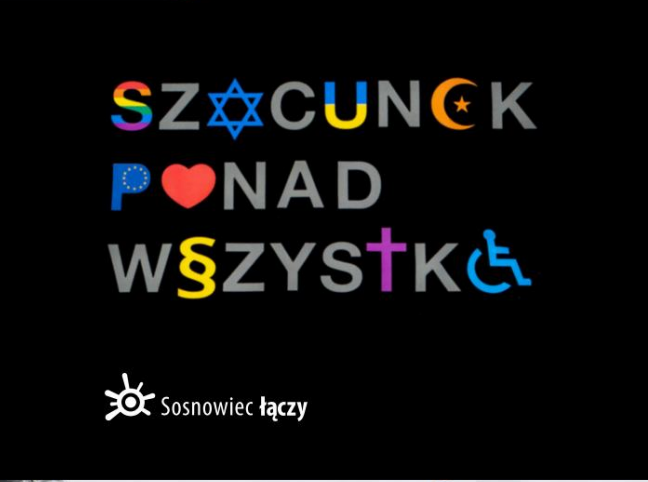
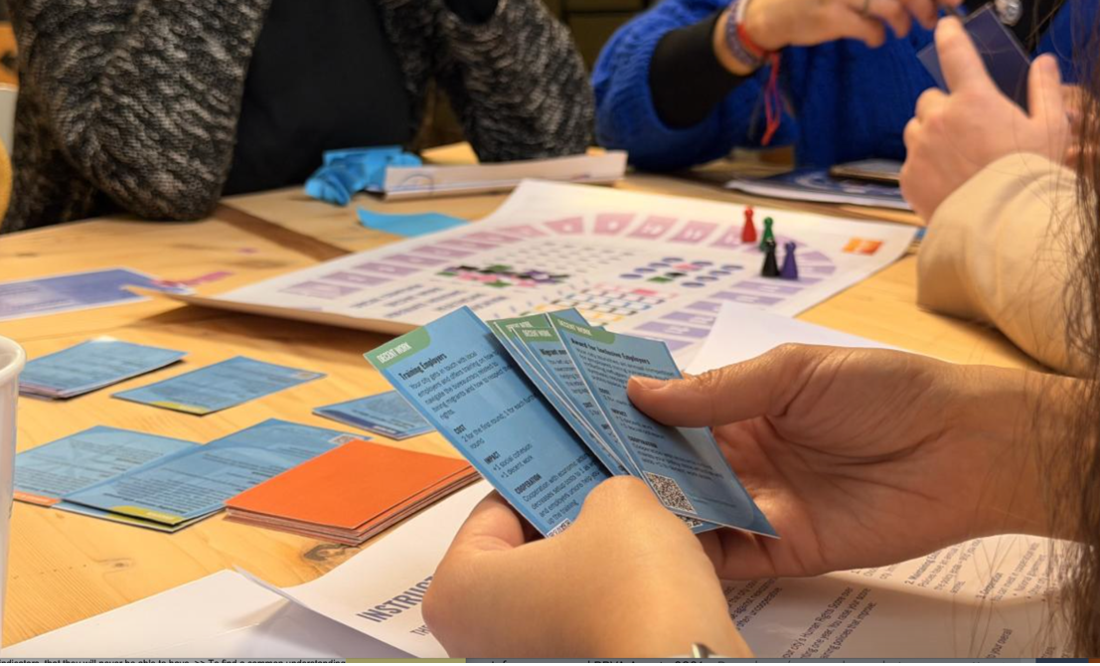
The WELDI network has also turned its experiences into the card game ‘build a welcoming city’. The game allows players to implement policies that align city policies with human rights, while it also challenges them through many things that can go wrong on this path. Both the challenges and good practice are based on the real experiences of WELDI partners.
WELDI included the cities of Utrecht (NL) (lead partner), Albacete (ES), Cluj-Napoca (RO), Fundão (PT), Lampedusa (IT), Liège (BE), Osijek (HR), Seine-Saint-Denis (FR), Sosnowiec (PL), Timișoara (RO).
Residents of the Future – solutions for urban shrinkage
For the nine partner cities of Residents of the Future, citizen-centric solutions to combat urban depopulation (and attracting migrants is one element of this). In Mangualde (PT), network partners worked closely with migrant communities, schools, associations and local residents to better understand newcomers' needs and improve integration. The city identified housing, education, mobility and community participation as key priorities, while also investing in skilled jobs within the green economy and innovation with a technology hub.
Sibenik (HR) depends on migrants to keep its booming tourism sector going, and many other partners see international students and digital nomads as potential future residents. On the Residents of the Future podcast, Nikolina Gracin and Ines Kulušić, from Šibenik’s Department of Economy, explain how the city relies on its increased cultural, educational, work offer to get the many tourists to stay for longer periods and relocate and to promote immigration. Furthermore, the city saw the importance of orientation so that newcomers receive reliable information and guidance in their new city. Based on the experience in the network, the city will develop a Šibenik starter kit and an AI agent for better guidance.
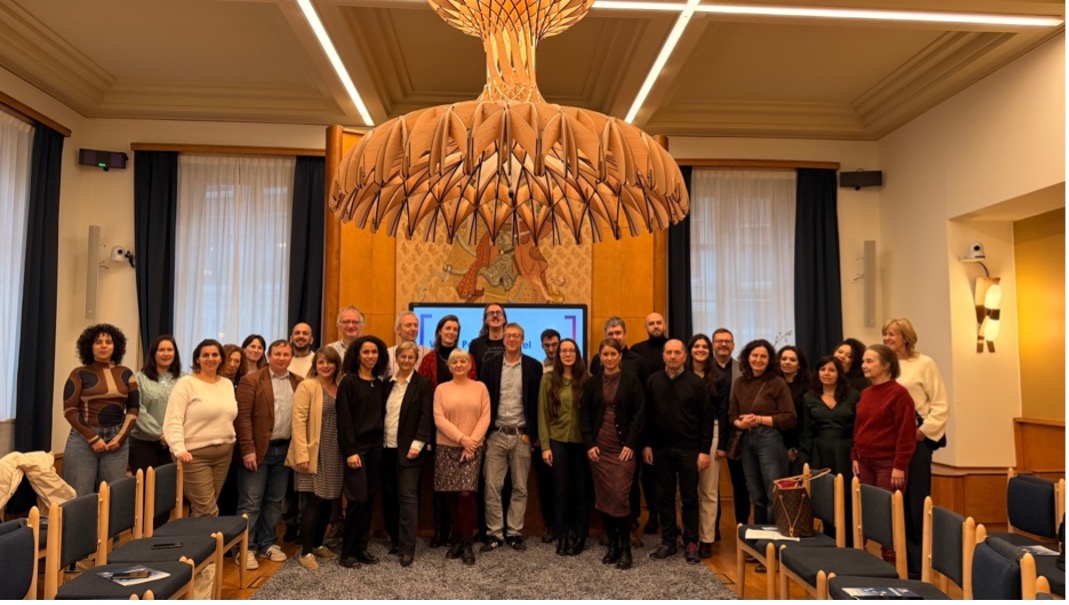
Residents of the Future included the cities of Šibenik (HR) (lead partner), Alba Iulia (RO), Iisalmi (FI), Mangualde (PT), Mantova (IT), Plasencia (ES), Saint-Quentin (FR), Saldus (LV), Trebinje (BA).
Agents of Co-Existence – immersive civic participation
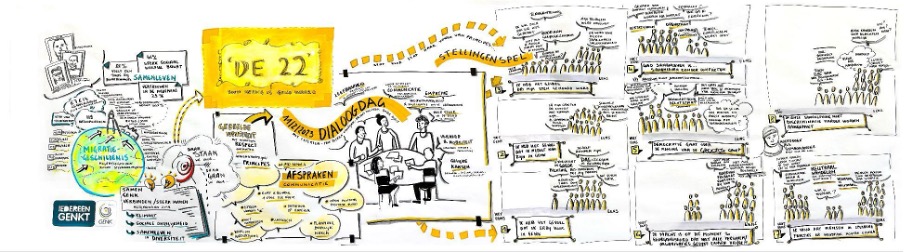
The nine partner cities in Agents of Co-Existence looked at welcoming cities through the prism of citizen participation, which is another powerful way to reduce mutual stereotypes. Its lead partner, Genk (BE), wanted to define a new model for living together in this super-diverse city. The ‘22’ - a panel of 22 randomly selected citizens representing the different neighbourhoods and population groups according to age, gender, migration, employment and educational backgrounds, came together to dialogue with city council and advisory bodies and define four ground rules for the city. One of these rules, ‘A real chat solves a lot’, for instance, led to the city organising public conversations called De Grote Babbel (The Great Chat), where pairs of people from different socioeconomic or cultural backgrounds deliberate in a structured, safe space on critical city challenges like housing or integration. This is just one of many measures through which the city wants to spell out the new ‘Genk habits’. They also include an immersion of every new city council worker in the local civil society organisations.
Some of the network partners were able to overcome technical and logistical obstacles to activating civic participation. The town council of Quart de Poblet (ES) developed the Urban Innovation Laboratory to rethink their governance and participation processes. In the Laboratory, citizens, local representatives and technical experts, alike, have a space to explore, experiment and transform how the city faces its contemporary challenges to public innovation.
Agents-of-Co-existence partner Gdansk (PL), a champion for civic participation, is keen to draw on participatory methods that have the potential to engage migrant residents alongside established residents, for instance in citizen assemblies. At the sub-local level, the city’s 35 neighbourhood houses spell out civic participation at the sublocal level and provide opportunities for all residents to co-produce the neighbourhood according to their specific needs.
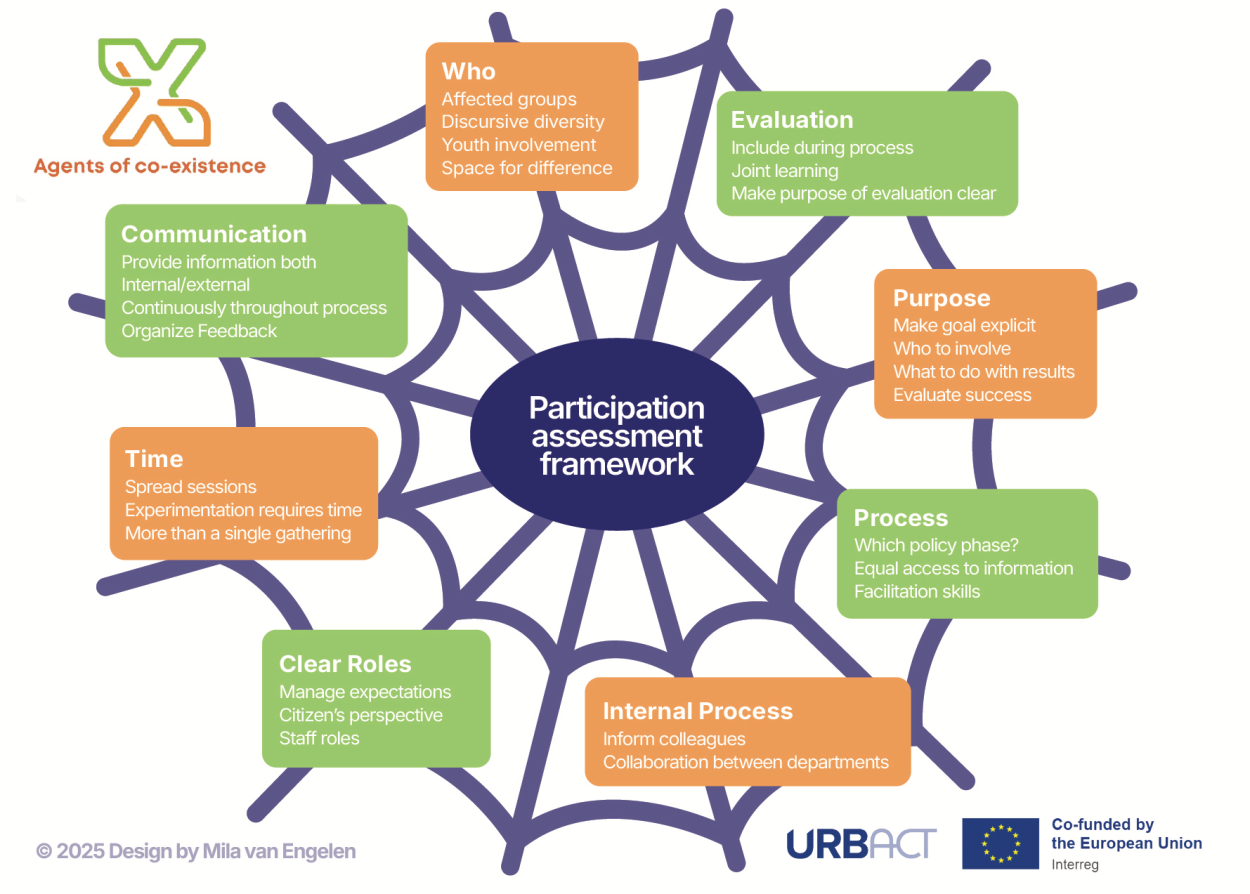
As a network, Agents of Co-Existence compiled their findings on meaningful participation for other cities in its Participation Assessment Framework.
Agents of Co-Existence included the partners of Genk (BE) (lead partner), Gdańsk (PL), Ķekava County (LV), Budaörs (HU), Banská Bystrica (SK), the Intercommunity Development Association of the Iași Metropolitan Area (RO), Quart de Poblet (ES), Aarhus (DK), Breda (NL).
Three lessons for more welcoming cities
Below are some guiding principles for cities welcoming new residents and fostering a shared sense of civic engagement.
1. New city residents need orientation and guidance
The need for reliable information and guidance for newcomers was one of the elements that emerged across the three networks. Albacete (ES) decided to strengthen its information policy by developing a guidance app, which will able to provide reliable information to newcomers.
2. Tell your own story
Cities should set their own local stories, oppose dehumanising discourses with real stories of migrants and stress common challenges that unite all residents. Fundao (PT) has done this with its vid-cast series Conversas a Propósito.
3. Foster meaningful interaction
Cities involved in the above networks show how interactions can lead to improved relationships: they confirm what “contact theory” from social psychology has found, namely that when members of different groups work together on an equal footing, with the endorsement of an official institution, to reach shared objectives, interaction can actually reduce mutual stereotypes and foster social cohesion. WELDI partners found that buddy and mentoring schemes, mixed sports teams, volunteering or schools and parents’ associations have a great potential to bring people together on an equal footing, keeping in mind ‘what’s in it’ for both established residents and newcomers and avoiding ‘staged interaction’ with unclear objectives.
Looking ahead: the door is still open
Building welcoming cities may be difficult in the current macro-political environment. Nevertheless, all three of these URBACT Action Planning Networks demonstrate that cities can withstand these pressures by doing their job well if they build on their proximity to residents. After all, cities are the most trusted level of government, and their citizens tend to value good relations and social cohesion over any given ideology.
By developing a strong social base for their cause and shaping an inclusive narrative that is reflected in the lived reality of their citizens, welcoming cities can set the trend, beating the path to follow for a socially sustainable future. To do this job well, cities need to draw on their strengths: co-creation with residents, collaboration with civil society and intermunicipal solidarity and learning - within URBACT and elsewhere.
Explore the three URBACT Action Planning Networks and their final outputs:
WELDI | Residents of the Future | Agents of Co-Existence | and all the 30 URBACT Action Planning Networks (2023-2025).