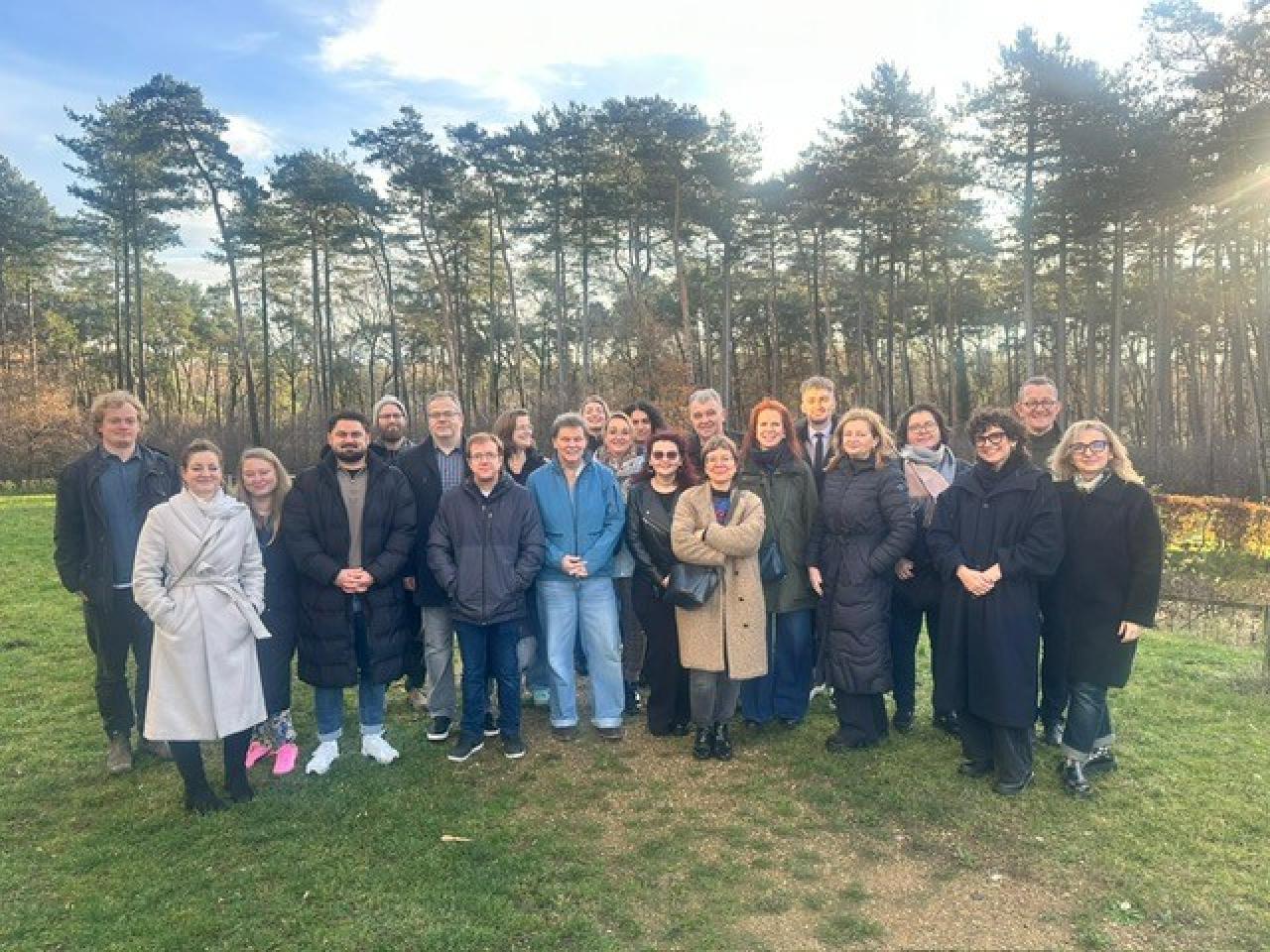
It is a small scene. But it captures a big shift that lies at the heart of the URBACT Agents of
Co-Existence (AoCE) network, where nine European cities spent the past 2.5 years
rethinking what citizen participation really means. From the beginning of their journey,
they shared one central question: How can local governments change themselves so that
working with citizens truly becomes meaningful, credible and sustainable?
At the start of the journey, partners discovered their challenges were very similar:
Participation meetings always attracted the same small group of people. Digital surveys
produced limited engagement. Civil servants were expected to engage “the public” but
often lacked clarity about their mandate. And citizens increasingly doubted whether their
input really made a difference. In many cities, participation started only after key
decisions had already been shaped. The space for real influence was narrow. When people
discovered this, trust quickly evaporated. As one participant put it during an early network
meeting:
“We call it participation — but for citizens it often feels like we are just explaining decisions
that were already made.
Looking inward, before reaching outward
The problem, partners realized, was not a lack of motivation on either side. The problem is
more structural and more complex, but it starts with how one looks at citizen
participation. If you consider it as just a tool, you are likely to keep having the same
problems.
What made the AoCE network different was a bold and sometimes uncomfortable
decision: instead of starting with new methods for engaging citizens, cities first turned the
spotlight on themselves. They began asking difficult internal questions. Who decides what
is open for discussion? Are political mandates clear? Do civil servants feel safe and
supported when they step into participatory roles? And do internal rules make
participation easier — or almost impossible?
This led the partner cities to an important, shared insight: If the organisation is not ready,
participation will almost always disappoint.
And this insight marked a fundamental shift. Cities started to move away from thinking
about participation as a technical process and towards seeing it as a matter of
organisational culture, trust and shared responsibility.
Participation as everyday democratic practice
Across the AoCE cities, a few important lesson were shared: First of all, trust is not built
through large campaigns or glossy platforms, but through small, human actions. A
personal invitation instead of a mass email. A phone call after a meeting to explain what
happened next. Clear feedback on which ideas were adopted and which were not, and
why.
In Gdańsk, years of experience with participatory budgeting evolved into a Civic and Green
Budget, where residents directly shape environmental priorities alongside other
community projects. In Budaörs, this shift took shape through the city’s first-ever
participatory budgeting process. By inviting residents to decide directly on part of the
municipal budget, the city discovered that participation is not only a democratic tool, but
also a test of organizational readiness and political trust. And in Ķekava, neighbourhoodled
events replaced formal consultations, bringing municipal staff into parks, schoolyards
and local celebrations. Again and again, partners discovered the same: People respond to
people, not to institutions.
Secondly, partners realized that many of the most creative solutions to social challenges
rarely originate inside municipal buildings. In Breda, this insight led to the creation of
Value Networks: permanent coalitions of public, private and civic actors working together
on issues such as inclusion, safety and equal opportunities. In Banská Bystrica and Iași,
new collaboration platforms enabled NGOs, youth groups and civil servants to co-design
solutions from the start, not as an afterthought.
These examples show a new role for civil servants: not as gatekeepers, but as connectors,
brokers and translators between systems and communities. Civil servants become
facilitators of dialogue, guardians of trust, and sometimes emotional anchors in difficult
public conversations.
The Aarhus Democracy Hosts, described in the example in the introduction, are a powerful
example of this. Citizens and civil servants train together to facilitate political dialogue. In
so-called “inverse voter meetings”, residents set the agenda and politicians listen first. The
effect is not only more equality in conversation, but also something deeper: growing
confidence among citizens and a renewed sense of purpose among public servants.
Thirdly, we learned that even when people are willing to collaborate, the system itself
often is not. Rigid procedures, siloed budgets and slow decision-making cycles frequently
clashed with the dynamic reality of civic initiatives and community action. Over time, AoCE
cities started to rethink these structures and to redesign them so that participation
becomes possible by default, not by exception. In Quart de Poblet, the city responded to
institutional rigidity by creating an Urban Innovation Laboratory, a dedicated space where
civil servants, citizens and local partners experiment with new ways of working together.
By stepping outside standard procedures, the city created room for learning, collaboration
and shared problem-solving.
A framework for better choices
All these insights in the end of our URBACT journey came together in one concrete,
transferable result of the AoCE network: the Participation Assessment Framework.
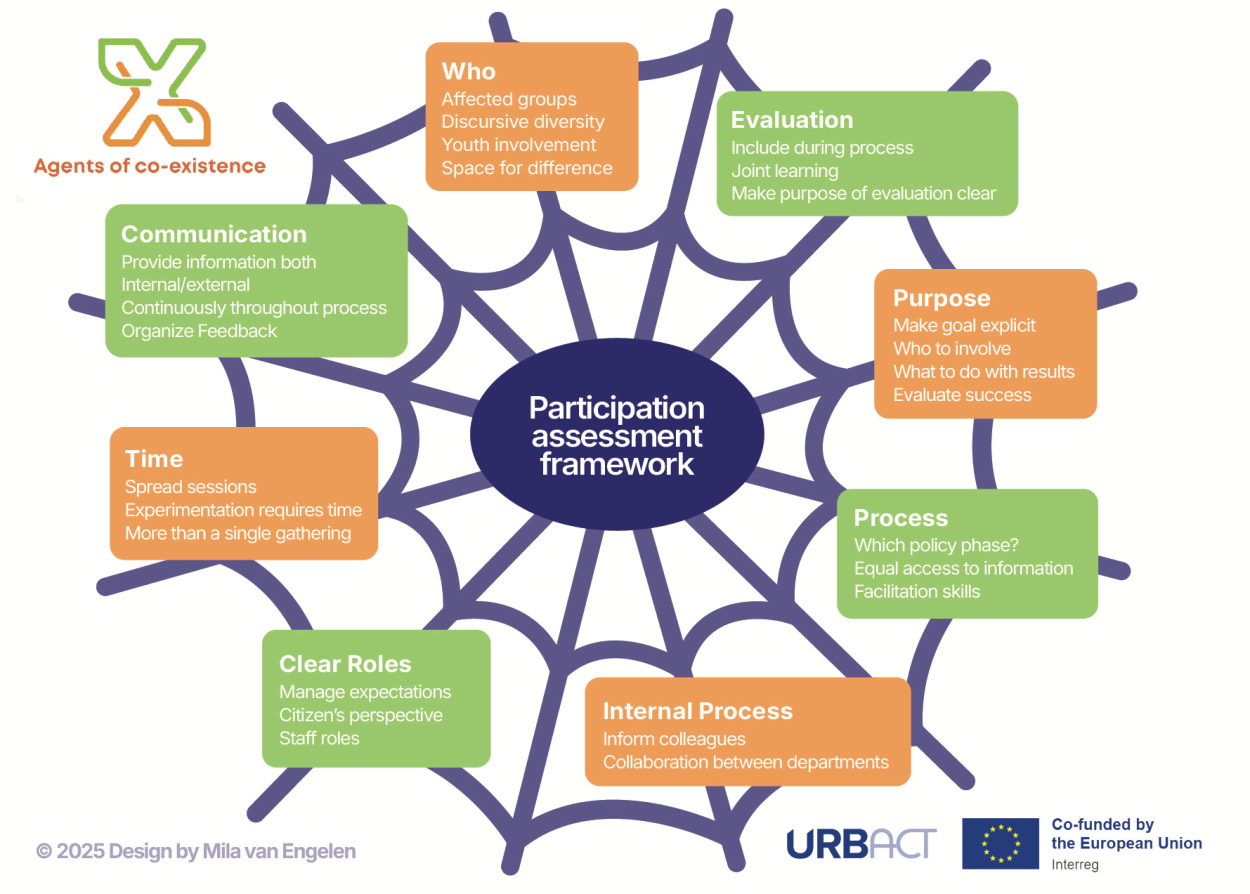
Rather than prescribing methods, the framework helps civil servants reflect before they
launch a participation process. It asks simple but fundamental questions: Is participation
appropriate here? What level of influence is truly possible? Who must be involved
internally and politically? Are the organisational conditions strong enough for success? By
making these questions explicit, cities avoid false promises, prevent frustration and
strengthen mutual trust. The framework, originally developed by the city of Genk, helps
move from good intentions to honest, realistic and credible participation.
Learning across borders
In these turbulent times across Europe, local governments face growing polarisation,
declining trust and increasingly complex transitions — from climate change to
digitalisation, from housing to social inclusion. Traditional top-down governance is no
longer enough. The AoCE journey has shown us that participation is not a communication
tool, it is democratic infrastructure. With the Participation Assessment Framework and a
rich collection of tested practices, AoCE now offers other European cities a practical
pathway towards more mature, trustworthy and resilient democratic governance.
After 2.5 years, the AoCE cities no longer see participation as something they “do at the
end” of policymaking. They increasingly see it as a way of working, a shared democratic
practice, a form of co-existence between government and society. Not perfect. Not
finished. But fundamentally different from the starting point. As one participant reflected
at the final network meeting:
“We did not just learn how to involve citizens better. We learned how to become a
different kind of government.”
Anja van Hout
Lead Expert for Agents of Co-Existence
An URBACT Action Planning Network
13 December 2025