Networks and cities' news

Catch up on the latest updates from cities working together in URBACT Networks. The articles and news that are showcased below are published directly by URBACT’s beneficiaries and do not necessarily reflect the programme’s position.

Want to learn more about the projects that are featured here? Discover the URBACT Networks.
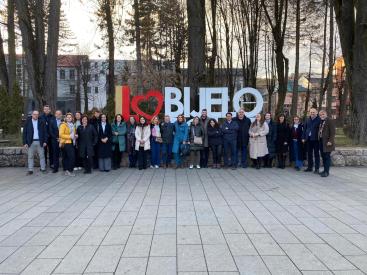


  • Group pic in Bijelo Polje

    Recap of the 8th Transnational Meeting in Bijelo Polje: One Step Further in the Fight Against Social Isolation 

    From March 3 to 5, 2025, the city of Bijelo Polje, Montenegro, hosted the 8th Transnational Meeting (TNM) of the Breaking Isolation network. This key event of the URBACT IV program brought together 8 partner cities in person and 2 more online, reaffirming the collective commitment of European actors in the fight against social isolation. 

    Barbara Gautherie

    See more
  • Circular economy: another buzzword or your city’s future?

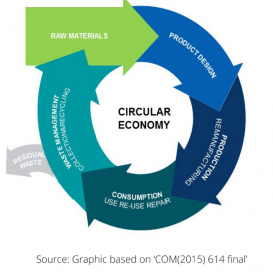
    In times of decreasing resources and growing responsibilities, many cities and regions are understandably skeptical towards what seems to be yet another buzzword. However, a transition to a circular economy is both a necessity and an opportunity, with the potential to offer long-lasting economic, environmental and social benefits. 

    What is circular economy? How can cities and regions support this transition? And, perhaps most importantly, where to start? Read on to find answers that are based on the experience of the European Territorial Cooperation programmes and the projects they support. 
     
    Workshop “Pathways to a circular economy in European cities and regions”, The European Week of Cities and Regions 2016 (source: EWRC/flickr.com, CC BY-NC-SA)
     
    The article below is based on a joint policy brief „Pathways to a circular economy in cities and regions” produced by ESPON, Interact, Interreg Europe and URBACT and launched during the 2016 European Week of Cities and Regions. Full version of the brief is available here.


    Ania Rok

    See more
  • Digital Uber Alles

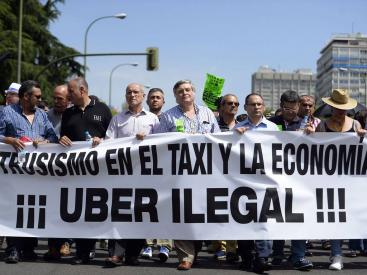
    Hands up those of you who have used Uber. Or Airbnb? I thought so. Increasingly, if you ask that question to a group of people, a forest of hands shoots up. When I asked it at a German Marshall Fund event in Bilbao last month, people with their hands down were a small minority.

    We were exploring the challenges that the 'Gig Economy' poses for equity and urban governance in the U.S. and Europe. As digital platforms become increasingly common, these new business models are generating new and complex questions for policy makers at all levels of government.
     
    So, what are the principal issues cities face in relation to these developments? How can they strike the right balance between regulation, designed to protect citizens, and innovation, which city authorities are keen to support? What can we learn from the experience of cities so far, and what can Urbact do to support decision makers as they grapple with these wicked issues? That’s what we’ll be exploring here.


    Eddy Adams

    See more
  • Squatting for cultural use toward commons: The case of Rog factory in Ljubljana

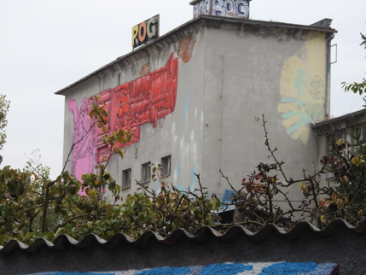
    During their 100-150 years of history industrial (or in a broader sense, non-residential) buildings face many challenges. Not only technology may change but whole industries might become outdated and shut down. Moreover there is a spatial factor: a factory built on the periphery of a small settlement might find itself a few decades later in the centre of the expanding city, occupying areas with much higher land value than justified for industrial use. 

    The problems of such outdated industrial places, the conflicts and their potential solutions have large relevance for many ongoing URBACT Action Planning Networks, such as Second Chance (dealing with re-use of abandoned large buildings), Refill (focusing on temporary use), Sub>urban (exploring new approaches to transition zones of cities), Maps (discussing options for former military sites). For all of these URBACT networks the story of the Rog factory in Ljubljana is interesting, as it highlights most of the key aspects and dilemmas of abandoned industrial places, while also confronting with each other the most important approaches to find solutions. 

    Ivan Tosics

    See more
  • Simple is the new smart: lessons from the refugee crisis


    “Refugees don’t just come to nations; they move to cities” writes B. McKenzy at Brookings Institution. Whether we agree on not with this catchy phrase, it is true that cities administrations, and simply citizens, are front-runners in dealing with incoming refugees. 

    Laura Colini

    See more
  • With a climate change denier in the Whitehouse, how can our cities maintain momentum towards a low carbon future?

    A day to remember…or one to forget

    Where were you when you heard that Donald Trump had been elected President of the United States? In years to come, that may be the ‘Where were you when Kennedy was shot?’ question for our generation. As it happens, on 9th November 2016 I was in Rotterdam working with a group of European cities on the development of low carbon resource efficient districts. So, on the day that a climate change denier was sent to the Whitehouse, we were investigating ways to support Europe’s sustainable energy future. 
     
    As we tried to absorb the news from across the Atlantic, someone asked how this would affect our work. Can Trump really roll back the decisions taken by his predecessor and the extensive networked commitments linked to the Paris agreements of only a year ago? If he does, can cities successfully support energy transitions without the support of key nation states, as Benjamin Barber and others have suggested? And as the climate change debate potentially reopens, how can our cities ensure all citizens are on the right side of this ongoing political faultline? 


    Eddy Adams

    See more