Every year, European Youth Week welcomes more than 1 000 participants to celebrate youth engagement making a difference across Europe. The 2026 edition, which is currently taking place, focuses on solidarity and fairness.
Between 2023 and 2025, these same themes were the driving force behind three URBACT Action Planning Networks. NextGen YouthWork addressed the challenge of how to get – or to stay – in touch with youth by re-inventing how youth work takes place. Re-Gen investigated how to give youth space in our cities by upgrading spaces lost to the city society to valuable activity spaces for youth. Schoolhoods tackled the challenge of how youth is moving in the city starting with their most frequent and regular trip: the one to school.
Find out more about giving youth a voice and the space to take a prominent role in our cities.
Understanding youth: the key message to the future
A simple formula proves that these are central questions for all societies, and therefore, cities: youth accounts for about 20% of our population but stands for 100% of our future. So, it is about high time to redefine the place that youth take in our thinking, in our visions for our cities. However, there are discrepancies between how Gen Z (born between 1997 and 2012) and younger generations are viewed and how they perceive themselves.
In their research work on ‘connecting generations’, Chris Hauck and Erin Sowell have analysed how each generation views both, itself and other generations. Their research shows that Gen Z, while seen as tech-savvy, are deemed ‘entitled’, ‘needy’, ‘moving too fast’ and even ‘lazy’ and ‘narcissistic’ in the view of older generations. The same study found that Gen-Z similarly views themselves as tech-savvy, but also as open-minded, creative, fast learners and detail-oriented.
Let’s see how 26 cities developed Integrated Action Plans to address and overcome these, sometimes biased, views about youth.
NextGen YouthWork – developing a hybrid and sustainable future for youth work
Led by Eindhoven (NL), Aarhus (DK), Oulu (FI), Cartagena (ES), Perugia (IT), Iasi (RO), Tetovo (MK), Klaipeda (LT), Vesprem (HU) and Viladecans (ES) teamed up to answer the mission statement question: Youth work starts where young people are – but how can youth workers get there? The 10 partner cities experimented with a range of options to improve how youth can take an active role in democratic processes of city development and, in turn, how cities can support youth in testing innovative approaches to digital work options.
For instance, Eindhoven (NL) created a city-wide vision on online youth work and started an e-learning training for youth workers on the use of digital tools reaching out to them already in 2026. Eindhoven merged the digital with the physical world in its Eindhoven Game Festival, where young people met for gaming, cosplay and community building. With the local team talking with them to learn more on how youth would define a digital youth centre in Eindhoven.
Oulu (FI) developed an online youth work environment on the Discord group chat platform. Using Discord, the local team virtually installed an online copy of their youth work structures offering a variety of layers on e.g. music, games and other topics of interest where youth can meet and exchange, amongst themselves as well as with youth workers. Youth itself took a prominent role in its creation by the Superhero Brainstorm workshop that ideated how online youth work could look like. The Discord channel has already more than 500 monthly users over the project’s lifetime.
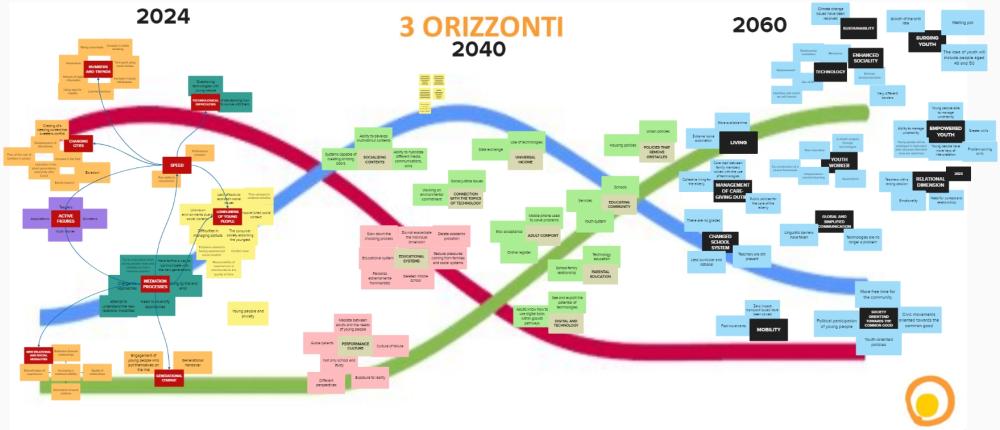
Perugia (IT) on the other hand, started by creating a vision on the interplay of the city, youth and technology, applying a ‘Three Horizons Future Lab’ method. The local team first analysed the challenges youth face in 2024 and then formulated the vision of how these challenges would have been addressed in 2060. The next step was to connect these two-time horizons by defining the development pathway towards the envisioned future expressing the needed changes for positive development over the next decade. The Lab delivered a clear structure for the transformative changes, and Perugia moved to developing the identified actions and testing them on the ground. A highlight of their work were the AI training sessions and events. The local team cooperated with young people originating from a rock festival who used digital and AI tools for the creation of videos and music. Within their AI events, more than 100 young people took part showcasing the demand for creative digital opportunities and the abilities youth gained throughout the training. The videos created by youth were presented at the Sonic Vision – AI Experience event.
NextGen YouthWork documented its experience and recommendations by a guide on sustainable youth work models.
Re-Gen – youth and urban regeneration to take back the public space
The Re-Gen team, Lezha (AL), Daugavpils (LV), Milan (IT), Dobrich (BG), Pula (HR), Vila Do Conde (PT), the Business Innovation Centre Albacete (ES) and Kapodistriaki Development S.A. of Corfu (EL), with its Lead City Verona (IT) worked on revitalising abandoned urban spaces that could also serve as space for youth activities. The nine partners even added a third dimension: developing a shared vision where Urban Sport Hubs act as inclusive, multifunctional public spaces, co-designed with young people.
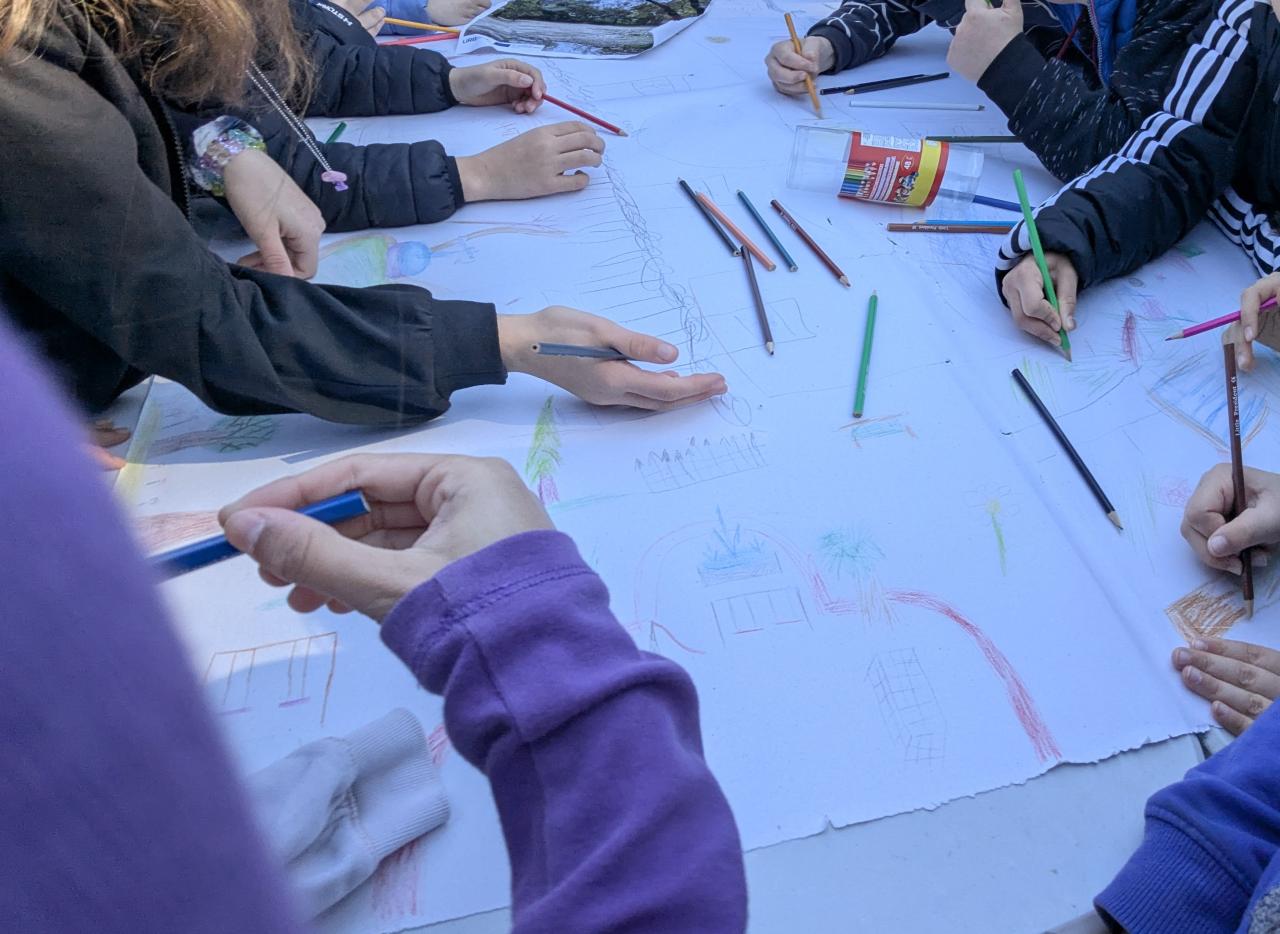
Daugavpils (LV) delivered a hackathon for the re-development of the Jaunā Forštate Park, a large but underused green area. The local team worked with youth and residents forming seven mixed teams who developed their ideas, refined these with the help of thematic mentors and finally advanced their work to prototypes: visuals and models on how the park could look like. One of the distinct methods they used was empathy mapping. The teams took the perspective of a future user of the space to see what elements are missing from their point of view. Empathy mapping helped the teams to get from the broad idea of having a nicer park to concrete and user-centric solutions. The designs of the seven teams are currently being evaluated by municipal specialists to determine which are most feasible for delivering the design on the ground.
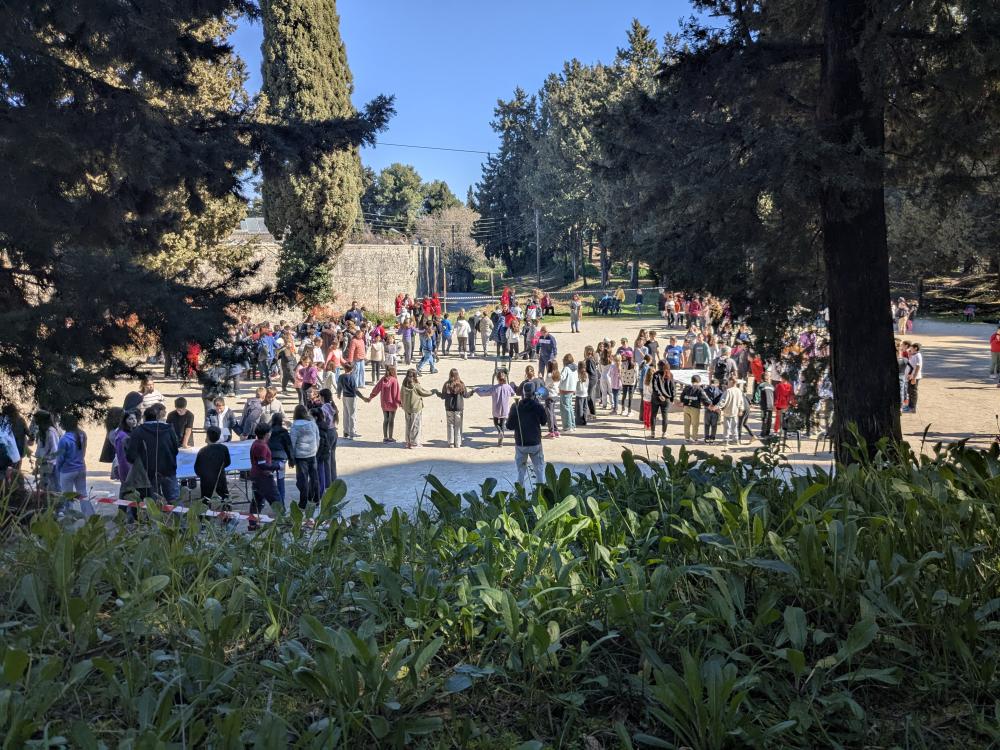
In Corfu (EL), Kapodistriaki Development S.A. employed a different approach to the local hackathon concept. As the first move, the local team created a cooperation agreement with the regional committee for education. By this, they gained a trusted and solid communication basis to work with the schools of Corfu. The cooperation produced two hackathons to regenerate the so-called Prison Park area – an abandoned urban space next to a prison: one working with the first graders of elementary schools and the other with high school teenagers. The hackathons were also an opportunity to define the needs and ideas of youth, test options and finally create designs as drawings for the future use of the area. More than 500 pupils alongside 50 teachers got involved in the Prison Park hackathons. Schools remain the centre of attention for the roll-out of Corfu’s Integrated Action Plan, since they take a prominent role in the delivery of the planned actions for 10 out of 15 total actions.
The Re-Gen network team created a Guidance for sports-based solutions helping other municipalities and cities to follow in their steps, along with an inspiring video.
Schoolhoods – safe, green and happy ways to school
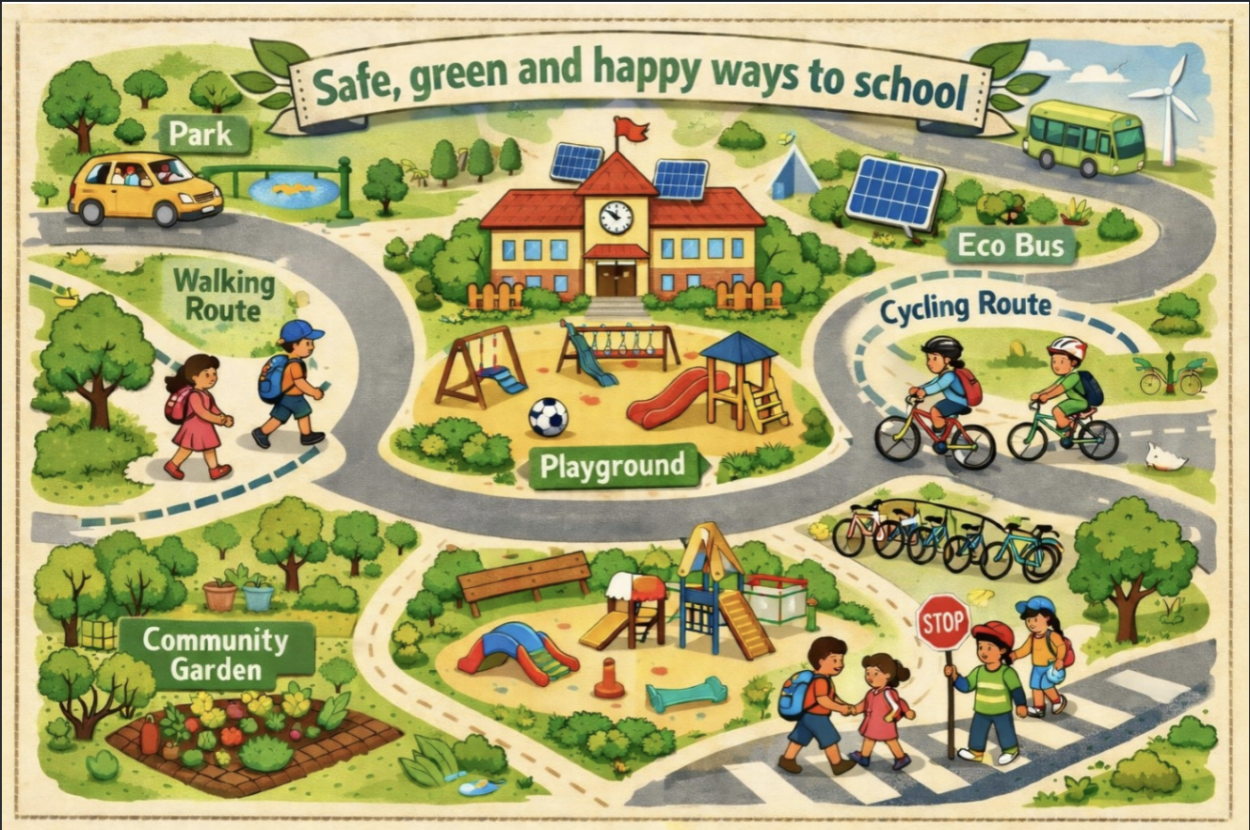
Schoolhoods tackled an ‘evergreen topic’ among challenges youth is facing: how is youth moving in the city? Taking the example of their trips to schools, the most structured – same origin, same destination - youth is doing. The Schoolhoods cities, spanning from its Lead City Rethymno (EL) to Parma (IT), Brno (CZ), Skawina (PL), Turku (FI), Zadar (HR) and the Brasov Metropolitan Agency for Sustainable Development (RO), all faced the same challenge: more and more pupils get driven to school by car. The problem with this is that youth sitting in the backseat of our cars are missing a lot. They grow up lacking essential skills such as social competences by interacting with other people and their environment; while also lacking their ability to move independently in the city. In order to alleviate this, the seven Schoolhoods cities concentrated on three moves: to get youth out of the backseat, to empower them for moving on their own, and to convince all with a stake in school mobility, specifically parents, to allow making this happen.
Parma (IT) focused its work on high school students. In contrast to primary school setting, the catchment area of high schools is greater, drawing students from all the urban areas. School mobility defines a large portion of morning traffic peaks in the city and thus represents a major source of congestion, road safety concerns and poor conditions for sustainable school commutes. The local team worked with five high school locations at the edges of the city centre to re-define how road space, and how public space can comfort the needs of students. School Street expansions, improved design of public transport stops and services; good quality bicycle and walking infrastructure were at the heart of improving school mobility in Parma. The students themselves took an active role by designing parklets – former parking spaces given to non-transport uses such as spots for recreation and meeting each other. The local team went beyond physical actions and created a School Mobility Manager training for teachers. The training introduced options for designing sustainable and safe travel plans between homes and schools as well as how to integrate the topic of sustainable mobility into regular school subjects.
In Rethymno (EL), the challenge of morning peak traffic met a second dimension related to school mobility. This is because pupils get picked up from school and then driven to other activities, creating a second traffic peak around schools in the afternoon. Teachers, parents, politicians and administration teamed up to test new ways of improving independent school commutes by pupils. The local team delivered a Pedibus (walking bus) scheme. This imitates how a bus line works, with stations, a fixed route and timetable, but translated to pupils walking in groups to school, together with some adults, who are the “bus drivers”. The Rethymno application of the Pedibus tested some additional elements: involving older pupils from a secondary school as co-drivers and pointing out stations as kiss and ride stops where pupils living further away could ‘jump on the bus’. Experiences of the pilots proved acceptance and effectiveness of the schemes and got scheduled for a wider use in the Rethymno Integrated Action Plan.
Schoolhoods produced a set of video recommendations on creating safe, green and happy ways to schools directed to the key actors who form school mobility: politicians, schools, administrations and parents.
What can other cities learn from the three networks?
Investing in youth is the best we can do, since as said: youth is 100% of our future. For this, we must change the way we connect to youth. Youth work need not only to add digital means of communication, but also improve physical spaces where youth can meet, socialise, do sports, just be – and take into account their mobility in cities so that they, especially the younger ones, feel safe and comfortable to commute to their places of activity.
The most important aspect here is to empower youth and to trust in youth. In order to do so, here are a few points to keep in mind:
Involve youth in policy development, action planning and delivery right from the start. This includes analysing the state of play and connected shortcomings.
Employ the main agents working with youth to get and stay in touch with them. Such as youth workers, teachers, and parents; without forgetting the digital world of social media.
Remember to speak in the youth’s language and use methods fitting to youth interests. This needs to be tailored to the groups addressed since both language and methods vary across age, gender as well as cultural and social background.
Demonstrate commitment. To empower youth and put trust in youth needs to be a living strategy backed by political decision makers, administrations, youth workers, teachers and parents. The entire city society, speaking frankly.
Cater for resources. If youth are to take part and be part of city development planning and policy-making, processes and investments need to reflect the objective to literally invest in youth.
More results from URBACT cities
Working with and for youth is but one example for the value of URBACT networks. They deliver much more than pure exchange among cities, they create a joint learning story, build a local ecosystem for planning and acting and establish stable frames for future urban developments across European municipalities and cities.
What can other cities use already? Visit the NextGen Youth Work, Re-Gen and Schoolhoods Network pages for practical guidance, tools and inspiration for cities looking for how to address youth policies into their practices.
Get inspired by more local actions from URBACT cities! Stay tuned for more thematic articles from the 30 URBACT Action Planning Networks (2023-2025) for climate action, youth, health and well-being, and much more.
Cities interested in taking this work further can now join the next generation of URBACT networks! The new Call for Action Networks is open until 17 June 2026.