Cities across Europe are under growing pressure to do more with less. Climate adaptation, digital transition, social cohesion, and economic resilience demand bold action, but public budgets are shrinking and competition for EU and national funds is intensifying. Additionally, for many city officers, the word ‘funding’ brings up the (often dreadful) familiar image of filling in complex forms, chasing grants, and hoping for the best. This can hold cities back from accessing the resources they need to transform their cities and communities.
In this context, European cities need to operate a crucial mindset shift: they need to move from reactive grant-seeking to proactive investment thinking, positioning themselves not as applicants, but as credible investment partners in shaping Europe’s future.
This article draws on URBACT Capacity Building activities with Innovation Transfer Networks at the beginning of their journey, as cities work to turn proven urban innovations into realistic, fundable action plans in new local contexts. The lessons apply to any city looking for sustainable funding opportunities.
So what does an effective investment plan look like? And how can cities build one?
From project proposal to innovative urban action: why an effective investment plan matters
Too often, promising urban ideas fail, not because they lack relevance or ambition, but because they lack a credible pathway to implementation. An effective investment plan bridges this gap.
A well-crafted investment plan is a city's strongest argument.
An effective investment plan is, at its core, a structured case for change. It explains why a challenge matters, what actions are needed, how they will be delivered, and how success will be measured. But more than that, it serves three essential purposes:
- Strategic clarity, translating a city’s ambition into a coherent and actionable roadmap
- Financial credibility, demonstrating that resources are understood, planned, and realistic
- Narrative power, telling a compelling story that resonates with funders, partners, and stakeholders.
An effective investment plan ensures that a project is not just desirable, but that it can be delivered. It links policy priorities with operational realities, aligning local challenges with national and European frameworks. In doing so, it answers the key questions funders ask:
- Why is this intervention necessary now?
- What will actually be done, and by whom?
- What resources are required?
- What measurable impact will be achieved?
Importantly, it also forces cities to confront their own capacity and readiness. Do they have the governance structures, financial management systems, and internal coordination needed to deliver? Are stakeholders aligned? Is there a clear logic linking actions to outcomes?
An honest self-appraisal at this stage helps cities gain clarity and trust, and can also prevent costly surprises later.

Effective planning - step-by-step
Developing a strong investment plan is not a one-off exercise, but an iterative process. Each phase strengthens the city’s strategic positioning, financial readiness, and ability to engage with funders.
Step 1: Understanding the context and building the case
Every robust investment plan begins with a deep understanding of the problem. This goes beyond listing challenges. Cities must contextualise their ambitions within a broader policy and evidence framework:
- How does the project align with EU priorities such as the Green Deal or social cohesion?
- What local data demonstrates urgency and need?
- What barriers currently prevent implementation?
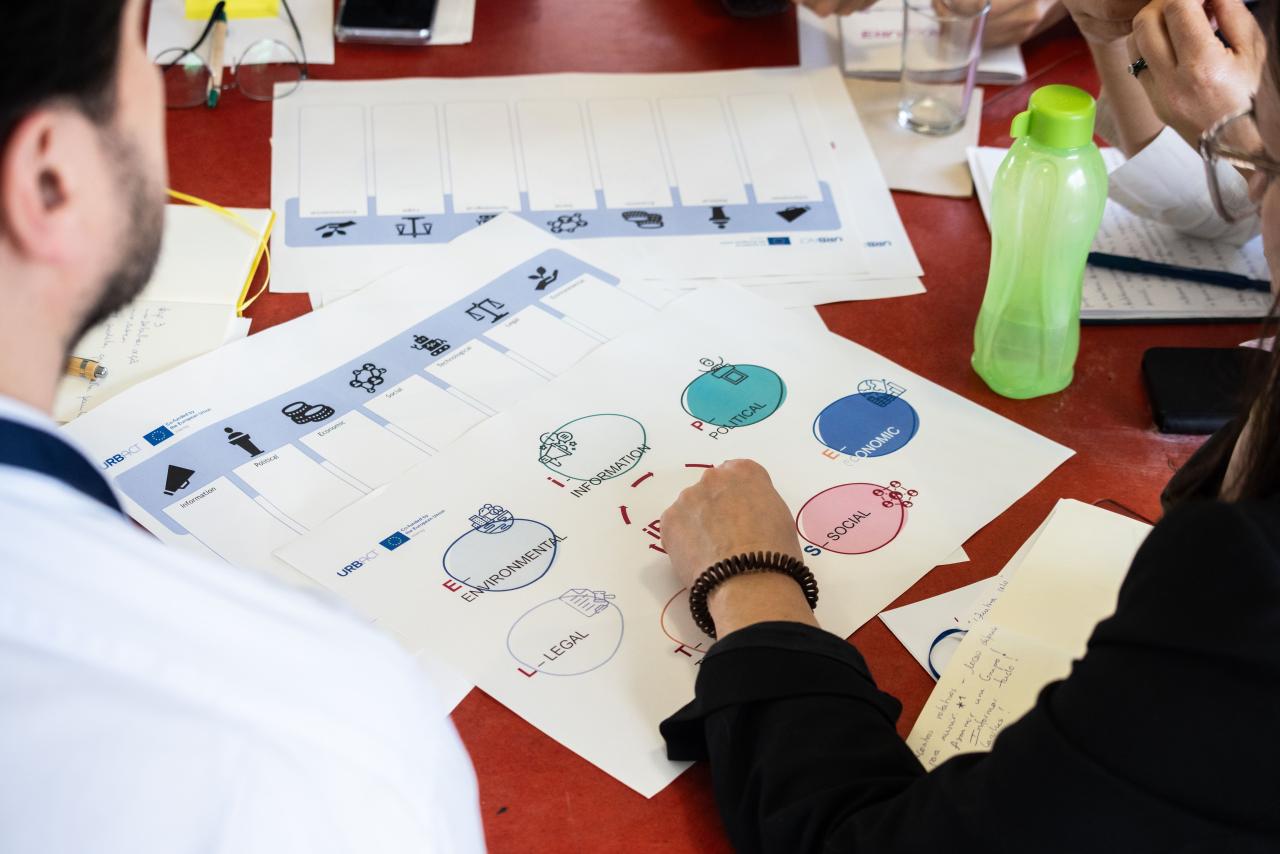
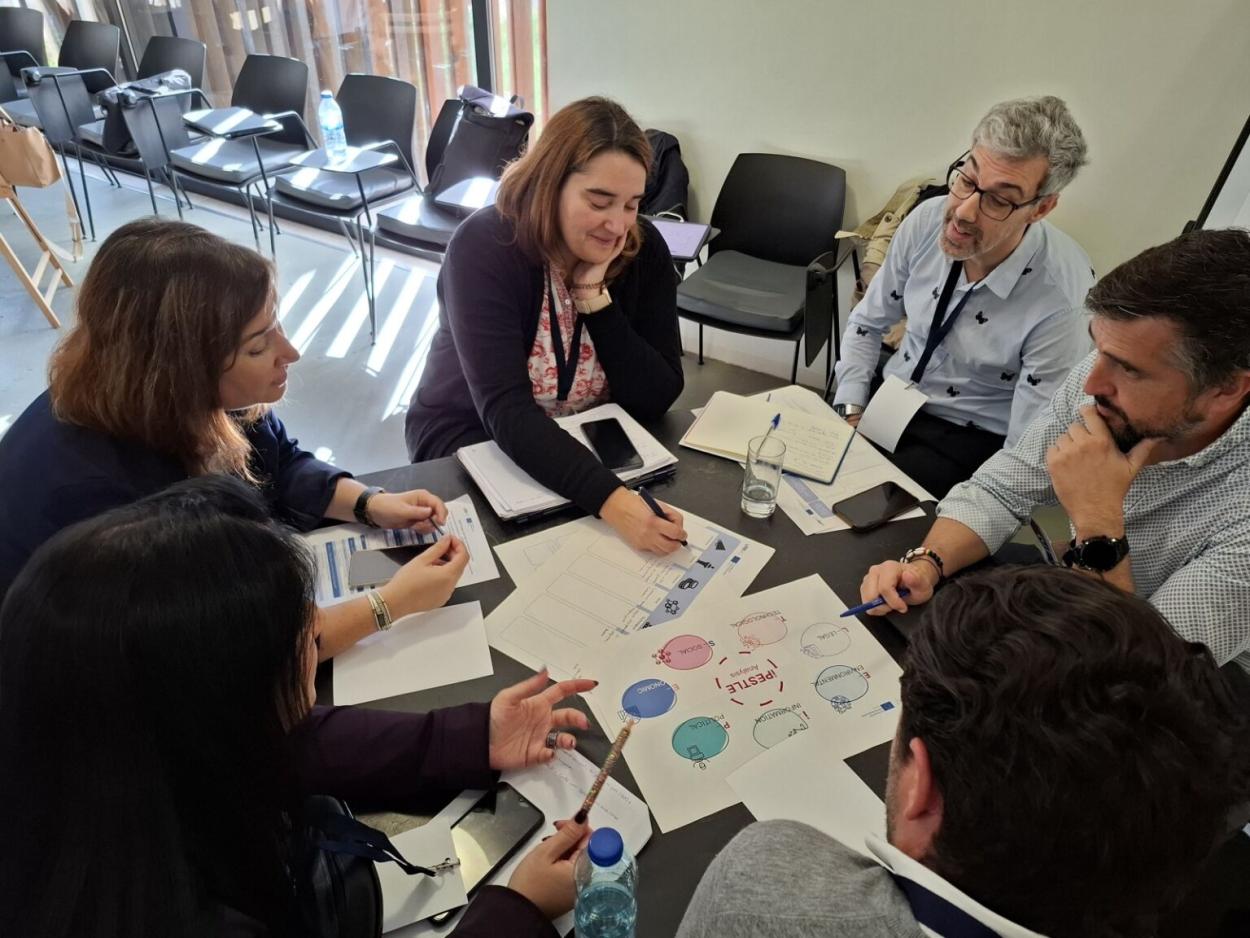
Tools such as the iPESTLE analysis (‘context diagnosis’), help cities examine the information (data/statistics), political, economic, social, technological, legal, and environmental conditions that influence the shaping of a project. This method helps cities identify both constraints and enabling factors within their local environment.
Funders want to see that the city understands the systemic dimension of the problem it is trying to solve. A well-mapped policy context that clearly demonstrates its alignment with EU climate goals, social cohesion priorities, or the Urban Agenda for the EU for example, shows strong strategic maturity.
Equally important is stakeholder engagement. Early involvement of local actors - businesses, community organisations, academia, public agencies - ensures the project reflects real needs and builds ownership from the outset.
The outcome of this phase is a clear intervention logic: a structured explanation of how proposed actions will address identified problems and generate measurable impact.
The URBACT Toolbox offers other useful resources here, including tools for stakeholder analysis and problem mapping that help cities move from a vague challenge to a clearly evidenced diagnosis.
Step 2: Designing actions and building the financial architecture
With a solid diagnosis in place, cities move from why to how: costing actions, mapping potential funders, and building a funding mix.
This phase translates strategy into a concrete action plan, supported by a realistic financial framework.
Key elements include:
- Costing actions: breaking down each activity into detailed cost components (staff, infrastructure, communication, monitoring, etc.)
- Distinguishing cost types: capital vs. operational expenditure
- Identifying funding needs: linking each action to potential sources
This is where ambition meets reality, and it requires managing the tension between the need to be detailed enough to be credible, but flexible enough to adapt to evolving funding opportunities. It is about presenting a plan that is ambitious but defensible.
At this stage, cities should also begin mapping their funding ecosystem. It requires mapping all realistic sources, not just the obvious ones. EU grant programmes are often the starting point, but they are rarely sufficient on their own. Regional and national grant schemes, EIB investment and framework loans, social impact bonds, revolving funds, third-party financing, philanthropic grants, and private sector co-investment all form part of the broader ecosystem.
The Nested Wholes Diagram is a powerful visual tool that helps cities map funding actors at city, national, and EU levels, revealing the connections between local decisions and the wider policy frameworks.
Using structured tools such as a cost estimation table, funding mix appraisals, cities can compare options and make informed strategic choices.
The result is a plan that is not only visionary, but financially grounded and investment-ready.

Step 3: Building a funding strategy and strengthening readiness
Once costs are clear, the central question becomes: who will pay and for what?
The answer is almost always: not a single source.
Cities that rely entirely on grants are exposing themselves to dependency and vulnerability. An effective investment plan relies on a well-structured funding mix, combining grants, loans, and private investment into a coherent strategy. Each source plays a different role, covering a different part of the cost structure and risk profile:
- Grants reduce risk and enable innovation
- Loans support scalable infrastructure
- Private investment accelerates impact
Cities must therefore develop a funding strategy that maps each action to appropriate funding sources, while understanding the priorities and expectations of each funder (priorities, timelines, eligibility criteria, and decision-making logic). The Funders Map is a useful tool that helps cities identify the most relevant funding sources for their specific project. Used in conjunction with the Funding Mix Appraisal, it helps transform what can feel like an overwhelming landscape of options into a structured investment plan.
At the same time, the city administration needs to show that it is ready to deliver. This means looking beyond the funding sources themselves and asking whether the right people, departments and decision-makers are aligned, whether potential risks have been anticipated, and whether there is a clear way to track progress once implementation begins. Funders do not invest in ideas alone, they invest in a city’s capacity to turn those ideas into results.
An honest and robust risk analysis should be seen as an opportunity for cities to identify potential obstacles early and to put mitigation measures in place early on, before approaching funders. Funders want to invest in cities that have thought through what could go wrong, not just what will go right.
Institutional readiness also means ensuring that internal political and institutional alignment is in place. An investment plan that has the backing of elected officials, the commitment of relevant municipal departments, and the engagement of key local stakeholders carries far greater credibility than one developed in isolation by a small project team.
To improve their funding readiness, cities should also integrate key performance indicators (KPIs) into their investment plans. These SMART indicators allow funders to evaluate whether the project will deliver measurable outcomes. A robust monitoring and evaluation (M&E) framework is a signal of credibility.
Ultimately, cities must translate their plans into competitive applications, tailoring narratives to specific funders without losing the coherence of the overall vision. This requires not just technical capacity, but strategic storytelling: demonstrating how local action connects to European-level ambitions and contributes to broader European objectives.

Turning urban ambition into an investment-ready plan
Developing an investment plan is demanding work. It requires cities to think strategically, act collaboratively, and engage with complex financial ecosystems.
But ultimately, a strong investment plan is a city’s best argument for why the future it envisions is worth backing. Investing the time and effort to make that argument well, grounding it in evidence, building a realistic financial strategy, and demonstrating the governance capacity to deliver, are the foundations for long-term change, turning vision into action and enabling cities to deliver innovative solutions for the communities they serve.
This is precisely what URBACT's Innovation Transfer Networks are currently doing. They are developing investment plans to implement proven innovations in new city contexts, across themes ranging from the green transition to social innovation to digital inclusion. Their experience is being documented and shared as a resource for the wider city community.
The resources, the tools, and the network are there. The next step is yours to take.
Want to hear from URBACT cities working on their own investment plans? Explore the progress of the 10 URBACT Innovation Transfer Networks
Want to get involved in an URBACT network? A new call for Action Networks is open, bringing new opportunities for cities to move from planning to implementation, with increased funding available for concrete local actions