
In a few sentences, how would you describe your IAP? What is its main focus or goal?
Veszprem’s BiodiverCity Integrated Action Plan focuses on green-blue infrastructure developments for period 2026-2031 with aspects on community involvement.
The intervention areas described in our Integrated Action Plan have developed naturally, the green issues, the blue infrastructure and – maybe most importantly – working with the local communities to enhance the quality of life of the residents
What local challenges or needs does your IAP address?
• The city's significant conifer population is predicted not to be able to adapt to the effects of climate change. These trees need to be replaced in a planned and timely manner.
• The public's vision of a city park is an English lawn, the biodiversity of these lawns is almost zero, so the only way to keep them alive in the heatwave days of climate change is intensive watering
• Under current park maintenance practices, green waste generated in Veszprém's green spaces is removed from the city.
• The city of Veszprém has many large areas characterized by steep slopes. A significant increase in flash floods is expected due to climate change.
• In line with current popular trends, the urban population is keen to plant invasive alien species in their gardens, which, when they spread into urban parks, significantly reduce their biodiversity
• There is a gap between up-do-trade local regulation and their implementation, the enforcement of the management plans should be increased
• Influence on privately owned properties (houses, plots) is limited, education and awareness raising is the key to overcome this obstacle.
What are the most innovative or inspiring elements of your plan?
• Having test action(s) included into the implementation of the project helped to focus on specific areas and have something to show beside the IAP and its actions. With the urban beekeeping experiment and the pilot rain garden in one of the city parks created visibility, publicity and credibility of the URBACT project.
• The Biodiversity Festival in connection to traditional Long Table Picnic was a good lesson for us, lots of planning, organising and volunteer work from the side of ULG members and we agreed to make it a tradition and organise it in the future if we can mobilise the necessary resources.
• Development and elaboration of the Therapeutic gardens into our IAP
What are the most valuable lessons your city learned during the BiodiverCity project?
For us BiodiverCity was a big opportunity to continue our initiatives to preserve and enhance urban biodiversity, to turn the focus of the decision makers on the nature-based solutions and start to appraise and value the ecosystem services we use daily.
The other local lesson is how important it is to have dedicated and enthusiastic professionals in you ULG.
Some good examples from partner cities that inspired us:
• Green and Blue Infrastructure Strategy of Limerick
• The Limerick Natural play area was a great experience and there were some talks about the possibility of such a site in Veszprém
• The position of biodiversity officer has been created in the city of Limerick, getting deeper knowledge on their role help locally to thing about such a position
• Guimarães visit was very much awaited by us and experience gained during the visit is a great opportunity to rethink some aspects of the sustainable urban development of Veszprém.
• Professional support and involvement of the Guimarães Green Brigades civil society in urban sustainability issues.
• In Cieza we’ve learned some important good practices like gentle pruning (Biofílica Cieza and conscious tree planting technique when a network of pipes is installed under the sidewalk to guide the root system and provide space for utilities good practice is share with our colleagues at the respective department.
Can you describe one good practice from your city that others could learn from?
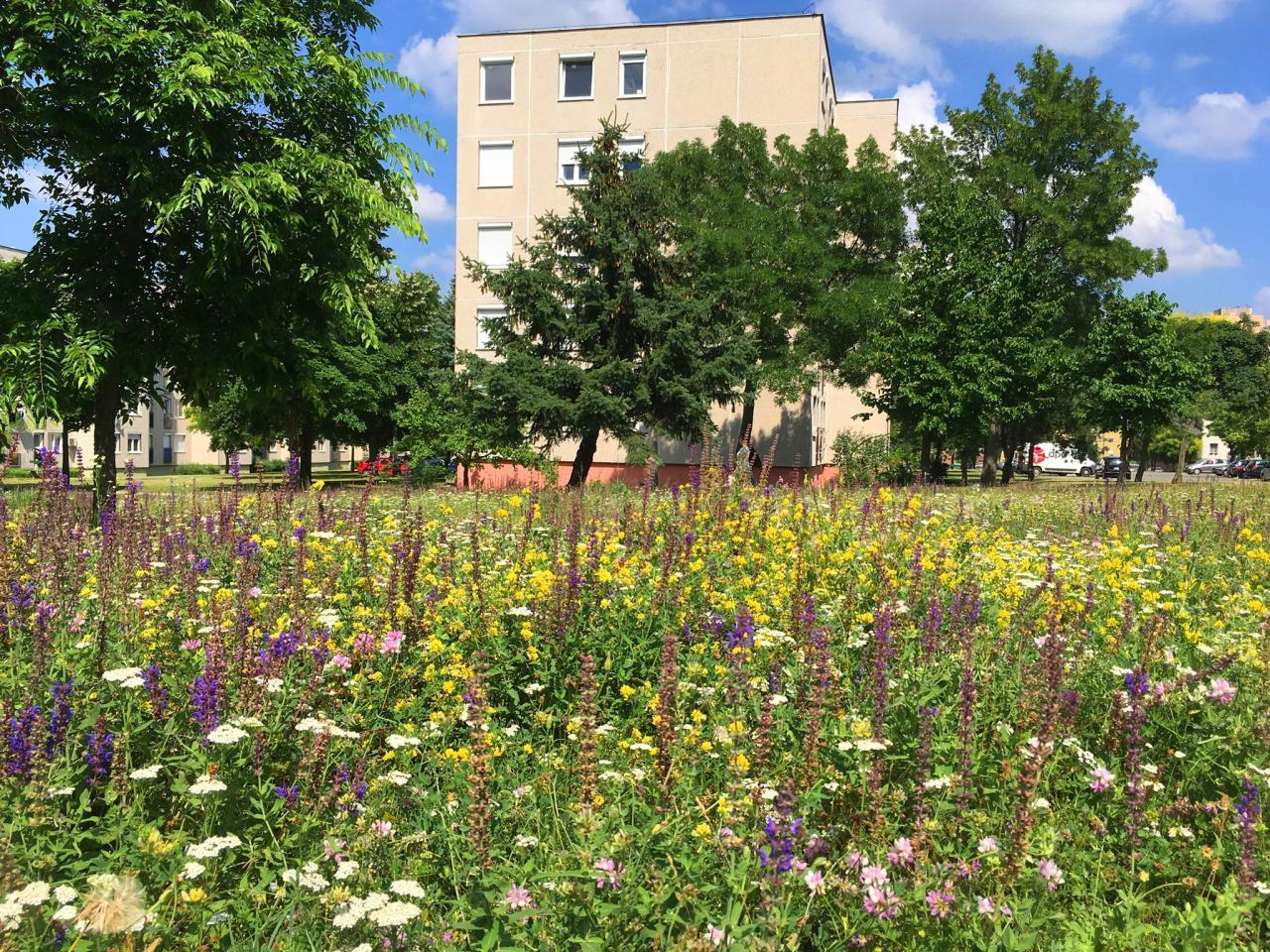
The “URBACT” Good Practice label winning "Wildflower cities - Climate-adaptive urban grassland management creating wildflower meadows" was shared with the BiodiverCity partners and in Wroclaw UCF with wider audiences. The practice utilizes diverse new technologies to address the challenges of green surface management in the 21st century. This approach works with nature, recycles resources, enhances biodiversity, and maintains ecological balance, and helps increase quality-of-life in the city.
This successful approach, refined through experimentation and testing, rests on three pillars:
• Political and expertise commitment: The city’s leadership supports VKSz in introducing new technology that exploits the advantages of urban green spaces, reducing heat island effects and enhancing biodiversity
• Scientific collaboration: In cooperation with the Hungarian University of Agriculture and Life Sciences, seven plots were established to test the methods, to suggest technological modifications, and monitor the process.
• Continuous community engagement: From the start, the local community was kept informed and involved, via information boards, leaflets, lectures, and community festivals.
What was your favourite moment or memory from the BiodiverCity project?
Sunset in Guimaraes Penha Mountain
If you could describe the project in three words, what would they be?
inspiring, overwhelming, practical
Any final thoughts or messages for the URBACT and BiodiverCity community?
Was great to be part of this project