

From ideas to impact: why Archimedes matters
The Archimedes Center was created to address a familiar gap in many university ecosystems: promising research results often struggle to move beyond the laboratory, while students and early-career researchers face significant barriers when attempting to turn ideas into viable ventures.
By bringing together the Technology Transfer Office (TTO) and a Business Accelerator under one coordinated structure, Archimedes simplifies the journey from invention to market. This integrated model reduces fragmentation, ensures continuity of support and makes innovation pathways more accessible, particularly for innovators who lack prior entrepreneurial experience or strong informal networks.
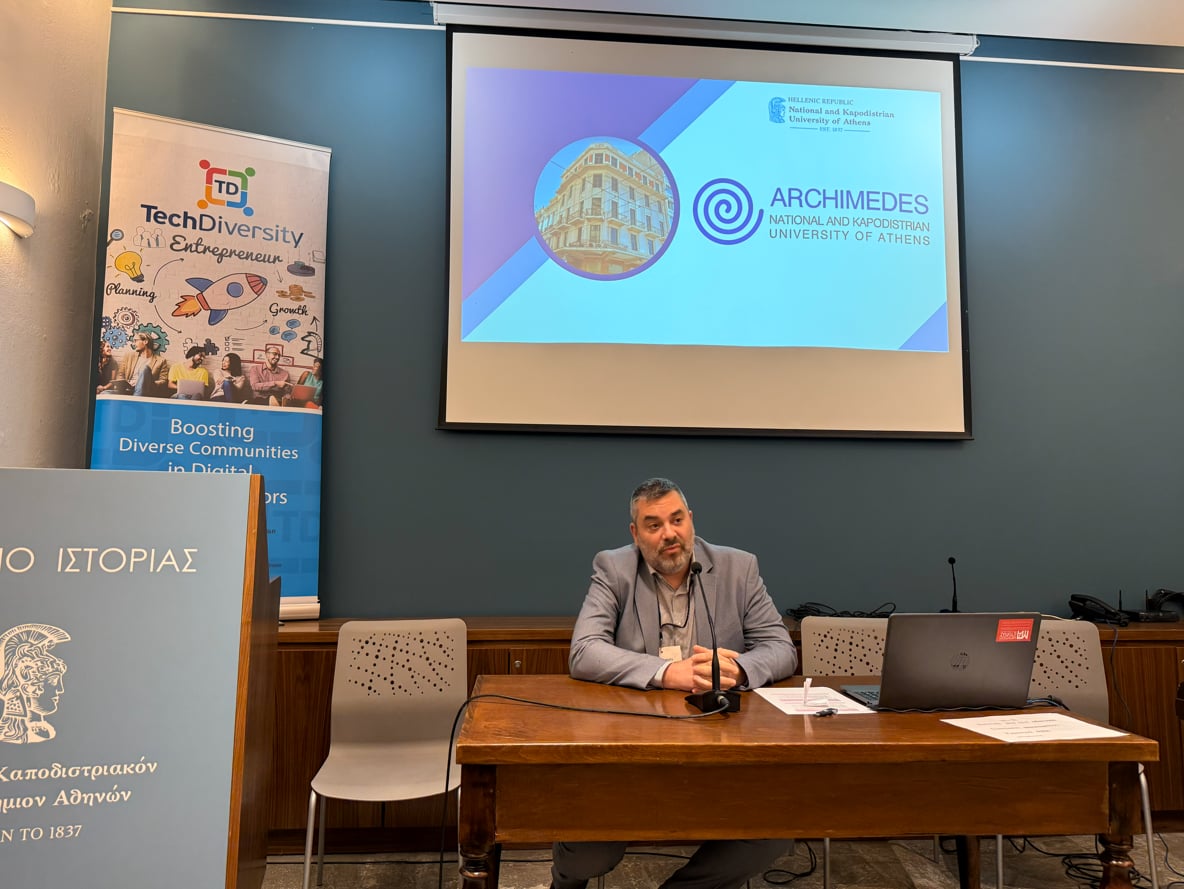
In the context of TechDiversity, Archimedes demonstrates how universities can actively contribute to more inclusive digital and tech ecosystems, supporting a broader range of people to engage in innovation and entrepreneurship.
How it works: a joined-up, multistage approach
Archimedes operates through a multistage acceleration model, matching support to the maturity level of each team or idea. Rather than relying on one-off calls or rigid programmes, the Center runs rolling intakes throughout the year, allowing students, researchers and early-stage innovators to enter when they are ready.
Support combines:
training and workshops on entrepreneurship and technology transfer,
coaching and mentoring tailored to each team’s needs,
access to expert guidance on intellectual property, licensing and commercialization, and
opportunities to connect with investors, industry partners and innovation ecosystems.
Competitions and applied-innovation challenges play a key role in surfacing ideas from diverse academic disciplines, offering visibility, feedback and clear next steps towards further development.
Inclusion as a driver of innovation
A defining feature of the Archimedes Center is its inclusive orientation. Activities are designed to lower entry barriers and encourage participation from under-represented groups, including women, early-career researchers and innovators from non-technical or interdisciplinary backgrounds.
By providing structured guidance on intellectual property, venture creation and market access, the Center helps demystify processes that are often perceived as complex or inaccessible. Inclusion is therefore treated as a quality factor for innovation, strengthening creativity, resilience and relevance rather than as a separate social objective.