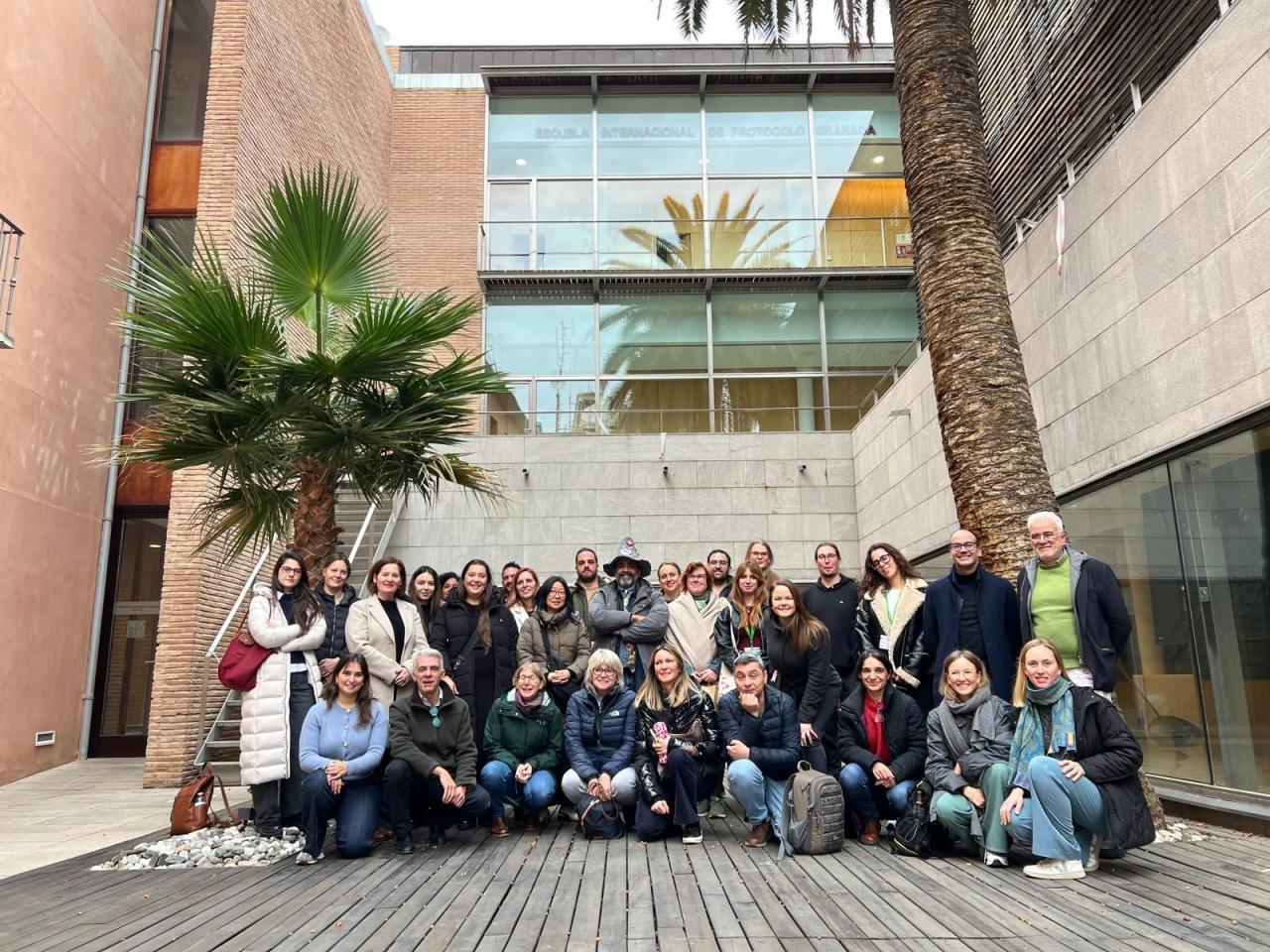
When ten European cities decided to work together to accelerate their transition toward circular, regenerative, and resource-efficient urban systems, none of them could fully anticipate how much the journey would transform their teams, their policies, and in many cases, their own understanding of what a circular city truly means. Over 2.5 years, the URBACT IV network LET’S GO CIRCULAR! became more than a project - it became a laboratory, a support system, and, as many partners described it, a circular family.
This article takes readers inside that journey: the methods, the breakthroughs, the challenges, and the collective achievements of Munich, Granada, Guimarães, Riga, Lisbon, Cluj-Napoca, Corfu, Malmö, Tirana, and Oulu - ten cities united by a common ambition to reshape their future.
Circularity as a shared language
Early in the process, the ten cities undertook a baseline study to map out the most pressing circular value chains in their territories. The group quickly identified several shared priorities, including textiles, food, household waste, water, and energy systems, as well as key R-strategies such as repair, reuse, recycling, redesign, rethink, and renew.
These insights became the foundation of a common methodology built on three pillars:
1. Local co-creation through URBACT Local Groups (ULGs)
2. Transnational exchange as a learning accelerator
3. Testing actions: small pilots with big impact
A turning point: The Mid-Term Reflection
Halfway through the project, the network held a Mid-Term Reflection (MTR) - a structured moment to pause, evaluate progress, and recalibrate. Cities did not simply share updates; they reflected deeply on how their understanding and governance of circularity had matured. Four key insights emerged:
1. Circular literacy had significantly increased
2. Municipal collaboration improved
3. Stakeholder groups gained strength and ownership
4. Testing actions shaped strategies
Cities take action: From vision to implementation
All ten cities ultimately delivered Integrated Action Plans - each adapted to local realities but sharing common elements such as a circular vision, diagnostics, priority areas, actions, governance mechanisms, and monitoring frameworks.
A legacy of ambition and solidarity
If one message resonates across testimonies and achievements, it is that circular transition is not a solitary endeavour. It requires collaboration, experimentation, courage, and shared learning.
Across ten cities, that message came to life through testing actions, co-design, ULG plenary and smaller group meetings, study visits, transnational exchanges, trilateral focused meetings and many more.
The LET’S GO CIRCULAR! network leaves behind not only action plans, tools, and tested actions, but also a strengthened community of changemakers determined to continue the work.
Or, as one partner put it more simply:
“We are friends now - and that matters for circularity."
See the full article from Lead Expert Dr. Eleni Feleki: