
The rise of remote work has transformed not only how people work, but also where they choose to live. Cities across Europe and the globe are competing to become hubs for remote workers and digital nomads, recognizing their potential to contribute to local economies, revitalize communities, and strengthen innovation ecosystems. But to truly capitalize on this opportunity, cities must look beyond marketing campaigns and coworking spaces. What’s required is a long-term, strategic investment in both hard and soft infrastructure - the tangible and intangible assets that shape the urban experience for mobile professionals.
Understanding the infrastructure spectrum
The concept of infrastructure in the context of remote work extends beyond roads and cables. It includes the physical environment, digital services, legal frameworks, and social systems that collectively create a place where remote workers can live, work, and integrate.
- Hard Infrastructure includes physical and digital assets high-speed internet, coworking hubs, transport systems, housing, healthcare, and utilities.
- Soft Infrastructure includes regulatory frameworks (e.g., visa schemes, taxation), community-building mechanisms, quality of life factors, support networks, and cultural amenities.
Together, these elements determine whether a city can attract, host, and retain remote professionals, and how well it integrates them into its economic and social fabric.
Why cities need to invest in both
According to a 2023 report by the OECD, many remote workers no longer need to be close to their employer's headquarters and are instead choosing locations based on lifestyle, cost of living, and quality of digital services. This shift requires cities to reimagine their attractiveness not through scale or corporate presence, but through functionality and community experience.
Research published in the Journal of Urban Affairs underscores that cities investing in both digital infrastructure and social integration mechanisms (e.g., language support, cultural inclusion, co-creation events) see higher rates of retention among digital nomads. In other words, infrastructure that is both visible and felt matters.
Building Strong Hard Infrastructure
Remote workers depend on uninterrupted digital connectivity, affordable and inspiring workspaces, accessible mobility, and safe, healthy living environments. Cities like Tallinn, Lisbon, and Barcelona are regularly cited for their robust hard infrastructure:
- Tallinn, Estonia has invested in 5G networks, nationwide e-services, and integrated transport systems, creating a seamless experience for both locals and digital nomads.
- Lisbon offers one of Europe’s densest coworking networks and strong public transport infrastructure, alongside an international airport within 20 minutes of the city center.
- Barcelona balances urban density with beach access, fast Wi-Fi zones, and smart city planning, which makes it attractive for professionals seeking both productivity and leisure.
However, cities must also think about non-digital hard infrastructure such as schools, medical services, and housing affordability, especially as more remote workers arrive with families or long-term intentions. The Nomad List 2024 Report highlights that nomads increasingly search for child-friendly infrastructure and safety ratings when choosing destinations.
Investing in soft infrastructure for belonging and stability
Hard infrastructure brings remote workers to a city, but soft infrastructure makes them stay. This includes the sense of belonging, integration into local communities, and a regulatory environment that supports their lifestyle.
Key components of soft infrastructure include:
- Legal frameworks- Remote work visas (e.g., Croatia’s digital nomad visa), tax incentives, and labour policies that clarify rights and obligations for non-resident workers.
- Community ecosystems- Events, meetups, local nomad groups, and public-private networks that connect newcomers with residents and institutions.
- Support systems- Language learning, mentorship programs, local guides, and digital platforms that ease the transition.
- Cultural infrastructure- Access to arts, heritage, cuisine, and local traditions that create a sense of place and identity.
The European Commission’s Digital Decade Policy Programme 2030 emphasizes the need for holistic approaches that include human capital, community participation, and digitally empowered public services. It recognizes that connectivity without inclusion leads to transient populations, not rooted communities.
Lessons from the Remote-IT network
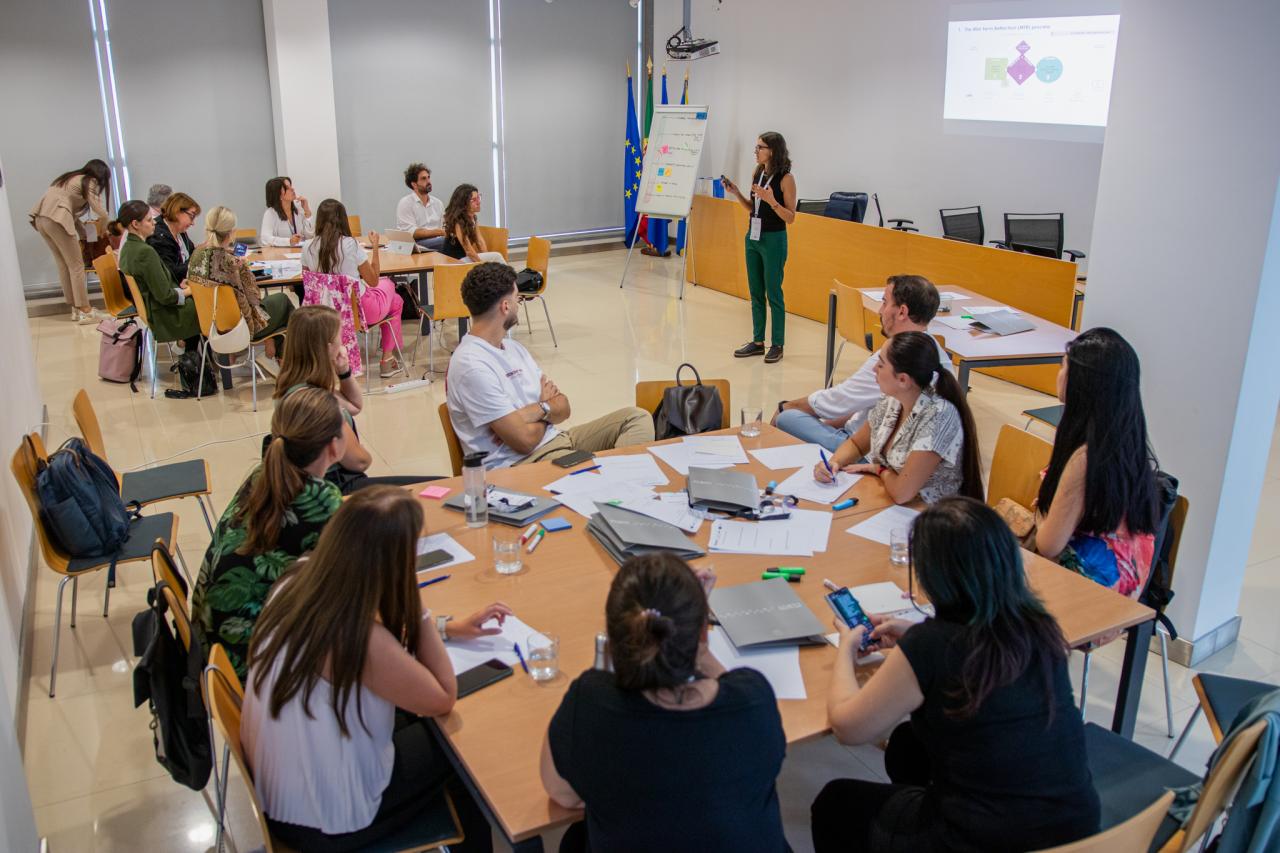
During the transnational meeting held in Câmara de Lobos, the topic of soft and hard infrastructure was explored in depth through a hands-on exercise. Each city team was asked to evaluate their own local conditions using a structured template that covered key aspects such as legal frameworks, community engagement, professional development, digital connectivity, coworking availability, and quality of life indicators.
The exercise allowed cities to reflect on their strengths and weaknesses in supporting remote workers and digital nomads. The activity sparked meaningful peer-to-peer discussions and highlighted the importance of balancing physical infrastructure with social, legal, and institutional conditions. This collective exercise provided a foundation for cities to better understand which infrastructure elements need prioritization in their local contexts as they continued to develop and refine their Integrated Action Plans.
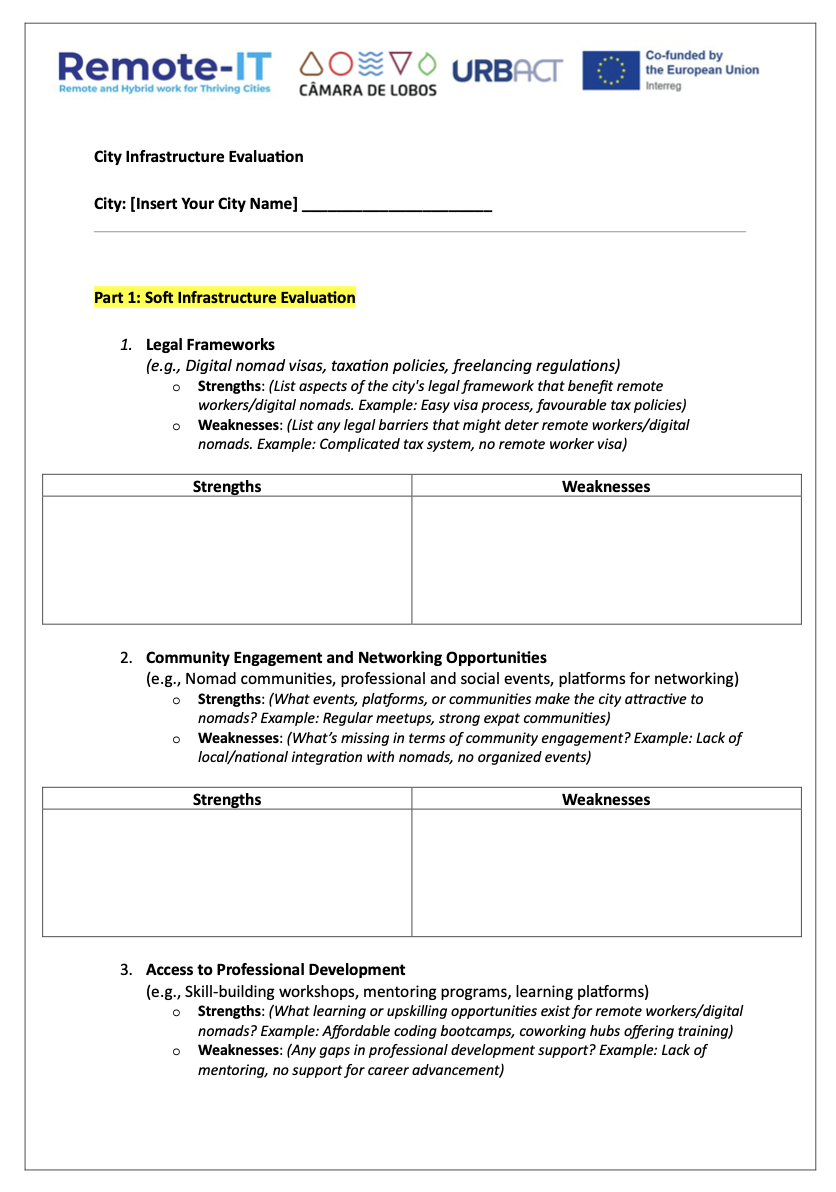
Screenshot of the structured self-evaluation template used in Remote-IT transnational meeting in Câmara de Lobos.
Five Recommendations for Cities
- Conduct a local infrastructure audit- Map out existing digital assets, legal conditions, social programs, and mobility systems.
- Bridge the urban-rural divide- Strengthen rural areas with broadband and social infrastructure to spread the benefits of remote work more equitably.
- Create hybrid spaces- Mix coworking with community use (e.g., in libraries, cultural centers) to embed remote workers in local life.
- Design for inclusion- Integrate remote worker strategies into broader urban planning, ensuring housing, healthcare, and sustainability goals align.
- Build feedback loops: Establish mechanisms for remote workers to co-shape policy and service design, reinforcing a sense of belonging.
As remote work reshapes migration patterns, housing demand, and urban economies, the cities that will thrive are those that invest, not only in connectivity and coworking desks, but in social glue the policies, programs, and platforms that turn arrival into integration.
In the race for remote talent, the question is not whether your city has fast Wi-Fi, it’s whether it has what it takes to make someone stay.