
Validated Expert info
Expert can perform Ad hoc expertise missions at network and programme level in relation to:
1. The design and delivery of (transnational) exchange and learning activities
2. Thematic expertise:
[Equality-Diversity-Inclusion; Housing; Participative governance; Social innovation]
Summary
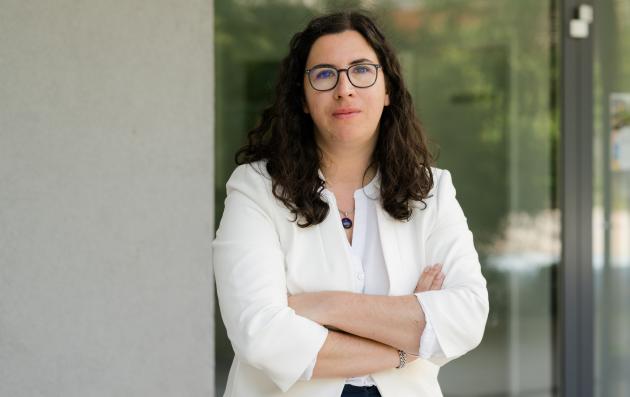
Cornelia Dlabaja is a sociologist and urban anthropologist with a focus on urban and tourism research, spatial and planning sociology, right to the city, inequality research and migration. She holds the first endowed professorship for sustainable urban and tourism development at FHWien. Previously, she worked as a postdoctoral researcher at the Institute for Urban and Regional Research at the Austrian Academy of Sciences (ÖAW) and spent several years as a research assistant at the Institute for European Ethnology at the University of Vienna, where she wrote her dissertation on Seestadt Aspern, which was awarded the Theodor Körner Prize, on urban negotiations in imaginations, practices and (re)orders. In 2011, she and colleagues founded the Social Inequality Section of the Austrian Sociological Association, of which she is the spokesperson. She works at the intersection of art and science through interventions in urban space and exhibitions. In 2022, she curated the outdoor exhibition ‘The Brunnenmarkt in Transition’ with Vincent Weisl, Wien Museum. Since 2014, she has researched social movements and overtourism, commodification and touristification in Venice. In 2021 and 2019, she was a visiting researcher at the IUAV University of Venice in the UNESCO SSIIM programme, where she conducted field research on the right to urban movements in Venice. In 2016, as part of the Gemeindabau Festival, she curated the exhibition Community Building Art, in which visions for future community-building art were designed.
Previous projects included settlement monitoring for Seestadt Aspern, a research collaboration between the Institute of Sociology at the University of Vienna, FH Campus Wien and Caritas Sadtteilarbeit. Projects on living in high-rise buildings at the Institute of Sociology and the Institute of Geography in the GenderATLas project, organisation of the WWTF-funded Marie Jahoda Summer School ‘Public Spaces and Inequalities in Transition – Rethinking the Urban Fabric’.
One of her long-term research areas is the analysis of urban change in the city space using the example of Vienna's Brunnenviertel district. During her studies, she worked as a journalist. From 2009 to 2010, she was a visiting researcher in the UrbanGRAD graduate programme, part of the ‘The Internal Logic of Cities’ programme led by Martina Löw. As part of the urbanize! festival she and Carmen Keckeis carried out a series of interventions in urban space to explore the meaning and use of places in urban space at the level of everyday perceptions.
Main research interests:
Urban and tourism development, Urban inequality, urban change, socio-spatial inequality research, housing research,
city concepts (European city, 15-minute city, just city, smart city, ..), Flanery and walking, caring for the city,
social movements, right to the city, migration and gender research
Methodological orientation: qualitative methods of social research, methods of social space analysis, participatory approaches, interventions in urban space, urban living labs, Go-Alongs, ethnographic urban research, visual methods, qualitative social media analyses,
Methods of analysis: Actor-centred analyses, media field analysis, dispositive & discourse analysis, grounded theory, empire-led theory building, content analysis, policy analyses