
Remote and hybrid work are no longer exceptional arrangements. Across Europe, working from home one or two days per week has become normal for many knowledge-based occupations, and expectations of flexibility are now embedded in labour markets. At the same time, many cities and regions face overlapping challenges: demographic decline, skills shortages, uneven development between metropolitan and non-metropolitan areas, and economies that are overly dependent on seasonal tourism or a narrow set of sectors.
In this context, remote workers, digital nomads and diaspora communities have moved to the centre of local development debates. Cities are increasingly exploring how to attract and retain people whose income is not tied to the local labour market, and how to reconnect with those who left but maintain emotional, cultural or professional ties to their place of origin.
Why focus on remote workers and diaspora
Remote workers and diaspora communities are attractive target groups for related but distinct reasons.
Remote workers bring purchasing power, skills and networks without requiring immediate local job creation. This is particularly relevant for smaller cities and regions that offer quality of life but have limited labour-market depth. By separating work from place, remote work allows cities to benefit from economic activity generated elsewhere.
Diaspora communities represent a different kind of opportunity. Many emigrants retain strong emotional and cultural ties to their home cities. They often face lower information and relocation barriers than first-time movers and can bring back international experience, sector knowledge and entrepreneurial capacity. Importantly, their motivation is rarely financial alone. Connection, purpose and the ability to contribute meaningfully are often decisive.
What do we mean by “incentives”?
Incentives are often understood narrowly as cash payments for relocation. In practice, cities use a broader mix of instruments that lower risks, remove barriers and signal welcome.
These include:
- financial incentives, such as relocation grants, housing subsidies or start-up support;
- tax or social-security advantages, usually defined at national level but with local implications;
- soft infrastructure support, including access to coworking spaces, mentoring, childcare, administrative help or language integration;
- regulatory and administrative facilitation, such as simplified procedures, one-stop contact points or fast-track services.
The key lesson from European experience is that no single instrument works on its own. Effective incentive strategies combine several elements and embed them in a clear local narrative and governance framework.
Learning from European practice and Remote-IT cities
Across Europe, incentive schemes have increased since 2020. Digital nomad visas at national level (for example in Estonia, Croatia, Greece or Spain) have created enabling frameworks, while cities and regions have layered local measures on top.
Italian towns and regions have experimented with rental vouchers and relocation grants, often linked to minimum stays or business creation. Spain has combined national visa reforms with local incentives in depopulating municipalities. Ireland has focused less on cash and more on infrastructure and access, notably through its national network of remote-working hubs and voucher schemes that allow workers to “try before they move”.
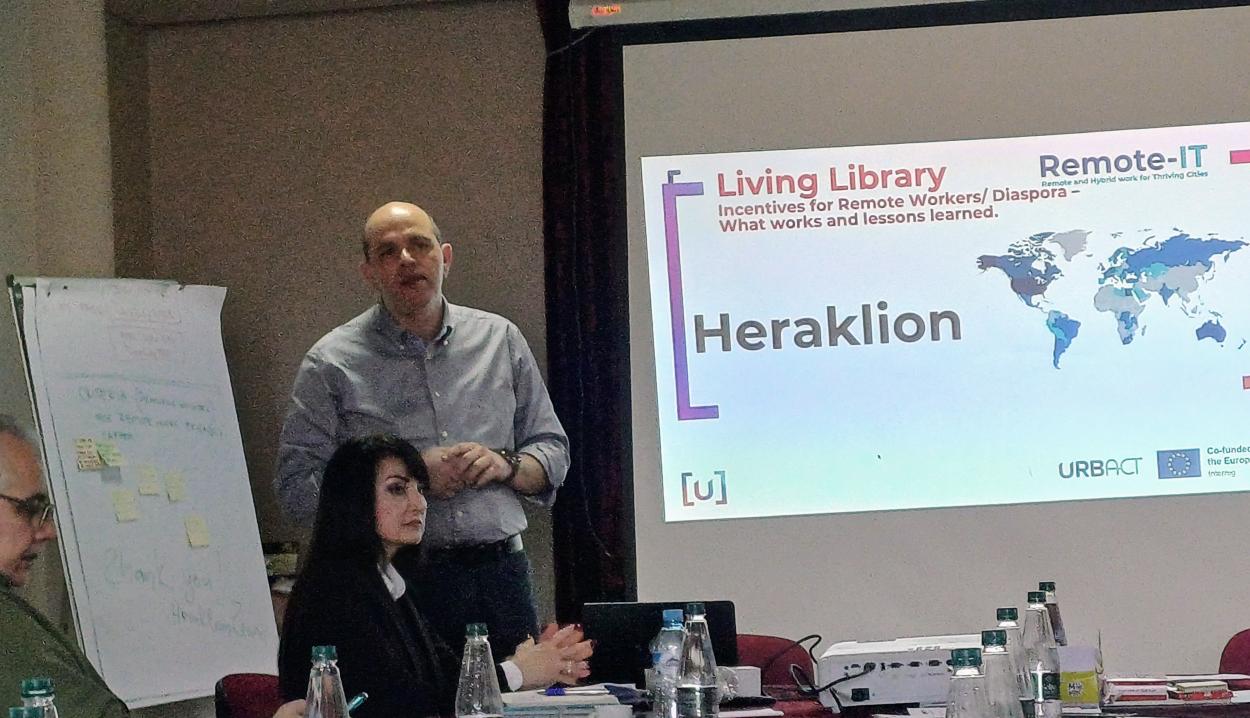
Photo: Mr. Markos Kourgiantakis presenting during the Remote-IT 7th transnational meeting in Tirana
Remote-IT cities reflected these lessons in their own work:
- Tirana presented a model that goes beyond return migration. Its approach links economic opportunity, cultural identity and urban innovation. TEDA Tirana, the city’s free economic zone, is positioned as one incentive mechanism for attracting diaspora investment and remote professionals, but it is complemented by RE-IN-VEST grants for returnees starting businesses, the Tirana Digital Nomad Festival, and targeted programmes for migrant women entrepreneurs, language integration, and career placement. Partnerships with GIZ, IOM, national ministries and the private sector are central to this ecosystem.
- Dubrovnik highlighted how national-level diaspora incentives in Croatia- including housing support, self-employment grants and language and cultural integration programmes, interact with local challenges such as housing pressure and tourism seasonality. The city’s contribution emphasised the need to align incentives with long-term residency and community anchoring.
- Heraklion shared insights from the Greek Diaspora Fellowship Programme, which connects Greek scholars abroad with universities at home through short-term fellowships. While not a relocation scheme, it illustrates how temporary and hybrid engagement models can act as bridges to longer-term collaboration and return.
Why incentives can make sense- and when they do not
Used strategically, incentives can help cities:
- tip marginal location decisions when people are choosing between several viable options;
- signal seriousness and readiness, showing that a city has thought through its offer;
- align individual behaviour with public goals, for example by linking support to hub use, business creation, housing renovation or off-season presence;
- reduce barriers for returnees facing administrative, family or care-related constraints.
At the same time, there are certain risks. Poorly designed incentives can fuel zero-sum competition between cities, intensify housing pressures, or create short-term “stopover residents” who leave once minimum conditions are met.
For diaspora incentives, there is an additional risk of perceived unfairness if returnees are privileged over local residents or entrepreneurs. Successful programmes therefore tend to strengthen the overall local ecosystem while recognising the specific assets of diaspora actors.
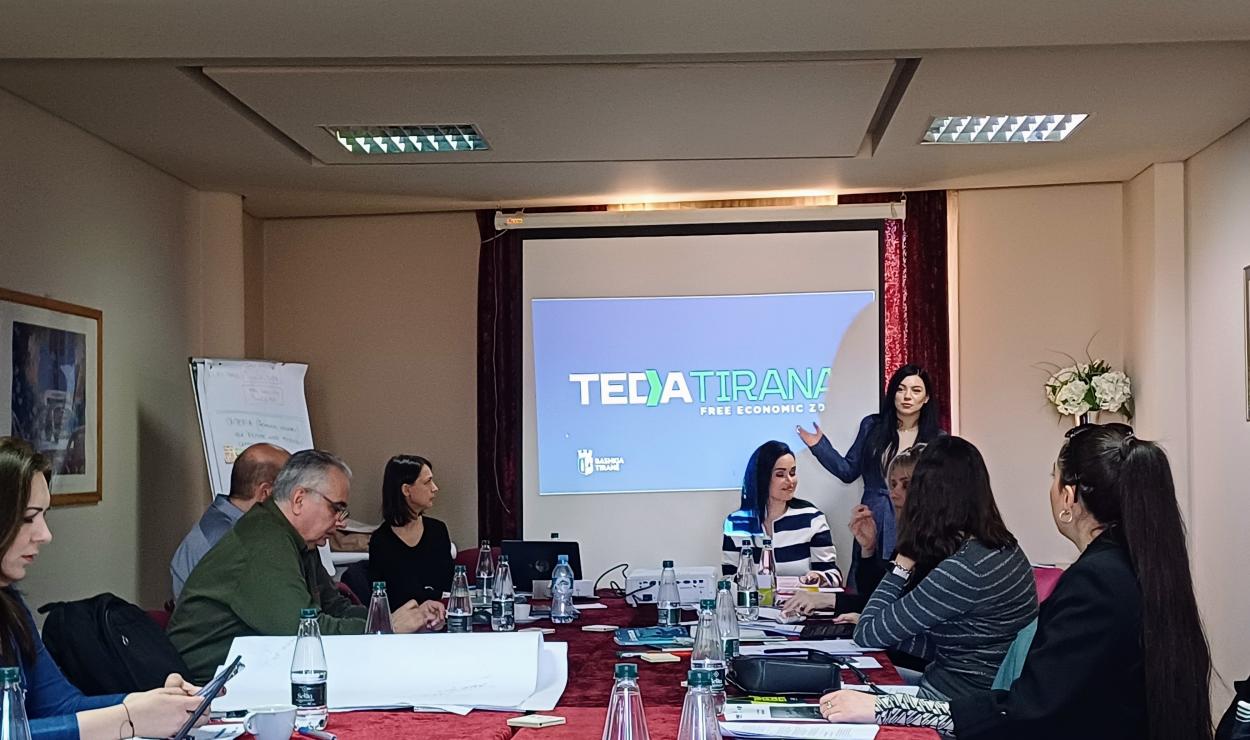
Photo: Ms. Sano Nuriu presenting during the Remote-IT 7th transnational meeting in Tirana
Designing incentives strategically: key questions for cities
Rather than copying models, cities benefit from asking a small set of strategic questions.
What problem are we trying to solve?
Is the goal demographic renewal, skills attraction, diversification beyond tourism, reuse of vacant housing, or reconnection with specific diaspora groups? Incentives should respond to clearly defined challenges.
Who are we targeting?
Remote workers and diaspora communities are not homogeneous. Personas and customer journeys, as developed through Remote-IT, help cities tailor offers to families, solo professionals, entrepreneurs or seasonal returnees.
What behaviour do we want to encourage?
Conditionality matters. Incentives can be linked to length of stay, use of local hubs, participation in community life, business creation or mentoring of local actors.
How will we integrate diaspora?
Diaspora engagement works best when it combines financial support with assistance on schooling, care, recognition of qualifications and administration, and when diaspora representatives are involved in programme design and governance.
How will we protect inclusion and housing affordability?
Monitoring housing markets, prioritising vacant stock, and ensuring that new services benefit existing residents as well as newcomers are essential safeguards.
Incentives as part of a broader social contract
Incentives for remote workers and diaspora are likely to remain part of the local policy toolkit. They respond to real structural challenges and new forms of mobility enabled by digitalisation. But their legitimacy depends on how well they are embedded in wider strategies for housing, services, inclusion and sustainability.
For Remote-IT cities, the key lesson is that incentives should not be about “paying people to move”. They are about renegotiating the relationship between cities and mobile populations, including those who left and may return. When designed around contribution, community and shared benefit, incentives can support more resilient, inclusive and future-ready local economies.