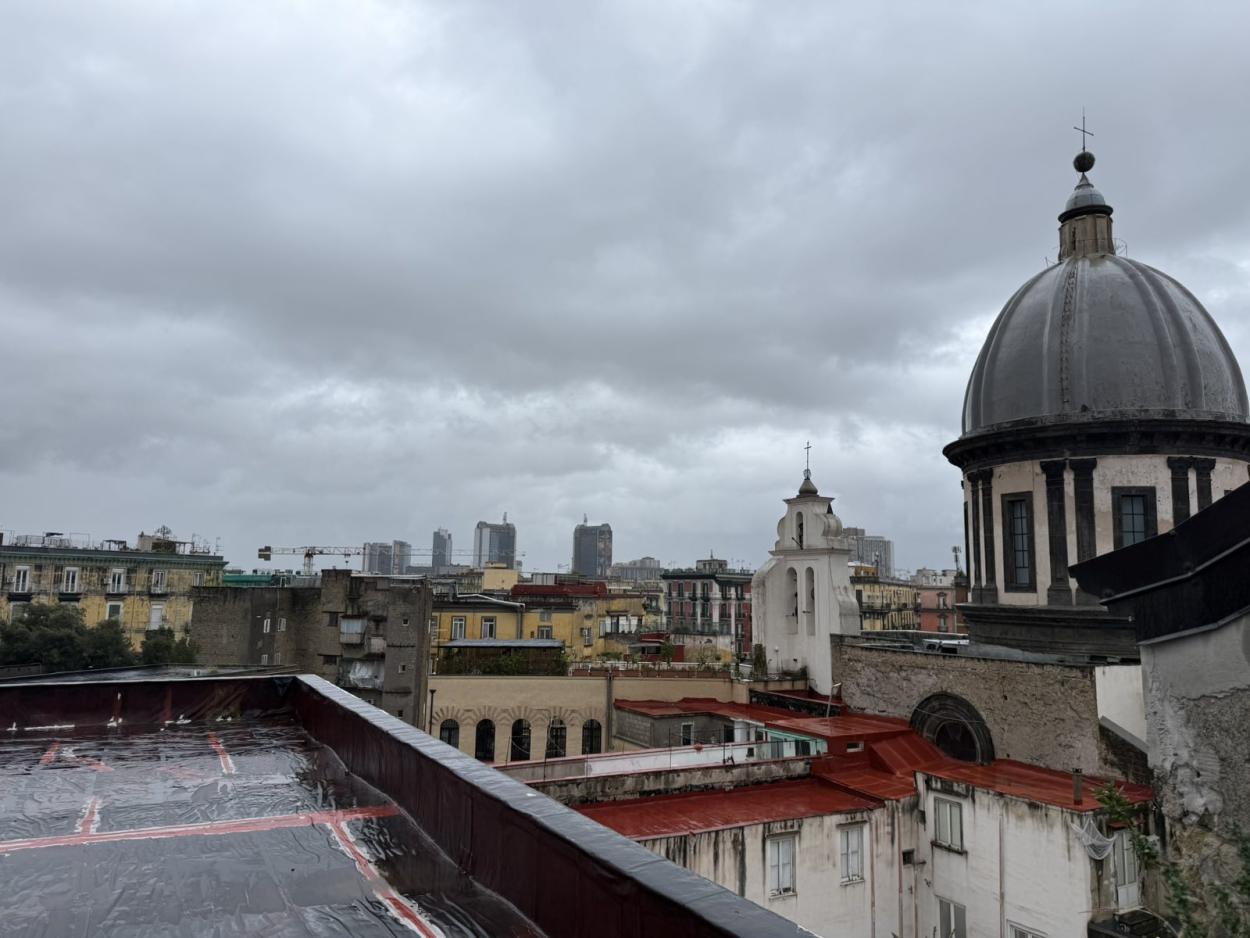
What does a city feel like after dark?
And how can urban safety be shaped not only through control, but through care, culture and community?
These were some of the questions that accompanied CITISENSE partners during three intense days in Naples and Rome, from 27 to 29 January 2026, as the network gathered for its 4th Transnational Meeting. Over the course of the meeting, reflection met reality — in historic halls, lively neighbourhoods and streets experienced both by day and by night.
Cities were not only discussed. They were walked, listened to and experienced.
Understanding the night
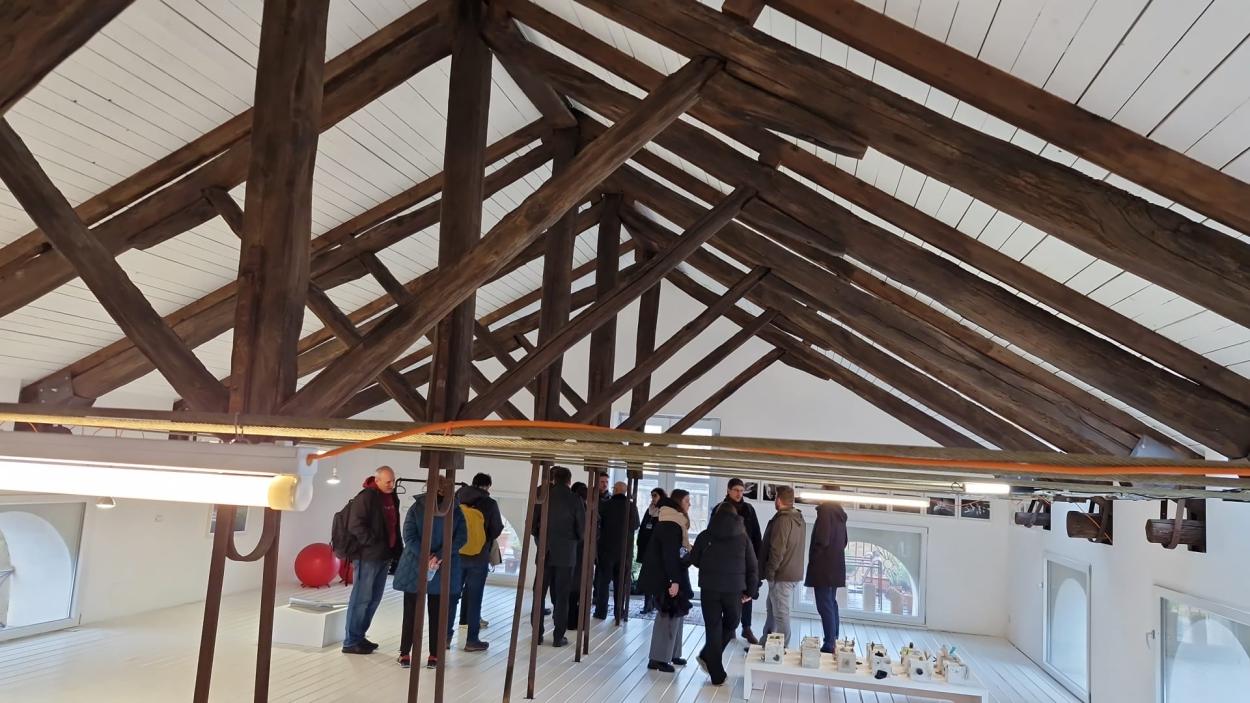
The meeting kicked off in the monumental Real Albergo dei Poveri, a symbolic setting for discussions on urban inclusion and transformation. Participants were welcomed with a visit to the exhibition “Ancora Qui – Prologo”, setting the scene for the days ahead.
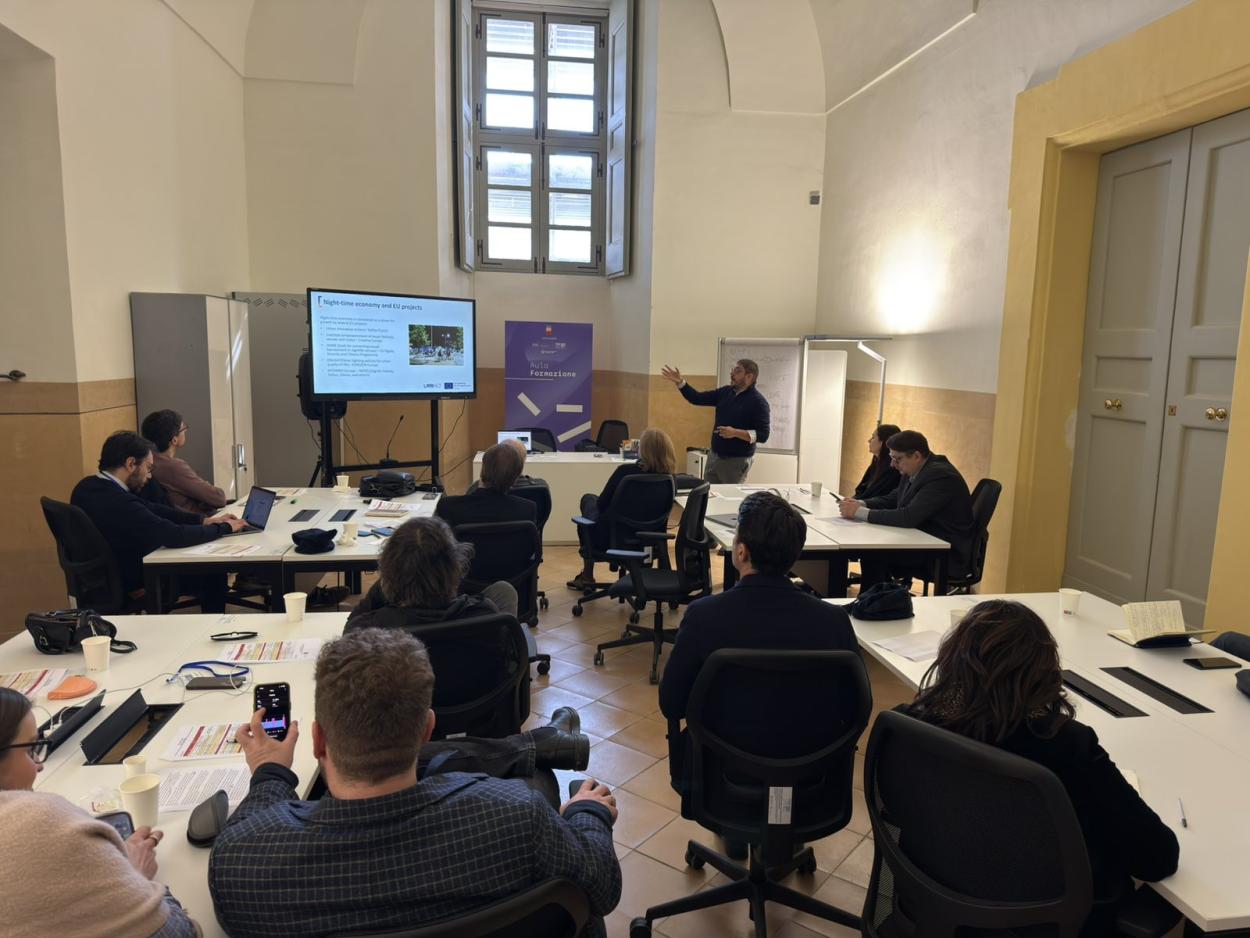
The morning moved into the heart of the programme with a Night-Time Economy workshop, facilitated by URBACT Expert Simone D’Antonio. The session introduced the night-time economy as a strategic dimension of urban safety and sustainable development, linking it to mobility, public space management, culture and local economies. Through guided group work and a Theory of Change approach, partner cities reflected on their own night-time realities, identifying challenges, actors and possible pathways for change.
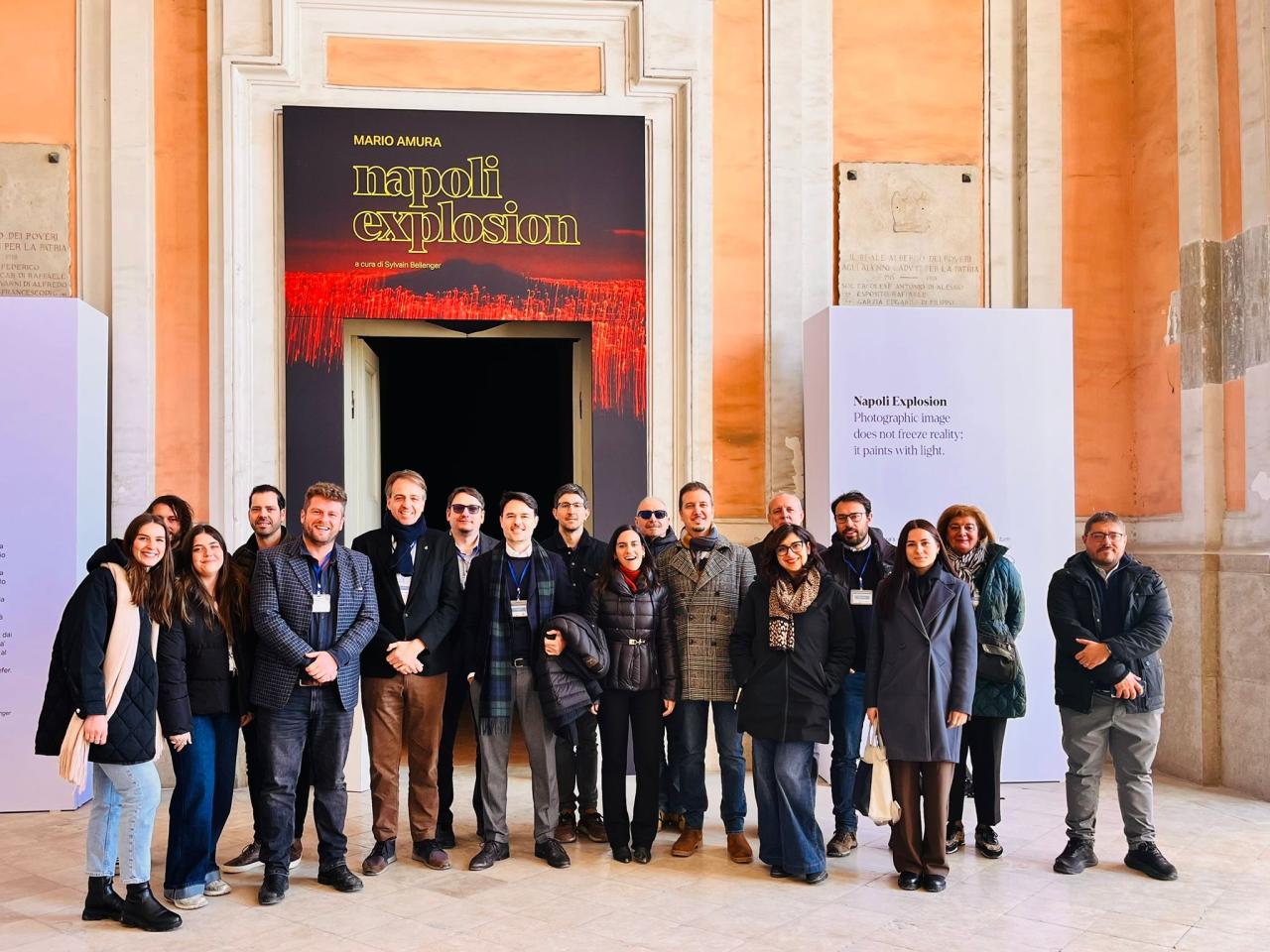
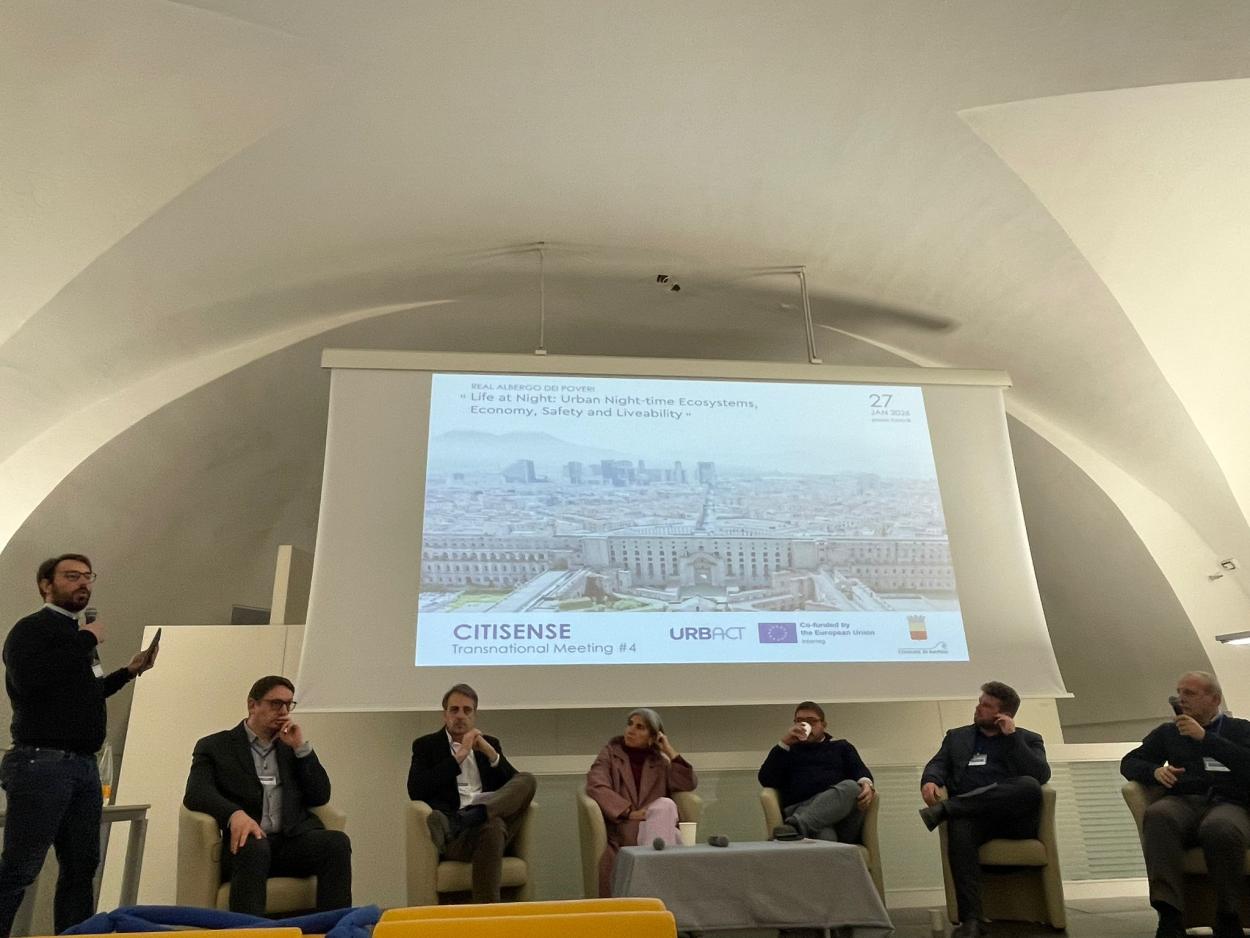
Following a visit to the exhibition “Napoli Explosion”, the doors opened wider in the afternoon. The public event “Life at Night: Urban Night-time Ecosystems, Economy, Safety and Liveability” brought local voices into the room — cultural operators, community representatives and public authorities — alongside partner cities from Piraeus, Geel, Liepāja and Manresa. Moderated by URBACT Lead Expert for CITISENSE Pietro L. Verga and Simone D’Antonio, the discussion highlighted a shared shift: cities across Europe are moving away from purely regulatory approaches and towards integrated, people-centred night-time policies.
The presence of elected representatives, including the Mayor of Geel (Belgium) Marlon Pareijn , the Deputy Mayor for Security of Manresa (Spain) Anjo Valentí Moll and the Councillor for Urban Planning of Naples (Italy) Laura Lieto, reinforced the political relevance of the debate.
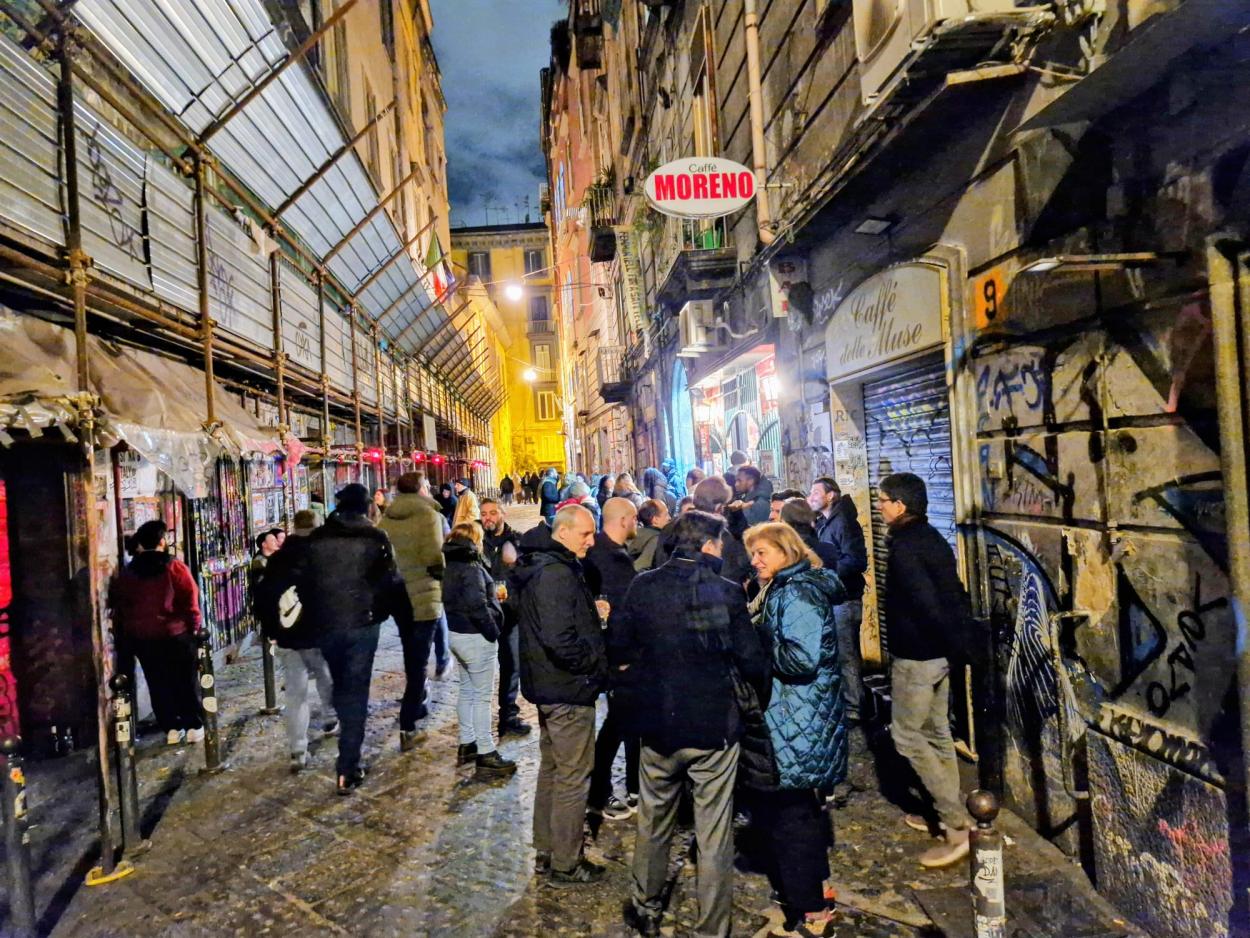
The day concluded as the group stepped into the city’s streets for a night visit starting from Porta Capuana, walking through different urban contexts and the historic decumani. Experiencing Naples after dark allowed participants to observe how lighting, street activity, uses of space and perceptions of safety shift across neighbourhoods — turning policy discussion into lived experience.
Naples revealed itself differently with every step, showing that safety was no longer an abstract concept; it was something felt, perceived and discussed in real time.
From context to strategy
The following day was dedicated to field learning and strategic planning. Starting from Piazza Garibaldi and moving through the Porta Capuana area, participants embarked on extensive daytime field visits and stakeholder meetings across one of Naples’ most complex urban areas.
The itinerary showcased a dense ecosystem of social, cultural and regeneration initiatives, including:
• the “Bella Piazza” project and its social concierge service,
• Dedalus Social Cooperative and Officina Keller at the former Ex Lanificio,
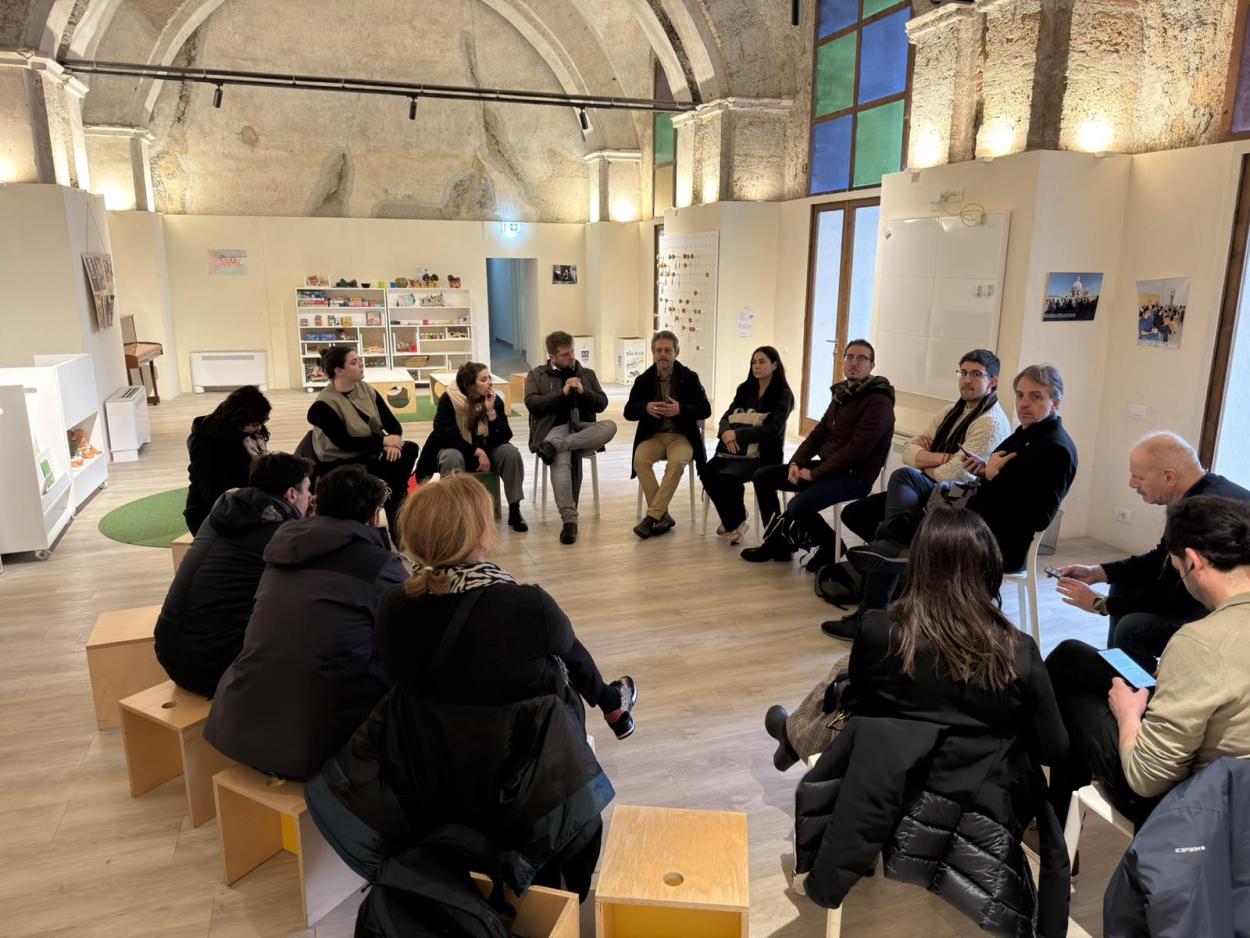
• Spazio Obù, a cultural and educational hub for children and families,
• the historic O’ Buvero market,
• and the Nanà Intercultural Centre, supporting inclusion and autonomy for young migrants.
Meeting local actors on-site highlighted how community-led initiatives, long-term social work and cultural production contribute directly to urban safety and cohesion.
Here, regeneration was not about iconic projects, but about presence: social workers, cultural mediators, educators and residents working together over time. The historic O’ Buvero market and the streets of Sant’Antonio Abate added another layer, reminding participants that public space is both a physical and a social fabric.
Back at the Real Albergo dei Poveri, the afternoon focused on the implementation of long-term strategies during an Investment and Continuity Plan workshop led by Pietro L. Verga. Cities worked side by side on real actions from their local plans. How can impact be measured? What does success look like after a project ends? And how can innovation be sustained beyond pilot phases?
Learning from practice: the We-Z study visit
The final day took participants to Rome for a study visit to the We-Z project, an EUI Innovative Action focused on tackling insecurity through co-design, participatory governance and place-based interventions.
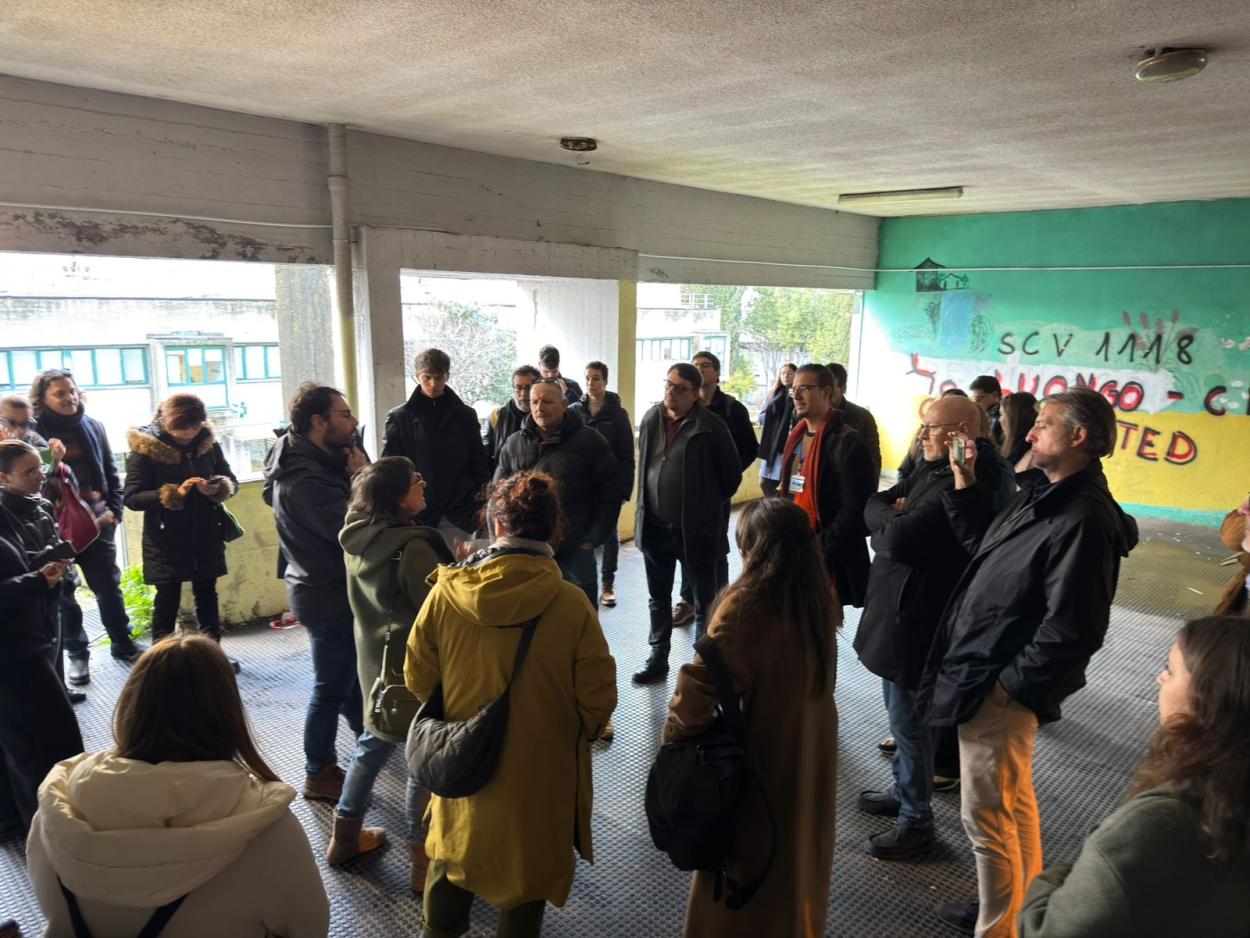
Hosted at Casali di Faonte, the day began with an introduction to the CITISENSE and We-Z approach, followed by a guided walk through the Vigne Nuove neighbourhood, focusing on key insecurity hotspots and ongoing transformations in public space.
The visit culminated in a round table with local stakeholders, structured around three themes:
• physical and spatial transformations in public space;
• participatory governance and co-creation;
• co-design and co-implementation processes;
This exchange offered concrete inspiration on how cities can empower communities, rebuild trust and activate underused spaces as part of broader urban safety strategies.
What we learned — key takeaways
- Urban safety day and night is a shared responsibility
Lasting night-time safety emerges from collaboration between cities, communities, cultural actors and local services. - Lived experience shapes better policy
Field visits and on-the-ground exploration revealed how perceptions of safety change across spaces and times, highlighting the importance of lived experience in shaping policies. - Communities are key urban safety actors
Grassroots initiatives and long-term social projects are central to building trust and inclusion in complex neighbourhoods. - Political commitment matters
The involvement of elected representatives underscored the need to anchor innovative approaches to urban safety within political commitment and long-term strategies. - Continuity turns ideas into impact
Sustainable impact depends on aligning vision, governance, funding and monitoring, ensuring that actions continue beyond project cycles. - Co-design builds safer neighbourhoods
The We-Z study visit demonstrated how participatory governance and place-based approaches can transform public spaces and reinforce community ownership.
From shared experience to shared impact
Across these three days, one thing was clear: the value of the 4th CITISENSE Transnational Meeting lay not only in what was discussed, but in what was experienced together.
From historic halls to night-time streets, from neighbourhood initiatives to political dialogue, the meeting strengthened a shared European understanding of urban safety that places people, public spaces and participation at its core.
As CITISENSE moves forward, the lessons from Naples and Rome will continue to shape local actions, investment plans and governance models across partner cities — turning shared learning into real, lasting urban impact, day and night.