
On Thursday 4 and Friday 5 of December, the heavens of Attica poured down around 100 mm of water per day challenging the Athenian Metropolis’ capacities to manage such volumes of rain-water. Indeed, the Regional Government declared the whole of Attica into a state of emergency and the schools stayed closed on Friday, underlying the emergency of climate adaptation and sustainable water management policies for the cities.
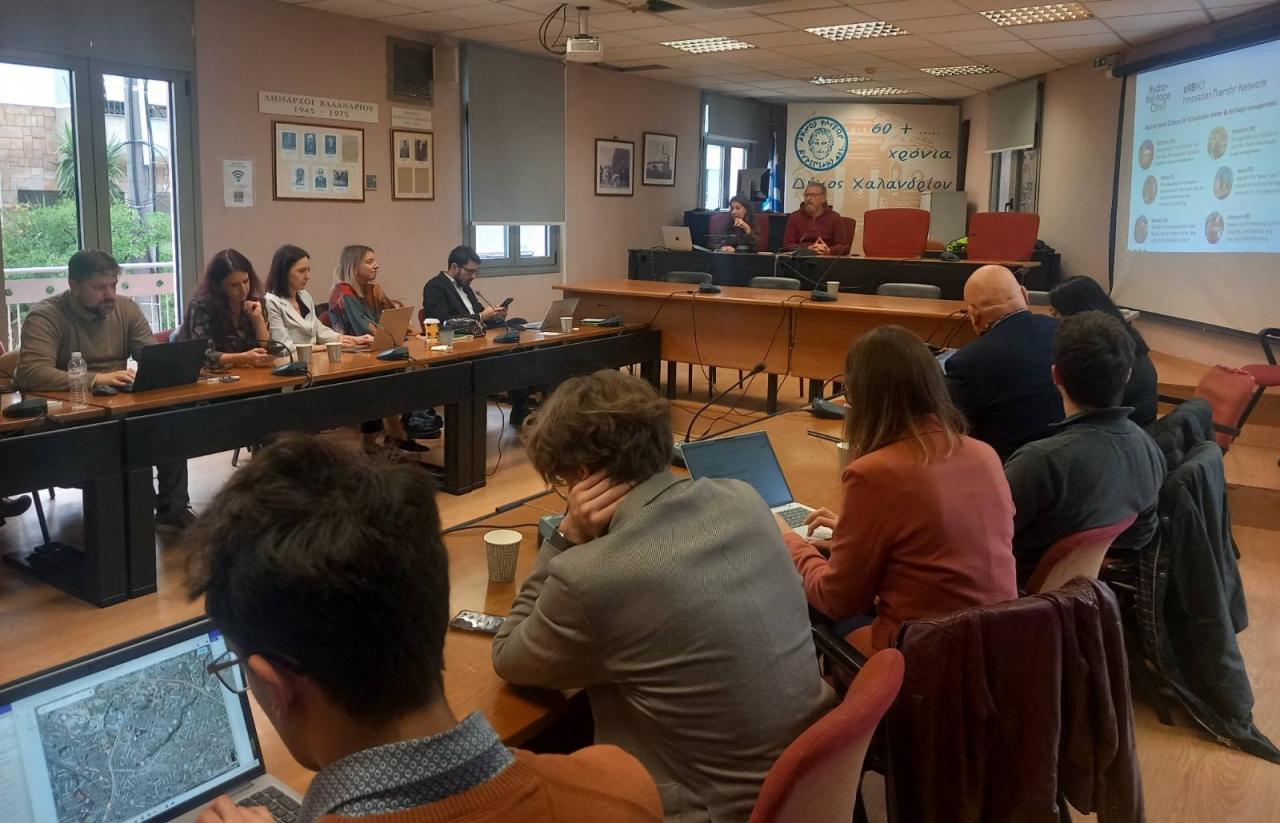
Promptly and paradoxically it was in those two days that the City of Chalandri and Commonspace (a Chalandri-ULG member) hosted the second in person meeting of the Urban Agenda for EU thematic ‘Water Sensitive City’ (WSC). Among the numerous quests - local administrations, EU bodies, water companies and research institutes - were included representatives from our Hydro-Heritage Network partner City of Elche, which is the Thematic’s digital innovation Action coordinator.
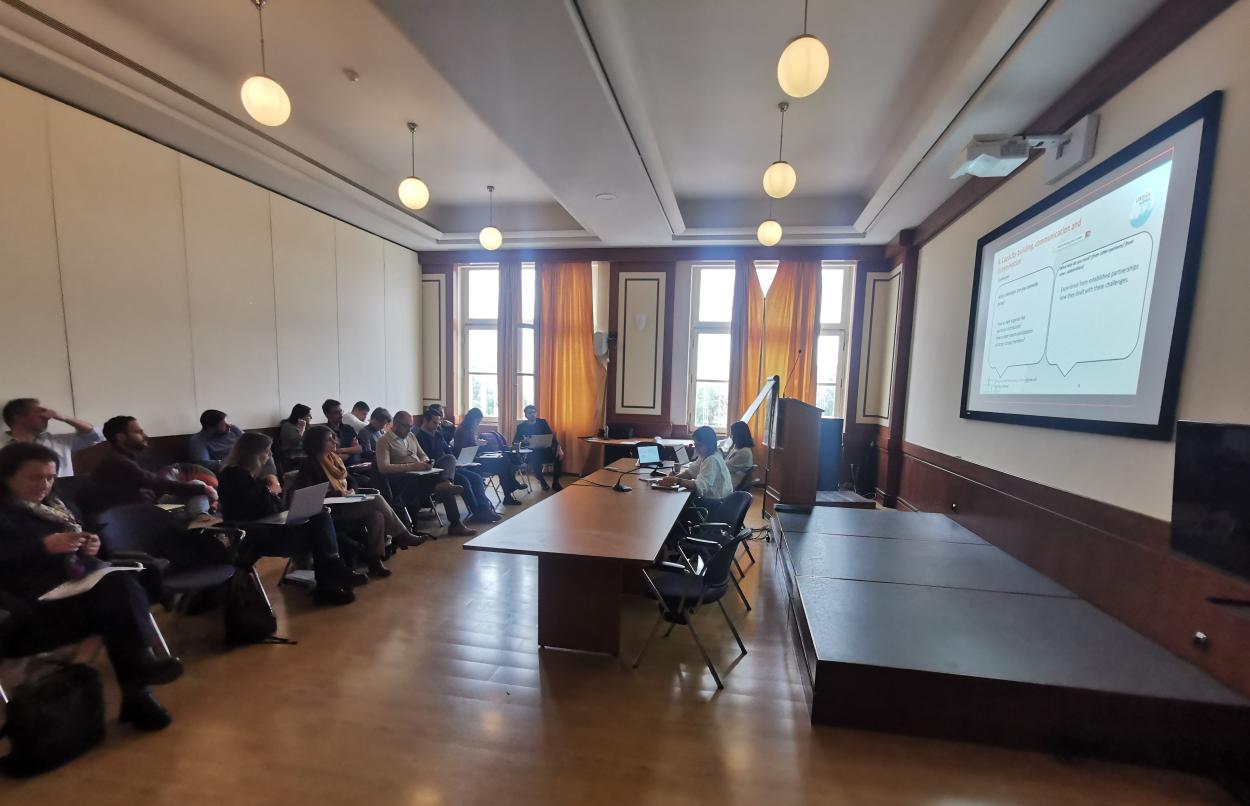
The meeting’s first day took place in the Agricultural University of Athens. It opened with a welcoming from the Mayor of Chalandri, Simeon Roussos, who highlighted the importance for water to remain under public control should we want sustainable and fair water policies in place. His talk was followed by Thanos Andritsos (Commonspace), Alexandru Matei (EUI) and Jorge Brito (CIM-RC), while the day’s three working sessions were dedicated to feedback and planning the thematic’s work, aims and deliverables.
The proceedings of the second day, titled ‘Learning from Practice’, were held in Chalandri. After a first session on ‘aligning the WSC thematic’s Actions with the EU policy landscape’, the presentation of the Cultural H.ID.RA.N.T. project and a field visit followed. Christos Giovanopoulos - Hydro-Heritage Cities’ Communication Officer – presented the integrative and participatory methodology of the Cultural H.ID.RA.N.T. project, while Stefania Gyftopoulou - Hydro-Heritage Cities’ Project Manager – talked on how its successful implementation led to this URBACT Innovation Transfer Network, presenting the variety of the Network’s hydro-heritage sites and the cities involved in.
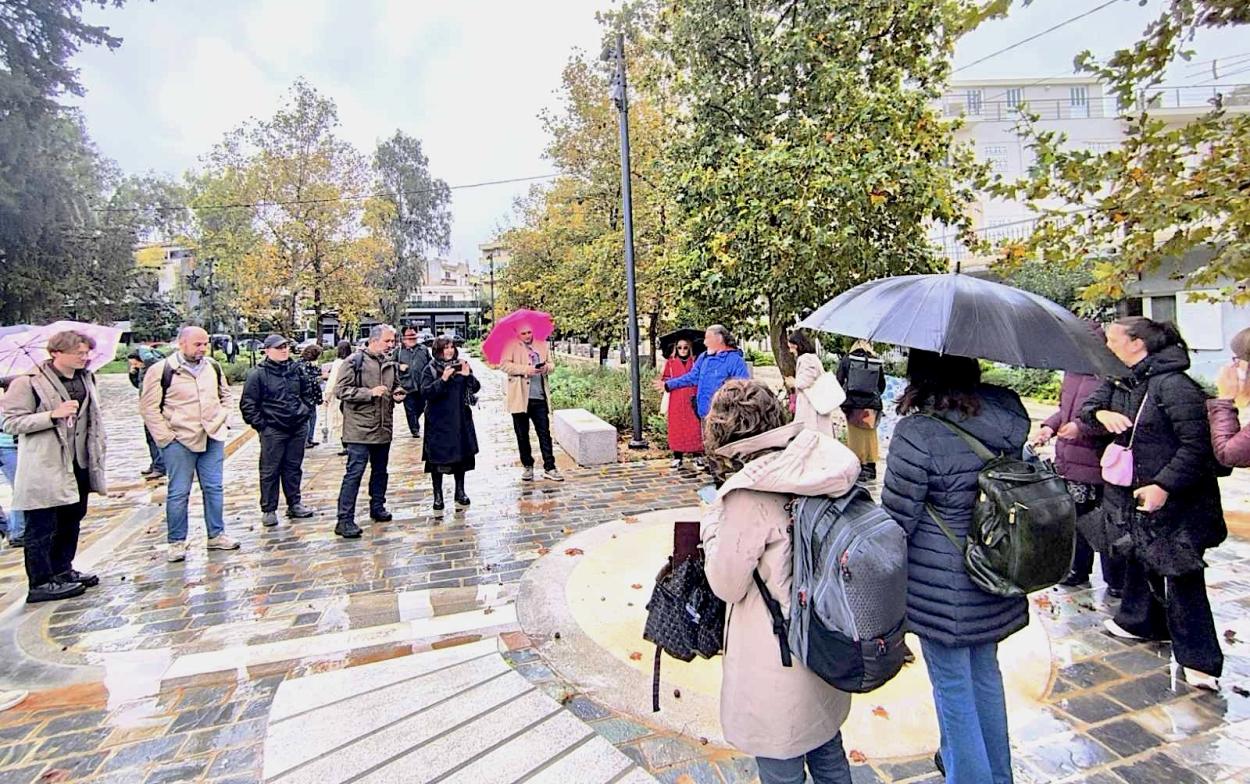
Albeit the, heavy at times, rainy weather, the field-trip on two of the regenerated by Cultural H.ID.RA.N.T. areas was also a test to its impact regarding water-management in an urban environment. The visit to the Rematia stream’s banks, made accessible by the project, and to the Hadrian Aqueduct’s sendimentation reservoir and the new public space around it, raised a lot of interest and inquiries about aspects regarding the re-utilisation of the abandoned Hadrian Aqueduct as non-potable water resource and the potential such endeavor might have for the vicinity and as a water-policy making.
The Water Sensitive City thematic meeting closed with a public event in the Agricultural University. In the roundtable discussion titled “Water and the City: Addressing an Urgent Challenge through Coordinated Action” took part Chiara Lucchini (EUI/URBACT expert, Urban Torino Lab), Kostas Gerolymatos (Municipality of Chalandri, Coordinator of Cultural H.ID.RA.N.T. project and Chalandri’s URBACT Local Group), Giorgos Sachinis (EYDAP-Athens & Pireaus Water Company, Water Europe Board Member), Eliza Kassotaki (Cetaqua Water Technology Center), Rene Reisner (Green Transition & Climate Adaptation, Ministry of Climate, Estonia) and Tymon Wolender (Expert - Municipality of Turin).
Having, as URBACT network, two cities (Elche, Chalandri) and a ULG partner (Commonspace) within the Urban Agenda ‘Water Sensitive City’ Thematic, besides the visibility that may provide to the Hydro-Heritage Cities Network, it places the latter’s work and objectives among a wider spectrum and strategies for developing sustainable water management and a water sensitive urban culture and policies across Europe.