

Why hybrid and remote work in public administrations matters
Public employment is macro-relevant. Across OECD countries, governments employ roughly 18 percent[1] of the workforce and spend on average more than 9 percent of GDP on public sector wages. How these employees work has consequences for productivity, fiscal sustainability, environmental goals and labour-market inclusion.
The pandemic demonstrated that many public services could continue and improve while staff worked from home or other locations. OECD analyses[2] show that telework rates in the broader economy jumped dramatically in 2020, with around 40 percent of workers in the EU teleworking at least sometimes during the first waves of COVID-19, compared with around 11 percent before. In several European administrations, the number of public employees teleworking increased from tens of thousands to hundreds of thousands within months; in one documented case, from 26 000 to over 450 000.
While emergency conditions have passed, few administrations have returned to a fully office-based model. OECD work on public administration after COVID-19 finds that most surveyed governments intend to retain some degree of remote work because of perceived benefits for resilience, continuity of operations, staff well-being and attractiveness as an employer. Public servants themselves generally report positive or mixed experiences: greater flexibility and autonomy, offset by challenges in collaboration, workload and the blurring of work–life boundaries.
For cities, the adoption of hybrid work in municipal administrations matters for at least three reasons:
- Service continuity and quality- remote-capable processes can help keep essential services running during crises - from pandemics to heatwaves or infrastructure failures, and can support extended opening hours through digital channels.
- Employer attractiveness and inclusion- flexible work arrangements are now a key factor for many professionals in choosing an employer, including younger workers and those with caring responsibilities or disabilities.
- Local modelling and credibility- city governments that experiment with hybrid work internally are better positioned to support private employers, set realistic regulations and speak credibly about the future of work.
How hybrid work entered public administrations
Although telework in public administrations has been discussed since the late 1990s, it was largely marginal until 2020. Early initiatives in countries such as Italy were framed as experimental and limited to small groups of volunteers.[3]
The pandemic transformed this picture. Lockdowns and social-distancing rules forced administrations to shift large numbers of staff to remote work almost overnight. A SIGMA/OECD survey[4] of civil services in several EU neighbourhood countries highlights that telework, previously used by a small minority, became the default arrangement for many administrative staff during 2020–2021. The survey also notes that administrations had to improvise solutions on equipment, security and performance management, often without prior guidelines. [5]
This emergency phase produced three important legacies:
- Proof of feasibility. Many managers and political leaders who had been sceptical discovered that remote work was compatible with maintaining – and sometimes improving – service delivery. OECD’s broader telework analysis finds that managers and workers in both public and private sectors generally rated productivity as stable or higher when teleworking, provided suitable tools and management practices were in place.
- Exposure of systemic weaknesses. The crisis revealed gaps in digital infrastructure, document management, cyber security, leadership skills and HR frameworks. These weaknesses now shape the agenda for more deliberate reforms.
- Raised expectations. Public employees experienced new levels of flexibility. Many now expect at least some degree of hybrid work as a normal part of their employment relationship, which affects recruitment and retention.
Remote-IT cities mirror this trajectory. In Murcia and Tartu municipalities used the post-pandemic period to review what had worked, identify legal and organisational constraints, and begin designing more structured hybrid models, supported by URBACT methodology and peer learning.
The regulatory landscape- telework, data protection and the right to disconnect
Municipalities operate within national legal frameworks that regulate telework, public employment and occupational safety. These frameworks differ across Europe, but several common elements can be observed.
Eurofound’s comparative mapping of telework regulation shows that EU countries use a mix of statutory legislation and collective bargaining to regulate telework conditions, including equipment, expenses, working time and health and safety.[6] In many cases, public administrations are covered by specific civil-service statutes or sectoral agreements that include telework provisions.
The Council of Europe’s Toolkit on teleworking in public administrations[7] provides detailed guidance for member states and local authorities on designing telework policies that comply with existing labour standards, particularly in relation to occupational safety, ergonomics, psychosocial risks and equality. It emphasises that telework is not a separate type of employment but a mode of organising work that should guarantee equivalent rights and protections.
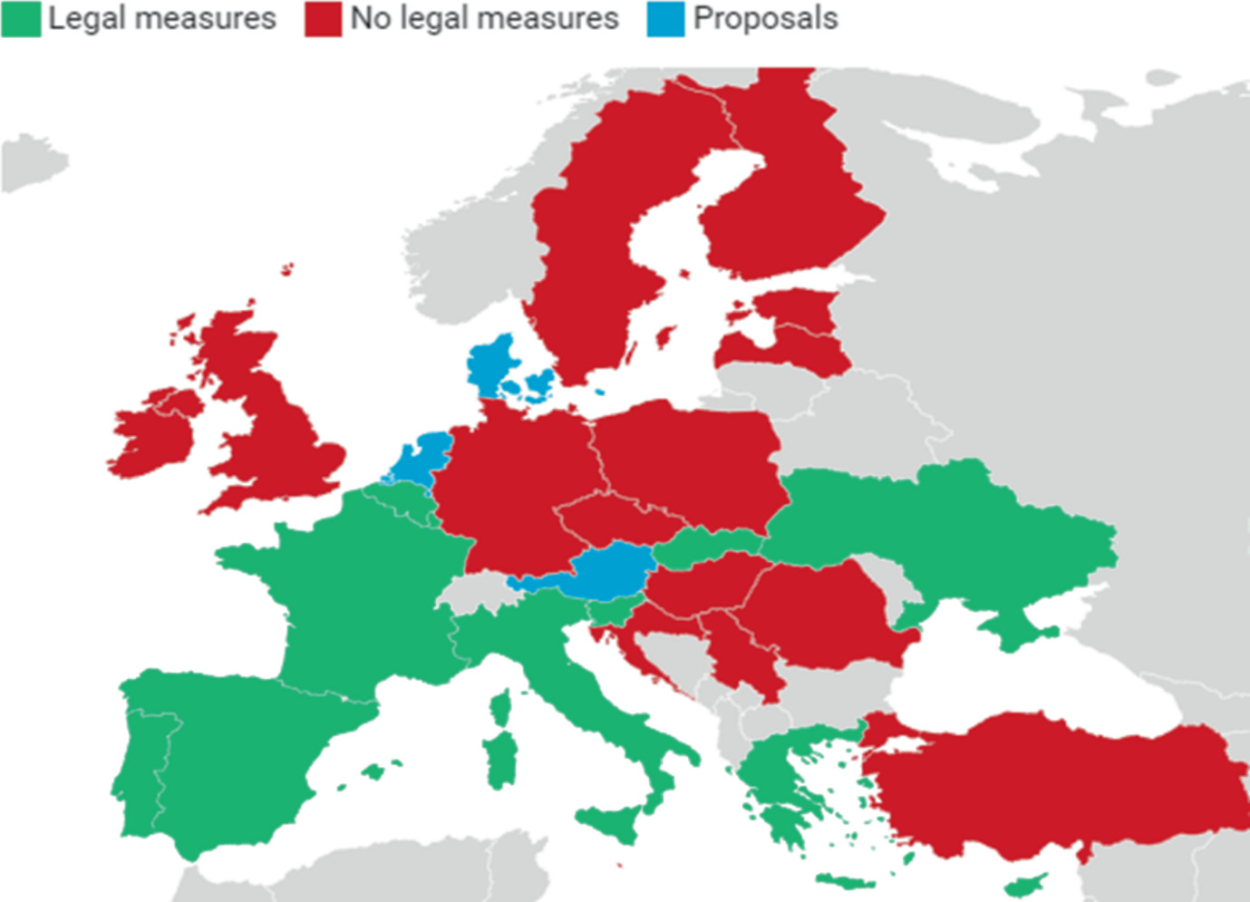
Figure 1: The right to disconnect in Europe[8]
One regulatory topic that has gained prominence is the right to disconnect - the right of workers to disengage from work-related electronic communications outside working hours. Eurofound and the European Parliament’s research service note that, while there is no EU-wide binding instrument yet, several member states (including France, Belgium, Spain, Italy and Greece) have introduced national legislation or binding guidelines, some of which explicitly cover public-sector workers. [9]
For municipal leaders, this means that any hybrid or remote-work scheme must be designed with careful attention to:
- compliance with national telework legislation and collective agreements;
- data protection rules, including the use of monitoring software or cloud services;
- health and safety obligations in home or remote workplaces;
- working-time regulations and emerging rights to disconnect.
Designing hybrid and remote work models inside city administrations
Hybrid and remote work in public administrations rarely means “everyone can work from anywhere”. It usually involves a structured mix of on-site and off-site work, differentiated by job type, service needs and individual circumstances. Research on teleworking models in European public administrations identifies several common patterns: occasional telework (one day per week), regular hybrid schedules (two or three remote days), and fully remote posts for specific back-office functions.[10]
Within Remote-IT, cities have approached design in iterative stages: assessing what roles are compatible with remote work, testing pilot arrangements, and then embedding what works into HR policies and collective agreements.
Although each city context is different, experience and international guidance point to a set of core dimensions that any municipal hybrid-work framework should address.
Tasks and eligibility
Not all roles in city administrations can be performed remotely: emergency services, many front-office functions, street maintenance, waste collection and other field-based tasks require physical presence. Telework is more suitable for policy development, planning, back-office processing, HR, finance, IT, communication and some social or educational services.
The Council of Europe toolkit and OECD guidance recommend starting from tasks rather than job titles. Administrations map which tasks can be done off-site, which require access to physical archives or in-person contact, and which involve confidential information with stricter security requirements. This mapping helps identify eligible positions and define reasonable limits (for example, a maximum number of telework days per week).
Transparent eligibility criteria are important to avoid perceptions of unfairness between staff whose jobs are more or less “teleworkable”.
Working-time patterns and presence rules
Hybrid models typically specify:
- how many days per week or month an employee may work remotely;
- core hours when staff must be reachable;
- rules for presence in the office (for example, team days, mandatory in-person meetings, rotation schedules to maintain service coverage).
OECD’s productivity analysis[11] emphasises that flexibility should be balanced with predictability, both for teams and service users.
Equipment, expenses and workplaces
Telework arrangements must clarify who provides equipment (laptops, monitors, headsets, secure connections) and who covers costs for internet or energy. Eurofound’s regulatory review shows that many European agreements now specify minimum standards and reimbursement mechanisms for teleworkers, including in public administrations.[12]
Performance management and leadership
A shift from presence-based to results-based management is central to successful hybrid work, suggesting that productivity outcomes depend heavily on managerial practices: clarity of objectives, feedback mechanisms, trust, and the ability to support distributed teams.
Through Remote-IT discussions, several priorities have been highlighted:
- revising job descriptions and performance indicators to focus on outputs rather than time spent in the office;
- training middle managers in remote team leadership, including inclusive meeting facilitation and conflict management;
- equipping staff with digital collaboration skills (beyond basic use of email or video conferencing).
Well-being, inclusion and the right to disconnect
Telework can improve work-life balance, especially for employees with care responsibilities or disabilities, but it can also lead to longer working hours, isolation and stress. Eurofound’s research on telework and working conditions underscores the increased risk of “always-on” cultures and psychosocial strain when boundaries are not managed.
Municipal schemes therefore need to integrate:
- explicit rules on communication outside working hours, aligned with national right-to-disconnect provisions where they exist;
- options for hybrid rather than fully remote arrangements, so that staff can maintain social contact;
- access to counselling, ergonomic advice and digital-well-being training;
- equality considerations, ensuring that telework opportunities do not reinforce gender segregation or disadvantage staff who lack suitable home environments.
Cybersecurity and data protection
Public administrations routinely handle sensitive personal data. Telework increases exposure to cyber risks if devices, networks and practices are not secure. Council of Europe guidance and national cyber-security agencies emphasise the need for secure VPNs, authentication protocols, regular updates, and clear rules on the use of personal devices.[13]
Municipalities should work closely with their IT departments to ensure that remote-work policies are aligned with data-protection frameworks such as the General Data Protection Regulation (GDPR), and that any monitoring of staff activity respects privacy and labour-law safeguards.
Risks, trade-offs and unintended consequences
Hybrid and remote work in public administrations are not without downsides. European and international analyses point to several risks that city leaders should actively manage.
One is the risk of unequal treatment between staff whose jobs are compatible with telework and those who must be physically present. If not handled carefully, this can undermine cohesion and morale. Municipalities may need to offer alternative forms of flexibility or recognition to staff in front-line roles.
Another concern is fragmentation of organisational culture. When teams rarely meet in person, informal knowledge sharing and cross-departmental relationships can weaken. Research suggests that hybrid models that preserve regular in-person team days or periodic whole-organisation events can mitigate this, but they require intentional planning.
There are also coordination and accountability challenges. Distributed work makes it harder for managers to monitor workloads and identify early signs of burnout or disengagement. Public-sector telework studies warn against over-reliance on digital monitoring tools, which can erode trust and raise legal issues.
From a spatial and environmental perspective, hybrid work can reduce commuting emissions and allow more efficient use of office space, but may also encourage longer-distance residential moves and greater reliance on cars for occasional trips, partly offsetting environmental gains. Emerging research on regional telework impacts in Europe finds mixed effects, depending on local transport patterns and housing markets.[14]
Finally, there is a governance risk: if public administrations move to hybrid work without adequate consultation or legal clarity, they may face disputes with staff representatives or legal challenges around working conditions, health and safety or equal treatment. Eurofound and trade-union organisations emphasise the importance of social dialogue in designing telework frameworks, particularly in central and local government administrations.[15]
A practical roadmap for city leaders
Each city will need to tailor its approach to national law and local conditions, but experience from Remote-IT discussions and broader European practice suggests a pragmatic sequence of steps:
- Clarify objectives. Define why the municipality is considering hybrid or remote work (e.g. resilience, employer attractiveness, inclusion, environmental goals) and how success will be measured.
- Map legal and institutional boundaries. Review national telework legislation, civil-service statutes, collective agreements and data-protection rules. Engage legal services early.
- Analyse tasks and roles. Conduct a structured assessment of which tasks and positions can be performed remotely, with what frequency, and under what conditions.
- Consult and co-design. Establish a working group with HR, IT, department heads, staff representatives and, where relevant, unions to co-design the framework.
- Pilot and evaluate. Start with pilot departments or groups, with clear indicators related to service quality, employee satisfaction, productivity and equality. Collect qualitative feedback as well as quantitative data.
- Formalise policies. Based on pilots, develop formal regulations or guidelines covering eligibility, working time, equipment, expenses, health and safety, data protection and the right to disconnect.
- Invest in leadership and skills. Provide training for managers and staff on remote collaboration, digital tools, inclusive communication and well-being.
- Reconfigure workplaces. Align office-space planning with hybrid patterns, ensuring that on-site time is used for collaboration and public interaction rather than solitary desk work.
- Monitor and adapt. Establish regular review cycles to adjust the model in light of feedback, technological change and evolving legal frameworks.
[1] OECD (2025), Government at a Glance 2025, OECD Publishing, Paris, https://doi.org/10.1787/0efd0bcd-en.
[2] OECD (2021), “Teleworking in the COVID-19 pandemic: Trends and prospects”, OECD Policy Responses to Coronavirus (COVID-19), OECD Publishing, Paris, https://doi.org/10.1787/72a416b6-en.
[3] Eurofound (1999), Agreement signed on telework in the public administration, article. https://www.eurofound.europa.eu/en/publications/all/agreement-signed-telework-public-administration?utm
[4] https://www.sigmaweb.org/content/dam/sigma/en/documents/2020/Teleworking-survey-Learning-from-the-COVID-19-crisis.pdf?utm
[5] Criscuolo, C. et al. (2021), “The role of telework for productivity during and post-COVID-19: Results from an OECD survey among managers and workers”, OECD Productivity Working Papers, No. 31, OECD Publishing, Paris, https://doi.org/10.1787/7fe47de2-en.
[6] Eurofound (2022), The rise in telework: Impact on working conditions and regulations, Publications Office of the European Union, Luxembourg. https://assets.eurofound.europa.eu/f/279033/abeb6083ef/ef22005en.pdf?utm
[8] Gutsu, S., Shyroka, S. (2025). The Right to Disconnect as an Implementation of the Employee’s Constitutional Right to Rest: a Philosophical and Legal Approach. In: Lytvynov, O., Pavlikov, V., Krytskyi, D. (eds) Integrated Computer Technologies in Mechanical Engineering - 2024. ICTM 2024. Lecture Notes in Networks and Systems, vol 1474. Springer, Cham. https://doi.org/10.1007/978-3-031-94852-7_8
[9] Eurofound (2023), Right to disconnect: Implementation and impact at company level, Publications Office of the European Union, Luxembourg. https://assets.eurofound.europa.eu/f/279033/70e915b9f3/ef23002en.pdf?utm
[11] Criscuolo, C. et al. (2021), “The role of telework for productivity during and post-COVID-19: Results from an OECD survey among managers and workers”, OECD Productivity Working Papers, No. 31, OECD Publishing, Paris, https://doi.org/10.1787/7fe47de2-en.
[12] Eurofound (2022), The rise in telework: Impact on working conditions and regulations, Publications Office of the European Union, Luxembourg https://assets.eurofound.europa.eu/f/279033/abeb6083ef/ef22005en.pdf?utm