
Project proposal by
- Institution : Town
- City : BOURGES
- Country : France
- Type of region : Less developed
- Population : 64 238
Presentation of the ‘Museum and Living Regenerative Territory’ Project
Overall objective
To foster a dynamic of a living regenerative territory, drawing on the Museum’s own transformation as a model
Project context
With its rich collections of over 230,000 objects and specimens, and a programme of acclaimed exhibitions and events, the Bourges Natural History Museum is one of the most visited museums in the Centre-Val-de-Loire region.
Aware of global challenges for several decades, the Bourges Museum has very often been at the forefront of the transformations taking place in our societies and their impact on the planet and its major ecological balances.
Thus, 30 years ago, it took on the challenge of studying and protecting bats—a species that had been little studied by scientists at the time—to set up multidisciplinary projects integrating these bioindicator species into land-use planning. Building on these experiences, the museum is now regarded as the national authority on bat research and conservation.
The museum team wished to capitalise on this hyper-specialisation and the wide range of associated experiences to give a voice to all the ‘invisible’ species during Bourges’ bid to become the European Capital of Culture 2028, by incorporating scientific culture into the programme.
The origins of the project
As part of its bid to become European Capital of Culture 2028, Bourges, drawing on the vision championed by the Museum, proposed a low-carbon event that highlighted the need for a shift in our societal model: one that would bring the Anthropocene era to an end and enable us to imagine and build a new world that is both sustainable and desirable for future generations.
This optimistic yet realistic vision of tomorrow’s world is the unique feature that enabled the city to win the title of European Capital of Culture.
Bourges’s nomination thus endorsed the shift in perspective championed by the region and marked the dawn of a new era known as the Symbiocene.
In 2028, four key events (exhibitions and a ceremony) will enable the general public to familiarise themselves with and embrace this concept of the Symbiocene.
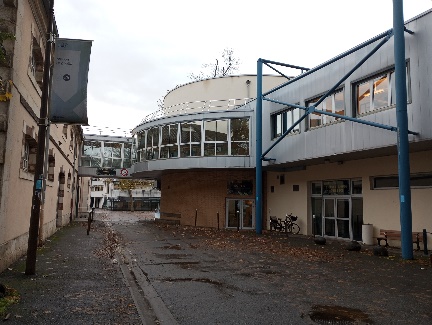
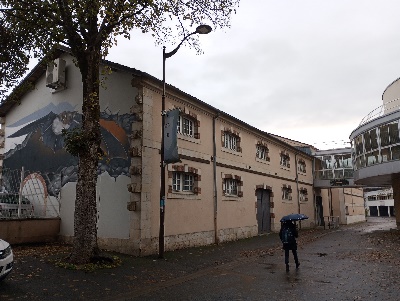
The Bourges Museum, which initiated this proposal, will host some of the exhibitions. To mark the occasion, the ageing and energy-inefficient museum must be renovated.
To ensure that words are matched by deeds, it will be designed as a living, regenerative museum.
The vision
The museum has therefore proposed ushering the region of Bourges and the Cher into a new Symbiocene era, in which humans no longer dominate nature but regard all living things as their equals and partners in future survival. This new symbiotic model, which enabled Bourges to win the title of European Capital of Culture 2028, represents a unique opportunity for the region to drive forward an avant-garde dynamic that can be replicated in other regions at all levels.
The Living Regenerative Museum becomes the place where ideas, words and actions come together. We envisage a region based on the principle of the regenerative economy, incorporating renaturation, carbon sequestration and water storage, and taking into account ‘invisible’ elements such as soil and air. All these interdependent objectives will build a new model in which the territory is reimagined as a living being. Urban and rural areas are regarded as living entities of human and non-human cooperation, designed to give back to the planetary system more than we have taken from it.
We will not merely renovate the site to improve its energy efficiency; we will take into account technical, social and ecological aspects with a view to reducing its negative impacts to the absolute minimum and generating positive impacts on ecosystems and communities through reconnection with the living world.
In line with this approach, it has been decided to undertake a long-term regeneration programme to allow nature to reclaim its rightful place, with an initial phase running from 2027 to 2029.
.
The definition of the Living Regenerative Museum
The Living Regenerative Museum is a constantly evolving space that meets the following six criteria:
- It employs original or inspired sustainable practices in social, technological and environmental spheres to minimise its negative impact and generate a positive impact on the planet’s resources and on plant, human and animal life
- It builds bridges between its various virtuous practices to maximise their effects
- It reaches out to the outside world to draw on and collaborate with partners to amplify the benefits of its actions for itself and its local area
- It identifies, measures and quantifies the effects of its practices on resources and living organisms
- It explains, shares and freely disseminates its experience to serve as a source of inspiration that can be replicated by other organisations
- It conveys the image of a vibrant, positive and optimistic place
The Project
The first concrete steps have already been taken and are beginning to bear fruit.
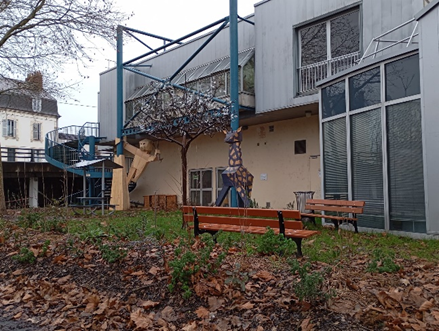
A 300m² mini forest garden has been recreated in just a few months along the museum on a completely artificial and barren site. This modest space is becoming an island of biodiversity, water and carbon storage for nature, and for its users an oasis of nourishment, freshness, beauty and mental rejuvenation.
By involving the museum in the drafting of Bourges’ new Local Health Contract 2025–2030, the various health stakeholders view the Symbiocene as a lever for regional innovation, offering a cross-cutting and positive approach to the link between the health of living organisms, human health and mental health.
The next step involves transforming the Natural History Museum into a living, regenerative museum.
The museum site comprises ageing, energy-intensive buildings that are no longer suited to current and future challenges, nor to the conservation, research and promotion of the collections, and have become ill-suited to the development of living organisms. Rather than seeking to demolish and rebuild a new building with a grand architectural gesture, or to renovate using materials that contribute to the depletion of global resources and exacerbate climate change, we have chosen to surround ourselves with multidisciplinary partners who, like us, wish to establish an innovative model embodying the Symbiocene. From these stimulating, constructive discussions, and a vision of an optimistic future, the Living Regenerative Museum project was born, which has the potential to become a catalyst for regional innovation.
Alongside the building works, the landscaping must also continue in order to make the site a symbol of a world inspired by life, a world that does not divide but connects, that does not deplete but nurtures.
The primary aim of our project is to make the Living Regenerative Museum a concrete model of transformation that marks the transition from an Anthropocene dynamic, where humans use nature as an inexhaustible resource, to a Symbiocene dynamic of reconnection with living organisms within the local area.
The Museum aims to rise to the challenge of transforming itself from an outdated, energy-intensive, unsuitable, obsolete and unattractive venue into an attractive, virtuous and responsible site adapted to the global challenges of tomorrow, by relying on cooperation with both human and non-human life and taking into account all the elements that define it.
The project is not limited to building renovation techniques but incorporates a comprehensive reflection on what constitutes the Museum: its functioning (its practices, its uses, etc.), its users—both human and non-human—and its interactions... It proposes a cooperative solution with the local living world Until now, when renovating buildings, we have been content with a narrow, building-centric approach focused on operational savings and their financial impact, which failed to take into account broader issues and the effects on well-being, the local area, the ‘invisible’ elements (biodiversity, vulnerable and marginalised people), or the local ecosystem and microcosm.
Such a holistic approach has never before been adopted in the Bourges area.
The calendar of the building renovation of the Museum
Work on emergency repairs and community-led projects will begin in 2027, with an initial budget of €2 million for emergency work on the roof and its insulation having been released. Reused or bio-based materials will be prioritised. This phase will also provide an opportunity to initiate discussions with the Architect of the Buildings of France regarding the adaptation of the building to new global constraints.
The subsequent phases will be rolled out in 2028 and beyond. The timing and phasing of the works will be rethought and will illustrate a different model where the relationship to time shifts in scale and takes all living beings into account.
A second phase, costing €3 million, will be initiated if funding allows, to redesign the entire envelope and fit-out of the industrial building.
A third phase, costing €9 million, could eventually be considered to completely reinvent the site.
The project’s main challenge
The urban landscape is likened to a living urban organism, and the Museum is the first entity to rethink its operations in order to become a model for the wider area in terms of how to approach urban regeneration projects and, more broadly, to transition from the Anthropocene to the Symbiocene.
The aim is to move from a building designed by humans for humans to a building that is carefully considered, tested and collectively designed for both the visible and the invisible, within a framework of human-non-human cooperation. The project is conceived across multiple dimensions.
The social dimension proposes opening up to all living humans, particularly the invisible.
The economic dimension breaks away from the extractivist economy, which disregards planetary boundaries, to promote an economy that values cooperation and symbiosis and regenerates the land.
The technical dimension advocates reuse, low-tech solutions and renovation, which will generate long-term savings that we will reinvest in other initiatives for the common good and the benefit of all living beings.
In the first phase, we will focus on the Museum and its immediate surroundings.
We will then incorporate other parts of the urban fabric into this process of regenerative transformation, before extending the model to the urban fabric representing the region as a whole.
This initiative, which has been in the making for several years, aims to interconnect the various isolated or individual actions carried out across the region by weaving a web of cooperation between the different stakeholders to give meaning, a vision of a common, coherent and comprehensive trajectory linking the diverse, varied, multidisciplinary projects that all converge towards a greater and more general objective of a paradigm shift and the aspiration for a new regenerative model enabling us to enter the Symbiocene era.
The Museum has participated in numerous initiatives across the region and aims to act as a unifying force for these various actions, proposing a new vision for regional planning.
It was only natural, then, that the idea of participating in an URBACT programme emerged.
Sharing and enriching our thinking and experiences on the implementation of a regenerative region with our European neighbours would be a real opportunity.
Application to URBACT, suggested topics for discussion and an overview of the scheme
The city of Bourges wishes to apply for the European URBACT call for proposals so that it can work alongside other European cities to explore how to transition its region from the Anthropocene era – which has ignored major global challenges – to the Symbiocene era, offering a sustainable and desirable world for future generations. Its ambition is to transform its region into a living, regenerative area.
To this end, it is seeking seven partner cities willing to embark on this journey alongside it.
Bourges can act either as the lead partner or as a partner, depending on the aspirations of the other cities.
How would she like to begin the discussion?
Each town would start with a concrete example of a building within its area being transformed through a sustainable approach, and could consider taking this approach a step further by turning it into a living, regenerative building that would serve as a model to drive the initiative forward across the local area.
The City of Bourges wishes to start with the concrete example of the transformation of a museum. This building is to be renovated as part of a living regenerative approach that integrates technical and social aspects as well as non-human life..
Suggested topics for reflection and experimentation
In our joint discussions, we would like to address the following questions:
- How can we turn an isolated transformation project into a model for sparking a regional dialogue that can generate solutions to tackle the five major global challenges (pandemics, socio-economic collapse, climate change, the sixth mass extinction of biodiversity, and the overshooting of planetary boundaries)?
- How can we present a positive narrative whilst advocating a reduction in our impacts down to the absolute minimum?
- How can we put living organisms back at the heart of our thinking and highlight the symbiosis between the preservation and regeneration of non-human life and the improvement of human health? How can we make all these invisible links visible?
- How can we engage local stakeholders (politicians, institutions, residents, the business and agricultural sectors) in the implementation of a new model? What role should we assign them?