
Regeneration of historic centres is a long-term process that provides context to many of the actions identified by the cities involved in CITISENSE. Aimed at addressing safety challenges, this Innovative Transfer Network is testing different ways in which community trust, advanced governance models and collaboration through specific actions makes cities safer and more inclusive. Many of those actions take place in the historic centres of the cities of Piraeus, Geel, Liepaja, Manresa or Naples, aiming at fostering a process of positive change in those areas and reversing abandonment, degradation or lack of urban life, among other challenges they are facing.
In order to provide some common context and understanding the role of the proposed actions within a wider picture, this text aims at extracting valuable insights from an array of experiences across the continent to foster positive change in historic areas. Assuming that transformation depends on actors, moments and places very specific to different realities, we acknowledge that the proposals and ideas discussed here will need to be adjusted and tailored to the local reality of each city.
Nevertheless, if there is an important lesson in all the cases studied, is that solid and positive change requires time. Quick transformations are more prone to generate drastic changes to the socioeconomic fabric of cities and, therefore, impact negatively through the replacement of groups of people living in those areas. Historic centres are often areas with intricate social networks and consolidated spaces, created over long periods of time that take decades or even centuries! The built space of historic centres is an important part of the identity of cities, local communities are a mix of people arrived in different moments of history, activities coexist in a mix of successes and failures resulting from constant transformation, and the buildings and spaces were often thought with logics of different times and climates. Drastic change into these complex layered territories may be able replace the physical structure but will most probably erase those dense social, economic, ecological and identitarian relationships.
Drawing from experiences in different European geographies, this piece reflects upon three main aspects that are key to the transformation of historic centres: the scale of actions, the collaboration of stakeholders and the understanding of space.
Change often starts through small actions
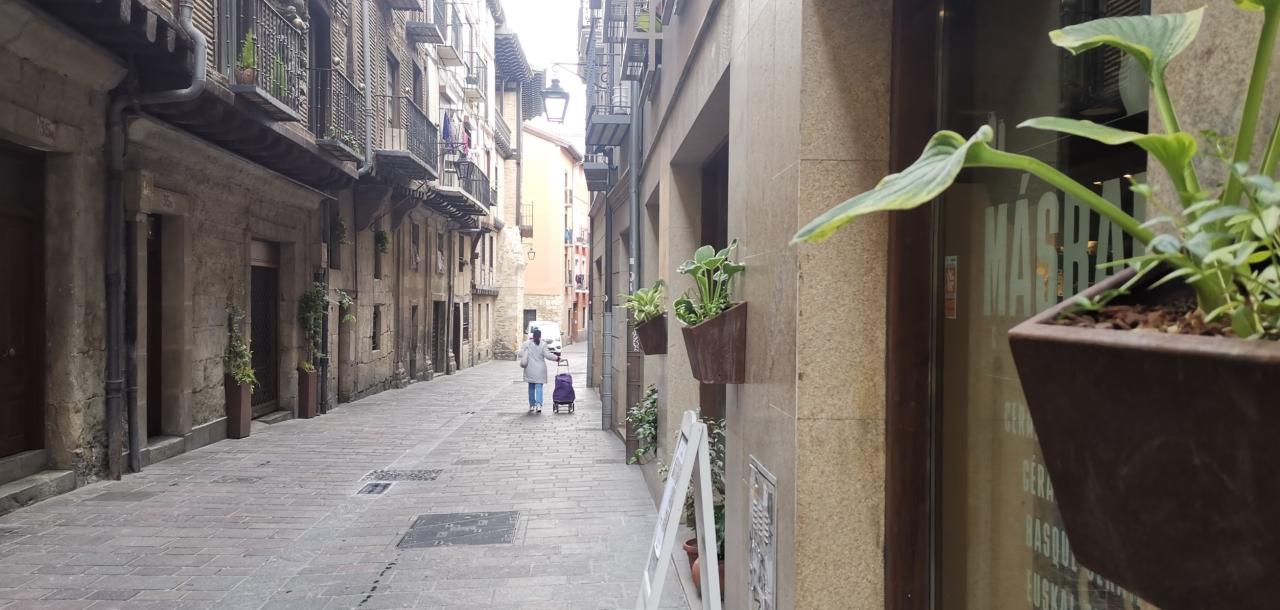
Even though transformation of historic centres takes part in long-term process, big changes often start with small-scale actions. In places with such density of layers, the resulting transformation is a sum of many small steps, ideas and actions tested and improved through time. This is an insightful idea that can be used when trying to improve the situation of historic centres. Vitoria’s (Spain) historic centre is dense and compact, with a lack of green and permeable surfaces and the municipality is currently implementing a greening strategy to create more liveable spaces and manage better the changing climate, reducing temperature in summer and improving rain water management in winter. The strategy has started with small greening actions, such as the installation of plants in shop fronts and neighbour’s balconies, a greening art installations public competition and greening workshops and interventions in school yards. These small actions are already changing the look of the historic centre, putting forward the idea that change is possible and opening the door for more impactful transformation, such as implementing nature-based solutions in squares and streets. Working in different spaces and with different actors provides an array of tested actions. Data on how each of them is performing is being monitored and assessed to understand which work better in each situation and how to proceed with the next steps of the general greening strategy.
Collaboration means sharing responsibilities but also outcomes
Another long-term process that started with small-scale actions has taken place in Heerlen (the Netherlands) over the last 17 years. This process used a growing bottom-up community around street art to build together the city’s identity around this practice and change the perception of its city centre, a degraded space after a change in the local economy in the last decades of the 20th century. Through a cultural agenda, festivals and cultural activities, street art is now part of the local DNA. Many of the murals were fostered through different local collaborations: from bottom-up art activities in schools, to housing corporations and businesses providing properties’ empty surfaces for mural work creation or thematic murals created through crowdfunding campaigns of specific communities, such as the Heerlen hospital mural fostered by a group of cardiologists. All these collaborations shared the common goal of improving the city centre, but also the responsibility of making it possible. The combination of all these collaborations is not only strengthening the bond of people with their city and benefiting from the potential density of the social networks in these areas, but also makes a more efficient use of the resources available, including people’s creativity, human resources or built spaces.
Space matters and has many different layers attached
Together with a reflection on the scale of the actions and the potential collaborative frameworks, these long-term processes benefit from a common vision rooted in the physical space of these urban areas and the historic buildings that are part of them. Many cities in Europe have regenerated and repurposed existing historic buildings, from the old slaughterhouse of la Villette in Paris transformed into a cultural venue, to the Battersea power station in London turned into a shopping and leisure centre or the Ex-Ansaldo factory in Milan, repurposed into a creative hub.
Nevertheless, repurposing the built fabric of historic areas through a combination of small-scale actions and impactful interventions that respect existing processes and involves the multilayered network of stakeholders is not easy. In Ljubljana, the regeneration of the Rog Factory has been a contested process since its closing in 1991 and the purchase of the building by the municipality in 2002. Ever since, different future visions were tested and fostered in this former factory, including a bottom-up squatting community centre, a public fab lab and, finally, a creative hub. Different visions involving different stakeholder collaboration frameworks were not always shared and the final result excluded some of the stakeholders participating in the process.
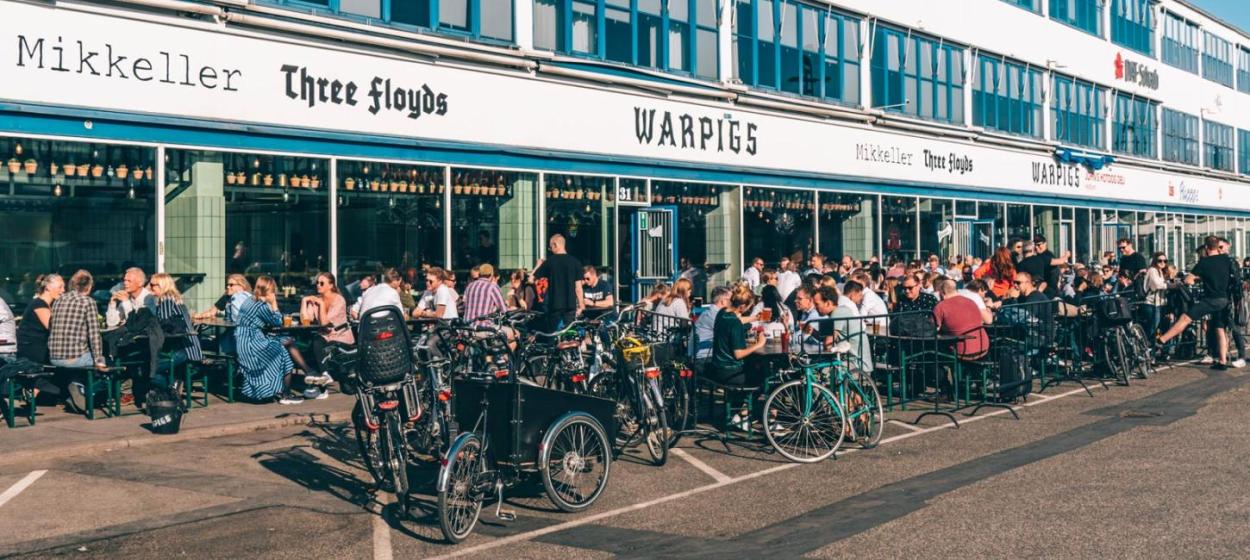
The transformation of Copenhagen’s Meatpacking District is a long-term ongoing process that has involved the participation of different stakeholders in different regeneration processes. The Brune Kødby (brown slaughterhouse) became a multifunctional cultural centre through the collaboration with creative industries already in 1996. Later on, a different strategic plan was developed in order to transform the Hvide Kødby (white slaughterhouse) into a food hall, involving retailing and nightlife activities. Even though the central location of the Meatpacking District influenced its transformation into a lively and active area, there were also other factors that played an important role, such as the long-term process of repurposing different spaces attending to different uses, creating a new image for this area in the imaginary of the city that was based on creative, cultural and leisure activities but also related to its former identity around food.
The regeneration path workshop
Together with the members of the CITISENSE Innovation Transfer Network, we had the opportunity to discuss these three aspects during the network’s transnational meeting in Manresa. Through a workshop in which participants had to define a regeneration path for a historic centre, we discussed different strategies, specific stakeholder configurations and combinations of small-scale actions in order to foster a desired and positive change to revitalise historic centres.
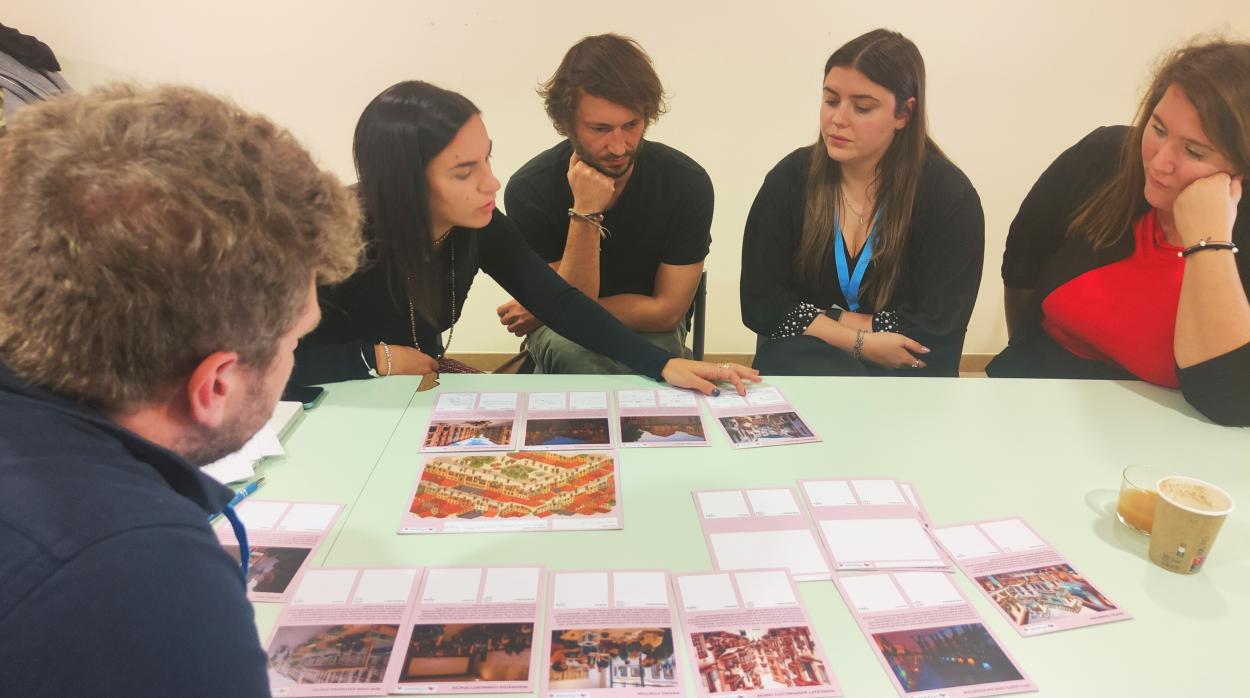
One of the key takeaways from the workshop was that any regeneration path depends greatly on the starting point. The goal of the historic centre’s regeneration in a small town may be to diversify its activities and transform it into a more attractive area to live in, whereas in a big city, its centre may be already pressed by touristic activity or gentrification processes, and the goal of the regeneration path may be to keep local population, to ensure coexistence of activities and make the historic centre a more liveable space.
Within these diverse situations, the agency of municipalities is often limited and, though unable to carry out these transformation processes on their own, local administrations are key to define rules and regulations for the transformation processes, as well as to foster collaboration agreements with the private sector and community members that ensure the involvement of the local’s population needs (including their right to stay) or the diversity of the stakeholders who define the common vision for the historic centre. Municipalities are very important actors to influence the pace of the transformation and who may be involved in it, as well as to foster a shared vision rooted in the spatial identity of the historic centre.
Even though each city must adjust its regeneration path to its own context, all historic centres are complex areas, full of history, social interrelated networks, and a diversity of spaces that have changed and adapted through time. Acknowledging the density of all these layers and including their complexity into any regeneration path will increase the potential of generating impactful and positive change.