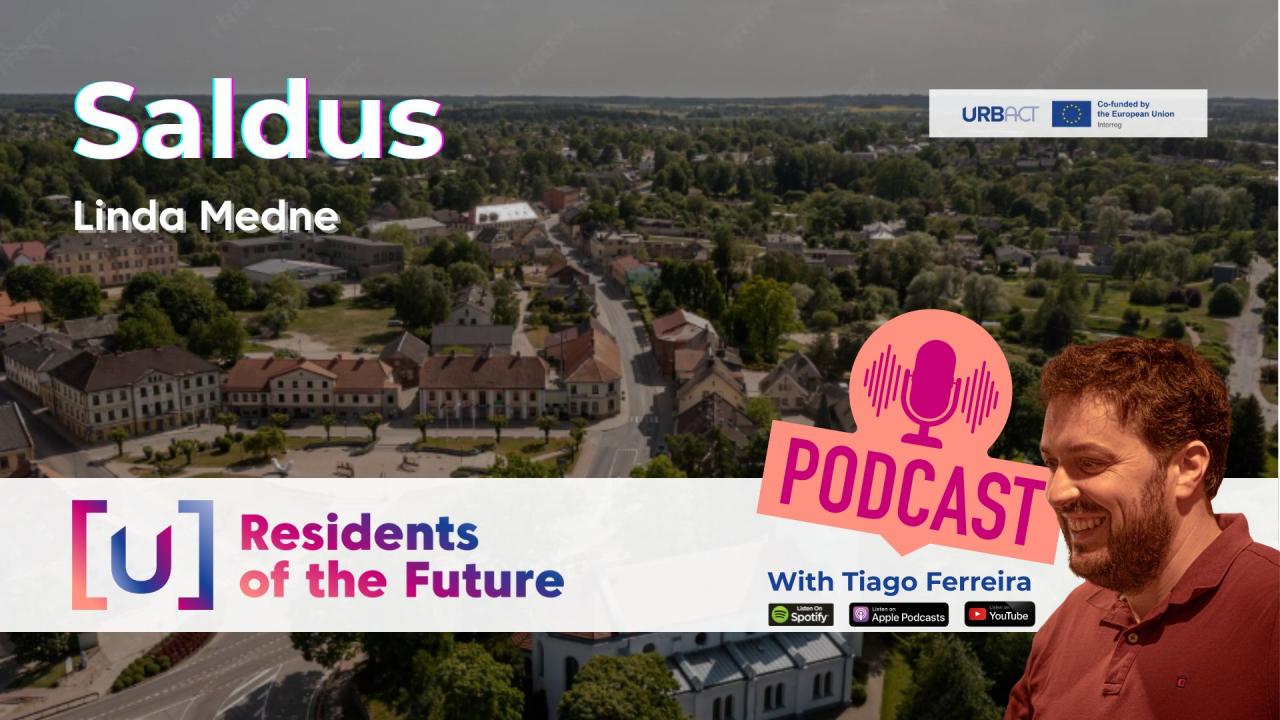
For Linda, Saldus is more than a project site. It is her hometown. After studying in Riga, she chose to return, motivated by one clear reason: raising children. Safety, walkability, access to schools, music and art education, sports facilities, and a strong sense of community make Saldus an ideal environment for families. These qualities, she argues, are not nostalgic memories — they are strategic assets.
Through the Residents of the Future network, Saldus has worked on understanding why people leave, what might bring them back, and what conditions are needed to make staying attractive. One key insight is that young people will leave to study — and that is not a failure. The real challenge is ensuring they want to return.
To address this, the city tested several actions. One of the most visible was the transformation of an empty school building — closed due to declining enrolment — into a community and entrepreneurship centre. Instead of seeing the building as a loss, Saldus treated it as an opportunity. With low-cost, hands-on interventions and strong involvement from local stakeholders, the space was prepared for small entrepreneurs. Today, more than 70% of the premises are in use, supporting local economic life and diversifying the town’s ecosystem.
🎧 Listen to the full episode of Residents of the Future
Housing emerged as another critical issue. While the municipality cannot build homes directly, the project helped bring the topic back into focus, aligning public and private actors around the need for modern, affordable housing that matches today’s expectations.
Perhaps the most important outcome, however, lies beyond physical investments. Linda emphasises the value of soft actions: mentoring newcomers, building welcoming communities, strengthening municipal capacity, and learning from other cities through exchanges with places like Fundão and Bologna. These actions may not produce immediate, visible results — but over time, they create smarter institutions and more resilient societies.
Saldus’ experience shows that tackling urban shrinkage is not about copying solutions, but about people, openness, and adapting good ideas to local realities. As the city moves towards implementing its Integrated Action Plan, one message stands out clearly: when people feel connected, valued, and hopeful, small cities can imagine — and build — a different future.