Why user-centred tools matter for remote-work strategies
Remote work changes who interacts with city systems and how. A digital nomad applying for a temporary stay, an SME owner rethinking office space, a municipal employee requesting a hybrid schedule, a resident worried about housing: they all experience the city through specific steps, rules and touchpoints, not through strategies or policy documents.
This entry explains what are the User-journey and Persona tools, when they are most useful, and how cities can use them to design remote-work strategies that truly reflect the realities of workers, residents and local organisations. It is more “how-to” than analytical in purpose, and complements other Playbook entries that cover who remote workers are, what they need from cities, and how to design infrastructure and incentives.
What personas and user journeys are in a city context
In service design and user-centred planning, two simple tools are used again and again: personas and user journeys.
A persona is a semi-fictional character that represents a group of users with similar needs, behaviours and constraints. Rather than designing for an abstract category such as “remote workers” or “municipal employees”, a persona description gives that group a name, a life situation, typical goals and frustrations. In Remote-IT, for example, persona canvases have been used to represent:
- a mid-career municipal IT specialist in a hybrid role
- a foreign remote professional relocating with a partner
- a returning diaspora professional maintaining a job abroad while living part-time in their hometown
These are usually not invented at random; they are grounded in interviews, workshops, surveys and other data.
A user journey maps the steps that a persona takes when interacting with a service or system over time: before, during and after the main interaction. In a remote-work context, this might be the journey of:
- a digital nomad from the moment they first hear about a city until they feel integrated in a local hub
- a municipal employee from the idea of requesting hybrid work through approval, set-up and ongoing evaluation
- a local SME owner from initial curiosity about remote work through accessing support and implementing changes
Each step in the journey includes touchpoints (websites, counters, emails, events), emotions (confusion, relief, frustration, motivation) and pain points (unclear rules, duplicated forms, missing information).
Together, personas and journeys provide a shared picture of reality that policymakers, IT staff, HR, tourism offices and external partners can work with. Instead of debating abstractly whether a process is “user-friendly”, they can look at specific steps and ask: “What actually happens to Ana, our ‘remote-ready civil servant’, when she tries to request hybrid work?” or “Where does Joe, our ‘first-time digital nomad visitor’, get stuck in our visa-to-housing-to-community chain?”
When these tools are most useful in city work
For cities these tools are especially useful at three moments:
- Diagnosis- at the beginning of a strategy process, personas and journeys help uncover blind spots. They make visible which groups you are not hearing from, which steps are confusing, and where informal workarounds are substituting for proper processes.
- Co-design and testing- as ideas for new services, hubs or policies appear, personas and journeys act as a quick testing ground. Before piloting a “remote work welcome programme”, for example, a city can walk its key personas through the proposed journey and ask: “What would this look like for each of them? Who is left out?”
- Scaling and communication. When cities move from pilot to wider implementation, personas and journeys offer a way to communicate changes to colleagues and stakeholders in a specific, human way. Instead of presenting only regulations or organisational charts, teams can show “a day in the life” of a user under the new model.
Because the URBACT method emphasises integrated, participatory approaches, personas and journeys fit naturally into URBACT Local Group work: they give residents, businesses and staff a common language for discussing problems and solutions.
How to build a useful persona for remote-work strategies
A persona in this context should be simple enough to be remembered, and rich enough to guide decisions. A typical Remote-IT style persona canvas includes:
- a short narrative (who this person is, where they live, what they do)
- their goals related to remote work and the city (for example, balancing work and family, finding a quiet place to work, reducing commuting time)
- pain points or barriers (unclear rules, lack of childcare, digital bureaucracy, language issues)
- enablers (existing networks, skills, resources)
- inclusion aspects (gender, caregiving responsibilities, disability, income constraints)
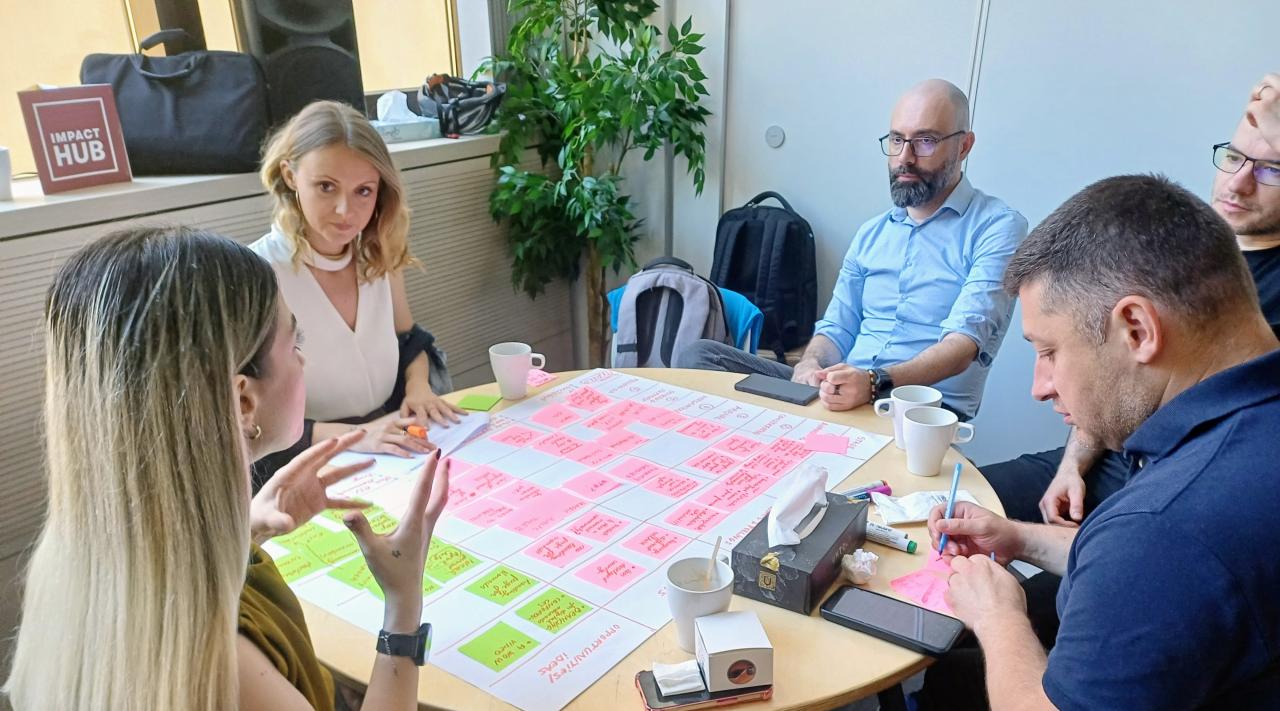
The process to create it is as important as the final template. In Brindisi, persona canvases were developed with local stakeholders as part of a broader discussion on soft and hard infrastructure for remote work.
A practical sequence that many cities use is:
- Collect qualitative insights (interviews, workshops, narratives) and quantitative data (survey responses, demographic trends) about remote workers, municipal employees or businesses.
- Cluster these insights into a small number of distinct patterns- for instance, “younger mobile professionals”, “returning diaspora with children”, “local SMEs going hybrid”, “long-serving municipal staff in back-office roles”.
- Turn each cluster into a persona with a name, age range, role, short biography and a clear description of goals and frustrations.
- Validate the personas by sharing them with real users and front-line staff: “Does this sound like people you know?”
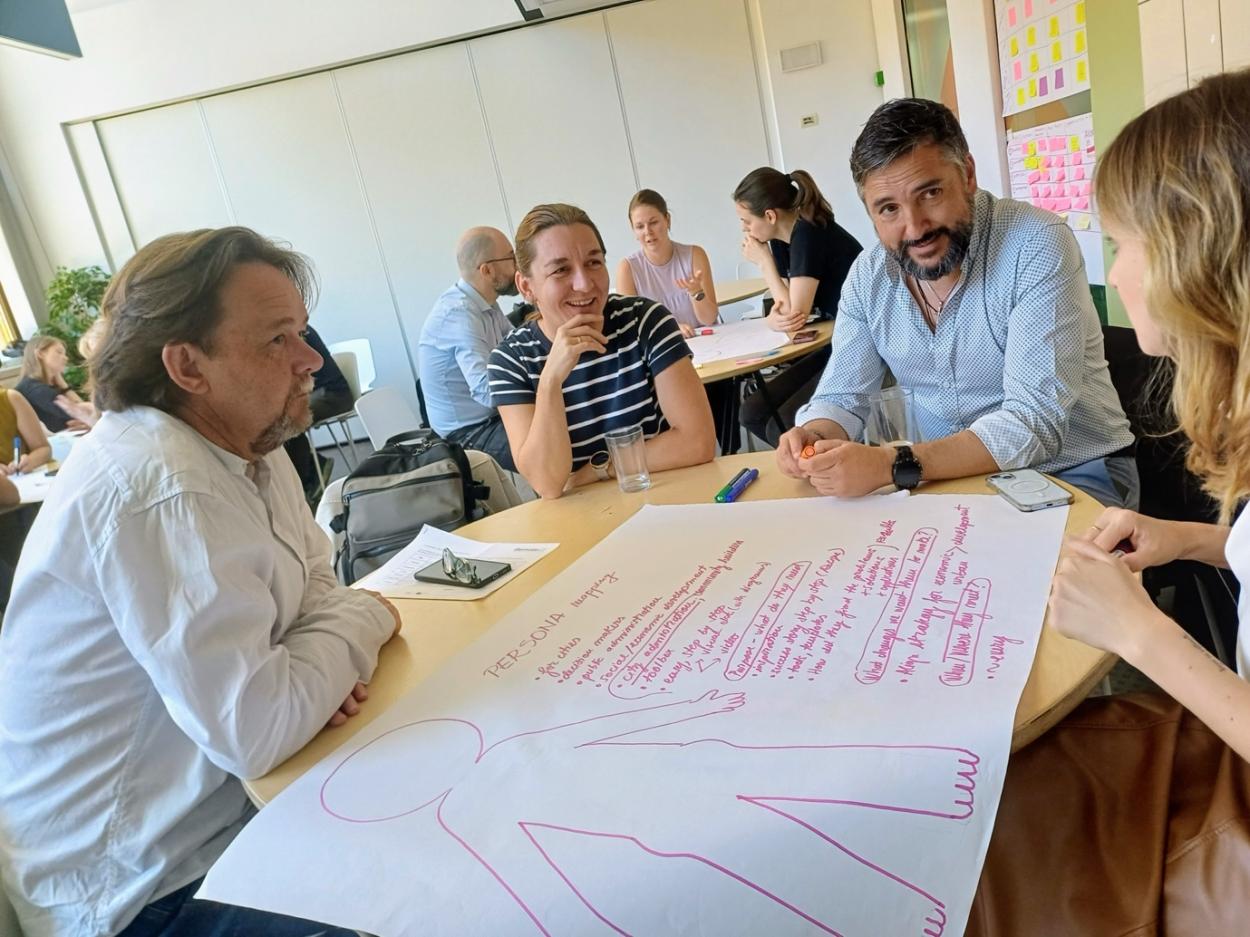
Photo: Remote-IT network working on persona tool during a transnational meeting
How to map a user journey for remote-work policies and services
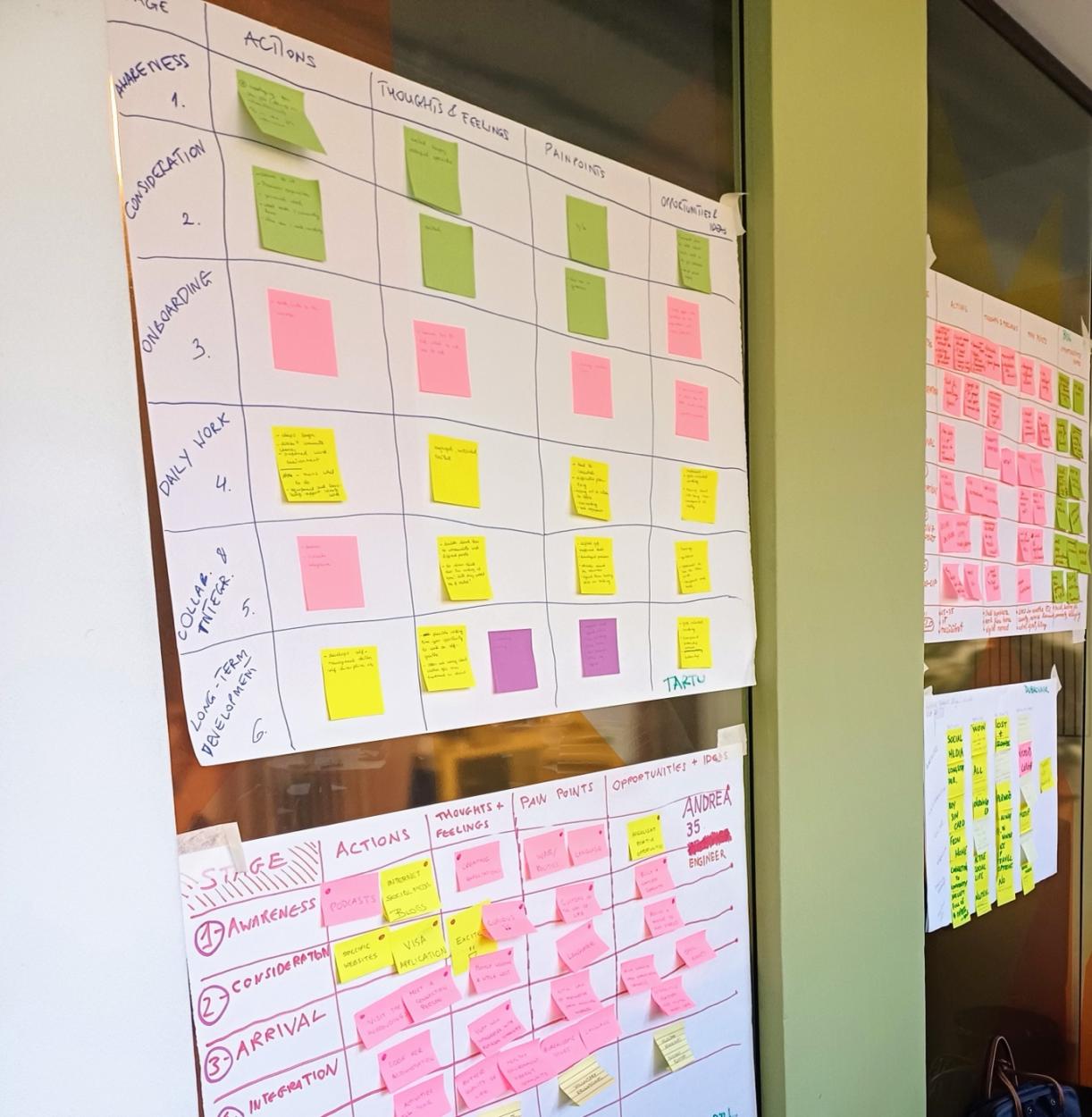
User journeys follows a similar logic but focus on steps over time rather than profile summaries. A typical journey map shows phases (for example, “awareness”, “search”, “decision”, “onboarding”, “everyday use”) and, for each phase, the actions taken, touchpoints encountered, emotions felt and problems experienced.
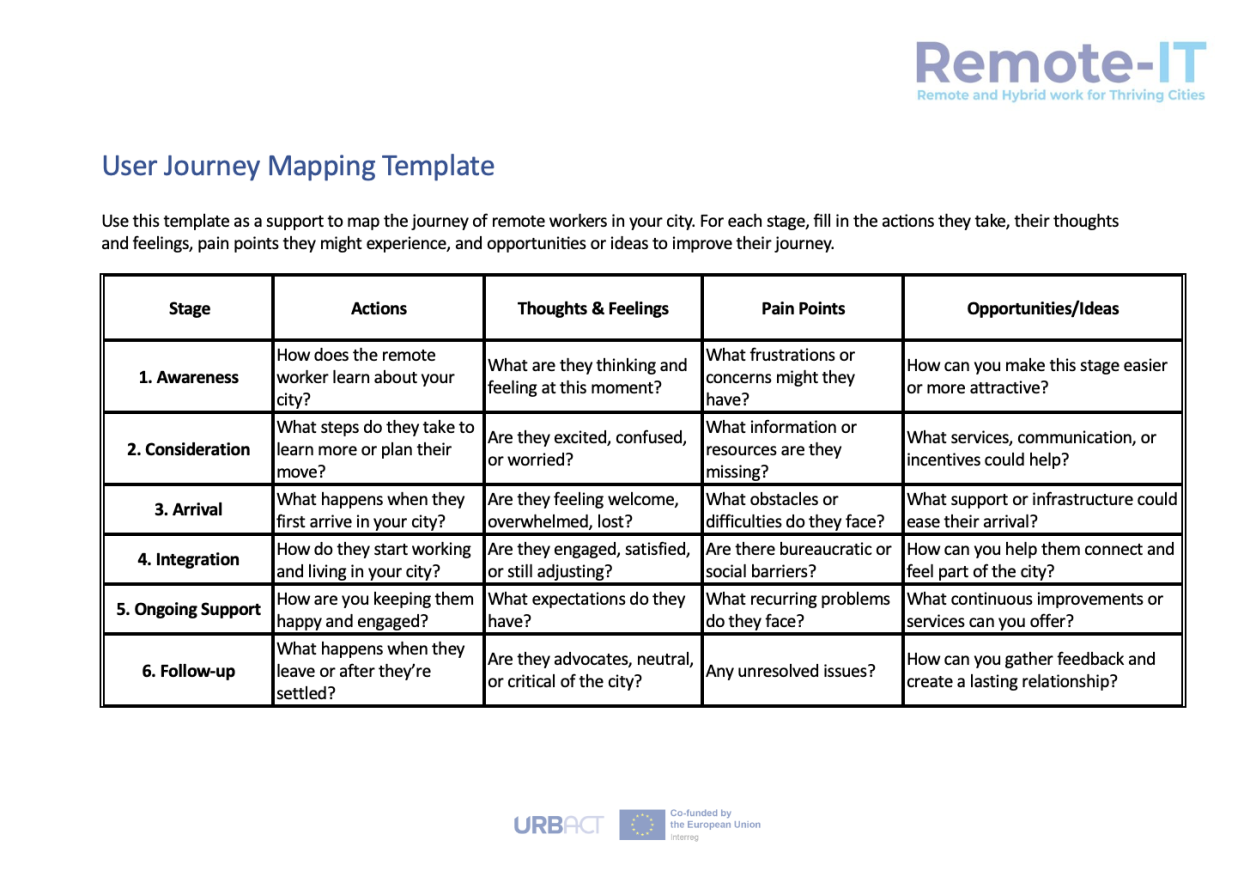
Photo: User journey template used by Remote-IT network
Used this way, journey mapping is not an abstract exercise but a bridge between lived experience and organisational change.
Practical tips and common pitfalls:
- Keep the number of personas small. Three to six well-developed personas are usually more useful than long lists. Remote-IT’s own planning distinguishes key groups (municipal staff, remote workers, SMEs, intermediaries) without trying to reflect every possible variation.
- Ground personas and journeys in real evidence. They should emerge from URBACT Local Group workshops, interviews, surveys and baseline studies, not only from internal brainstorming. This ensures they reflect the diversity of your population, including gender and affordability issues that the Playbook highlights as cross-cutting themes.
- Use them across departments. Personas and journeys are most powerful when HR, IT, tourism, economic development, mobility and housing teams work with the same set, rather than each using their own informal mental models.
- Update them as you learn. As Remote-IT cities implemented testing actions and gathered feedback, personas and journeys were revisited. They are living tools, not one-off deliverables.