Across Europe, cities are under pressure to become greener, fairer and more resilient, in line with the EU’s climate-neutrality objectives, circular economy agenda and climate adaptation priorities. Within this policy framework, cities are expected to reduce emissions, restore nature, support local economies, create decent jobs, reuse resources and improve quality of life. A greener urban economy is a promising response to these challenges.
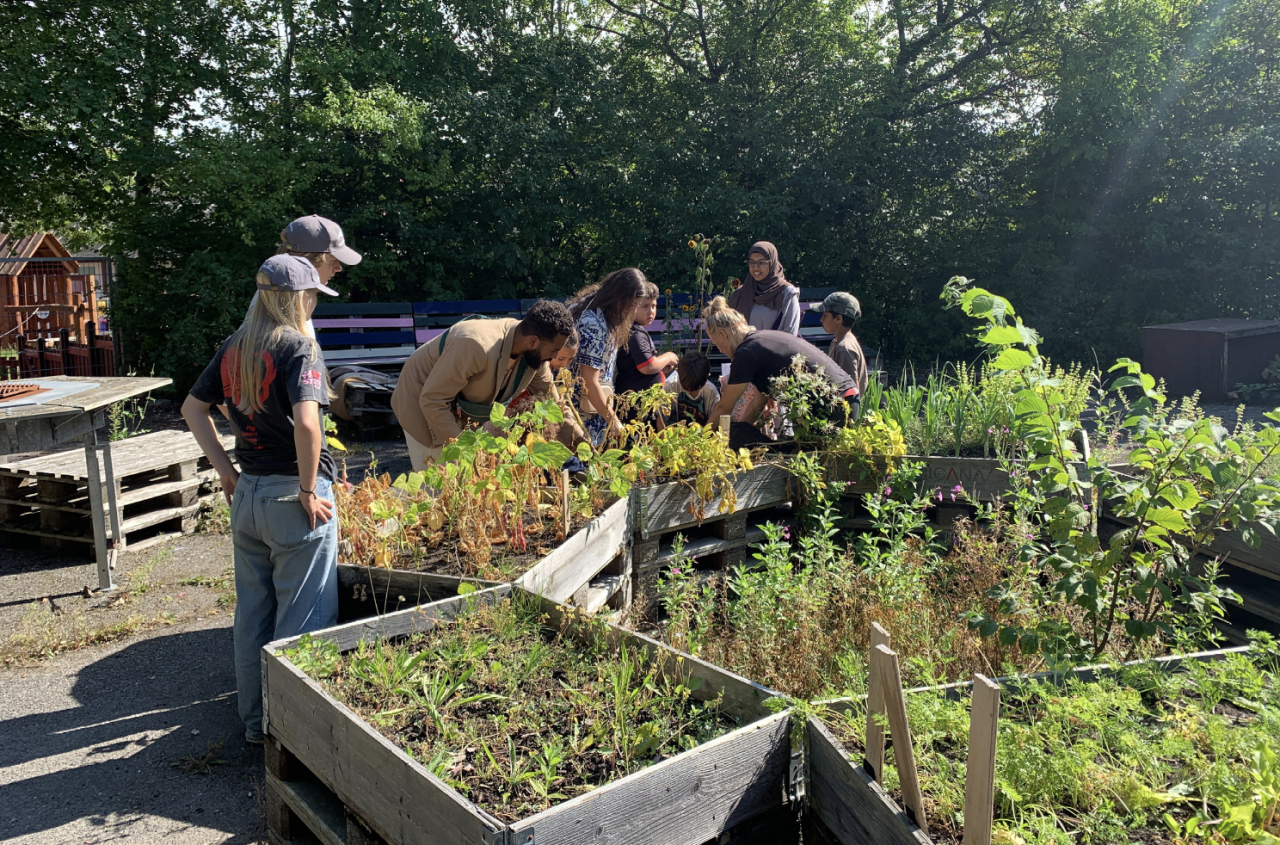
A green urban economy can take many different forms. An old industrial site that transforms into a public park can reinvigorate new public spaces. A neighbourhood garden can bring climate action closer to residents, or a small industrial town can prepare its workforce for green jobs, encouraging municipalities to work across departments and build trust with citizens. For many cities, especially small and medium-sized ones, the biggest question is how and where to start (although the opportunities are immense).
The experiences of five URBACT Action Planning Networks, GreenPlace, In4Green, COPE, LET’S GO CIRCULAR! and EcoCore, show that greening urban economies is not a distant policy concept. It is practical, something that happens in streets, neighbourhoods, industrial areas, schools, parks, businesses and local partnerships.
Green economy for people and places
Greening the urban economy links environmental action with social value and local economic opportunity. This process helps cities respond to the challenges in an integrated way.
Between 2023 and 2025, five URBACT Action Planning Networks approached the greening urban economies journey through different doors. LET’S GO CIRCULAR! started with circular economy, GreenPlace with forgotten urban spaces. In4Green took off with industrial transition. COPE was concerned with citizen-centred climate action. EcoCore started with small cities along transport corridors. But they all arrived at the same conclusion: a greener economy is not just about what cities build, it is about how they organise change, and so much more.
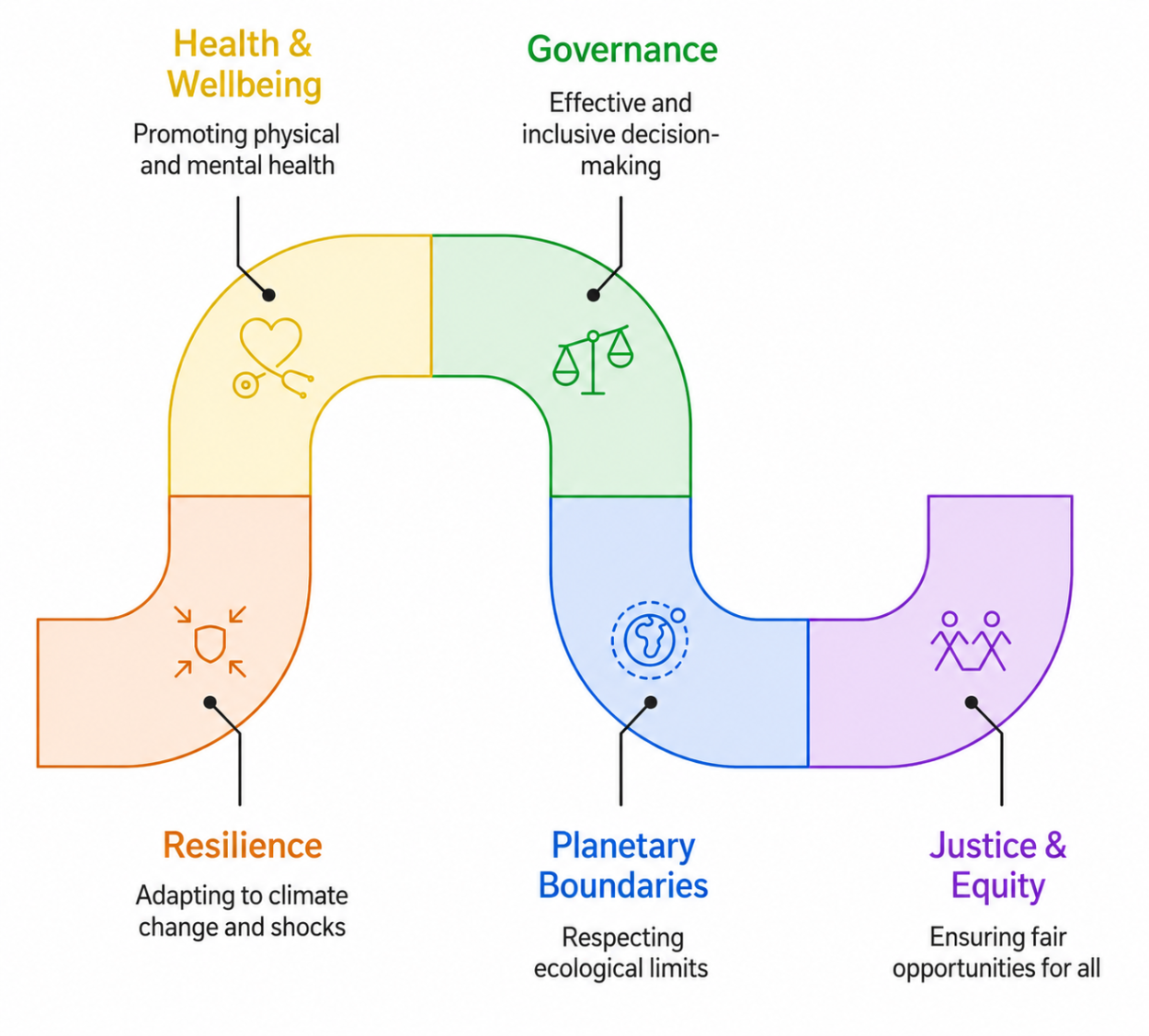
Together, these networks tell a story addressing five key pillars: health and wellbeing; justice, equity and equality; planetary boundaries; efficiency and sufficiency; and good governance.
The urban journey in action: where the green economy becomes visible
When looking at the URBACT Action Planning Networks involved in greening urban economies, the most powerful examples are often the most tangible.
GREENPLACE: FROM AN INDUSTRIAL TO A GREEN ECONOMY
In GreenPlace, 10 partner cities worked with places that had been forgotten: abandoned buildings, unused green areas, old industrial spaces and derelict sites. Addressing forgotten urban places can create measurable impact by turning them into green, active and socially useful spaces. The social impact is also significant: revitalising these spaces can improve access to everyday green areas, especially in dense or underserved neighbourhoods. This links directly to the World Health Organisation benchmark that urban residents should have access to at least 0.5–1 hectare of public green space within 300 metres of their homes.
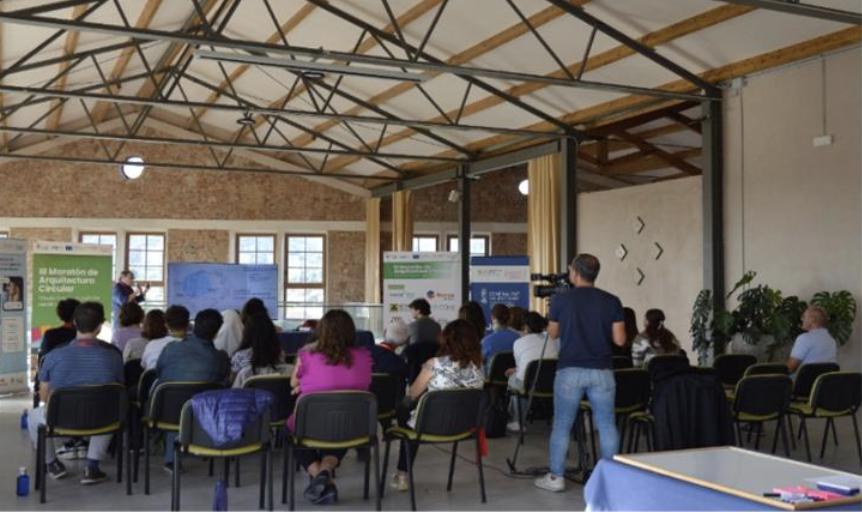
In Onda (ES), a city with no more than 30 000 inhabitants, a former ceramic industrial area is being transformed into a new green lung for the city, improving public health, environmental quality and community life. A testing action consisted of a sustainability hackathon aimed at involving young people in the development of the Green Lung project and promoting awareness of environmental and sustainability issues. These are not only regeneration projects. They are wellbeing projects that also lead to more resilient cities.
For cities trying to bring forgotten places back into public life, GreenPlace offers Inspiring Practice Fiches, Inspiring Action Fiches and a handbook. These tools can support cities that want to transform abandoned buildings, unused green areas or derelict sites through greenery, heritage and participation.
-----
GreenPlace included the cities of Wrocław (PL) (lead partner), Nitra (SL), Vila Nova de Poiares (PT), Boulogne sur mer Développment Côte d’Opale (FR), Löbau (DE), Bucharest (RO), Onda (ES), Qarto d’Altino (IT), Limerick (IE).
COPE: CLIMATE ACTION WITH DEMOCRATIC VALUES
The eight partner cities in COPE brought the same human dimension to climate action. In Pombal (PT), also with 55 000 inhabitants, temporary traffic closure and on-the-ground surveys in the historic centre helped residents imagine a more attractive, people-friendly urban space. Justice and equity are also visible in the way cities involve people who are often left out (e.g. vulnerable youth, elderly, young children). In Vilnius, a Climate Neutral Community call brought forward 21 communities interested in urban gardening, food sharing, energy saving and other sustainability actions. These may sound like small steps, but they matter: they make climate action feel closer, more democratic and more shared.
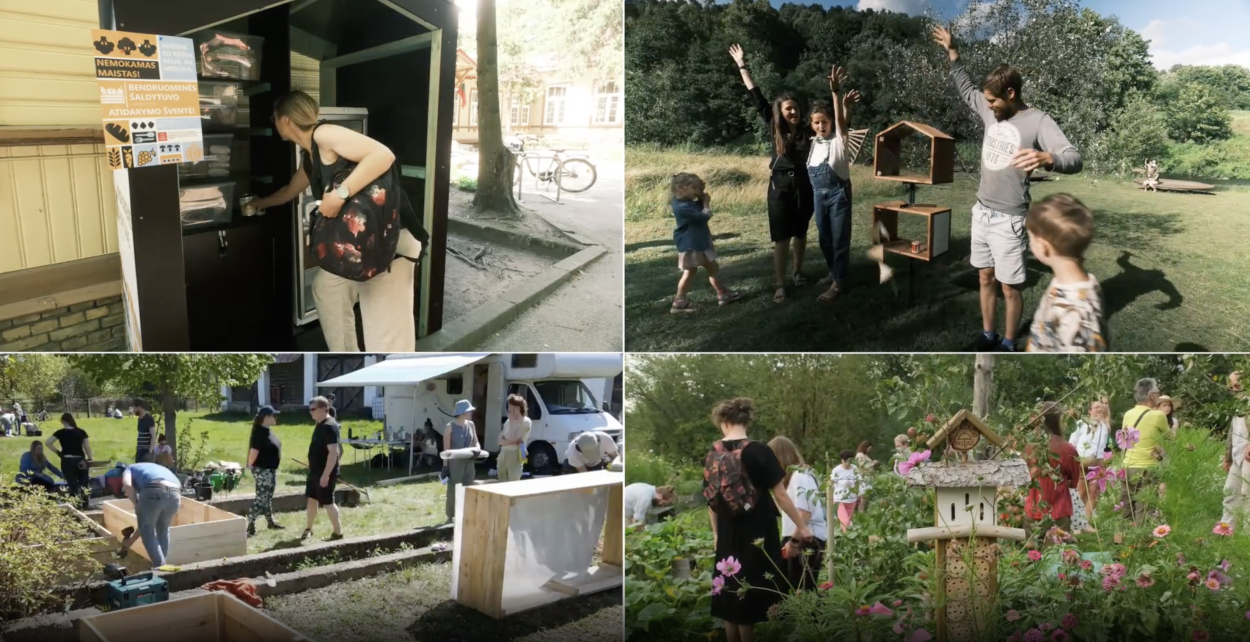
COPE’s final catalogue shows how climate policy can move from abstract targets to local action shaped with residents, schools, communities and neighbourhoods.
---------
COPE included the cities of Copenhagen (DK) as lead partner, Kavala (EL), Pombal (PT), Bistrița (RO), Saint-Quentin (FR), A Coruña (ES), Korydallos (EL) and Vilnius (LT).
ECOCORE & IN4GREEN: INNOVATIONS FOR GREENER SPACES
Industrial cities cannot simply be told to ‘go green’. They need skills, investment, business support and practical pathways. The potential impact is measurable: green transition policies are already linked to employment growth, with EU environmental goods and services employment rising from 2.02% to 3.1% of total employment between 2010 and 2022. In industrial cities, this can translate into practical outputs such as sustainability training for companies, green skills programmes, renewable energy communities, and more attractive green employment districts.
In Balbriggan (IE), one of nine cities involved in EcoCore, local partners set out a route to turn a conventional edge-of-town industrial area into a green employment hub. This links sustainable mobility, skills, circularity and climate-resilient infrastructure.
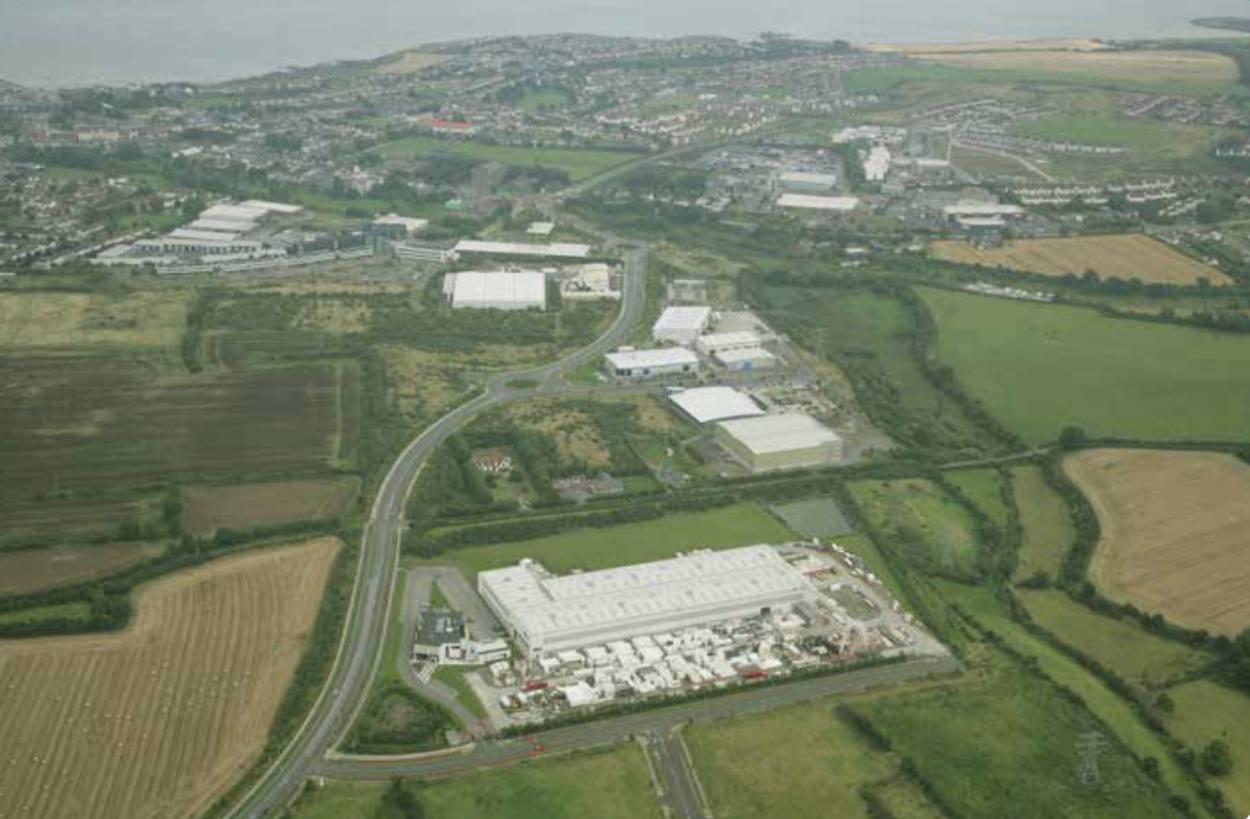
In4Green also shows that industrial legacy can become an innovation asset: in Avilés (ES), one of the 10 In4Green partner cities, the shift from heavy industry towards a green innovation hub includes a Science and Technology Park and 10 new R&D centres, helping connect industrial cooperation, SME engagement and decarbonisation support, through one of the network’s most advanced testing actions reaching more than 200 SMEs through carbon-footprint diagnostics and practical reduction roadmaps.
Are you a small city working along a transport corridor or industrial area, but struggling with limited capacity? Listen to EcoCore’s podcast series. Through accessible stories on green jobs, leadership, planning tools, alliances and innovation ecosystems, it shows that small cities can also lead the green transition and that technical learning does not always need to come in a long report.
Is your city an industrial city trying to green its economy? Start with the In4Green Playbook. It brings together pathways, city examples, testing activities, governance approaches, indicators and practical warnings about what to avoid. It can help local authorities work with businesses, skills providers and communities to turn industrial transition into a shared local agenda.
---------
EcoCore included the cities of Balbriggan (IE) as lead partner, Dubrovnik (HR), Ormož (SI), Alba Iulia (RO), Ķekava County (LV), Santo Tirso (PT), Pärnu (EE), Villena (ES) and Tuusula (FI).
In4Green included the cities of Avilés (ES) as lead partner, Vila Nova de Famalicão (PT), Dąbrowa Górnicza (PL), Larissa (EL), Salerno (IT), Žďár nad Sázavou (CZ), Sabadell (ES), Solingen (DE), Bijelo Polje (ME) and Navan (IE).
LET’S GO CIRCULAR! GOING FULL CIRCLE
With the EU aiming to increase the circular material use rate to 22.4% by 2030, while current progress is remaining limited and uneven, the 10 partner cities in LET’S GO CIRCULAR! made the resource question practical. Cluj Napoca (RO) introduced green meals into schools, enhancing the awareness and acceptance of vegetarian food consumption as an environmentally friendly practice. The activity will be implemented weekly, specifically targeting Fridays. These examples show that green urban economy is equally about redesigning local systems so materials, spaces, businesses and people can work differently.
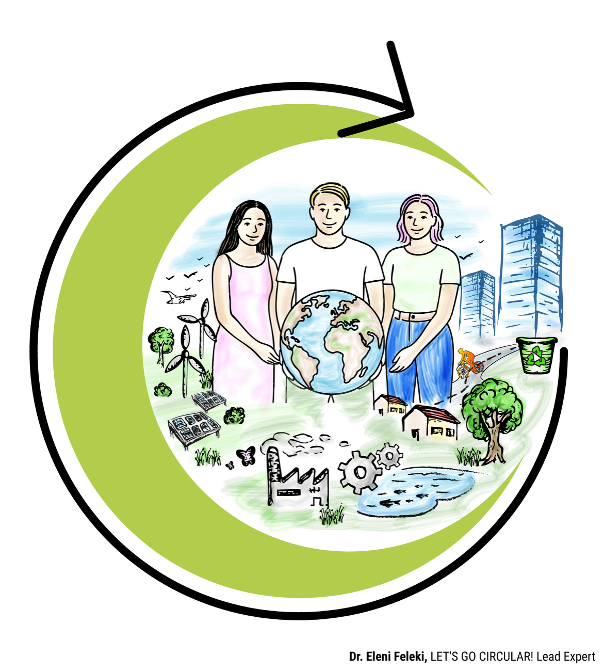
Are you ready to make circular economy practical in your city? The LET’S GO CIRCULAR! flipbook is a reader-friendly guide on the practical steps for embedding circular economy approaches locally.
-----
LET’S GO CIRCULAR! included the cities of Munich (DE) as lead partner, Riga (LV), Cluj Metropolitan Area (RO), Guimarães (PT), Corfu (EL), Granada (ES), Oulu (FI), Lisbon (PT), Malmö (SE) and Tirana (AL).
Network results: learning that changes how cities work
The value of URBACT is not only in the local actions. It is in the learning journey and the way cities start to think and work differently. Three lessons stand out:
- Governance capacity is still a major challenge. Greening urban economies requires cities to work across departments, sectors and levels of government. This takes time, trust and coordination.
- Participation has to be meaningful. Citizens engage when they can shape something concrete: a garden, a street, a depot, a green space, an industrial area, a local service. Abstract strategies are harder to connect with everyday life.
- The next challenge is funding them, maintaining political support and moving from pilots to long-term delivery.
Many cities now have strong Integrated Action Plans, which were a critical output for partner cities in all Action Planning Networks. Nevertheless, in light of the above, implementation remains the biggest test when looking to the longer term.
Looking ahead to greener pastures
The five URBACT networks show that greening urban economies is not one single agenda. It is a way of improving wellbeing, making transition fairer, respecting planetary limits, changing how cities produce and consume, and strengthening local governance.
The entry point can be different in every city: a circular economy strategy, an industrial zone, a forgotten wall, a school, a community garden, a resource hub, a transport corridor or a neighbourhood climate action. What matters is the ability to connect people, place, economy and environment.
This is where URBACT makes a difference. It gives cities the time, structure and European peer support to test ideas, learn from each other and turn complex transitions into practical local action.
Visit the URBACT Action Planning Networks pages and discover how European cities are shaping greener urban economies from the ground up, among other areas of action planning.
For more green urban economies-related resources, visit the brand new URBACT Greening Urban Economies Knowledge Hub.