Summary
Overview
Analysing the “starting point” for a city in relation to the Sustainable Development Goals (SDGs) as a holistic framework can be rather complex. Where to start and what to focus on? What is the best process to follow and which tools to use? These questions often depend on the scope of the action-planning process itself. Is the scope to develop a holistic plan supporting the city’s long-term development? Is it meant to solve a concrete challenge in the city together? Is it to strengthen how the city as an organisation works with the SDGs holistically on a daily basis?
Strategise, Experiment or Enable
Among the 19 partner cities of the Global Goals for Cities Network that piloted the URBACT action planning process using SDGs, three broad-based approaches to scope the planning process emerged:
- Using the SDGs framework to develop a long-term strategic plan - the Strategise approach;
- Using the action planning process to tackle specific sustainable development challenges in the city - the Experiment approach, and;
- Strengthening how the city as an organisation works with the SDGs - the Enable approach.

Identifying which approach to take helps to select suitable methods and tools for analysing the local context, the starting point.
For example, Dzierżoniów (PL) decided early on that they wanted to focus on the “People” pillar of the 2030 Agenda, since the most fundamental challenge of the city is related to its shrinking and ageing population. So, they went for an “Experiment” approach, focussing their integrated action plan on solving concrete challenges especially linked to reducing poverty (SDG1), promoting health and well-being (SDG3) and ensuring quality education (SDG4) and reduced inequalities (SDG 10). To dig deeper into the challenge, the local group used the Problem Tree analysis from the URBACT toolbox to analyse the root causes and effects of their challenge (see below).
City cases
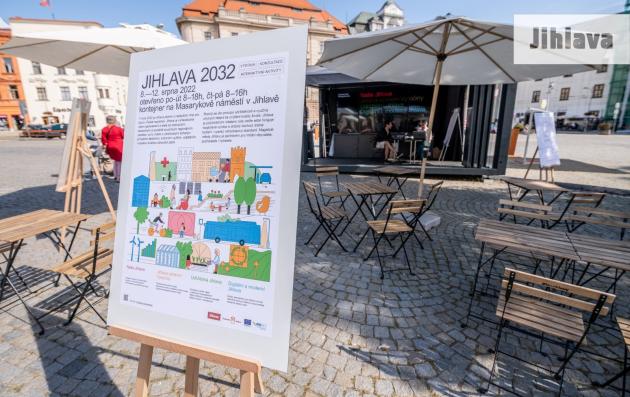

Jihlava (CZ)
STRATEGISE
Using the new Strategic plan Jihlava 2032, the city looked at how the SDGs were addressed in municipal sectoral strategies. So, the city developed a traffic light system to assess documents.
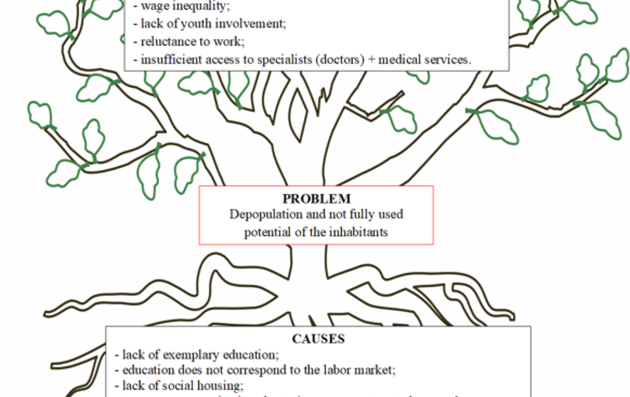
Dzierżoniów (PL)
EXPERIMENT
With the objective to solve concrete challenges especially linked SDG 1, SDG 3, SDG 4 and SDG 5, a Problem Tree analysis was done to analyse the roots and effects of related problems.
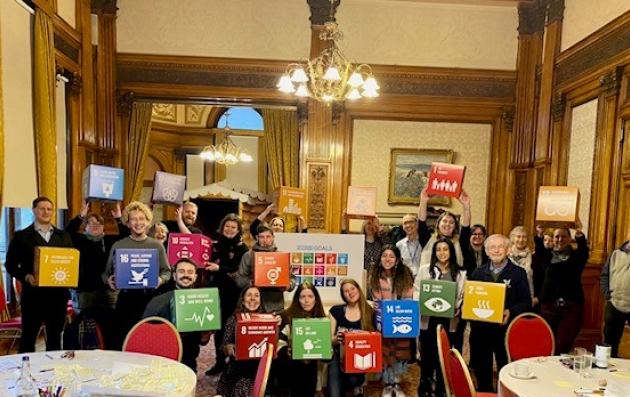
Glasgow (UK)
ENABLE
In 2019 the city declared a climate and ecological emergency, developing a climate plan aligned with the SDGs, with a strong committment to working with local communities and stakeholders.
Tools

Problem tree
4Ws
 RFSC tool
To analyse the SDGs as a holistic framework, the Reference Framework for Sustainable Cities (RFSC) online tool promoted by the Council of European Regions and Municipalities includes an SDG functionality allowing cities to analyse plans, projects or strategies. Used at this stage of the planning process, the tool allows users to analyse existing priorities and gaps in current strategies and plans, in relation to the 17 SDGs. Next, users can decide whether to zoom in on one of several specific challenges to be addressed (Experiment), to use the results to strengthen, update or develop a new holistic plan (Strategise), or to identify gaps in how the municipality deals with the SDGs on a daily basis, including data gaps (Enable).