The European Mobility Week has established itself as an annual opportunity fortowns and cities to reflect on their mobility patterns and introduce small-scaleexperiments that gradually help build a new mobility culture. In Machico, as part of the URBACT Beyond the Urban network, this reflection has been particularly relevant over the last two editions, revealing lessons that go far beyond the celebratory nature of the initiative.
Despite not implementing physical interventions such as street closures, common practice in many European cities, Machico has demonstrated that small local actions can be decisive in shifting the mobility paradigm when combined with community dialogue, structured reflection, and the critical engagement of residents.
 1. When small actions become drivers of transformation
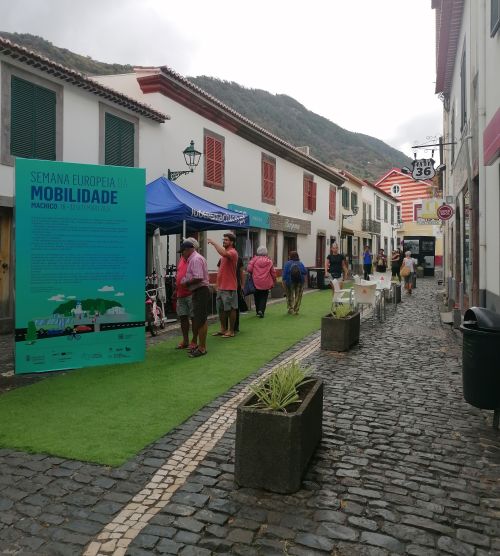
The last two editions of the European Mobility Week in Machico included awareness-raising initiatives, school activities, thematic walks, and moments of direct interaction with the community. Although discreet, these actions played an essential role in creating a favourable environment for reflection on mobility habits.
These activities showed that they:
- allow people to experiment with and discuss alternatives to car use in an informal way;
- help introduce new topics into the public debate;
- create opportunities to listen to residents’ concerns, suggestions, and expectations.
In a territory where the car carries strong social and functional importance, these “light” interventions serve as an effective entry point for deeper conversations about the future of local mobility.
2. Committed residents: the invisible force behind cultural change
One of the most striking aspects identified through participation in the URBACT project was the role of the more attentive and engaged residents, who proved to be essential agents of positive “contamination” within the community.
These citizens play several informal yet powerful roles:
- they spread ideas and good practices among neighbours, colleagues, and family members;
- they help demystify sustainable mobility measures;
- they promote constructive and informed debate;
- they create conditions for new proposals to be more easily understood and accepted.
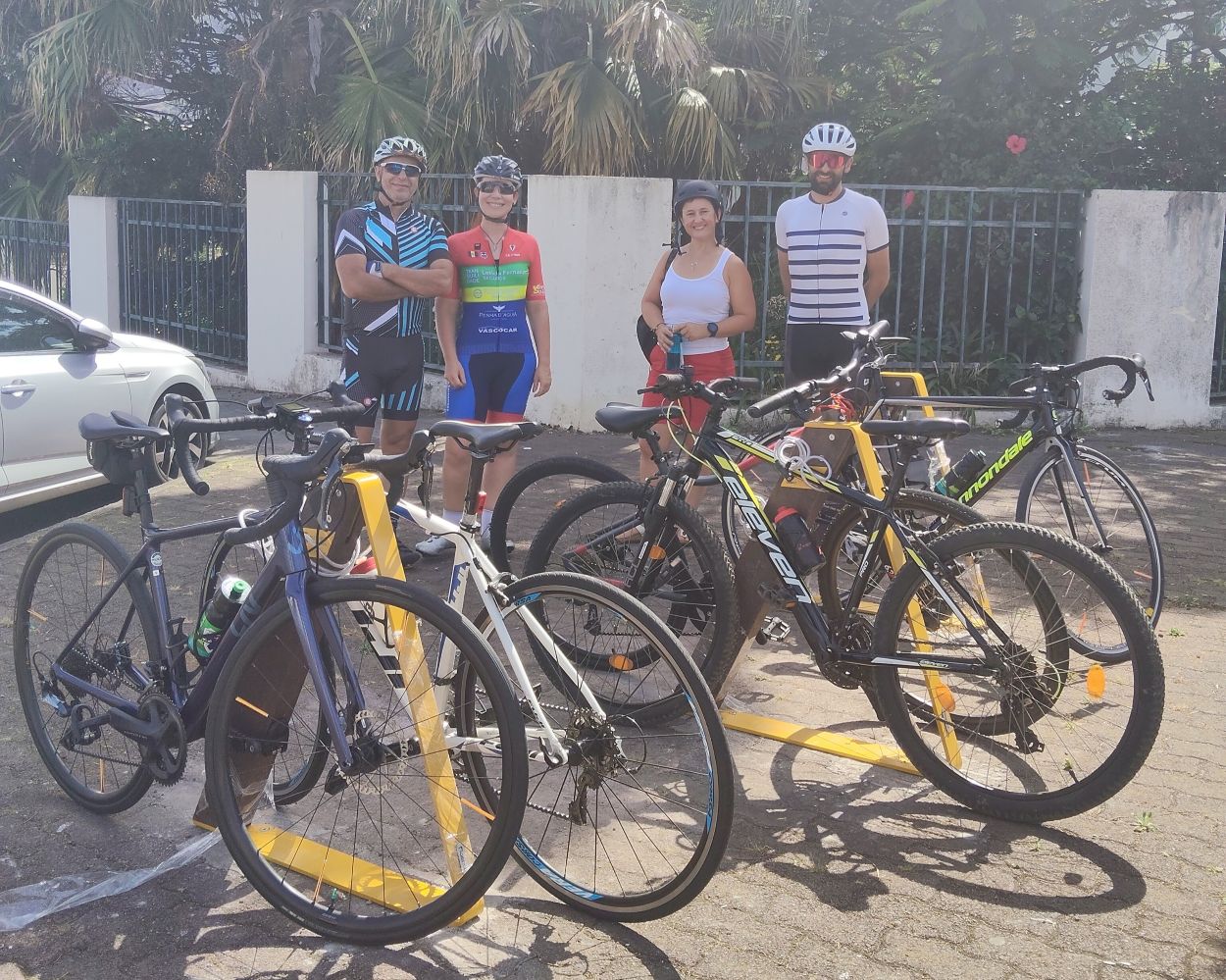
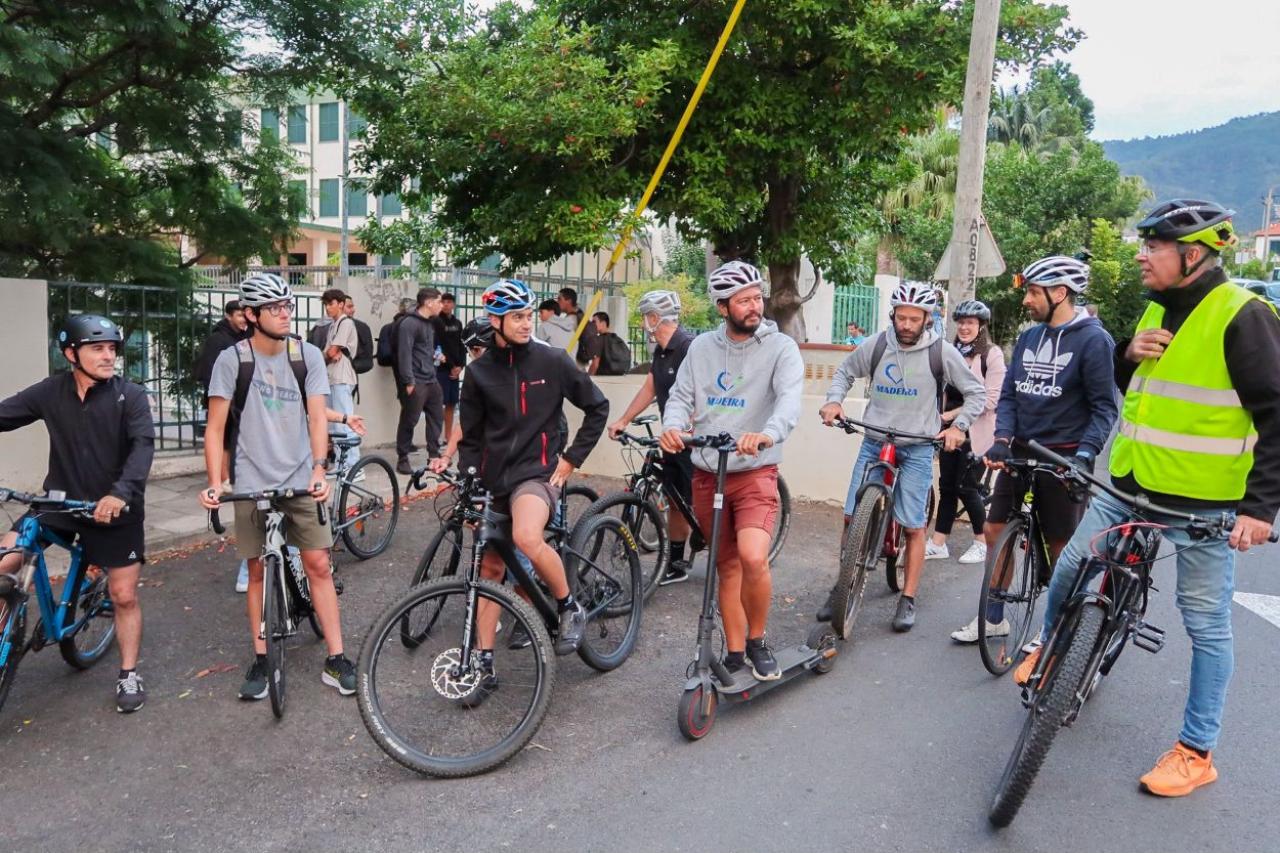
In 2025, with bicycle parking
During the latest meeting of the ULG (URBACT Local Group), this phenomenon became particularly evident: participants shared examples of how, after reflecting on mobility through SEM activities and others, they began publicly advocating for more sustainable practices, influencing other residents while always keeping the municipality’s best interest and the wider community in mind.
3. From the event to continuity: a commitment extending beyond September
At Machico’s final Beyond the Urban network event, a shared perception emerged among participants: the small actions carried out during the European Mobility Week were understood, valued, and, most importantly, recognised as practices that should be replicated throughout the entire year.
This conclusion is particularly meaningful, as it indicates that:
- the community does not view sustainable mobility merely as an annual celebration;
- there is a willingness to transform these actions into permanent habits;
- a growing sense of shared civic responsibility is becoming evident.
This ongoing commitment, reinforced through the discussions within the ULG, demonstrates that cultural change in mobility is shaped just as much by repetition and consistency as by major investments.
 4. Transferable lessons for other european cities
Machico’s experience offers useful insights for municipalities at an early stage of their mobility transition:
a) Change starts in everyday life
Simple activities like walks, school challenges, awareness-raising actions, can have real impact when they generate conversation and reflection.
b) The community is at the heart of transformation
Sustainable mobility is not just a technical issue; it is a social one. Engaged residents become key allies in building new paradigms.
c) The value of structured reflection
ULG meetings, post-event dialogues, and spaces for sharing create continuity and allow isolated experiences to evolve into more consistent policies and practices.
d) No need to begin with disruptive measures
Even without street closures or complex urban interventions, cultural change is possible when there is vision, dialogue, and progression.
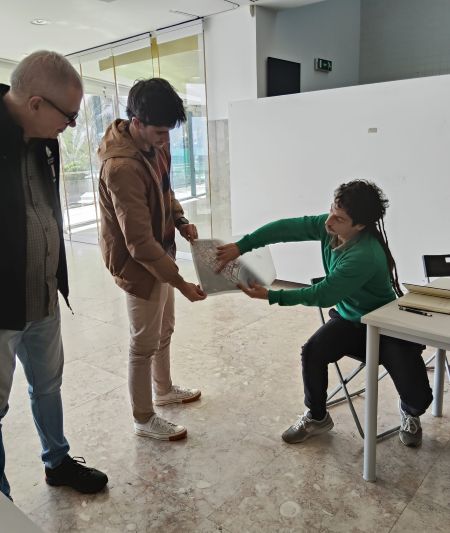
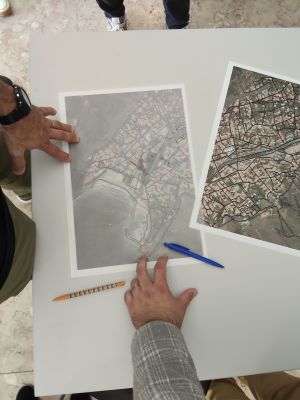
Images from the last ULG Meeting, already working towards the future
5. The road ahead: building change gradually and solidly
Machico is undergoing a cultural transformation in its approach to mobility. This process is gradual, deliberate, and sustained, grounded in community participation and the progressive reinforcement of new practices.
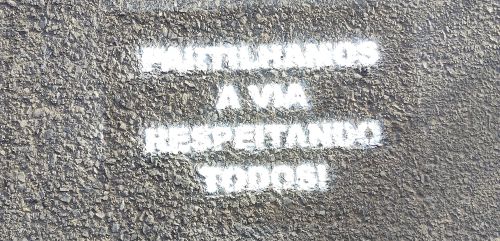
Image - Inscription on the pavement of strategic roads with the phrase: "We share the road, respecting everyone!"
The lessons learned from the last two editions of the European Mobility Week show that:
- the paradigm shift is underway, visible in evolving conversations, perceptions, and attitudes;
- continuity of actions throughout the year is essential to consolidate this movement;
- every small gesture, from a school activity to a public debate, brings Machico closer to a more sustainable, inclusive, and balanced mobility model.
In sum, Machico’s recent experience shows that local and seemingly modest actions often trigger the most significant changes. Sustainable mobility emerges as a collective process, with the community playing a central role and the paradigm being rebuilt step by step. Just as in other European cities — where a gradual shift in individual priorities also occurred — these places have become inspiring references whose path we aim to adapt and replicate at Machico’s scale.
This article was written by Tânia Carvalho