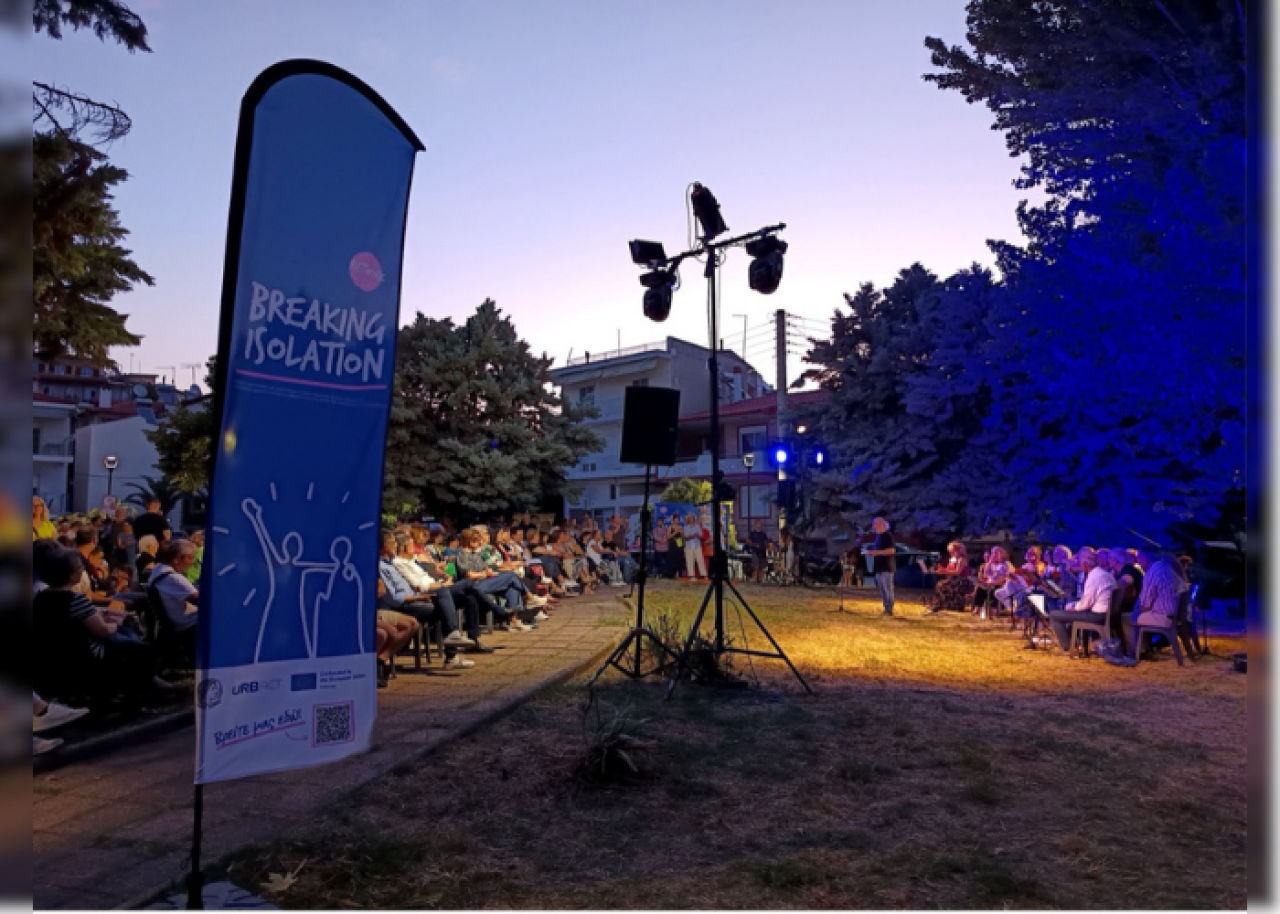
After the URBACT Summer University in Malmö (Sweden) in August 2023, where (almost) all partners met for the first time, it was time for our first official Transnational Kickoff meeting. Without surprise, the City of Agen (France) decided to host it as Lead Partner of the Breaking Isolation network. This Transnational Meeting (often shortened as TNM) was the occasion, for partners, to introduce themselves and their city profiles to the rest of the network, to discuss the URBACT activation stage steps and, most importantly, plan the upcoming study visits.
Study visits to find good practices
Well, study visits, are on site in-person visits from the leading duo of the network, meaning the Lead Partner and the Lead Expert to each partner city so as to assess where they stand, what they’re already doing in terms of policies on the topic, identify their possible strengths and weaknesses, etc. In about 3 months, Nicolas Castet (lead partner and coordinator) and myself, Christophe Gouache (lead expert), visited all 10 partners spending 2 full days in each city and meeting each time with dozens of local stakeholders, NGOs, health professionals, social workers, elected officials (inc. mayors) and civil servants. Each study visit also included site visits of inspiring practices/cases in each city. In total, we came across about 30 inspiring existing actions.
If most of them were not explicitly meant to tackle isolation per say, they were undoubtedly doing it. To only cite 5 examples from 5 different partner cities, we could mention:
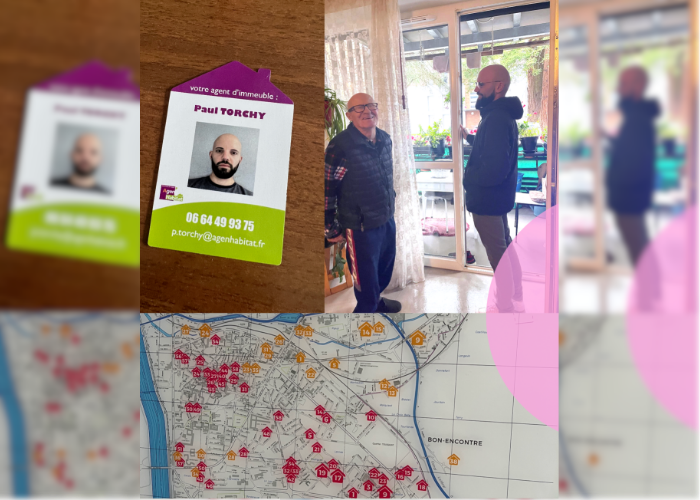
- The ‘Building Carers’ of Agen Social Housing (Agents d’Immeubles d’Agen Habitat) - France
In Agen, France, social housing employs "building carers" who manage both facilities and resident welfare across 150 apartments each. These positions prioritize social skills over technical abilities, with carers conducting courtesy visits, checking on absent residents, and monitoring mailboxes. The director estimates 10-20% of residents face social isolation, making these carers an effective early identification tool for vulnerable individuals needing support.
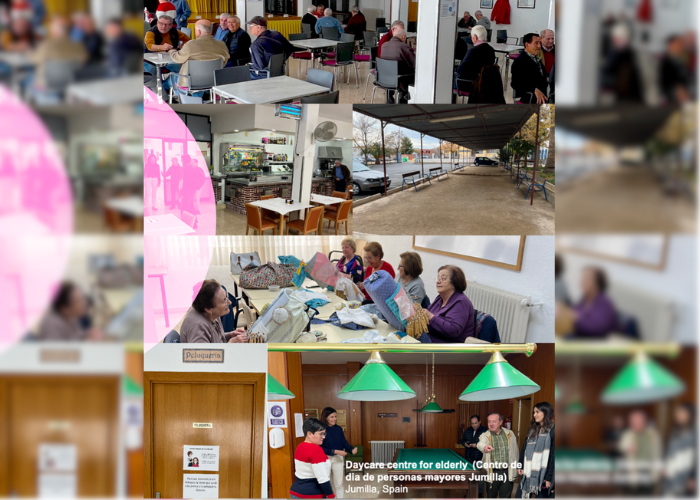
- The Elderly Day Care Center - Centro De Dia De Personas Mayores, Jumilla - Spain
Jumilla's Daycare Centre for Elderly serves 3,500 members (1,000 active) aged 60+, offering 25 workshops led by volunteer and paid tutors. Open daily 9:00-20:00, it hosts 250 daily visitors who socialize through activities like dominos, pilates, and memory games. Run by four municipal employees, this vibrant hub effectively prevents social isolation by encouraging elderly residents to connect and interact.
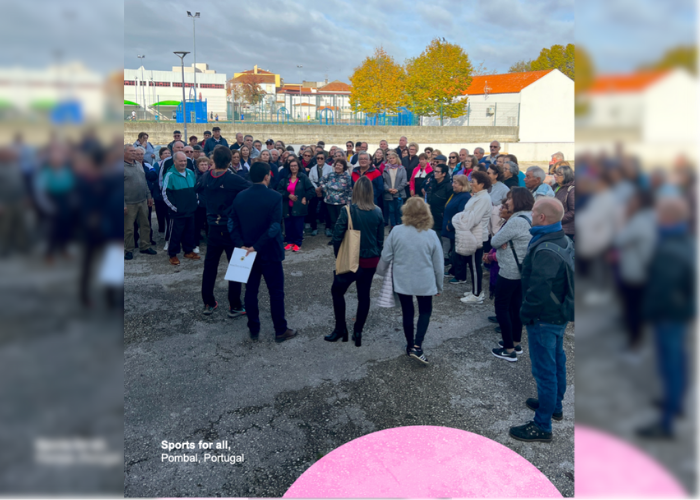
- Sports for All – Desportivo par todos – Pombal – Portugal
"Sports for All" in Pombal offers free group exercise sessions three times weekly for elderly participants, including hydrogymnastics, gym, and hiking. Launched 20 years ago, the programme currently has 283 members, with 100 attending walks during our visit. Why do people join? We asked participants: ‘to remain young’ says a participant, ‘to socialize’ adds an other, ‘to live above 100 years old’ laughs an other one, ‘to avoid staying at home in front of TV’ responds an other, or ‘to maintain fresh air in the brain’ concludes an other. Run by two municipal sports coaches, it effectively combats social isolation while keeping participants mentally and physically active through simple, sustained community engagement.
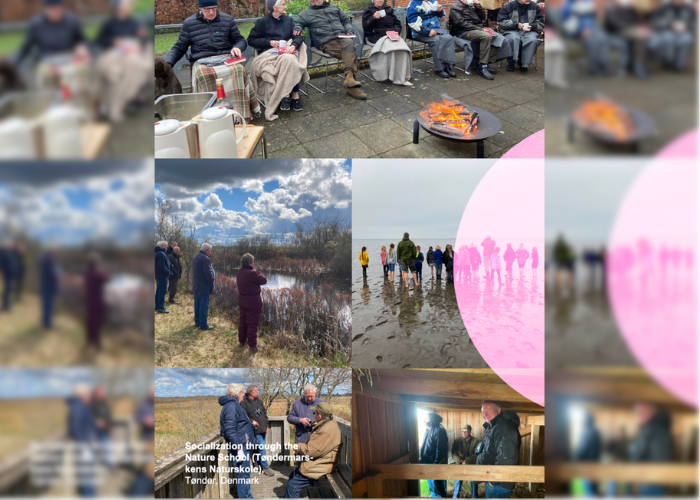
- Nature School - Tøndermarskens Naturskole Nature - as a socialization – Toender, Denmark
Tønder Nature School uses nature-based activities to combat social isolation. Run by two municipal employees, it hosts monthly groups of 10 men (ages 50-80), including widowers and those with depression or dementia. Activities like bird watching, mushroom picking, and fishing create non-confrontational settings where participants walk side-by-side, fostering connections. Nature serves as therapy, helping socially isolated individuals build lasting relationships through shared outdoor experiences.
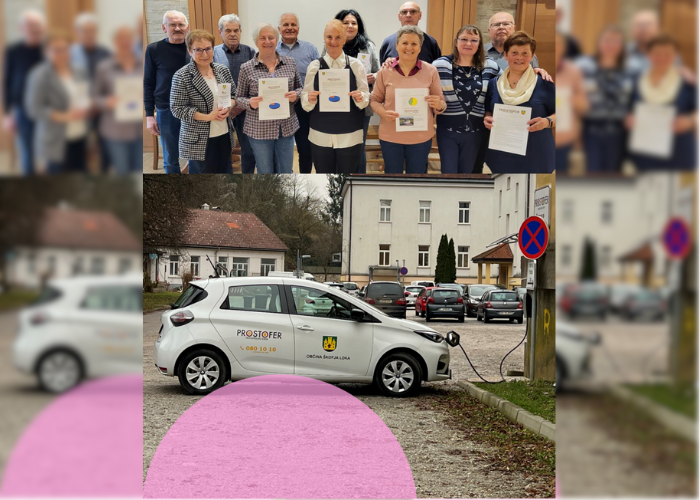
- Elderly to Eldery and Prostofer initiative – Skofja Loka – Slovenia
Slovenia's "Elderly to Elderly" programme, launched nationally in 2004, uses younger retirees as volunteers to support isolated older adults through visits, phone calls, and assistance with daily tasks. In Škofja Loka, 50 trained volunteers complement social workers, as elderly often open up more easily to peers. The EU-awarded programme also includes PROSTOFER, where 11 volunteers provide daily transport for elderly residents needing rides using municipality cars.
If you are interested by finding out more inspiring cases from our 10 cities, have a look at the Baseline Study of the Breaking Isolation network here: https://urbact.eu/sites/default/files/2025-05/Baseline-study-v2.pdf
After this European tour of our Breaking Isolation cities, it was the time to analyze what we saw but also investigate, in parallel, the public problem of social isolation itself. In super short, here are the main findings:
- Social isolation is not a private issue but a public problem, which requires dedicated local strategies and action plans,
- There is nearly no policy, programme or strategy, at European, national or local level targeting specifically the issue of social isolation, as if the problem does not exist or is not identified
- Social isolation is not only concerning old people but all age range,
- Social isolation is a growing issue with severe effects on health, increasing risk of dementia, risks of heart stroke and risks of premature death, etc.
- Number of isolated people is high and their identity vastly unknown,
- Social isolation should not be only taken care of by social and/or health departments/policies, but transversally responded…
- Social isolation should not be taken care only by public/municipality tools/policies but also in partnership with local stakeholders and associations (NGOs), etc.
- Social isolation should be prevented but answers for those already isolated also need to be developed
Those findings allowed us to come up with 7 potential focus for our cities (each city being free to choose the different points they’d like to focus on):
- We need to better identify socially isolated people
- We need to better diagnose those at risk of isolation (early signs)
- We need to develop direct answers to help out those already isolated
- We need to reinforce and multiply solutions to prevent isolation of those at risk
- We need to raise awareness on social isolation, how to recognize it and its effects
- We need to develop city-wide answers by partnering within municipality departments and with local stakeholders, and in particular, local NGOs
- We need to reinforce a culture of mutual community care
In November 2023, what a surprise! The World Health Organization announces the launch of a special international committee on Social Connection & Loneliness! This means we’re not the only ones caring for this issue anymore! WHO not only confirms the urgent need to work on this problem but also provides extra materials, data, evidences about isolation.
A journey of sharing, exchanging, experimenting, transferring
After the activation phase of 6 months, the network spent the following 2 years, sharing, exchanging, experimenting and transferring practices. In total, 12 in-person Transnational Meetings were conducted. One in each city of the network, plus one in Brussels (to meet with the City of Brussels and EU institutions) and 2 in the lead partner City of Agen (kickoff and closure). All those TNMs were extremely useful for the process as they allowed to uncover more good practices and experiment creative testing actions. The Transnational Meetings were also great convivial moments that made the network closer and tighter (increasing the dedication to the project and willingness to deliver quality work) and inspiring moments of discovering each other’s’ cultures and practices (including the administrative culture of every country, as well as each municipality’s functions and responsibilities). Indeed, it appeared very clearly that from one country to another, the scope of responsibilities (policy portfolio) varies a lot from one municipality to an other. For example, Danish municipalities like Tønder have a lot more on their plate to manage than regular municipalities due to the national decentralization that took place in 2007. Yet, those differences were no obstacle to the process as an action-planning network is mostly focusing on exchanging policy concepts, ideas and possible actions, and that could be done regardless of each other’s policy agenda.
Transferring policy ideas and actions
In terms of actions, three main things happened throughout the planning phase:
- Some cities decided to integrate in their action plans, already existing practices from other partners
- Some cities decided to conduct testing actions based on others' existing practices
This is interesting and worth mentioning because this is precisely what URBACT is about. Indeed, an action-planning process is not only about inventing new actions to carry on but also transfer practices when they've proven to work. Just like a Transfer Network, some actions got transferred or copied from one city to another. To cite a few examples:
- The solidary taxi (Prostofer programme) of Skofja Loka in Slovenia (in which volunteers give free rides to elderly in need using muncipality cars) or the On-demand-Transportation of Pombal in Portugal, got copied by Fot in Hungary and inserted into their IAP.
- The neighbourhood festival of Serres, Greece is a direct inspiration from the french national 'Fête des voisins' (Neighbours' Parties).
- The Center for socialization of Isernia or the Center to fight isolation of Agen are both direct inspirations from Jumilla's Daycare center for elderly (Centro de Dia de Personas Mayores).
- The Thematic Socialization days of Isernia were inspired by Tønder's nature school but also Pombal's Sports for all programme.
- The Let's go to culture together action from Skofja Loka, Slovenia, is a direct inspiration from Brussels' case of Culture on prescription that was presented by the City of Brussels during our special TNM there.
- And Social Prescribing in Pombal, Portugal, is a direct inspiration of the Testing Action of the City of Heerlen, Netherlands from the URBACT III Sib-Dev network
Carrying out testing actions
The opportunity of conducting testing actions was largely appreciated by all partner cities as it provides the opportunity to 'make' things, 'to create concrete & operational things', to turn some ideas and intentions into actions.
Within the network, all partners made testing actions, yet with different intensity. Indeed, some partners made 2-3 testing actions while others, such as Fót (Hungary) or Serres (Greece) made 4 or more. All in all, dozens of testing actions were made and proved the added value of such exercise. Also, it is interesting to note that many testing actions made their entry as full actions in many Integrated Actions Plans. And that several cities got inspired by each other's testing actions ideas and decided to carry out similar ones:
- Jumilla (Spain), Roman (Romania) and Fót (Hungary) conducted similar testing actions regarding communication campaigns
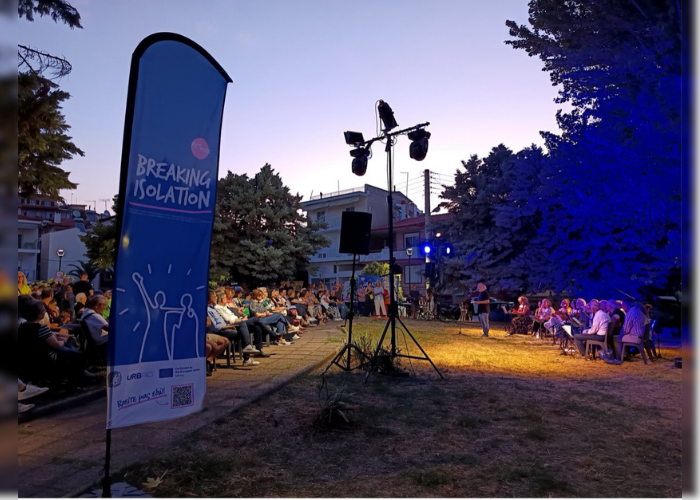
- Serres (Greece) and Fót (Hungary) conducted similar actions regarding Neighbourhood festivities, which inspired other cities for their IAPs
To only cite a few of testing actions that made their way to the final versions of some IAP:
- The Breaking Isolation Café & chat corner in the public library of Fot (Hungary)
- The Bench of Friendship of Agen (France)
- The Establishment of a “Neighborhood Festival» in Serres (Greece)
- The Intergenerational “Youth–Elderly” activities in Bijelo Polje, Montenegro
- The Citizens College (Three-Day Peoples College Experience between isolated people) in Toender (Denmark)
- The public campaign of digital posters to raise attention in the streets: Can we talk? in Jumilla (Spain)
Developing integrated action plans
As any action-planning network, Breaking Isolation had to deliver actions plans for each of its member. The process included intense participatory work (problem-analysis, diagnosis, visioning, ideation, experimenting, prioritizing/negotiating, etc.) with URBACT Local Groups (known as ULG). All IAPs are available on the Breaking Isolation URBACT page: https://urbact.eu/networks/breaking-isolation
Each city developed its own IAP and, looking across all of them, it is interesting to identify some similarities and eventual differences. Of course, some Integrated Action Plans appear more ambitious than others either in terms of number of actions or of scale of actions but that is commonly found in every action-planning network. Indeed, some cities may have stronger political ambitions than others on the topic, but also greater resources to appoint to the strategy and finally some are more advanced already than others on the topic. Therefore, some are accelerating and intensifying while others are taking smaller and more prudent baby steps, which may still be ambitious for them, in their own local context.
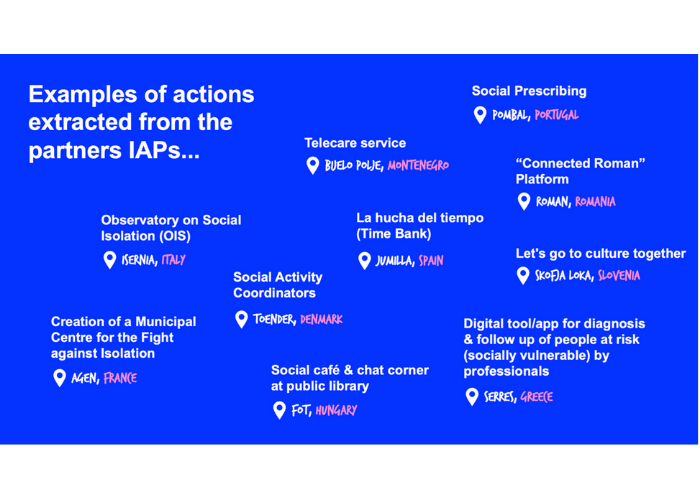
While all cities have developed some adhoc actions, they also have many similar types of interventions such as:
- The need for actual data on isolation through observatory/monitoring/data systems/social radar etc.
- The need for awareness raising and communication about the phenomenon of isolation (as it is largely unknown)
- The need for training and capacity building of those who may provide help and support such as social workers, health professionals but also family caretakers, NGO volunteers, etc.
- The need to make use of digital tools and modern technology (inc. AI or robots ) to explore new ways to identify isolated people and break isolation
- The need to provoke social interactions through intergenerational programs, volunteer peer to peer support, community spaces, meeting occasions, cultural opportunities or nature-based and sport ones
- The need to bring on the table the topic of isolation at school but also to those about to retire
- The need to develop dedicated responses to specific targets such as the elderly, LGBTQI+ communities, Roma people, etc.
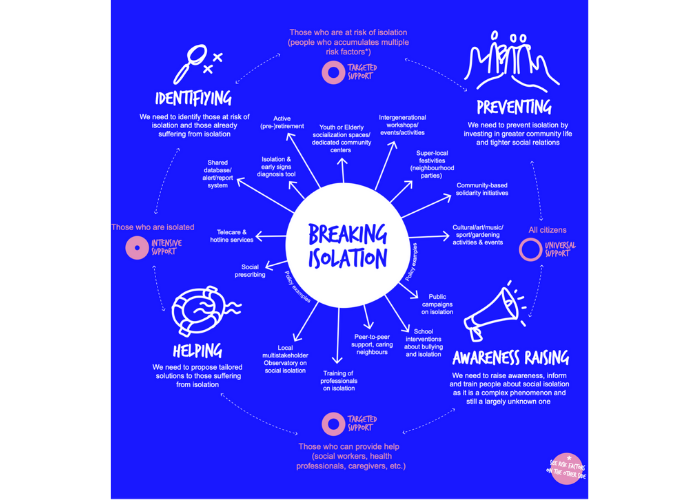
Based on that, we managed to come up with a sort of model that we called the Breaking Isolation Intervention model.
The intervention model presented below is built around four main policy interventions. First, identifying people who are isolated or might be at risk of falling into isolation. Second, helping those who are isolated by offering them a way out. Third, awareness-raising to inform about the issue and equip people, including professionals, with tools, methods and knowledge about isolation. Fourth, preventing isolation by intensifying social interactions and tightening community life and care.
The model is articulated around four types of beneficiaries: those who are isolated, those at risk of getting isolated, those who can provide help such as professionals, care providers and informal helpers, and all citizens. Interventions may be of three levels: intensive support, targeted support, and universal support.Finally, at the center of the model, examples of policy interventions (taken from the actual IAPs of our Breaking Isolation cities) provide concrete actions that may be put in place.
The Breaking Isolation network is a really interesting network as it has been exploring a topic that was largely overlooked and unknown. In a way, we can consider the Breaking Isolation a pioneer network. Indeed, whether during the investigation phase of the study visits and the literature review done for the baseline study, it appeared quite clearly that isolation was not so commonly mentioned in policies, whether we were looking at local, regional, national or EU level (or beyond).
This means that the network included a learning curve that was higher than other networks who might have worked on more well known policy topics and challenges. This made the start of the journey particularly rich intellectually speaking, as we all became more knowledgeable on the issue.
After 2,5 years, we can even say that we have, at local levels, in 10 EU cities, dozens of people who know about isolation, who can talk about it and who even have some clues about what to do about it. That's precious. In terms of impact of the network, it adds up to the 10 Integrated Action Plans that our cities have developed. The impact we had on people is sticky.
It is also worth mentioning that the network has been robust and remained together all along, loosing no partner along the way. It might sound obvious but it's not always the case.
In Breaking Isolation, the network members have been fully committed to the task, and have repeatedly participated to all Transnational Meetings (which were demanding in terms of traveling and time spent). And doing so, despite some staff change or even political change.
Finally, the connection made by the network with the World Health Organization (WHO) has been a highlight of how valuable the work of Breaking Isolation is. I, therefore, hope that the network will keep in contact and continue exchanging about the topic and making noise about their actions to come. As it matters. It really does.
As a lead expert, I have been proud to participate to this network and explore with those 10 cities this critical topic of social isolation. I hope it will inspire policymakers and cities to do the same.
By Christophe Gouache, Lead Expert of the Breaking Isolation network.