Seven cities across the Western Balkans are facing down mountains of municipal waste and linear consumption models. Their ambitious mission: to scrap the landfill-centric past and build a future rooted in circularity. This challenge defines the Waste Management cluster of the URBACT Pioneers Accelerator (UPA). This pioneering group of seven cities- Kamza (AL), Mostar (BA), Trebinje (BA), Shtip (MK), Herceg Novi (MNE), Bački Petrovac (RS), and Novi Pazar (RS) - is focused on overcoming critical obstacles, including setting up Zero Waste plans, creating essential circular economy infrastructure, and breaking through the widespread barrier of public awareness-raising.
The transition from abstract goal to concrete action began in late October 2025. In their first critical Thematic Expedition, the Pioneers traded theoretical debates for boots-on-the-ground learning, embarking on a deep dive into one of Europe’s leading sustainability champions: Munich, Germany.
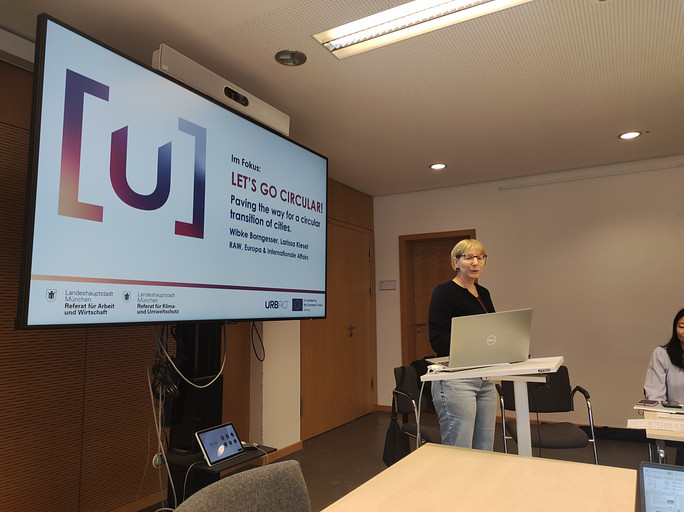
Wibke Borngesser, Project Manager European & International Projects at the City of Munich comments, “The City of Munich was truly honored to host the enthusiastic Pioneers from the Waste Management cluster. Our journey towards a circular, zero-waste city has been a decades-long process, and we are incredibly happy to share our experience, our successes, and the lessons we've learned over the past years.”
This two-day study visit wasn’t a lecture; it was a powerful exercise in proof of concept, designed to help the Pioneers leap from the 'Discover' phase to the 'Define' phase of the URBACT Pioneers Accelerator program with confidence.
Seeing the Vision in Action
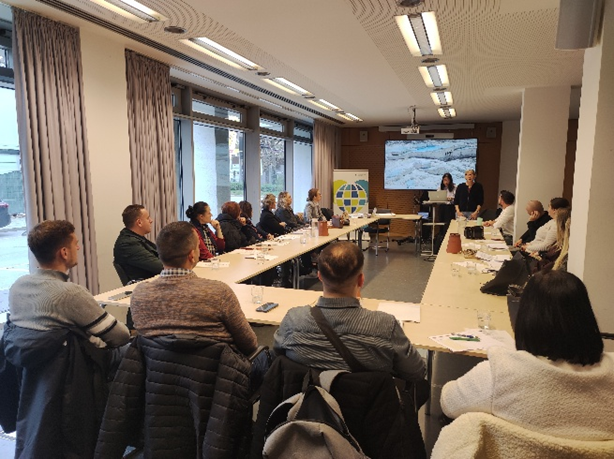
The key to the visit was making Munich’s Zero Waste ambition tangible. The Pioneers' itinerary, led by Thematic Expert Nuša Lazar, combined high-level policy presentations with essential site expeditions. The teams learned how Munich successfully combined strong political commitment with sophisticated, grassroots-level educational strategies, including initiatives for citizen participation and the use of EU project frameworks like URBACT LET’S GO CIRCULAR!, ASCEND and CIRCOFIN.
However, the deepest impact came from walking the floor of Munich’s established infrastructure:
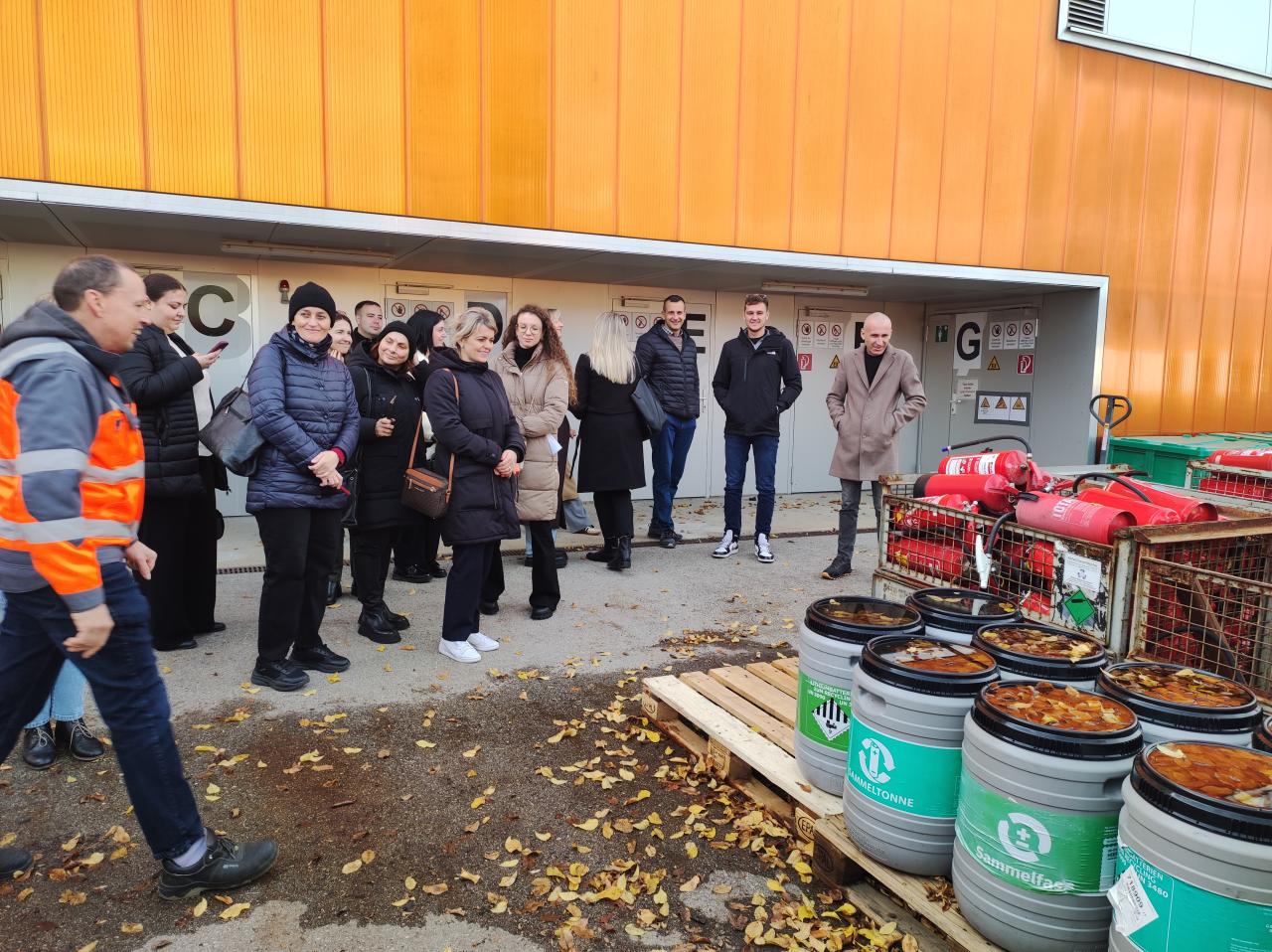
- The Recycling Center: Pioneers witnessed the sheer operational efficiency of the municipal waste company (AWM). Seeing industrial-scale sorting and processing firsthand demystified the logistics of high-volume recycling and provided a clear benchmark for what's possible when a public utility is properly empowered.
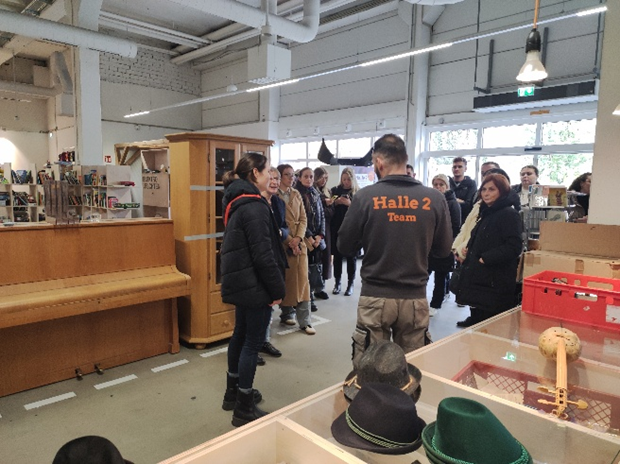
- Halle 2: The municipal second-hand shop offered a shining example of circular economy in practice. More than just a store, it represents a municipal commitment to reuse and repair, directly tackling consumer habits and extending the lifespan of goods - a powerful social and economic model for reducing municipal waste.
- Zero Waste Workshop: This highly interactive session focused on the social dimension of circularity, demonstrating actionable methods for behavior change. Pioneers learned how to design effective local engagement activities, manage stakeholder expectations, and build community buy-in, which is a key barrier across all seven cities.
As Marko Ćapin from Trebinje - Development Agency TREDEA (one of the Waste Management cluster cities) noted, “For us, the study visit to Munich was truly a transformative experience. For the first time, we were able to see the full picture of how a circular economy functions – from strategic planning and long-term political decisions, through EU-funded projects such as LET’S GO CIRCULAR!, ASCEND and CIRCOFIN, all the way to the practical reality of the AWM recycling center and the Halle 2 reuse shop. Seeing firsthand the results that have been built over more than 40 years clearly showed us that change is possible – it requires dedication and continuity, but it brings deep and lasting benefits. We return home with greater motivation and concrete ideas that we can adapt to the local context of our cities.”
The Challenge of Localization
The feeling among the Pioneers was electric, translating into a strong, unified satisfaction with the study visit. During the wrap-up session, the focus quickly shifted from admiration to application. Their immediate questions revealed the depth of the challenge they're ready to tackle:
- "How can we implement a recycling center in our city?"
- "How do we motivate more people (households, schools and business) to be responsible with the waste they produce?"
- "How to integrate Munich’s ideas into our local mindset?"
As Nikola Iliev from Municipality of Shtip (one of the Waste Management cluster cities) noted, “For all of us, the study visit to Munich was both inspiring and motivating. Experiencing first-hand how the city combines smart waste management, reuse initiatives, and strong citizen involvement helped us reflect on our own practices and challenges. The visit strengthened our shared understanding that meaningful change comes from collaboration, trust, and learning by doing - lessons we are eager to bring back and adapt in our cities through the URBACT Pioneers Accelerator”.
This process of localization is the critical transfer moment. The Pioneers are taking home not just knowledge of what Munich does, but a set of practical tools and questions on how they can adapt similar strategies - whether it’s launching textile waste collection competition in the schools, organizing free consulting for households and business about waste management or developing deeper educational work with local youth with the help of utility companies responsible for waste management in their cities.
Wibke Borngesser from Munich concluded her thoughts, “We were impressed by the motivation, insight, and focus demonstrated by the Pioneers. Their pointed questions - centered on localization, financing, and grassroots education - showed a strong commitment to moving beyond theory and straight into action. We wish the Pioneers the very best in the demanding but rewarding process setting up their own structures, and we eagerly anticipate following their progress in building sustainable, circular waste systems back home.”