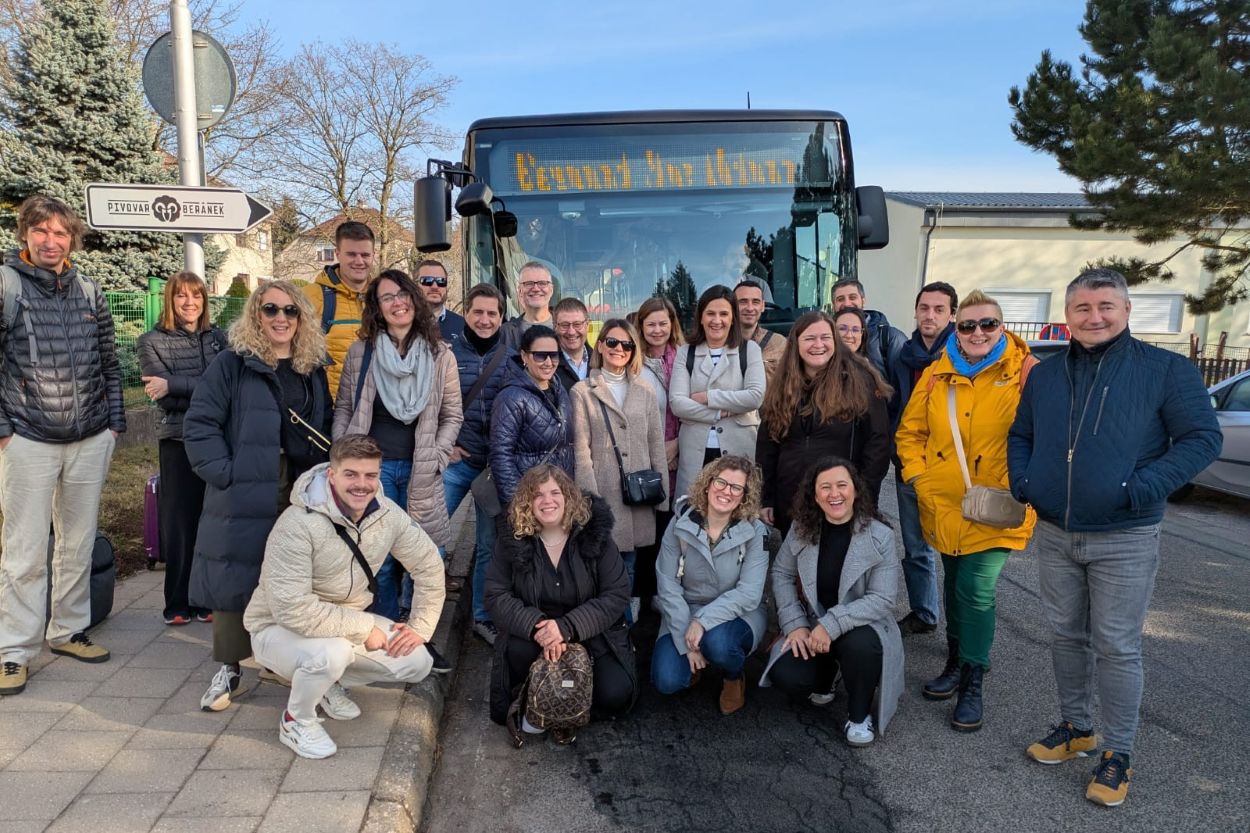
Across all partner territories, the starting challenges have been strikingly similar: strong car dependency, growing gaps between urban and rural areas, and new residential and economic developments expanding faster than public transport can adapt and active mobility infrastructure can grow. Beyond the Urban responds to this growing urban–rural disconnection —which can deepen social exclusion, widen economic disparities and increase environmental pressures— by supporting partners to build integrated, locally grounded solutions that work across scales and administrative levels.
At the end of the process, the network reaches a major milestone: all ten partners have completed their Integrated Action Plans (IAPs). These plans translate the exchange of experiences, peer learning and local stakeholder work into concrete roadmaps for change —strengthening intermodality, multi-level governance, gender equality, accessibility and the smart use of digital tools. Here, we present each IAP in a short overview and a direct link directly to the IAP documents, so you can explore the approaches, priorities and actions territory by territory.
Beyond the Urban formally ends in December 2025, but for all partners this is not the final destination —it is the starting line for implementation. Because beyond technical planning, the network has been about people sitting together, listening, and rethinking mobility through the lens of everyday journeys. The IAPs mark the point where that shared learning becomes delivery: turning ideas into pilot actions, investments and long-term change for more connected, fair and sustainable urban–rural mobility.
Osona’s IAP: from car dependency to a connected, intermodal mobility system
Osona’s IAP responds to a familiar challenge across the territory: strong car dependency and limited public transport options, especially beyond the main corridors. With most trips happening within the county, the plan highlights the need for a more reliable and better connected mobility system that works for both urban centres and rural areas —improving coordination between rail and bus services, strengthening intermodality, and making active mobility a real option for everyday journeys.
To deliver this shift, the IAP sets out a practical programme for 2026–2035 built around three goals: creating real sustainable alternatives to the private car, supporting behavioural change, and reinforcing governance and coordination. It includes 39 actions across governance and cultural change, mobility hubs and intermodality, a stronger interurban bus system, and active and shared mobility—supported by key structures such as an Osona Mobility Office and an upgraded Mobility Roundtable to steer implementation and monitor progress.
Bram’s IAP: turning a rural hub into a multimodal gateway
Bram (with the CCPLM) positions itself as a key link between rural municipalities and larger metropolitan centres, like Toulouse and Carcassonne, but today mobility is still highly car-dependent -with very high household car ownership and a dominant share of trips by private car. Even though many journeys are short, cycling and public transport remain underused, and the public transport offer relies heavily on the regional train service, with limited coach and demand-responsive options.
Looking ahead to 2038, the plan makes cycling a backbone of a wider multimodal, intermunicipal system —supported by stronger cooperation between institutions, clearer and more frequent public transport, and better intermodality around the station. Structured into 7 work areas and 18 actions, it sets concrete targets such as expanding bus services, building a continuous cycling network, developing shared mobility (including car-sharing and carpooling), creating at least one multimodal exchange hub, and establishing monitoring tools like a mobility observatory to track progress over time.
Machico’s IAP: from “traveling fast” to “traveling better”
Machico’s IAP tackles a clear local reality: mobility is still dominated by the car (64% of trips), while walkability and shared, safe public space remain limited. At the same time, the municipality sees a major opportunity in its compact urban centre —where slopes can support a “5-minute city” approach— and in the growing urgency to manage traffic and tourism impacts more sustainably and inclusively.
To drive change, the plan sets three strategic goals —sustainable mobility, improved public space, and stronger data collection— delivered through five intervention areas (education, training, culture, physical interventions, and information gathering). It combines “soft” actions (workshops, awareness and training) with practical measures such as speed-reduction pilots, clearer urban bus stop signage, public-space improvements, and digital tools to better manage parking —supported by ongoing monitoring and repeated surveys to adapt actions over time.
Tartu’s IAP: from suburban growth to rural accessibility
Tartu’s IAP responds to a fast-changing territory: rapid growth in urbanised areas close to the city of Tartu (with rising congestion and parking pressure), alongside sparsely populated villages where distances are longer, public transport options are scarcer, and daily life often depends on having a private car. The plan also recognises a unique local challenge: ensuring year-round accessibility to Piirissaar island, by ferry in summer and hovercraft in winter.
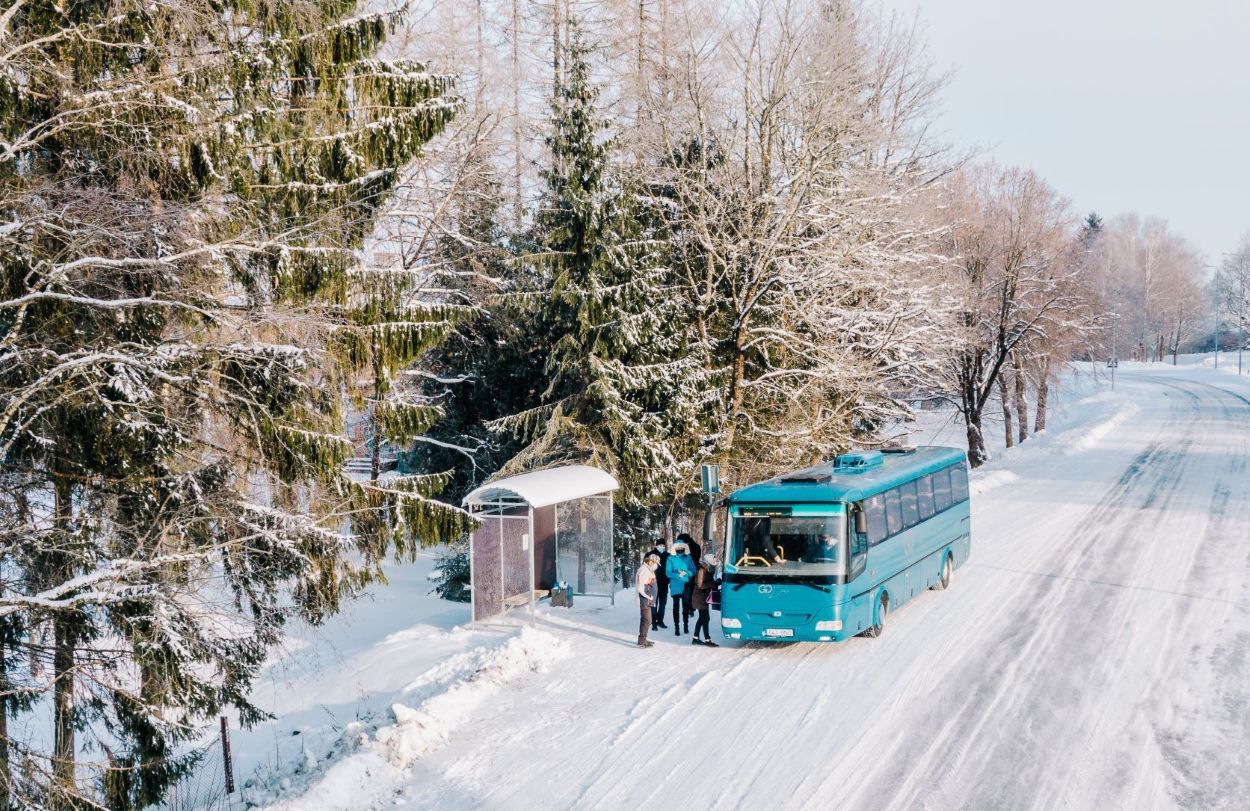
To move towards its vision of being “accessible to everyone, safe, and well-connected” by 2030, Tartu focuses on making walking, cycling and public transport more attractive and practical. The IAP prioritises a cohesive cycle-and-pedestrian network and a “light traffic” strategy, school-based actions like “Jupike jala” drop-off points and cycling education, and as well as better public transport conditions through surveys, safer and more multifunctional bus stops, and targeted intermodality measures such as park-and-ride in Raadi and improved parking at Kärkna railway station.
Bucharest–Ilfov’s IAP: building a seamlessly connected, people-first mobility system across the Metropolitan Region
Bucharest–Ilfov’s IAP targets the everyday reality of a fast-growing metropolitan area (around 2.2 million people across 42 municipalities) where congestion, uneven service quality and limited rural –urban connectivity still make the private car the easiest choice for many trips. Coordinated by TPBI— the regional public transport authority —the plan builds on an already extensive network (surface lines, metro and a metropolitan rail line) but focuses on making the system more coherent, reliable and accessible for both urban and rural communities.
Its vision is clear: a seamlessly connected, sustainable and inclusive mobility system that increases public transport attractiveness, strengthens intermodality, and leverages digital tools. The IAP groups actions around upgrading infrastructure (modernised stops, dedicated bus lanes, rural–urban intermodal hubs), optimising services (including low-emission fleets and testing new routes such as the “Green Lines”), rolling out smart solutions (integrated digital platforms and ticketing), and driving behaviour change through campaigns and measures that support walking, cycling and more liveable public space.
Treviso’s IAP: communicating the SUMP, from plans on paper to mobility people actually use
Treviso’s IAP is built around a clear local challenge: making the city’s Sustainable Urban Mobility Plan (SUMP) understandable, visible and usable for everyone —so that sustainable mobility becomes the easy, familiar choice, not the “alternative”. The IAP centres on improving intermodality and promoting new services, backed by targeted communication, awareness and training for different audiences, from students to seniors.
The plan translates this into four action areas already prioritised in Treviso’s SUMP: urban space management, public transport, digital & technology, and corporate/school mobility management. In practice, this means redesigning street space for universal accessibility, traffic calming and more cycling routes (including LTZ and 30 km/h zones), upgrading public transport with safer stops, reserved lanes and on-demand services, and rolling out digital tools (MaaS, mobility data, ITS and real-time information) alongside measures for schools and workplaces such as “Kiss & Ride” regulation, discounts on public transport, and better bike parking at key destinations.
Szabolcs05’s IAP: a regional plan to bridge the urban–rural mobility gap
Szabolcs 05 is a voluntary development association in north-eastern Hungary (Szabolcs-Szatmár-Bereg County), bringing together 44 municipalities (6 towns and 38 villages), with Mátészalka as its main centre. Like many rural areas, the region faces population decline, strong car dependency and unequal access to services and opportunities across the urban–rural divide.
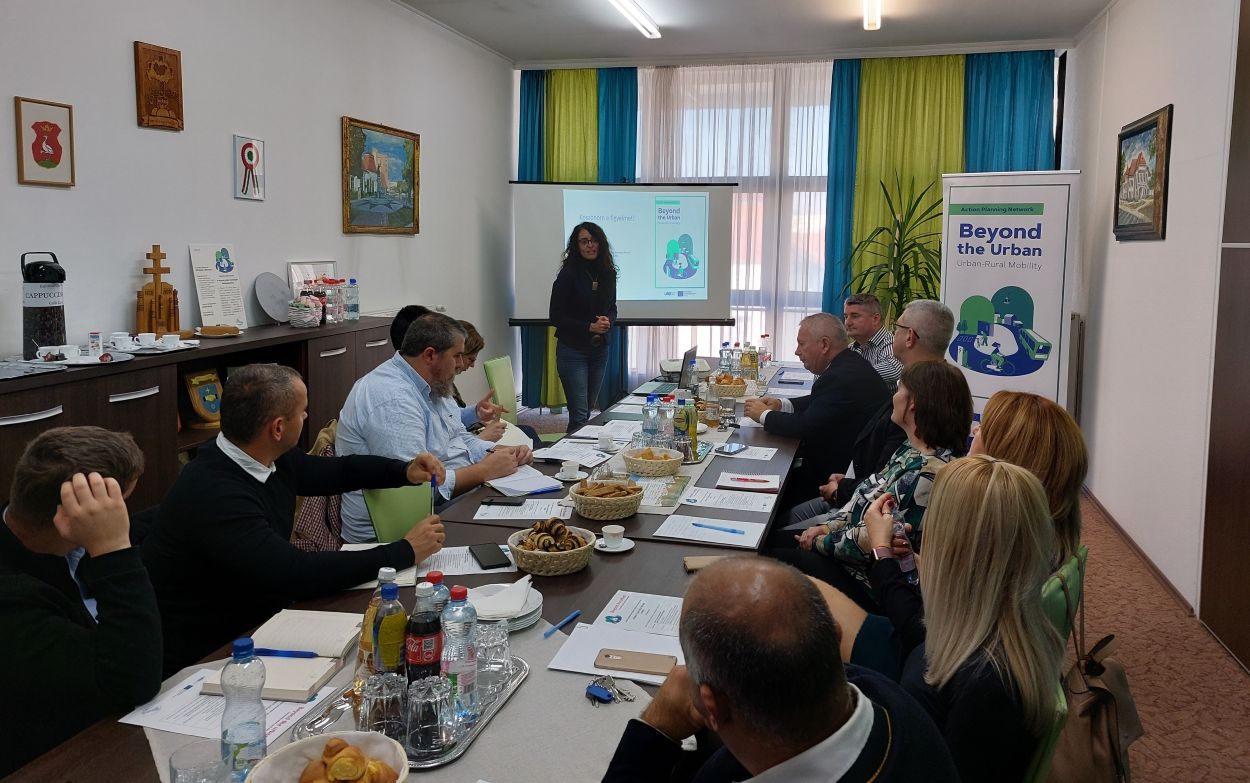
Through its IAP, Szabolcs 05 sets out a shared vision for more cohesive, accessible and sustainable mobility, aligned with Mátészalka’s mobility and urban development strategies. The plan translates this vision into six strategic objectives and a concrete delivery framework built around five intervention areas: promoting sustainable mobility and awareness, improving road safety, activating public spaces, ensuring social inclusion in access to transport, and strengthening regional cooperation and transport coordination.
Hradec Králové’s IAP: linking urban and rural mobility through cycling, integration and smart management
Hradec Králové’s IAP responds to the city’s role as a regional hub, facing high daily commuting, growing private car traffic and pressure for high-quality public space —alongside fragmented cycling infrastructure and the need for better public transport integration and stronger data systems. The IAP sets out a practical framework to reduce car impacts and make public space, walking and cycling options more attractive, while embracing smart mobility management.
Built around four strategic objectives, the plan combines “soft” and investment measures: boosting active mobility (including expanding bike-sharing to surrounding municipalities), improving links between urban and regional transport (towards unified fares and better transfer terminals), upgrading key infrastructure and service provision, and accelerating digitalisation with smarter traffic monitoring and open data. The goal is a city of short distances with seamless urban–rural connections and more reliable alternatives to the private car.
Santa Maria da Feira’s IAP: making sustainable mobility visible, trusted and connected, from street to screen
Santa Maria da Feira’s IAP responds to a clear challenge: mobility remains strongly car-centred, while public transport and shared alternatives are often underused not only because of service gaps, but also because people lack visibility, clear information and trust —especially across the urban–rural divide. The plan therefore combines physical improvements with a strong focus on communication, awareness and user confidence.
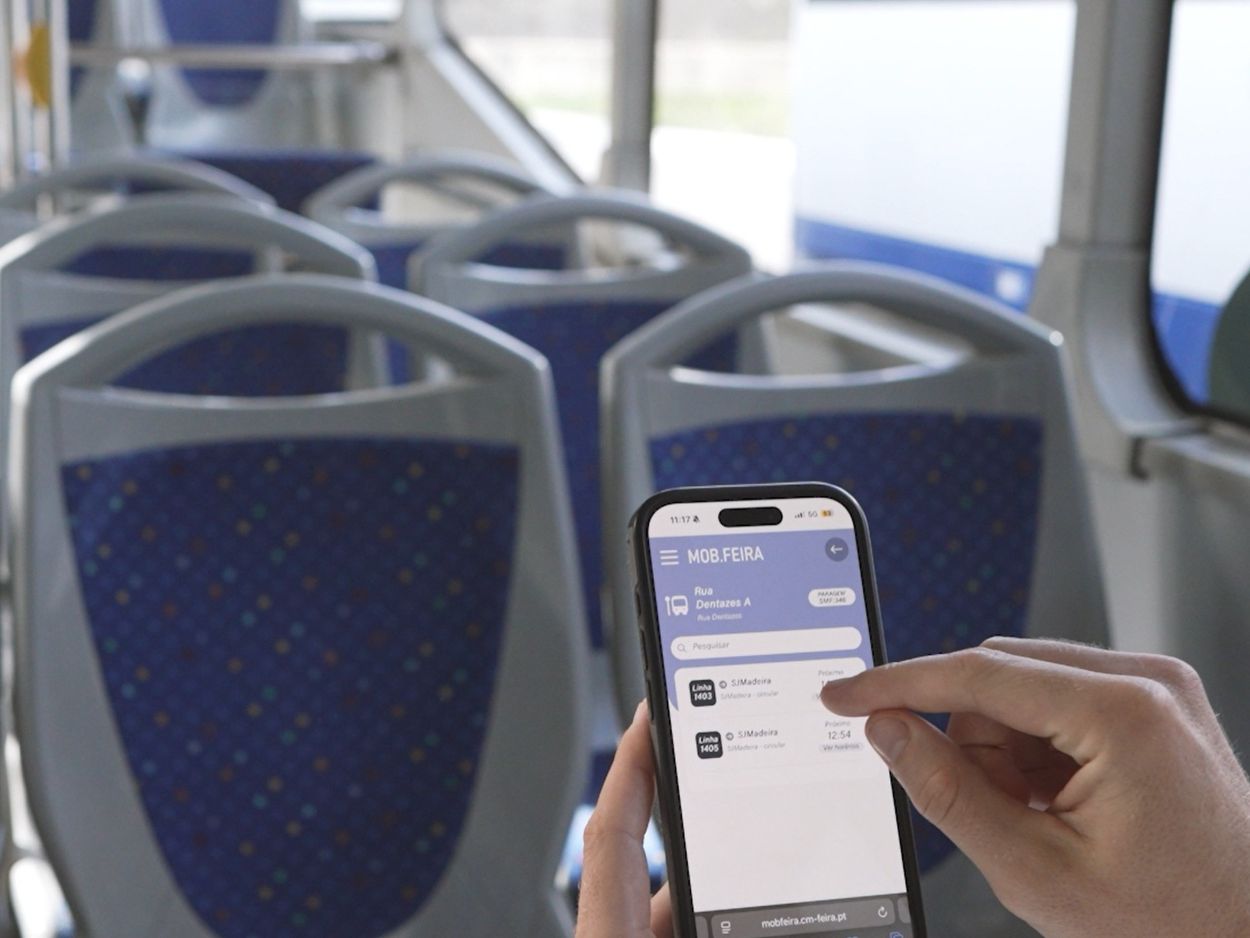
At the heart of the IAP is Mob.Feira, a one-stop digital platform that centralises mobility information (walking, cycling and public transport) and supports real-time updates —reinforced by practical tools like QR codes at bus stops. Structured around 5 strategic objectives and 14 actions across walkability, cycling, public transport & intermodality, road system optimisation, and a new mobility culture, the plan aims to shift everyday choices toward healthier, more inclusive and connected mobility
Kočani’s IAP: safe routes to school, a people-first centre and better urban–rural connections
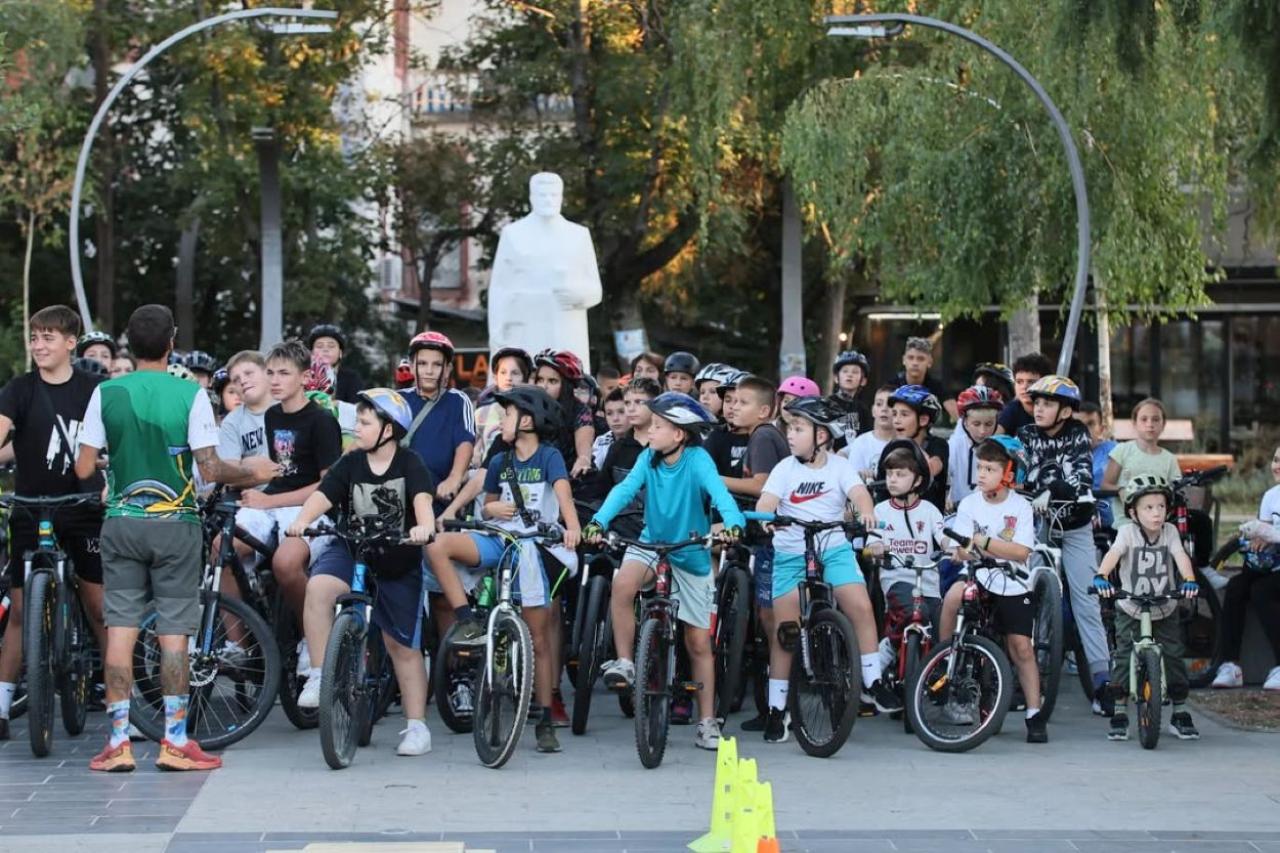
Kočani’s IAP starts from a clear local diagnosis: high car use and congestion, very limited cycling, and walking that remains common but often unsafe due to poor infrastructure —especially around schools. Built through a participatory process with hundreds of citizens, the plan sets a “mobility for people, not cars” vision: safer, shaded and accessible streets, a basic but connected walking and cycling network, and public transport that better links rural villages to the city centre.
To deliver this, the IAP prioritises practical, staged change for 2025–2027: safer school zones (crossings, speed control, education and the idea of “school streets”), creation of key active-mobility corridors connecting schools, neighbourhoods and industrial zones, and initial steps to recover the city centre through traffic calming, parking management and pedestrian-priority areas. Alongside infrastructure, it puts strong emphasis on citizen engagement, awareness campaigns and better data/monitoring—so progress can be tracked and the plan updated as a living roadmap.