Networks and cities' news

Catch up on the latest updates from cities working together in URBACT Networks. The articles and news that are showcased below are published directly by URBACT’s beneficiaries and do not necessarily reflect the programme’s position.

Want to learn more about the projects that are featured here? Discover the URBACT Networks.
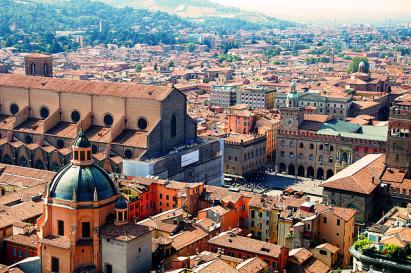


  • Bologna innovates to help its most fragile communities

    Three of the cities selected in the first call of Urban Innovative Actions (UIA) are working, or have worked, within URBACT on topics similar to their UIA bids: Turin, Bologna and Rotterdam.

    We investigated what made these cities successful at being involved in the two European programmes, and asked whether there is – for these cities – something like a trajectory between URBACT and UIA.

    This article is the third and last of our series of articles on this topic.

    It is based on an interview with Manuela Marsano, from the Economic development and city promotion Department, and Inti Bertocchi, from the social inclusion unit at the City of Bologna.

    Learning with other European Cities to help the most fragile population

    s.pruvot@urbact.eu

    See more
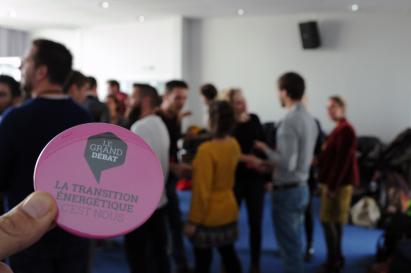
  • A city fighting climate change: How Nantes got its citizens to talk energy transition

    Tackling climate change was never going to be easy. But in the afterglow of the Paris COP21 Agreement, at least it seemed that we were moving in the right direction. By late 2016, the biggest polluters were signed up, and there appeared to be consensus on the scale and urgency of the problem, as well as on what needed to be done. What a difference a year can make. From where we are now, feels like we have another mountain – or two – to climb.

    Eddy Adams

    See more
  • Can nature make your city climate-resilient?

    Among the headlines of summer 2017: disastrous floods in the South of England, Istanbul and Berlin, extreme water scarcity in Rome, wild fires damaging homes on the Croatian coast, the Côte d'Azur and elsewhere… The magnitude and frequency of these and other events indicate that climate change is already a reality, and the impacts will be even bigger in the future. Yes, we need to reduce greenhouse gases to limit climate change, but equally urgent: we need to adapt to the remaining impacts. All cities, depending on their geographical position, are likely to experience prolonged and more intensive heatwaves or droughts, more frequent wild fires, coastal flooding, or an increase in the frequency and intensity of heavy rainfall with the associated threat of urban flooding, river flooding or landslides. How can cities cope with these huge predicted impacts of climate change in the future, even when they are faced with tight budgets? Can nature be a solution?

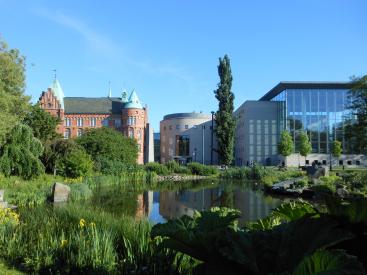
    Malmö enjoys its green infrastructure solutions

    Birgit Georgi

    See more
  • « L’espace citoyens » : a smart collective hub

    The city of Saint Quentin took over citizen participation in 2014.

    Barbara Gautherie

    See more
  • BluAct - Starting Up the Blue Economy

    BluAct network initiated its works during Spring of 2018, and has been awarded with the EEPA 2018 “Promoting the Entrepreneurial Spirit” award. Phase 2 of the project initiated recently with main event the transnational kick-off meeting that took place in Piraeus between 26-28 of February 2019.

    Angelos Ploumis

    See more
  • France’s ÉcoQuartier label, an initiative to support communities for sustainable city planning

    The concept of “écoquartier” - the term is a contraction of the two French words “quartier” and “écologique” (ecological neighbourhood) - was inspired by Northern European countries experiences of eco-districts.

    By creating a Label, delivered in four stages and according to urban sustainable development criteria, the French State wanted to push the approach one step further. The approach was successful in France, now also opened to other neighbourhoods and cities throughout the world.

    Eco-districts: historical background of the concept and first projects in Europe

    Delphine Gaudart

    See more