
In the face of complex, interconnected challenges, city planners and municipality officials are coming up with inventive ways to make cities more resilient and inclusive. One method, in particular, focuses on empowering citizens and building cooperative networks. ‘Social innovation’ is becoming a new way of governing and shaping the public realm, grounded in the collective intelligence of the people.
URBACT Good Practices highlight valuable solutions for European cities on topics ranging from mobility to housing, green urban regeneration to social innovation and local economy. Among the 116 URBACT Good Practices awarded in 2024, eight cities stand out for their work in turning collaboration into transformation. From employability to neighbourhood regeneration, these practices can be seen as part of the social innovation movement: cities are moving from delivering services to co-operative city-making.
Social innovation in cities
Social innovation is often described in relation to a social good. In cities, this type of innovation can happen when citizens, public servants, researchers and local actors experiment together to solve shared problems, often outside traditional power hierarchies. In other words, social innovation emerges when institutions and public institutions become porous enough to let new knowledge in, opening governance and turning collaboration into a method for city-making. This collective creativity, which lies at the heart of social innovation and the capacity to generate social value through trust, can strengthen and amplify a shared sense of purpose.
Across the eight practices featured in this article, social innovation unfolds through three main pathways:
• Cities transforming their public systems from within
• Communities using spaces and networks as engines of collaboration
• People developing skills and agency to shape their own everyday lives
In light of current social innovation research, these practices highlight not just institutional typologies but also the different logics of change.
Public systems that learn and adapt
Public institutions are rethinking how to deliver social value through collaboration and integrated governance. These institutions must recognise that complexity demands collaboration, and learning must become part of governance itself.
#1 – Barcelona (ES)
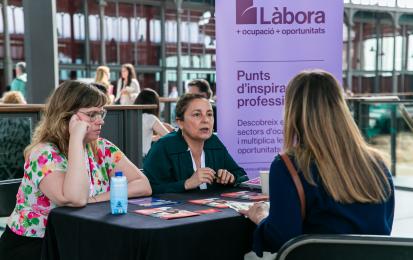
The Làbora programme connects vulnerable job seekers with employment opportunities through a partnership between the city council, social organisations and businesses. Created in response to rising unemployment, the programme provides integrated pathways that combine job training, mentoring and placement support. Every year, around 6 000 people participate in the programme, and 1 000 find a job, regaining autonomy through dignified work.
Làbora’s innovation lies in a new way of working: a public system that coordinates with civil society rather than acting in parallel. The programme demonstrates how structured collaboration between local governments and NGOs can humanise employment policies and make inclusion scalable.
#2 – Miskolc (HU)
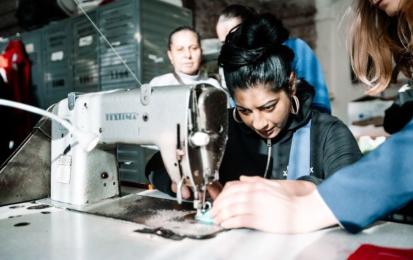
Like many European cities, Miskolc faces challenges of social exclusion, unemployment and deteriorating housing. Instead of addressing each issue separately, the Urban initiative for innovative integrated social services interventions (4IM) uses an integrated welfare model that brings together social, health and employment services around residents’ needs. This shift from fragmentation to integration exemplifies systemic social innovation, with public services designed as part of a holistic ecosystem.
Even though this approach is not new, putting it into practice is a real achievement. Miskolc developed and tested a coordinated model in two deprived neighbourhoods, combining five tailored service packages – from immediate employment support and vocational training to housing improvement, health and debt assistance and community mobilisation. Through coordinated outreach teams and household-level mapping, the majority of local residents engaged in employment, training or other social inclusion activities.
All in all, Miskolc proves that even under resource constraints, cities can innovate by coordinating existing assets around people, approaching them as living resources who help develop administrative intelligence.
| 
|
Key takeaways for your city
Both Barcelona and Miskolc show how integration and coordination can help unlock innovation, even when resources are limited. Furthermore, structured partnerships between municipalities and NGOs can make welfare policies more meaningful and effective. Both practices remind us that social innovation can happen inside bureaucracy when creativity and political will align.
Collaborative spaces
Social innovation needs places where people can meet, connect and experiment. Across Europe, cities are creating social infrastructures: hubs, labs and cultural spaces where innovation and participation meet. These hubs can be seen as urban commons, much-needed infrastructures for collaboration.
#3 – Roeselare (BE)
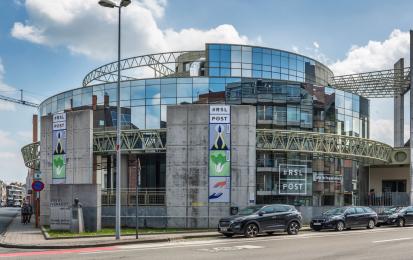
Roeselare’s Community Innovation Hub operates as an interface between the municipality and citizens, offering tools, mentoring and microgrants for civic initiatives. By framing citizens as city makers, the city can make the most of a flow of bottom-up solutions, from local sustainability projects to digital inclusion schemes.
The Hub has over 120 visitors a day, with over 700 community-led activities hosted annually. In practice, hub activities involve a wide range of accessible programmes and shared spaces: from digital assistance to workshops for young people, a social grocery reducing food waste and a Repair Café run by volunteers repairing electronics and other items. Reaching around 120 visitors per day, the Hub combines essential services with opportunities for learning, volunteering and co-creation.
Through this model, residents actively shape the use of shared spaces, the municipality acting as a facilitator, providing the conditions for civic creativity to flourish.
#4 – Ghent (BE)
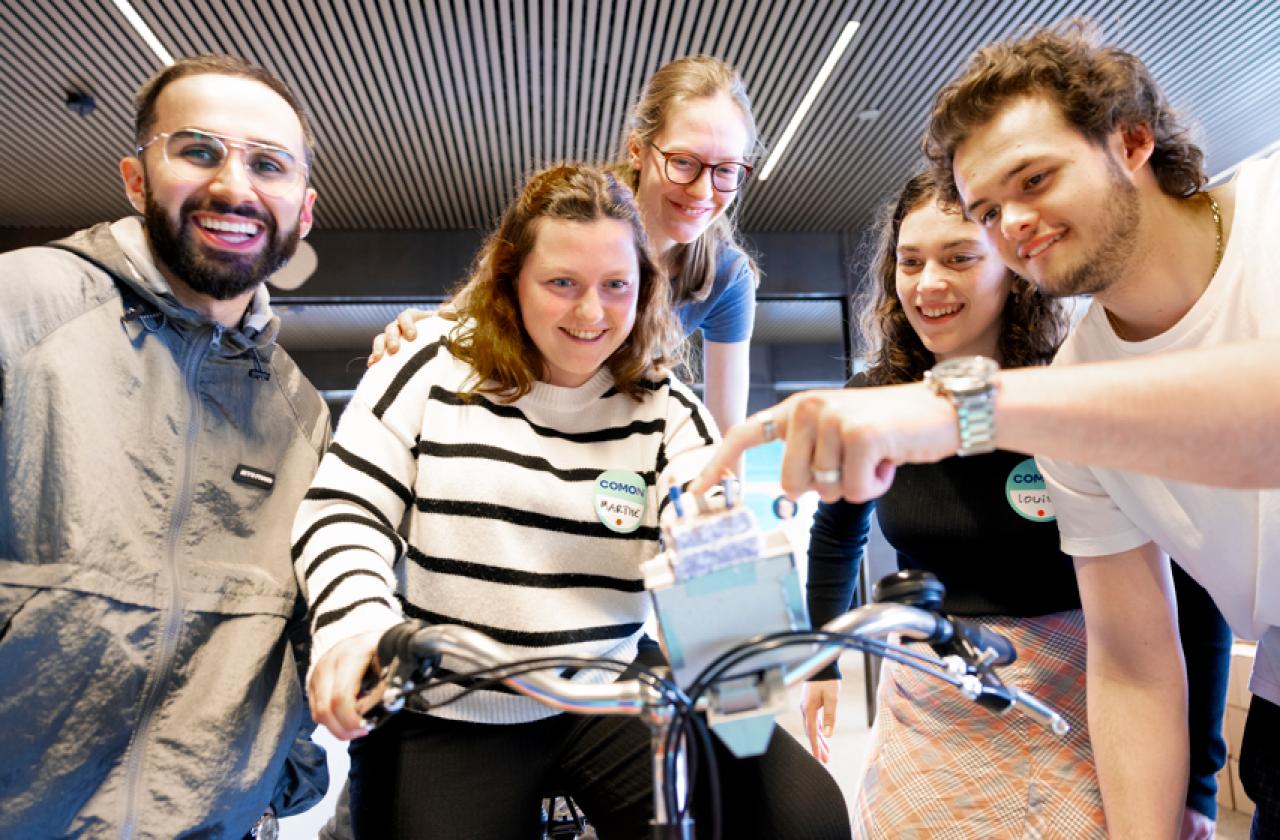
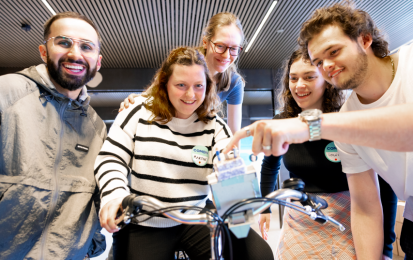
Comon invites residents, researchers and local government to co-define urban challenges and prototype solutions together. Using design-thinking methods, the process is open-ended: problems are not predefined by the municipality, but recognised through dialogue.
One key challenge identified in Ghent was the difficulty many residents faced in navigating the healthcare system, particularly non-native speakers and people with low health literacy. Through workshops and make-a-thons, participants co-created practical solutions such as RingMe, a multilingual phone bot for medical appointments, and ExplainMed, a tool that translates medical documents into accessible language. These prototypes were tested in real-life settings, combining research expertise with lived experience.
The city has advanced significantly since it had the courage to say, 'we do not have all the answers', and open up for others to co-create human-centred technological solutions grounded in real community needs.
| 
|
#5 – Brindisi (IT)
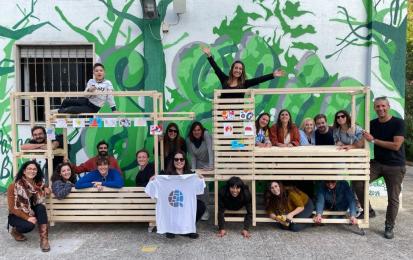
Brindisi’s social innovation hub is a network of 10 underused municipal buildings, located both in the historic centre and in peripheral neighbourhoods. This space has been transformed into multi-use hubs where youth, social entrepreneurs and cultural actors collaborate. These former public properties, once vacant or marginalised, now function as community meeting places that host cultural, educational and social enterprise activities.
By linking regeneration with the social economy, the city repositions culture as a driver of inclusion, showing that vacant public assets can become catalysts for social enterprise and belonging.
At least 1 000 residents have already benefited from training programmes, events and new community services developed across the network of neighbourhood houses.
#6 – Braga (PT)
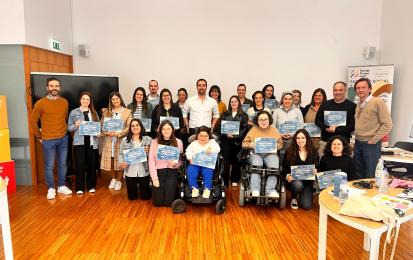
The Human Power Hub is a social innovation accelerator providing mentorship, workspace and training for local changemakers. The initiative operates as a structured social entrepreneurship centre, building an ecosystem that connects municipal strategy, academic research, businesses and community action.
Since its inception, it has supported over 50 social enterprises, helped create more than 200 jobs, and engaged over 1 000 citizens in capacity-building programmes, positioning Braga as a regional reference for social innovation.
| 
|
Key takeaways for your city
Looking at the four practices above, the shared space, itself, is a method for social innovation, whereby cities can act as facilitators, providing space and support for citizen-led innovation. In Brindisi, underused urban spaces can be transformed into inclusive, productive community spaces, whereas in Braga, cross-sector partnerships create fertile ground for local changemakers to thrive.
Building skills and agency
Some cities are investing directly in people, nurturing the skills and confidence that sustain social innovation. Across Europe, however, many urban areas struggle with skills gaps, youth outmigration and unequal access to education and digital tools, challenges that can weaken long-term innovation capacity if left unaddressed.
#7 – Amarante (PT)
The Tech Hub for Local Futures supports digital literacy, entrepreneurship and innovation among young residents in a smaller-scale urban setting. It bridges the digital divide, showing that small cities can host innovation ecosystems that retain and sustain talented youths.
Through inclusive training programmes aligned with industry needs, partnerships with universities and tech companies, and direct pathways to internships and job placements, the Hub connects local talent with real employment opportunities.
So far, the initiative has strengthened the local economy while reducing the need for young people to migrate to larger urban centres. Among the key results of the initiative, 200 participants have completed training programmes and around 70% securing tech-related jobs, alongside the creation of 15 startups.
#8 – Kristianstad (SE)
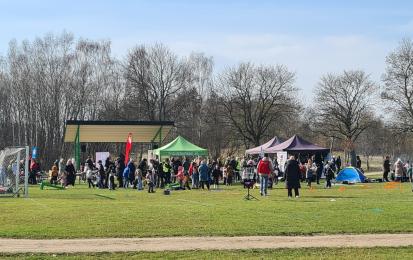
In Kristianstad, neighbourhood development focuses on building leadership within communities through Urban Community Development Näsby. Through participatory processes, residents co-design local projects addressing safety, inclusion, and cohesion.
These projects range from cycling courses and free electric bike rentals to improve green mobility, to the co-creation of safer public spaces with new lighting and public art, local flea markets promoting circular economy, reading initiatives encouraging family literacy, and the creation of dialogue spaces where residents meet municipal representatives and NGOs.
Whether digital or social, these projects share a belief that innovation begins when people are trusted to learn and lead. Capacity-building is not a side effect; it is the core outcome.

| 
|
Key takeaways for your city
Looking at Amarante and Kristianstad, it is clear that decentralising innovation helps smaller cities retain talent and create new employment opportunities. Furthermore, empowering local leadership is essential for long-term community resilience.
Moving forward together
Across these eight cities, social innovation takes many forms, whether as an employability programme, a co-creation lab or a community hub. In different ways, each of the above-showcased practices reveal that innovation goes beyond technology and is just as much about trust, capability and connection. Yet, all share one foundation: cooperation as culture. When institutions and citizens co-create, the city itself becomes a learning organism founded on time-earned trust.
Looking for more urban solutions? Get inspired by the latest URBACT Good Practices! Each of the practices is part of a database of tested methods for sustainable urban development. Some of these practices will be transferred to other cities through URBACT Transfer Networks. Stay tuned for updates.
Laura Sobral is an urbanist and researcher focusing on participatory governance, social innovation, and cooperative city making.