15/09/2015 03/05/2018
European cities face higher levels of Early Leaving from Education and Training (ELET) than their national averages, meaning that some urban areas have more ELET rates, than the countryside areas - contrary to the national trends of these cities' countires. This represents a serious challenge, as ELET has significant societal and individual consequences, such as a higher risk of unemployment, poverty, marginalization and social exclusion. Tackling this issue means breaking the cycle of deprivation and the intergenerational transmission of poverty and inequality.

Summary
Partners
Lead Partner : Ghent - Belgium- Ampelokipi - Menemeni - Greece
- Aveiro - Portugal
- Barcelona - Spain
- Berlin - Germany
- Gothenburg - Sweden
- Nantes - France
- Sofia - Bulgaria
- Tallinn - Estonia
Timeline
Phase 1 kick-off
Phase 2 kick-off
Phase 2 development
Final event

Network Outputs
Operational Implementation Framework
-
STAY TUNED - Berlin OIF(PDF, 429Ko)
-
STAY TUNED - Ghent OIF(PDF, 343Ko)
-
STAY TUNED - Sofia OIF(PDF, 376Ko)
-
STAY TUNED - Gothenburg OIF(PDF, 680Ko)
-
STAY TUNED - Barcelona OIF(PDF, 3Mo)
-
STAY TUNED - Aveiro OIF(PDF, 1Mo)
-
STAY TUNED - Ampelokipi OIF(PDF, 2Mo)
-
STAY TUNED - Tallinn OIF(PDF, 710Ko)
Stories
-
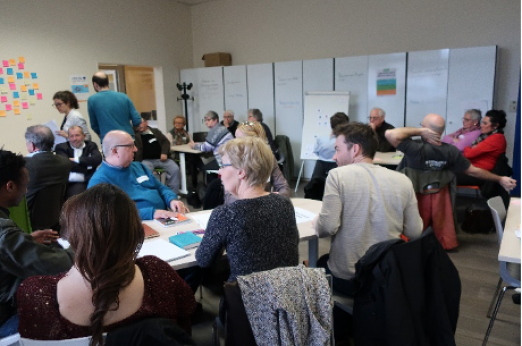
« L’espace citoyens » : a smart collective hub
The city of Saint Quentin took over citizen participation in 2014.
-
BluAct - Starting Up the Blue Economy
BluAct network initiated its works during Spring of 2018, and has been awarded with the EEPA 2018 “Promoting the Entrepreneurial Spirit” award. Phase
-

Vilanova i la Geltrú Transfer Story
"URBACT support has been essential to overcoming the challenges. It gave INSPIRATION at a personal, team, institutional and city level, empowering the