15/09/2015 03/05/2018
In September 2015, at what was the height of migration flows witnessed in the Europe since the Second World War, this Action Planning network began its activities.
As a result of this global flow, one can observe a rapid change in the population structure and interactions between individuals and social groups: cities of migration are places of inclusion and exclusion. In this sense, Arrival Cities took place against a backcloth of rising discrimination and prejudice against immigrants. The network's cities have had to tackle the new and old challenges to ensure the migrants' integration.
Summary
Get in touch
Av. Movimento das Forças Armadas
2700-595 Amadora
Portugal
Tel.: +351 21 436 9000
- Val-de-Marne - France
- Oldenburg - Germany
- Dresden - Germany
- Riga - Latvia
- Vantaa - Finland
- Thessaloniki - Greece
- Patras - Greece
- Messina - Italy
- Roquetas de Mar - Spain
Timeline
Kick-off meeting in September (Dresden)
Transnational meeting in January (Vaanta), May (Thessaloniki) and September (Oldenburg)
Final event in April (Brussels)
Network Outputs
-
ARRIVAL CITIES Final Report(PDF, 3Mo)
-
ARRIVAL CITIES Migrant's Perspective Book(PDF, 2Mo)
- The Intercultural cities programme (ICC) supports cities in reviewing their policies through an intercultural lens and developing comprehensive intercultural strategies to help them manage diversity positively and realise the diversity advantage
- Amadora launches a Guide on the welcoming of migrants
Integrated Action Plans
Integrated Action Plans
-
ARRIVAL CITIES Riga (LV) Integrated Action Plan(PDF, 837Ko)
-
ARRIVAL CITIES Vantaa (FI) Integrated Action Plan(PDF, 901Ko)
-
ARRIVAL CITIES Petras (EL) Integrated Action Plan(PDF, 588Ko)
Stories
-

The Bee-friendly city movement is about spreading knowledge on urban beekeeping
BeePathNet Reloaded is about spreading knowledge on urban beekeeping to additional four EU cities that have proven its environmentally friendly
-
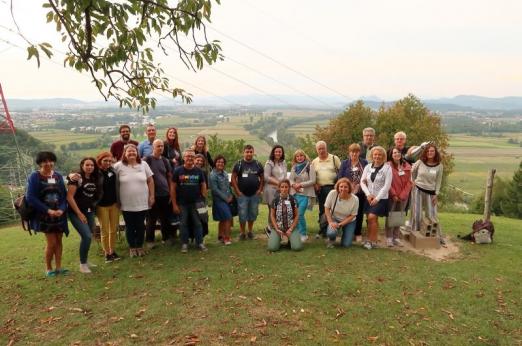
BeePathNet Reloaded Boot Camp
The BeePathNet Reloaded Boot Camp was a five-day intensive training opportunity. The BeePathNet Reloaded partners Ljubljana (lead partner), Bansko
-
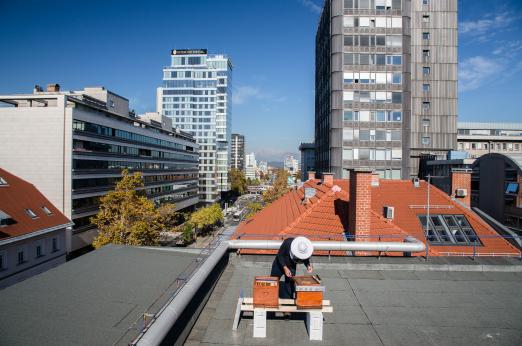
Upgrading environmentally friendly orientation of four EU cities with urban beekeeping principles
BeePathNet Reloaded is about spreading knowledge on urban beekeeping to additional four EU cities that have proven its environmentally friendly