Networks and cities' news

Catch up on the latest updates from cities working together in URBACT Networks. The articles and news that are showcased below are published directly by URBACT’s beneficiaries and do not necessarily reflect the programme’s position.

Want to learn more about the projects that are featured here? Discover the URBACT Networks.
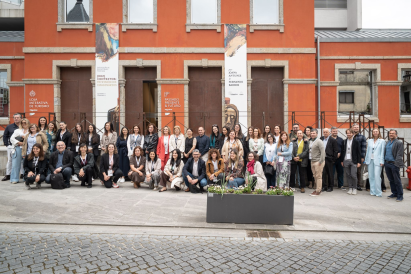


  • From local innovation to European transfer: Komotini and the future of accessible cities

    From local innovation to European transfer: Komotini and the future of accessible cities


    AUTHOR: IO CHATZIVARYTI, LEAD EXPERT FOR URBACT TN C.ALL


    As European cities face growing pressure to create more inclusive, sustainable, and people-centred urban environments, accessibility is increasingly moving from the margins of policy discussion to the centre of urban governance. Yet for many municipalities, especially medium-sized cities, translating accessibility commitments into coherent action remains a challenge. Fragmented planning, limited technical capacity, and insufficient stakeholder coordination often prevent accessibility from becoming a truly systemic urban priority.

    The URBACT Transfer Network C.ALL – Accessible Cities for All offers an alternative approach. Led by Komotini, the network explores how accessibility can evolve from isolated interventions into an integrated governance model linking mobility, public space, participation, digital innovation, and social inclusion. At the heart of the network lies the transfer of the good practice “Komotini Accessible City for All”, a methodology developed progressively over two decades through cooperation between the municipality, civil society organisations, technical experts, and people with disabilities themselves.


    Rather than presenting accessibility as a technical checklist, the Komotini approach treats it as a continuous urban process embedded across all areas of city planning. Seven European partner cities — Jarosław, San Lucido, Bratislava, Galway, Dubrovnik, Pentágono Urbano in Portugal, and Zrenjanin — are working to adapt this methodology to their own local realities through study visits, stakeholder engagement, and peer-learning activities.


    DSC09165[71].JPG


    Eleftheria Gkiosou

    See more
  • YOUth SPACE LINK in Alba Iulia!

    On 17–18 February, representatives of the URBACT Transfer Network YOUth SPACE LINK, including coordinators from Lublin and the network expert, visited Alba Iulia, one of the network partner cities.

    Volodymyr Vityk

    See more
  • YOUth SPACE LINK across Europe

    At the beginning of March, project coordinators from the Social Participation Office of the City of Lublin carried out visits to three partner cities of the URBACT Transfer Network YOUth SPACE LINK: Plasencia (Spain), Torres Vedras (Portugal) and Sofia (Bulgaria). The visits provided an opportunity to explore local youth-focused initiatives and exchange experiences on the development and management of youth spaces. The network’s Lead Expert also took part in the visits.

    Volodymyr Vityk

    See more
  • The future-of-work transition starts locally

    Network article by Petra Grgasović, Lead Expert of Network4Work.


    Zoltán Szenes

    See more
  • The future-of-work transition starts locally

    Network article by Petra Grgasović, Lead Expert of Network4Work.


    Zoltán Szenes

    See more
  • EPIU GETAFE Hogares saludables

    From Getafe to Europe: a roadmap for tackling hidden energy poverty

    What can other European cities learn from Getafe’s award-winning fight against energy poverty? According to the EmPowerIngUs Transferability Study, the Spanish city’s Energy Poverty Intelligence Unit (EPIU) offers far more than a local success story. It provides a practical and adaptable framework that can help municipalities identify vulnerable households, improve living conditions and modernise public services.

    One of the most transferable elements is the shift from a reactive to a preventive approach. Instead of waiting for citizens to request assistance, Getafe developed mechanisms to identify “hidden energy poverty” – households struggling to maintain adequate comfort at home but often absent from official statistics. This proactive model allows cities to intervene earlier and more effectively.

    Another key lesson is the creation of a dedicated one-stop-shop service, the Healthy Homes Office. Acting as a trusted interface between citizens and local authorities, the office combines technical advice, social support and personalised guidance. The study highlights that this human-centred service became the cornerstone of the entire system, helping to build trust and reach vulnerable groups that traditional public services often fail to engage.

    The Getafe experience also demonstrates the value of cross-departmental collaboration. Housing, social services, energy experts, universities and community organisations worked together to address a complex challenge that no single department could solve alone. This integrated governance model is considered highly replicable across different administrative contexts.

    Equally important is the use of data-driven decision-making. Although the project learned that artificial intelligence alone is not a “magic solution”, it successfully combined data analysis with direct community engagement, creating practical citizen profiles and tailored interventions.

    Finally, the study stresses that transferability does not depend on copying every action. Cities can adopt individual modules—from awareness campaigns and data collection systems to renovation support schemes and neighbourhood interventions—while adapting them to local realities.

    For cities seeking inclusive climate action, Getafe’s message is clear: tackling energy poverty requires data, cooperation and technology, but above all, trusted relationships with people.
     

    Chiara.Lucchini

    See more