
The capital city of Cyprus, Nicosia (or Lefkosia in Greek), will welcome more than 500 city representatives on 29 and 30 September 2026 for the 2026 URBACT City Festival. This year, participants will discover urban topics through the experiences of European cities involved in 30 URBACT Action Planning Networks.
Beyond the programme sessions, the city of Nicosia has many stories to share. Get a refresher on Nicosia’s history and find out what’s in store for the 2026 edition of this landmark URBACT event.
A history that shapes contemporary urban identity
As Europe’s southernmost capital, Nicosia is a city shaped by millennia of layered history, moulded by centuries of coexistence among diverse cultures, religions, and traditions. Throughout the ages, the city’s identity has felt the imprint of different influences, starting with the Mycenaean Greeks, through the Hellenistic, Byzantine, Frankish periods, to Venetian administrators (1489-1571) to Ottoman governors (1571-1878) and British colonial authorities (1878-1960). As a result, the urban landscape blends Greek temples, Venetian walls, Byzantine churches, Ottoman architecture, British colonial-style buildings, and contemporary buildings, creating a cityscape where tradition and modernity exist side by side.
In 1960, Nicosia became the capital of the Republic of Cyprus, whose constitution relied on the co-operation of the island's two communities, Greek (80%) and Turkish (18%). In December 1963, skirmishes amongst Greek Cypriots and Turkish Cypriots resulted in dividing Nicosia into Turkish and Greek quarters, separated by the so-called Green Line. The military invasion of Turkey to Cyprus on 20 July 1974 and the illegal Turkish occupation of the northern part of the island, extended the Green line and made it impassable, making Nicosia the last divided capital in the world.
Beyond its historical significance, Nicosia plays a central role in shaping Cyprus’s urban agenda, positioning itself as a laboratory for innovation in governance, education, and creative industries. Universities, start-ups, and civic initiatives contribute to a dynamic urban environment that extends beyond the city’s ancient history.
In recent years, the city has strengthened its engagement within the European ecosystem, including the URBACT programme, actively engaging in city exchanges, networks and training that explore inclusive growth, sustainable development, and community-led planning.
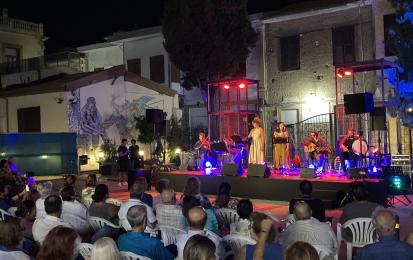
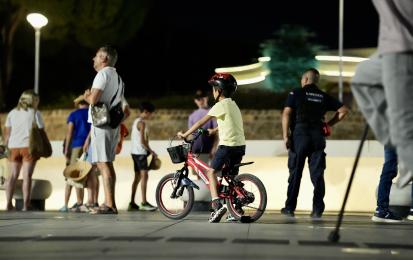
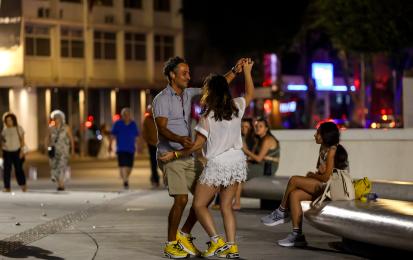
The URBACT Action Planning Network Cities After Dark, of which Nicosia is partner, focuses on the night-time economy. Through this network, Nicosia reinforced the city’s commitment to rethinking how urban spaces function beyond traditional hours, fostering safety, creativity, and social vitality after dark.
| 
| 
|
A unique setting for the URBACT City Festival
Hosting the 2026 URBACT City Festival marks an important milestone in Cyprus’s URBACT journey. “Nicosia is expected not to be just a venue and host city but a living case study, prompting discussions on integrated planning and urban resilience in border, island and peripheral contexts,” says Christiana Sizinou, European Funds Directorate, Ministry of the Interior, URBACT Monitoring Committee National Representative.
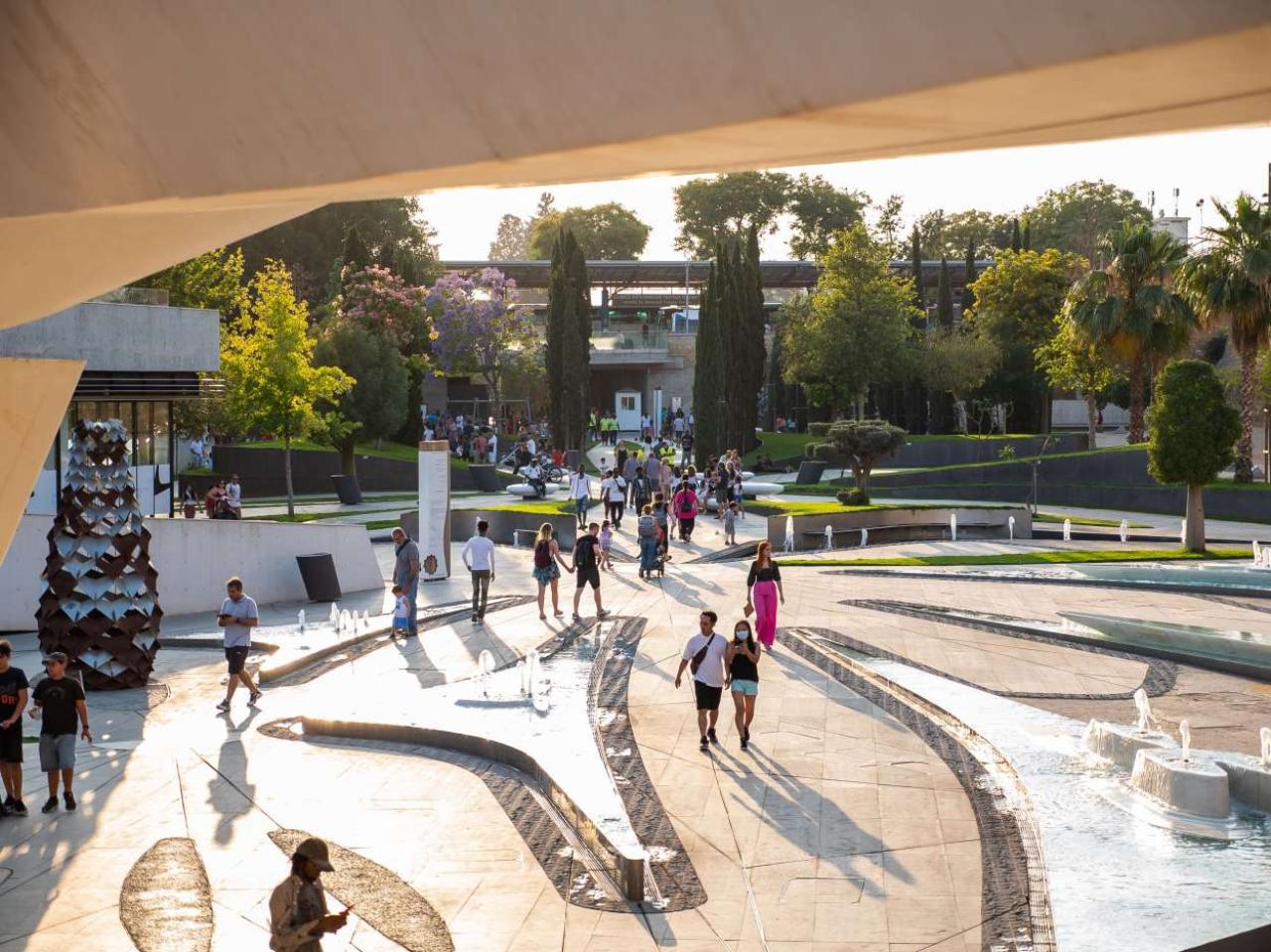
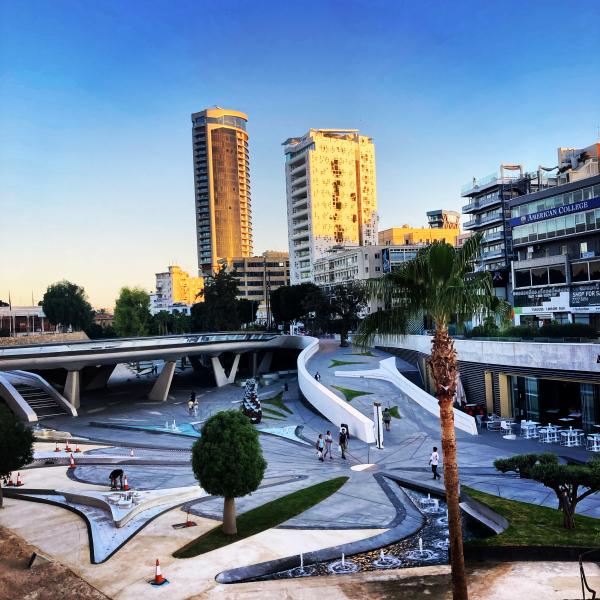
During the two days of the Festival, Nicosia will put forward its role as a dynamic urban laboratory for innovation and cultural exchange. Equally important, the city’s vibrant and adaptable urban setting will be showcased through the Festival’s two public venues. To start with, the Eleftheria (Freedom) Square, redesigned by world-renowned architect Zaha Hadid, and co-funded by the European Structural and Investment Fund, is a striking urban landmark that reconnects the historic walled city with its modern surroundings through bold, fluid design. Another venue of the URBACT City Festival is the Old GSP Stadium, a former football stadium that has been turned into an urban plaza with green areas and spaces for recreation and parking, co-funded by the European Regional and Development Fund.
Together, these modern spaces embody Nicosia’s energy, accessibility, and openness, making the city an ideal setting to celebrate urban culture, innovation, and community.
Inside the 2026 URBACT City Festival: ideas, local actions, and exchanges
Following the event programme, the Festival will bring together municipal staff, urban experts, elected officials, and representatives of regional, national and European authorities to share experiences, inspire one another, and build new collaborations. According to Christiana, “the Festival is expected to move beyond showcasing good practices and focus more on what has worked, what hasn’t, and what must change in EU urban governance and funding.”
Local actions and networking opportunities
At the heart of the Festival is the celebration of 273 local actions developed by cities involved in 30 URBACT Action Planning Networks, showcasing real-world urban solutions. These stories of local impact will be presented throughout the programme and in 12 dedicated thematic sessions, and will form the basis for learning and dialogue among peers.
A highlight of this year’s edition will be the outdoor exhibition and marketplace in Eleftheria square, which will be open to the general public (for the first time ever), where visitors can explore urban solutions in an accessible, informal setting.
The Festival will also serve as the launch pad for the next URBACT call for networks, giving participants a first look at upcoming funding opportunities and the chance to form future partnerships through dedicated networking sessions.
Walking tours of Nicosia’s historic and contemporary urban landscape
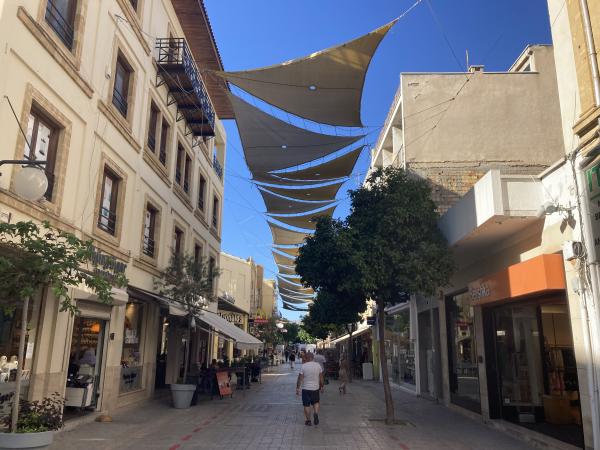
This year participants will be spoiled for choice with eight different options to discover Nicosia. Here’s what to expect from the guided city visits (on 1 April):
- EU-funded projects in practice: an exclusive look at EU Cohesion Policy projects
- Nicosia from an urban planner’s perspective, a bike tour of the city centre and old town, highlighting the potential to connect cycling and pedestrian paths with the commercial and historic heart of the city
- HerStory: walk of female history: an exploration of the city’s streets, monuments, and buildings, while discovering the women who shaped them
- Walking through a united Nicosia: a contemplation on life in a unified Nicosia in the 20th century, through significant landmarks of the Nicosia Master Plan
- From multicultural past to intercultural future: a tour of lesser-known neighbourhoods, their people, customs, and organisations, fostering community connections and promoting intercultural understanding within the walled city
- Architecture tour: an exploration of modern designs and historic fortifications, while guided through the city’s rich urban heritage
- Nicosia walled city tour: a tour of the venetian walls and historic gates to Eleftheria Square and the Green Line, ending with the Old Town Hall with a photo at the ‘Poet’ glass sculpture
- City museum tour: an introduction to the city’s cultural treasures through its historic and cultural institutions, including the Leventis Municipal Museum and the Bank of Cyprus Museum of Cypriot Coinage.
Stay tuned for more city voices and stories from Nicosia…
The 2026 URBACT City Festival in Nicosia will be a shared moment of practical insights, peer exchange, and renewed energy to take ideas back home and turn them into local actions. It will also be an opportunity to get updates from the URBACT community, including the next call for URBACT networks.
Follow us on all URBACT channels and subscribe to our newsletter to join the conversation around the Festival!
Want to know more about Cyprus’s involvement in URBACT and EU sustainable urban policy? Read the article on the Cyprus Presidency of the Council of the EU.