What's new

Check URBACT's latest stories, updates and events!


  • Great places connect people. Main square in Skawina during European Mobility Week. Photo credit: Gmina Skawina

    Beyond the Ballot Box: Why the Best Mobility Plan is a Great Place

    By Maciej Zacher, URBACT Ad-Hoc Expert

    Democracy often feels like a series of checkboxes. We vote every few years, fill out the occasional survey, and attend the odd town hall meeting. But building a city - especially one focused on sustainable mobility - requires something deeper than counting votes. It requires understanding lives.

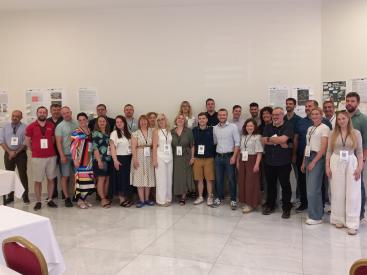
    This was the core challenge the URBACT PUMA network tackled during our recent workshop in Nova Gorica, Slovenia. When we talk about Sustainable Urban Mobility Plans (SUMP), the conversation often drifts toward technicalities: bus frequencies, bike lane widths, and modal split percentages. These are crucial, of course. But we gathered to strip mobility back to its most fundamental truth: the spatial aspect.

    Zacher

    See more
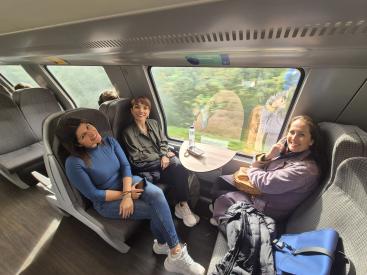
  • PUMA network meeting in Gdansk, Poland

    How the PUMA Network changed the way cities plan mobility


    Cities, cooperation and the URBACT experience

    The Plans for Urban Mobility Actions (PUMA) network brought together nine partners from eight European countries, reflecting a wide range of territorial, institutional and governance contexts.

    The partners included cities, regions and knowledge institutions from Spain (Viladecans), Italy (Cento), Slovenia (Nova Gorica), Greece (Larissa), Poland (Gdańsk), Lithuania (Tauragė), Latvia (Liepāja and Dienvidkurzeme) and Croatia (University of Zagreb).

    This geographical and institutional diversity meant that partners entered the network with very different planning traditions, capacities and challenges - making mutual learning not only valuable, but essential.

    KarolinaOrcholska

    See more
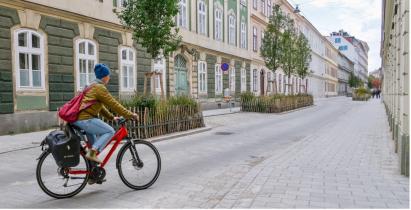
  • The new Bernardgasse was transformed with a lot of data and knowhow through an urban research project called Glara. Source: Melissa Bruntlett, 2025.

    Vienna Calling: mobility lessons from a city built around people

    Six URBACT networks took a deep dive into one of the most liveable cities to reimagine inclusive mobility. 

    roland.krebs

    See more
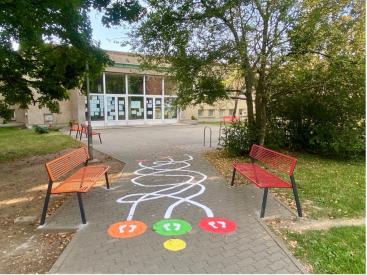
  • SCHOOLSHOODS project at Elementary School Krásného in BRNO

    Getting a move on: small sustainable mobility actions, big impact

    What makes a city truly walkable, cyclable, or low emissions? While the returns are ambitious, implementing inclusive active mobility projects can feel daunting. Often the perception in city organisations is that change can only be achieved with big, costly actions, as opposed to smaller interventions.

    URBACT

    See more
  • Highlights from PUMA second quarter in 2025 (April - June)

    KarolinaOrcholska

    See more
  • Five Reasons Why Cities Should Consider the Night When Planning Urban Mobility

    Waiting for hours at a bus stop after a night out with friends is one of the most vivid memories of my youth. Night buses aren’t just for those who don’t have a car, but they are vital for a wide range of people who rely on public transport to get to or from the work, or who simply feel safer than walking alone at night. 

    Urban mobility systems are typically designed for being fully operational at daytime, but once night falls, cities of all sizes face a series of challenges. Cities and metropolitan areas are perfect testing grounds for testing innovative solutions that can enhance the quality of the mobility during night-time hours. 

    The URBACT Action Planning Networks Cities After Dark and PUMA sparked the conversation among partners cities on the importance of 24-hour mobility systems, drawing on some of the most interesting models carried out by cities across Europe and globally. Here are five key reasons why cities should integrate night-time dimension into their urban mobility plans, to become more vibrant, inclusive and attractive for all. 

    dantonio

    See more